AI’s Environmental Impact Extends Beyond Power and Water
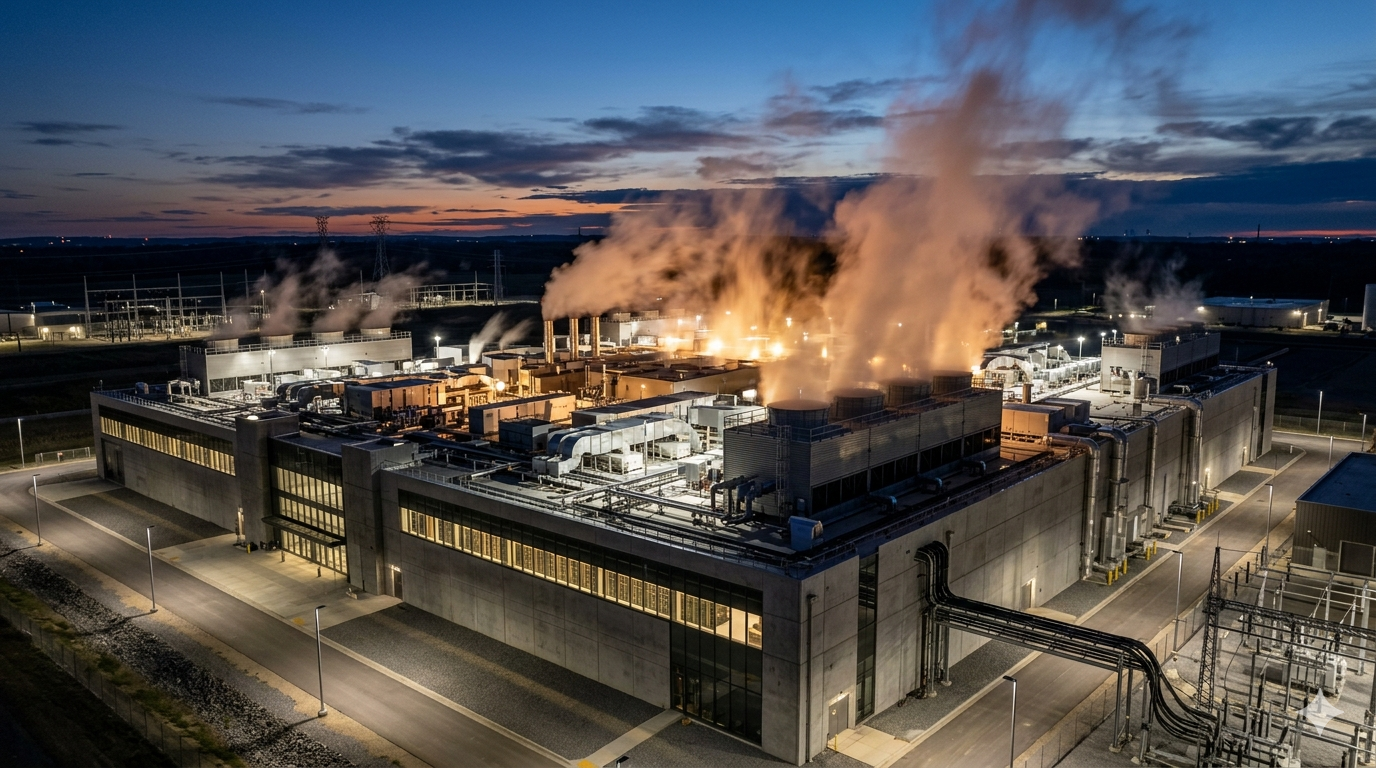
The rapid expansion of artificial intelligence infrastructure has sparked widespread discussion about electricity consumption and water use. However, researchers are increasingly focusing on another consequence of AI growth that receives far less attention: heat. Every watt consumed by a server ultimately becomes heat that must be removed from the facility. As hyperscale operators deploy larger clusters of GPUs to train and run advanced AI models, the amount of waste heat generated by data centers continues to rise. New research suggests that this heat is beginning to affect surrounding communities, creating what some researchers describe as a new form of localized environmental impact.
Understanding the Data Heat Island Effect
Researchers from the University of Cambridge and collaborating institutions have introduced the concept of the “Data Heat Island Effect” to describe how concentrated data center operations can raise temperatures in nearby areas. Similar to the urban heat island effect observed in major cities, data centers release large amounts of thermal energy into the surrounding environment through cooling systems, ventilation infrastructure, and operational equipment. The study argues that this effect has been largely overlooked despite the rapid growth of AI infrastructure worldwide. As facilities become larger and more densely packed with computing hardware, their contribution to localized warming may become increasingly significant.
AI Data Centers Can Significantly Increase Local Temperatures
According to the research, areas surrounding large data center clusters can experience measurable temperature increases compared with neighboring regions. The study found that average temperature increases can approach 2°C in some locations, while specific hotspots may experience temperature spikes of up to 9°C under certain conditions. Researchers believe these effects are likely to become more pronounced as AI infrastructure continues expanding. Such increases may influence local energy demand, environmental conditions, and public health outcomes, particularly during periods of extreme heat. While the findings require further validation across additional regions, they provide one of the first detailed examinations of AI infrastructure’s direct thermal footprint.
Why AI Workloads Generate More Heat Than Traditional Computing
Artificial intelligence workloads place unique demands on data center infrastructure. Training large language models and serving billions of AI queries requires thousands of high-performance GPUs operating simultaneously. These systems consume substantially more power than conventional enterprise workloads. Modern AI clusters frequently operate at power densities that would have been considered extraordinary only a few years ago. As computing intensity increases, cooling systems must work harder to maintain safe operating temperatures. The result is a growing concentration of heat production inside facilities that must ultimately be transferred into the surrounding environment.
Nearly Every Watt Becomes Heat
The relationship between power consumption and heat generation is governed by basic physics. Computers do not consume electricity without consequences; nearly all electrical energy entering a server eventually leaves as thermal energy. Whether through processors, memory systems, storage devices, networking equipment, or power supplies, the vast majority of consumed energy is converted into heat. Cooling systems remove this heat to protect equipment, but they do not eliminate it. Instead, they transfer it into the surrounding atmosphere through cooling towers, heat exchangers, liquid cooling systems, and ventilation infrastructure. As AI workloads grow, the volume of waste heat grows alongside them.
Where Are Most AI Data Centers Located?
The geography of AI infrastructure plays an important role in determining its environmental impact. Most hyperscale AI facilities are concentrated in North America, Europe, and parts of Asia-Pacific. The United States remains the dominant market, driven by investments from major cloud providers and AI developers. Significant capacity is also located in China, Western Europe, South Korea, Japan, and increasingly India. These regions benefit from access to power infrastructure, fiber connectivity, skilled labor, and proximity to enterprise customers. The concentration of facilities in specific regions creates localized clusters where environmental impacts can become more pronounced.
The United States Leads Global AI Infrastructure Development
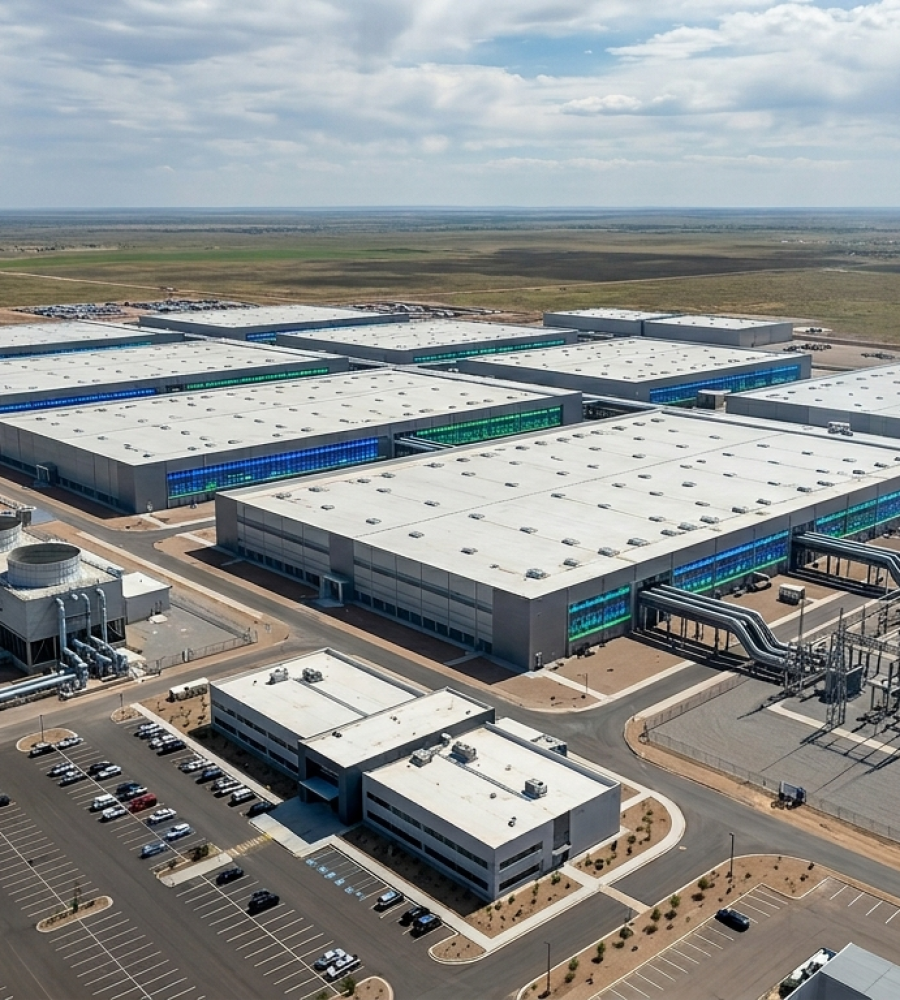
The United States hosts many of the world’s largest AI data center clusters. Northern Virginia remains the largest concentration of data centers globally, while Texas, Arizona, Oregon, Ohio, and Georgia continue attracting substantial investment. These regions offer varying combinations of energy availability, land access, tax incentives, and network connectivity. The scale of deployment has accelerated as cloud providers race to expand AI capacity. As facilities become larger and more energy-intensive, local communities are increasingly examining how these developments affect surrounding infrastructure, environmental conditions, and resource availability.
Many New Facilities Are Emerging in Water-Stressed Regions
The placement of AI infrastructure has also raised concerns about resource management. Researchers and environmental groups have noted that many new data center projects are being developed in regions already experiencing water stress. Cooling requirements often place additional pressure on local water systems, particularly in areas facing drought conditions. When combined with the heat generated by large facilities, these concerns contribute to broader debates regarding sustainability and long-term infrastructure planning. The challenge becomes increasingly complex as AI adoption drives demand for larger and more powerful computing environments.
Heat Is Becoming a Community Concern
Historically, discussions about data center development focused on economic benefits such as job creation and investment. Today, communities are increasingly evaluating the environmental implications of large-scale AI infrastructure. Heat emissions have become part of that conversation. Residents living near large facilities have expressed concerns about localized warming, increased energy demand, and the cumulative impact of multiple developments within the same region. Researchers argue that heat should be considered alongside water use, carbon emissions, and electricity consumption when assessing the sustainability of future AI infrastructure projects.
More Than 340 Million People Could Be Affected
One of the study’s most striking findings involves population exposure. Researchers estimate that more than 340 million people globally may already be living in areas affected by the thermal impacts associated with large-scale data center operations. The figure highlights how infrastructure decisions made by technology companies can influence communities far beyond the boundaries of individual facilities. While the severity of impacts varies significantly across locations, the findings suggest that data center heat deserves greater attention as AI infrastructure continues expanding worldwide.
The Industry Is Exploring Heat Reuse Opportunities
Not all waste heat must be discarded. Data center operators and researchers are increasingly exploring methods to capture and reuse thermal energy. In several European countries, excess heat from data centers is already being used to support district heating systems that warm homes and commercial buildings. Other initiatives focus on industrial processes, greenhouse agriculture, and carbon removal technologies. While such projects remain relatively limited compared with the overall scale of the industry, they demonstrate how waste heat can potentially become a valuable resource rather than an environmental burden.
AI Growth Will Intensify the Heat Challenge
The expansion of artificial intelligence infrastructure shows no signs of slowing. Analysts expect global AI computing capacity to grow rapidly throughout the remainder of the decade as organizations deploy increasingly sophisticated models and services. This growth will require more servers, more power, and ultimately more cooling. While advances in efficiency may reduce the heat generated per unit of computation, overall demand is likely to continue increasing. The challenge for operators, regulators, and communities will be managing this growth in a way that balances technological progress with environmental responsibility. As AI becomes a foundational technology across industries, the heat generated by the infrastructure supporting it may become an increasingly important part of the sustainability conversation.