Korea Is No Longer Just a Semiconductor Powerhouse
For decades, South Korea’s role in the global technology industry has been defined by semiconductors, memory manufacturing, consumer electronics, and telecommunications. Companies such as Samsung and SK hynix became critical suppliers to the world’s computing ecosystem, providing the hardware that powers everything from smartphones to hyperscale data centers. Today, however, South Korea is pursuing a far more ambitious objective. Rather than remaining primarily a supplier of technology components, the country is positioning itself as a destination for AI infrastructure, sovereign compute capacity, and large-scale AI cloud services. Recent announcements involving SK Telecom, NVIDIA, and NAVER suggest Korea wants to become one of Asia’s most important AI compute hubs.
The Rise of the Gigawatt AI Cloud
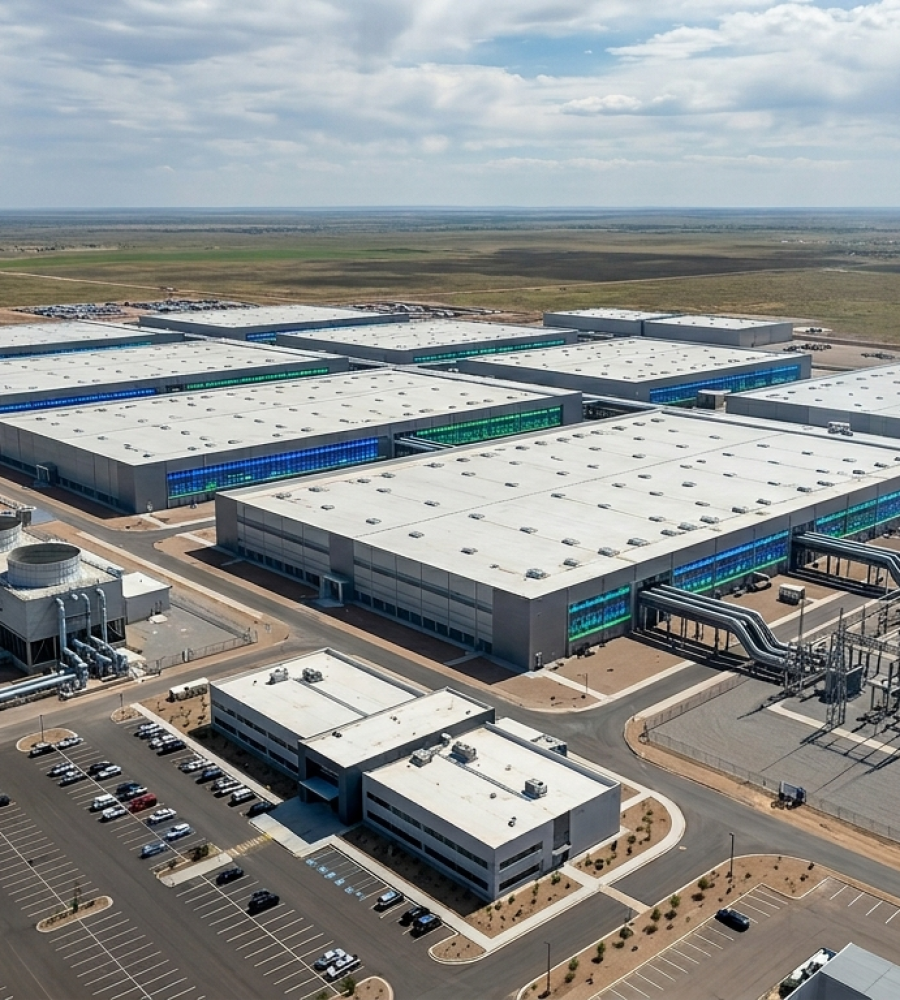
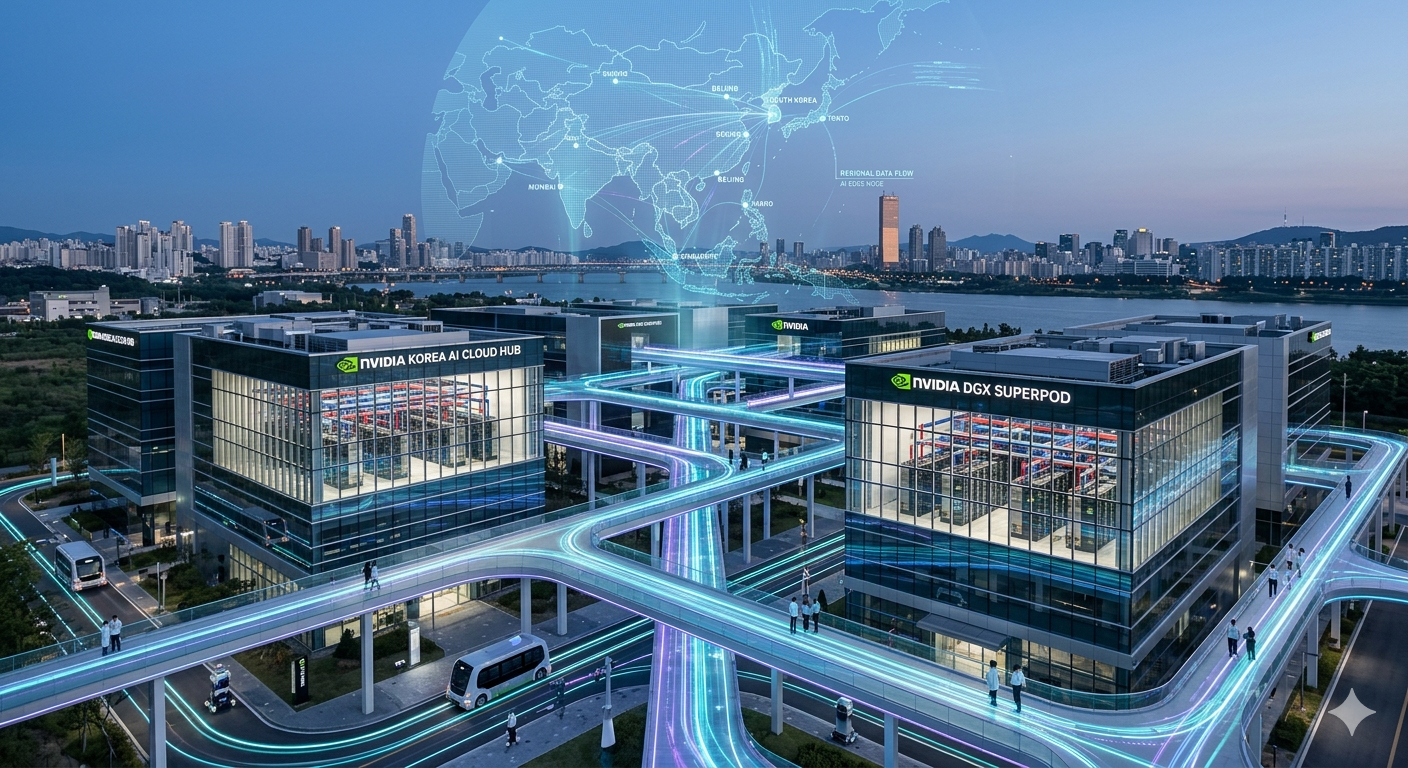
The scale of Korea’s ambitions became clear when SK Telecom announced plans to build a gigawatt-scale AI Cloud using NVIDIA’s DSX AI Factory architecture. The project will support AI training, inference, agentic AI, and physical AI workloads, with the first AI factory expected to become operational in 2027. Unlike traditional cloud infrastructure designed for a broad mix of enterprise applications, AI clouds are purpose-built environments optimized for GPU-intensive workloads. These facilities are designed to manufacture what NVIDIA describes as “tokens,” the fundamental units that power modern AI services. The move signals a transition from conventional data center expansion toward infrastructure built specifically for artificial intelligence.
AI Factories Are Becoming National Infrastructure
The concept of an AI factory extends beyond the traditional definition of a data center. AI factories combine high-performance computing, advanced networking, specialized software, and operational intelligence to create dedicated environments for producing AI outputs at scale. In this model, compute capacity becomes a strategic national asset similar to transportation networks, energy infrastructure, or telecommunications systems. Countries capable of building and operating large AI factories gain greater control over innovation, economic competitiveness, and technological sovereignty. Korea’s investment in AI factories suggests policymakers and industry leaders increasingly view compute infrastructure as a foundational layer of future economic growth.
NVIDIA Has Become Korea’s Infrastructure Partner
NVIDIA sits at the center of many of Korea’s AI infrastructure initiatives. The company’s DSX platform serves as the architectural blueprint for several of the country’s planned AI deployments. Through partnerships with SK Telecom, NAVER, SK hynix, and other Korean technology firms, NVIDIA is helping establish a full-stack AI ecosystem that spans hardware, software, networking, memory, and cloud services. Jensen Huang has repeatedly emphasized that AI factories represent the next evolution of industrial infrastructure, and South Korea appears determined to become one of the first nations to implement that vision at scale.
NAVER Is Building Its Own Compute Platform
The country’s ambitions extend beyond telecommunications providers. NAVER, one of South Korea’s largest technology companies, has announced plans to expand its sovereign AI infrastructure using NVIDIA technology. The company will begin with a 55-megawatt deployment at its GAK Sejong facility before scaling toward gigawatt-level capacity. The infrastructure will support enterprise AI, government applications, cloud services, AI agents, and physical AI workloads. NAVER’s investment demonstrates how AI infrastructure is becoming a strategic priority across multiple sectors of Korea’s economy, not simply among telecommunications operators.
Sovereign AI Is Driving Infrastructure Investment
One of the most important forces behind Korea’s AI infrastructure expansion is the growing importance of sovereign AI. Governments and enterprises increasingly want AI systems trained, hosted, and governed within their own jurisdictions. Concerns around data residency, regulatory compliance, intellectual property, and national security are driving demand for domestic AI infrastructure. Sovereign AI strategies require more than large language models; they require access to compute, storage, networking, and cloud platforms under local control. Korea’s AI cloud initiatives align closely with this trend, providing domestic organizations with access to advanced AI resources while reducing dependence on overseas infrastructure providers.
The Competition Is Global
South Korea is entering a highly competitive race. The United States continues to dominate AI infrastructure through hyperscalers such as Microsoft, Amazon, Google, and Meta. The United Arab Emirates has invested heavily in sovereign AI initiatives through G42 and national AI programs. Saudi Arabia is pursuing large-scale AI infrastructure projects as part of its economic diversification strategy. Japan is accelerating investments in AI data centers, advanced semiconductors, and next-generation computing infrastructure. Against this backdrop, Korea’s gigawatt-scale AI cloud strategy represents an effort to secure a meaningful position in the emerging global compute economy.
Memory Leadership Gives Korea a Unique Advantage
Unlike many countries pursuing AI infrastructure strategies, South Korea already occupies a critical position within the global AI supply chain. SK hynix and Samsung collectively produce much of the world’s advanced memory used in AI accelerators. High-bandwidth memory (HBM) has become essential for training and deploying large AI models, and demand continues to outpace supply. By combining memory leadership with AI cloud infrastructure, Korea gains an advantage that few competitors can replicate. The convergence of compute, memory, networking, and cloud services could allow the country to build a vertically integrated AI ecosystem.
Telecom Operators Are Becoming Compute Providers
The transformation of SK Telecom reflects a broader shift occurring across the telecommunications industry. Traditionally, telecom operators focused on connectivity services and network infrastructure. AI is expanding that role. As demand for AI services grows, telecom companies are increasingly becoming operators of compute platforms, GPU clouds, and AI infrastructure. NVIDIA CEO Jensen Huang recently described telecom networks as becoming national AI infrastructure, highlighting how connectivity providers may evolve into major participants in the AI economy. Korea’s strategy demonstrates how telecom companies can leverage existing assets such as data centers, fiber networks, and enterprise relationships to compete in the AI cloud market.
AI Factories Could Create a New Compute Economy
The emergence of AI factories introduces a new way of thinking about digital infrastructure. Traditional data centers store, process, and transmit information. AI factories generate intelligence. Their primary output is not storage capacity or application hosting but AI inference, training, automation, simulation, and decision-making capabilities. As enterprises adopt AI across manufacturing, healthcare, finance, robotics, and telecommunications, demand for these capabilities is expected to increase substantially. Countries that establish large AI factory ecosystems could become exporters of AI services in much the same way previous generations exported software or cloud computing.
Can Korea Become Asia’s AI Infrastructure Hub?
The answer will depend on execution. Building gigawatt-scale AI infrastructure requires enormous investments in power, networking, semiconductors, cooling systems, and talent. Yet Korea enters the race with several advantages: a mature technology ecosystem, world-leading memory manufacturers, advanced telecommunications infrastructure, and strong partnerships with NVIDIA. The simultaneous expansion of AI clouds, sovereign AI initiatives, GPU infrastructure, and AI factories suggests the country is pursuing a coordinated strategy rather than isolated projects. If these plans progress as intended, South Korea could emerge as one of Asia’s most influential centers for AI compute, helping shape the next phase of the global AI economy.