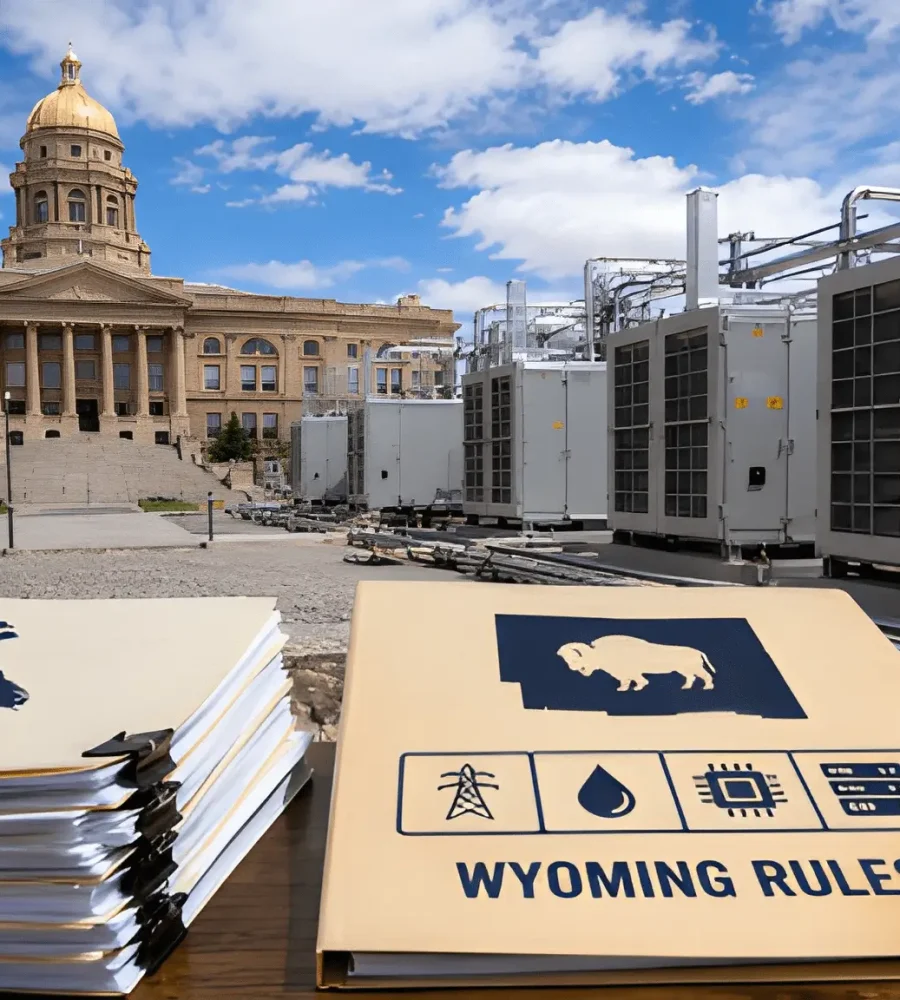
A permitting file once ended when construction approvals arrived and utility agreements cleared review. Water now changes that sequence because regulators increasingly treat consumption, withdrawal, discharge, and watershed exposure as information that carries compliance significance long after a project begins operating. Legal teams that historically focused on land use, environmental permitting, and utility contracts now face a different challenge that sits between hydrology, disclosure law, and risk governance. Reporting obligations increasingly depend on whether water conditions create operational, financial, or regulatory exposure that could affect stakeholders, investors, and public authorities. Several jurisdictions have already moved toward greater transparency requirements while others continue evaluating water reporting frameworks tied to large infrastructure developments. The result is a compliance environment where water data increasingly functions as regulated information rather than a technical operating metric alone.
Pressure behind this shift does not originate from a single statute or regulator. Concerns over drought resilience, watershed stress, infrastructure planning, community transparency, and resource allocation increasingly converge around large digital infrastructure projects that require reliable cooling systems. Several states have increased scrutiny of water-intensive infrastructure developments while policymakers continue evaluating transparency measures, permitting oversight mechanisms, and resource-planning requirements associated with water use. European reporting frameworks already require organizations to evaluate water-related impacts, risks, and opportunities when those issues meet materiality thresholds under sustainability reporting rules. Legal departments therefore face a growing need to understand how water governance requirements emerging from different jurisdictions may interact rather than operate independently. Compliance preparation increasingly begins years before a reporting deadline because data collection systems, legal definitions, and evidentiary standards rarely appear overnight.
The Disclosure Domino: States Triggering First-Mover Water Laws
Water governance for data centers increasingly develops through state-level initiatives rather than a single national framework. Legislators in several jurisdictions have examined measures related to transparency, infrastructure impacts, water-use oversight, resource planning, and environmental accountability associated with large digital infrastructure developments. Those efforts vary substantially because each state approaches water management through different legal doctrines, resource constraints, and administrative structures. Some proposals focus on public disclosure while others emphasize metering requirements, permit oversight, or infrastructure accountability mechanisms. Legal teams therefore cannot assume that one reporting framework will satisfy every jurisdiction where operations occur. Compliance planning increasingly requires a jurisdiction-by-jurisdiction review of emerging legislative activity before formal reporting obligations become effective.
The European regulatory environment follows a different path because disclosure requirements emerge through structured sustainability reporting standards rather than separate state-level legislative initiatives. Organizations subject to European Sustainability Reporting Standards must evaluate water-related impacts, risks, and opportunities when those matters are material to business performance or stakeholder interests. Reporting expectations increasingly connect operational activities to geographic water conditions, risk exposure, management actions, and measurable targets. Water therefore enters corporate disclosure through a broader sustainability governance framework instead of isolated infrastructure legislation. Legal practitioners operating across both regions must reconcile different reporting philosophies while preserving consistency in disclosed information. That challenge becomes more complex when reporting calendars, thresholds, and definitions differ across jurisdictions.
Staggered implementation schedules create an additional layer of compliance complexity. A legal team may confront disclosure obligations in one jurisdiction while another state still operates under consultation, rulemaking, or legislative review. Reporting systems therefore must function before every jurisdiction reaches the same regulatory maturity level. Internal governance structures often struggle with that reality because they were designed around centralized environmental reporting rather than fragmented regional requirements. Disclosure controls become difficult to maintain when reporting definitions change across locations sharing the same operating model. Organizations often benefit from establishing foundational documentation and governance controls before regulatory requirements become fully standardized across jurisdictions.
Compliance Architecture Must Mature Before Deadlines Arrive
Many compliance programs currently track water consumption primarily for operational efficiency and environmental management purposes. Emerging disclosure requirements demand something different because reported information must withstand legal scrutiny, public review, and regulatory verification. Documentation standards therefore become more rigorous than traditional engineering reporting practices. Legal teams need clear evidentiary trails showing where data originated, how calculations occurred, which assumptions were applied, and who approved final disclosures. Questions regarding watershed exposure, water sourcing, permit conditions, and resource constraints increasingly require formal documentation rather than informal technical explanations. Those expectations push compliance functions toward governance models that resemble financial reporting controls.
Different regulatory models also create different liability profiles. A disclosure regime focused on transparency may emphasize completeness and accuracy of reported information. A permit-linked regime may focus on operational compliance with withdrawal limits, reporting obligations, and resource allocation conditions. Those distinctions matter because enforcement agencies often evaluate reporting failures through the specific statutory framework governing disclosures. Legal teams therefore need to map reporting obligations directly against enforcement authority rather than treating every disclosure requirement as functionally identical. Internal controls should reflect those distinctions because material omissions may carry different consequences depending on the governing statute. Effective preparation begins with understanding how regulators define compliance rather than assuming common standards across jurisdictions.
Regulatory momentum suggests that transparency requirements will continue expanding even where final statutory language remains unsettled. Policymakers increasingly seek clearer visibility into how major infrastructure projects interact with local water systems, drought planning, and resource management frameworks. Water data therefore moves closer to becoming a routine component of infrastructure governance rather than an exceptional disclosure category. Organizations that establish defensible reporting structures early gain flexibility when requirements evolve. Those that delay preparation may face compressed implementation timelines once rules become effective. Compliance readiness increasingly depends on building reporting architecture before regulators require its use.
Liters on the Ledger: What “Material Water Risk” Actually Means in Filings
Material water risk no longer refers solely to physical water availability. Emerging disclosure frameworks increasingly examine how water conditions create operational, financial, legal, strategic, and reputational consequences that could influence stakeholder decision making. Drought restrictions, watershed stress, permit uncertainty, allocation constraints, infrastructure limitations, and community opposition can all become relevant when assessing disclosure obligations. The analysis therefore extends beyond engineering performance into risk governance and legal reporting. Organizations must determine whether water-related conditions could affect operations, investment decisions, expansion plans, or regulatory outcomes. Materiality increasingly depends on exposure and consequence rather than simple consumption volume.
European reporting requirements provide insight into how regulators increasingly approach water materiality. ESRS E3 requires organizations to evaluate water-related impacts, risks, and opportunities while considering geographic context and areas experiencing water stress. Reporting expectations increasingly connect operational activities to location-specific conditions rather than relying exclusively on aggregate consumption figures. A site operating within a constrained watershed may therefore attract greater disclosure attention than a comparable site located in an area with different hydrological conditions. Materiality assessments increasingly require geographic analysis alongside operational data. Legal teams consequently need stronger integration with environmental and hydrological expertise.
Financial implications further expand the scope of water-related materiality. Resource constraints can influence expansion schedules, permitting outcomes, infrastructure investments, operational continuity, and stakeholder relationships. Disclosure frameworks increasingly focus on whether those conditions create identifiable business risks rather than merely documenting environmental performance. Water therefore enters governance discussions traditionally dominated by financial, legal, and operational considerations. Internal reporting structures must evolve accordingly because risk assessments require information from multiple disciplines. Organizations that isolate water management within environmental functions may struggle to produce defensible materiality analyses.
Watershed Stress Is Becoming a Reportable Risk Category
Materiality assessments increasingly require examination of watershed conditions surrounding operational locations. Regulators and reporting frameworks increasingly recognize that water availability depends on local hydrological realities rather than national averages. A disclosure therefore gains relevance when water stress, allocation constraints, competing demand, or drought vulnerability create identifiable operational exposure. Legal teams must understand those conditions because regulators increasingly expect location-specific analysis. Generic sustainability narratives rarely satisfy requirements built around demonstrable risk assessment. Reporting quality increasingly depends on geographic precision and defensible supporting evidence.
Hydrological risk assessment also introduces new documentation requirements. Legal reviewers increasingly need evidence supporting statements regarding water availability, watershed resilience, allocation assumptions, and resource planning. Engineering teams may possess much of that information, but disclosure obligations require translating technical findings into legally defensible narratives. Materiality determinations therefore depend on documentation standards that extend beyond operational monitoring. Internal reviews must establish how assumptions were developed, validated, and approved before disclosure. That process often reveals governance gaps that traditional environmental reporting never exposed.
The next phase of compliance evolution will likely place greater emphasis on forward-looking risk evaluation. Regulators increasingly seek evidence that organizations understand not only current water conditions but also foreseeable constraints that could affect future operations. Material water risk therefore becomes a dynamic assessment rather than a static disclosure exercise. Legal teams must prepare for reporting environments where watershed conditions, allocation policies, and drought planning influence disclosure obligations. Those developments move water governance closer to mainstream risk management practice. Reporting requirements increasingly ask not only how much water is used, but also how secure access remains under changing conditions.
The Language Gap: Translating Hydrology Into Legal Disclosure
Hydrological assessments often describe watershed dynamics, recharge rates, consumptive use patterns, return flows, seasonal variability, and basin-level stress conditions through scientific terminology that serves technical analysis rather than regulatory disclosure. Legal reporting frameworks require a different outcome because statutes, reporting standards, and administrative rules depend on clearly defined terms that regulators can interpret consistently across reporting entities. That distinction creates significant challenges when environmental specialists and legal professionals rely on different vocabularies to describe the same operational reality. A technical report may accurately characterize a water system while still failing to satisfy disclosure requirements because the terminology does not align with statutory definitions. Legal teams increasingly need structured translation mechanisms that convert scientific findings into language suitable for regulatory review and public disclosure. Compliance risk therefore emerges not only from inaccurate data but also from inconsistent interpretation of technically correct information.
Draft reporting initiatives and sustainability disclosure frameworks increasingly distinguish between water withdrawal, water consumption, water discharge, and water dependency because each concept addresses a different regulatory concern. Hydrologists may use those terms within broader watershed analyses, yet disclosure obligations often require them to be reported through specific legal definitions that cannot vary between reporting periods. Consistency becomes critical because regulators evaluate filings based on repeatable standards rather than project-specific interpretations. Variations in terminology can create discrepancies between permit applications, environmental assessments, sustainability reports, and formal disclosures even when underlying operational practices remain unchanged. Regulatory scrutiny frequently increases when different documents describe the same activity through conflicting language. Legal departments therefore need controlled definitions that govern how water-related information appears across all reporting channels.
The challenge becomes more pronounced when water conditions intersect with concepts such as scarcity, stress, resilience, availability, sustainability, or long-term resource adequacy. Scientific disciplines often define those terms through methodologies that differ from the legal thresholds used within disclosure frameworks. Attorneys cannot simply adopt engineering terminology without assessing whether the language accurately reflects applicable reporting obligations. Disclosure narratives must remain technically defensible while also satisfying statutory interpretation standards that regulators may later apply during reviews or investigations. That balancing exercise increasingly requires collaboration between hydrological experts, compliance personnel, and legal counsel before reporting periods begin. Organizations that establish common terminology frameworks early often reduce interpretive disputes once disclosure obligations become enforceable.
Building Defensible Interpretive Frameworks Before Reporting Cycles Begin
Many organizations possess extensive operational data regarding water sourcing, cooling systems, discharge management, and infrastructure performance, yet those datasets rarely arrive structured for legal disclosure. Regulatory reporting requires documented methodologies explaining how information was collected, validated, categorized, retained, and ultimately disclosed. Engineering teams generally prioritize operational accuracy while legal teams focus on consistency, materiality, evidentiary support, and regulatory defensibility. Those objectives overlap but they do not always produce identical reporting outcomes. A technically accurate operational statement may require additional contextual explanation before appearing within a filing subject to regulatory review. Compliance preparation therefore increasingly involves constructing interpretive frameworks that establish how technical information transitions into legally reportable information.
Many organizations use interpretive memoranda as a governance mechanism to document the rationale behind key reporting decisions before disclosure obligations arise. These records can explain why specific definitions were selected, how materiality determinations occurred, which hydrological methodologies informed analysis, and how conflicting interpretations were resolved. Internal consistency becomes easier to maintain when future reporting teams can reference established reasoning rather than reconstructing prior decisions. Regulatory reviews frequently focus on process as much as outcome because authorities often seek evidence demonstrating that disclosures resulted from structured decision-making rather than ad hoc judgment. Documentation therefore serves both governance and defensibility objectives. Organizations that create detailed interpretive records strengthen their ability to respond to future regulatory inquiries and disclosure challenges.
The evolution of water disclosure requirements suggests that terminology disputes will become more significant rather than less significant over time. Reporting frameworks continue expanding their emphasis on context-specific water conditions, geographic exposure, resource dependencies, and risk-based assessments. Each development increases the importance of precise language because disclosure quality increasingly depends on how information is characterized rather than simply whether it is reported. Legal teams must therefore invest in translation capabilities that connect hydrological science with regulatory expectations. Successful compliance programs will likely treat terminology governance as a core reporting function rather than an administrative detail. The organizations best positioned for future disclosure obligations will be those that can explain complex water realities through language regulators can consistently interpret and verify.
Watershed Jurisdictions Redrawing Your Reporting Map
Environmental reporting traditionally relied on geographic identifiers such as street addresses, municipal boundaries, permitting districts, and administrative jurisdictions because those markers aligned with conventional regulatory oversight. Water governance increasingly challenges that model because hydrological systems operate according to basin structures that rarely correspond with political boundaries. A single operational campus may draw water from one watershed, discharge into another, and remain subject to resource management decisions originating from multiple authorities. Reporting obligations therefore become more complex when regulators evaluate water impacts through hydrological relationships rather than administrative convenience. Legal teams cannot assume that a facility location alone determines the scope of water-related disclosures. Compliance analysis increasingly begins with understanding how a site interacts with the broader watershed system surrounding it.
This shift reflects a broader regulatory recognition that water availability, stress conditions, allocation pressures, and ecological impacts emerge at basin level rather than property level. Reporting frameworks increasingly emphasize contextual analysis because identical water consumption patterns may create different consequences depending on local hydrological conditions. A disclosure that ignores watershed context may therefore fail to capture relevant risks or impacts even when operational data remains accurate. Regulators increasingly seek information regarding the relationship between resource use and surrounding water conditions. Geographic context consequently becomes a critical component of disclosure quality. Organizations must develop reporting systems capable of linking operational activity to basin-level realities rather than relying exclusively on site-based metrics.
Hydrological reporting boundaries also create challenges for governance structures built around traditional jurisdictional models. Environmental, legal, operational, and compliance teams often organize responsibilities according to administrative regions that may not align with watershed configurations. Data collection systems frequently mirror those same organizational structures. When disclosure obligations begin emphasizing basin-level analysis, information may need to be aggregated, validated, and interpreted across boundaries that existing governance processes never anticipated. Organizations therefore face a structural challenge rather than a simple reporting adjustment. Effective compliance increasingly depends on mapping water relationships that extend beyond conventional administrative frameworks.
Multi-Agency Oversight Is Expanding the Scope of Water Reporting
Watershed-based oversight often introduces multiple regulatory stakeholders into a single reporting process. Resource management authorities, environmental regulators, permitting bodies, water planning agencies, and disclosure oversight functions may each evaluate different aspects of the same operational activity. Their responsibilities frequently overlap because water governance increasingly incorporates resource availability, environmental protection, infrastructure planning, and transparency objectives simultaneously. Compliance obligations therefore become more interconnected than many organizations initially expect. A reporting issue identified by one authority can influence reviews conducted by another authority examining the same underlying information. Legal teams must understand those interdependencies before filing cycles begin.
The expansion of oversight responsibilities increases the importance of data consistency across reporting channels. Information submitted through permits, environmental disclosures, sustainability reports, public consultations, and regulatory filings must align because inconsistencies can trigger questions regarding accuracy or governance controls. Regulators increasingly possess greater ability to compare information across reporting systems than in previous reporting environments. That capability raises the significance of internal coordination because discrepancies that once remained isolated may now become visible during routine reviews. Compliance programs therefore require stronger integration between technical, operational, environmental, and legal functions. Consistency has become a governance requirement rather than a reporting preference.
Future reporting obligations will likely continue moving toward watershed-informed governance models because water risk increasingly depends on geographic context rather than administrative boundaries alone. Regulatory frameworks already emphasize contextual assessment in several reporting environments, and that direction aligns with broader resource-management objectives. Organizations that continue evaluating water exclusively through site-level perspectives may overlook disclosure issues emerging elsewhere within the basin. Legal teams therefore need reporting maps that capture hydrological relationships alongside conventional jurisdictional responsibilities. The next generation of compliance planning will likely treat watershed analysis as a foundational reporting activity rather than a specialized environmental exercise. Understanding where water comes from, where it goes, and who governs those pathways increasingly shapes disclosure obligations across multiple jurisdictions.
Permit Penalties With Teeth: Civil Fines, Curtailment, and License Holds
Water disclosure obligations increasingly attract attention because regulators are moving beyond voluntary transparency concepts and toward enforceable reporting expectations. Environmental compliance frameworks have historically relied on reporting requirements to support permitting decisions, oversight activities, and enforcement actions, and water governance is gradually following a similar path. Regulators often view reporting accuracy as essential because resource allocation decisions depend on reliable information regarding usage patterns, sourcing arrangements, discharge practices, and operational impacts. A reporting system loses effectiveness when disclosed information cannot be trusted or independently verified. Legal obligations therefore extend beyond submitting reports on time and increasingly encompass data integrity, methodological consistency, and documentation quality. Compliance programs that underestimate the enforcement dimension of disclosure requirements may overlook risks that emerge long before a substantive operational violation occurs.
Civil penalties remain among the most common enforcement tools because they provide regulators with a mechanism to address reporting failures without immediately disrupting operations. Environmental statutes frequently authorize penalties for incomplete submissions, inaccurate disclosures, recordkeeping deficiencies, and failures to meet reporting deadlines. Established environmental reporting programs provide enforcement models that future water-related disclosure frameworks may draw upon because regulators already possess experience applying those concepts across other environmental domains. The objective extends beyond punishment because penalties also encourage timely reporting and consistent compliance behavior. Legal teams therefore need to evaluate disclosure obligations with the same rigor applied to permit conditions and regulatory filings. Reporting failures often attract scrutiny precisely because authorities view them as indicators of broader governance weaknesses.
Documentation quality plays a decisive role when regulators assess whether reporting obligations have been satisfied. Authorities generally examine how information was collected, verified, reviewed, approved, and retained before evaluating the content of a disclosure itself. Weak governance controls can complicate regulatory reviews even when underlying operational practices remain compliant. Organizations therefore benefit from establishing clear evidentiary standards before disclosure requirements mature into enforcement priorities. Internal audits, validation procedures, record retention policies, and review protocols increasingly serve as compliance safeguards rather than administrative exercises. Effective reporting programs recognize that enforcement exposure often originates from governance failures rather than technical water-management shortcomings alone.
Operational Consequences May Extend Beyond Monetary Penalties
Financial penalties represent only one category of enforcement risk associated with emerging water disclosure obligations. Regulatory frameworks sometimes authorize permit modifications, corrective action requirements, enhanced monitoring obligations, or administrative restrictions when reporting deficiencies undermine confidence in disclosed information. Those mechanisms allow authorities to increase oversight while they evaluate whether additional compliance concerns exist. Legal teams should therefore assess reporting obligations through a broader operational lens rather than focusing exclusively on monetary exposure. Regulatory confidence often influences permitting relationships and future review processes. Organizations that establish strong reporting credibility generally enter regulatory discussions from a more favorable position.
Permit-related consequences can become particularly significant when water access forms a critical operational dependency. Resource management authorities frequently rely on reported information when evaluating allocation decisions, permit renewals, infrastructure planning, and long-term resource management strategies. Questions regarding reporting accuracy may therefore affect administrative processes extending beyond the disclosure itself. Regulatory agencies often seek assurance that water-related decisions rest on reliable information and defensible methodologies. Governance failures that compromise confidence in reported data can create complications across multiple compliance activities. Strong disclosure controls help preserve both regulatory trust and operational flexibility.
Enforcement trends suggest that water reporting will increasingly be treated as a core compliance obligation rather than a secondary sustainability exercise. Regulatory attention continues expanding as policymakers examine water availability, resource resilience, infrastructure planning, and watershed management challenges. Reporting requirements provide authorities with information needed to evaluate those issues, which increases the importance of accurate and timely disclosures. Legal departments should therefore expect scrutiny levels comparable to other established environmental reporting programs as requirements evolve. Preparing for that environment requires disciplined governance, documented methodologies, and clear accountability structures. The most effective compliance strategies view disclosure obligations as enforceable regulatory commitments rather than informational submissions.
Public Dockets, Private Risk: Competitor and Activist Use of Your Water Data
Water disclosure obligations increasingly place operational information into public channels where a wide range of stakeholders can review, analyze, and interpret reported data. Public records laws, environmental disclosure systems, permitting processes, and sustainability reporting frameworks already provide mechanisms through which water-related information can become accessible outside regulatory agencies. As reporting requirements expand, organizations face a new reality in which disclosed information may attract attention from community groups, researchers, investors, competitors, and advocacy organizations simultaneously. The issue extends beyond regulatory compliance because public disclosure changes how operational decisions are perceived and evaluated. Information originally collected for compliance purposes can quickly become part of broader debates regarding infrastructure development, resource allocation, and environmental stewardship. Legal teams must therefore consider how disclosures may be interpreted once they enter the public domain.
Public scrutiny often focuses on context rather than raw operational figures. Stakeholders increasingly evaluate disclosed water information alongside regional drought conditions, watershed stress indicators, infrastructure planning discussions, and local resource-management concerns. A disclosure that appears straightforward within a compliance framework may generate broader questions when examined through community or environmental perspectives. Public audiences rarely review filings through the same lens used by regulatory specialists. Organizations therefore need communication strategies capable of explaining water-related information accurately and consistently across multiple stakeholder groups. Transparency requirements create an environment where disclosure quality depends not only on technical accuracy but also on contextual clarity.
Disclosure visibility also increases the likelihood that external parties will compare information across jurisdictions, reporting periods, and operational locations. Publicly available records make it easier to identify apparent inconsistencies, changes in methodology, or differences between separate reporting channels. Some discrepancies may reflect legitimate operational or regulatory distinctions, yet external reviewers may interpret them differently without additional context. Legal departments therefore need governance processes that promote consistency across disclosures while documenting the rationale behind reporting decisions. Internal alignment becomes increasingly important when multiple audiences possess access to the same information. Transparency transforms reporting from a regulator-facing activity into a broader reputational consideration.
Water Data Is Becoming a Strategic Intelligence Resource
Public disclosures can reveal operational patterns that extend beyond environmental reporting objectives. Water sourcing approaches, infrastructure dependencies, watershed exposure, resource constraints, and long-term planning assumptions may become more visible when reporting frameworks require greater transparency. Competitors often examine publicly available information to better understand market conditions, infrastructure availability, and regulatory environments. Water disclosures therefore contribute to a growing body of intelligence that external parties can use to assess development opportunities and operational risks. The issue does not necessarily involve confidential information because even publicly disclosed data can generate valuable insights when analyzed systematically. Organizations should evaluate disclosure governance with that reality in mind.
Advocacy organizations increasingly rely on disclosed environmental information to support policy analysis, community engagement, and regulatory participation. Water-related disclosures may therefore become part of broader discussions regarding growth management, watershed protection, resource allocation priorities, and infrastructure planning. Public participation mechanisms often encourage stakeholders to review and comment on information submitted through permitting and disclosure processes. Organizations should expect greater scrutiny where water availability remains a prominent public concern. Clear documentation and consistent reporting practices help reduce misunderstandings that may arise during those discussions. Effective governance strengthens credibility when disclosures become part of public policy debates.
Investor and sustainability assessment frameworks increasingly evaluate water-related risk as part of broader governance and resilience considerations. Public disclosures therefore influence audiences that extend well beyond environmental regulators and local stakeholders. Reporting quality, methodological consistency, and transparency regarding risk management practices often shape how external observers assess organizational preparedness. Legal teams should recognize that water disclosures increasingly function as signals regarding governance maturity and risk oversight capabilities. Information released for compliance purposes may ultimately influence perceptions across several stakeholder categories. The growing visibility of water-related reporting ensures that disclosure strategy now occupies a central role within broader compliance planning.
The Reporting Talent Gap: Why Legal Can’t Do This Alone
Water disclosure obligations increasingly demand expertise that extends beyond the traditional boundaries of legal compliance functions. Regulatory reporting now requires an understanding of hydrology, watershed management, environmental data governance, resource allocation frameworks, permitting conditions, and disclosure controls operating within a single compliance process. Legal professionals remain essential because statutes, reporting obligations, evidentiary standards, and regulatory interpretations determine how disclosures ultimately appear in filings. Technical specialists, however, generate much of the underlying information that supports those disclosures. A reporting framework becomes difficult to defend when legal teams lack visibility into technical assumptions or when technical teams fail to understand regulatory requirements. Effective compliance therefore depends on structured collaboration across disciplines that historically operated through separate governance channels.
Hydrology specialists can play an important role because many disclosure frameworks place emphasis on watershed context, resource dependencies, water stress conditions, and location-specific exposure assessments. Those professionals help organizations understand how local hydrological realities influence operational risk and disclosure obligations. Their analyses often provide the foundation for materiality assessments, resource planning discussions, and risk evaluations that later appear within regulatory filings. Legal teams need access to that expertise because reporting obligations increasingly require context rather than isolated operational data. A withdrawal figure alone rarely explains whether a disclosure carries regulatory significance. Watershed conditions frequently determine how regulators and stakeholders interpret reported information.
Environmental compliance engineers contribute another critical capability because they understand how operational systems generate the data that disclosure frameworks require. Reporting quality depends heavily on measurement methodologies, monitoring systems, data validation processes, and documentation controls established at operational level. Regulators increasingly expect organizations to demonstrate how reported information was produced rather than simply presenting final results. Engineers therefore help bridge the gap between operational performance and disclosure reliability. Their involvement strengthens evidentiary support while reducing the likelihood of inconsistencies across reporting channels. Compliance programs increasingly require technical governance capabilities that traditional legal structures alone cannot provide.
Data Lineage Is Emerging as a Core Compliance Function
Water reporting obligations increasingly resemble other mature disclosure systems where regulators expect traceability from source data through final reported outputs. Data lineage specialists help establish those connections by documenting how information moves across collection platforms, validation processes, reporting systems, review stages, and disclosure workflows. Their work provides visibility into data quality controls and supports the defensibility of reported information. Regulatory scrutiny often intensifies when organizations cannot explain how key figures were generated or verified. Traceability therefore becomes an important compliance capability rather than a purely technical exercise. Strong lineage controls support both reporting accuracy and regulatory confidence.
The growing complexity of water disclosure requirements also increases demand for professionals capable of integrating legal, technical, environmental, and operational perspectives into a single governance framework. Organizations frequently possess each component individually, yet reporting obligations require those components to operate as an integrated system. Cross-functional coordination becomes particularly important when disclosures involve materiality assessments, watershed analyses, forward-looking risk evaluations, or location-specific resource constraints. Governance failures often occur at the boundaries between disciplines rather than within a single function. Effective reporting teams therefore focus on information flow, accountability structures, and decision-making processes in addition to technical expertise. Compliance success increasingly depends on integration rather than specialization alone.
The reporting talent gap will likely remain a significant challenge as disclosure requirements continue evolving. Water governance frameworks increasingly demand skills that many organizations have not historically developed within compliance programs. Organizations expanding water-related reporting programs may require greater access to hydrological expertise, environmental reporting specialists, data governance professionals, and regulatory analysts. Legal departments should therefore evaluate capability requirements well before filing deadlines arrive. Building internal expertise often requires time because effective reporting depends on both technical knowledge and institutional understanding. Organizations that begin developing multidisciplinary reporting capabilities early will likely adapt more effectively as water disclosure obligations mature.
Beyond 2027: Disclosure Is the Floor, Allocation Caps Are the Ceiling
Disclosure requirements often provide regulators with information used to evaluate resource-management conditions, infrastructure planning needs, and future policy considerations. Reporting requirements help regulators understand resource usage patterns, identify areas of potential stress, evaluate infrastructure needs, and assess long-term resource planning challenges. Those insights often inform subsequent policy discussions regarding allocation frameworks, resource management strategies, and permitting approaches. Water disclosure therefore serves as an information-generating mechanism that supports future regulatory decision-making. The quality and consistency of reported information may influence how authorities evaluate emerging policy options. Compliance teams should recognize that today’s reporting obligations may shape tomorrow’s regulatory environment.
Resource-management authorities increasingly face pressure to balance economic development, population growth, environmental protection, infrastructure resilience, and long-term water availability within the same planning frameworks. Disclosure systems help support those objectives by providing greater visibility into how different users interact with water resources. Policymakers often require reliable information before considering allocation reforms, permitting changes, or resource-management adjustments. Reporting obligations therefore contribute to a broader governance infrastructure that extends beyond compliance administration. Water data increasingly influences strategic planning discussions occurring across multiple regulatory domains. The expansion of disclosure requirements reflects that growing policy significance.
Governance discussions in water-constrained regions frequently examine how water-use information relates to allocation decisions, drought planning measures, resource-prioritization frameworks, and watershed-resilience strategies. Different jurisdictions will likely pursue different approaches because water-management systems vary significantly across legal and hydrological contexts. Some regions may emphasize planning mechanisms while others focus on permitting controls, infrastructure investments, or resource-allocation policies. Disclosure obligations provide a common informational foundation regardless of which policy path ultimately emerges. Organizations should therefore treat reporting quality as a strategic compliance issue rather than a narrow administrative requirement. Reliable disclosures position organizations to engage more effectively within future regulatory conversations.
The Next Regulatory Debate Will Focus on Access Rather Than Transparency
Transparency initiatives primarily address what regulators and stakeholders know about water use. Water-management policy discussions often address how water access can be managed under conditions of competing demand, infrastructure constraints, and resource pressures. Disclosure frameworks create visibility into those challenges, which naturally leads policymakers toward broader questions regarding allocation and long-term resource governance. Regulatory attention may therefore expand from reporting obligations toward decisions affecting future development patterns and resource availability. Water governance often evolves through that sequence because information precedes intervention. The collection of reliable data frequently becomes a prerequisite for more substantive policy action.
Discussions regarding allocation mechanisms, watershed planning strategies, demand-management approaches, and resource resilience frameworks are already occurring in many jurisdictions confronting long-term water challenges. The specific outcomes of those discussions remain uncertain because legal structures, hydrological conditions, and policy priorities differ substantially across regions. One consistent trend nevertheless remains visible. Regulators increasingly seek better information regarding how major infrastructure developments interact with local water systems. Disclosure requirements provide information that supports accountability, transparency, and regulatory evaluation of water-use conditions. Compliance obligations therefore represent an early stage within a much broader governance transformation.
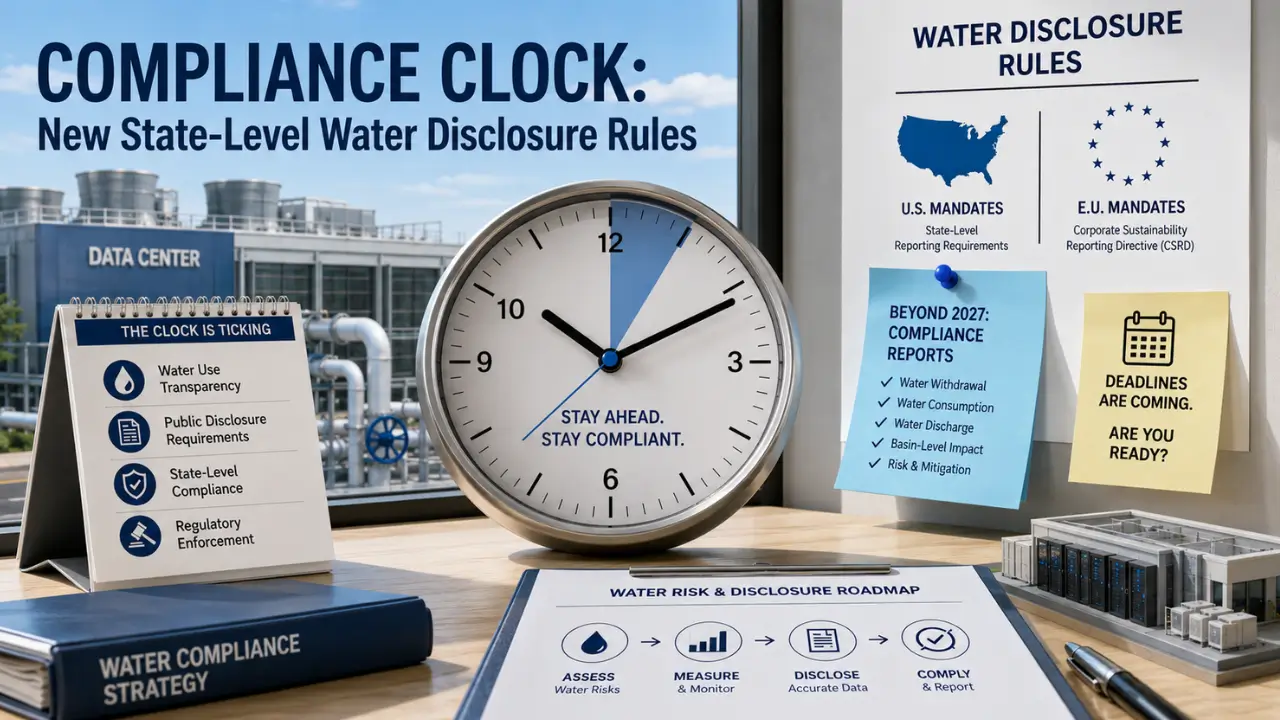
The compliance clock associated with emerging water disclosure obligations should not be viewed solely through the lens of reporting deadlines. Organizations that focus exclusively on filing requirements risk overlooking the larger regulatory trajectory shaping water governance across multiple jurisdictions. Water increasingly occupies a position alongside energy, environmental performance, and infrastructure resilience within strategic regulatory discussions. Legal teams, technical specialists, compliance professionals, and governance leaders must therefore prepare for an environment where water-related information carries growing regulatory significance. Disclosure remains the immediate requirement because regulators need visibility before they can evaluate broader policy responses. The next chapter of water governance will likely depend on the information collected during the reporting era that now begins to take shape.