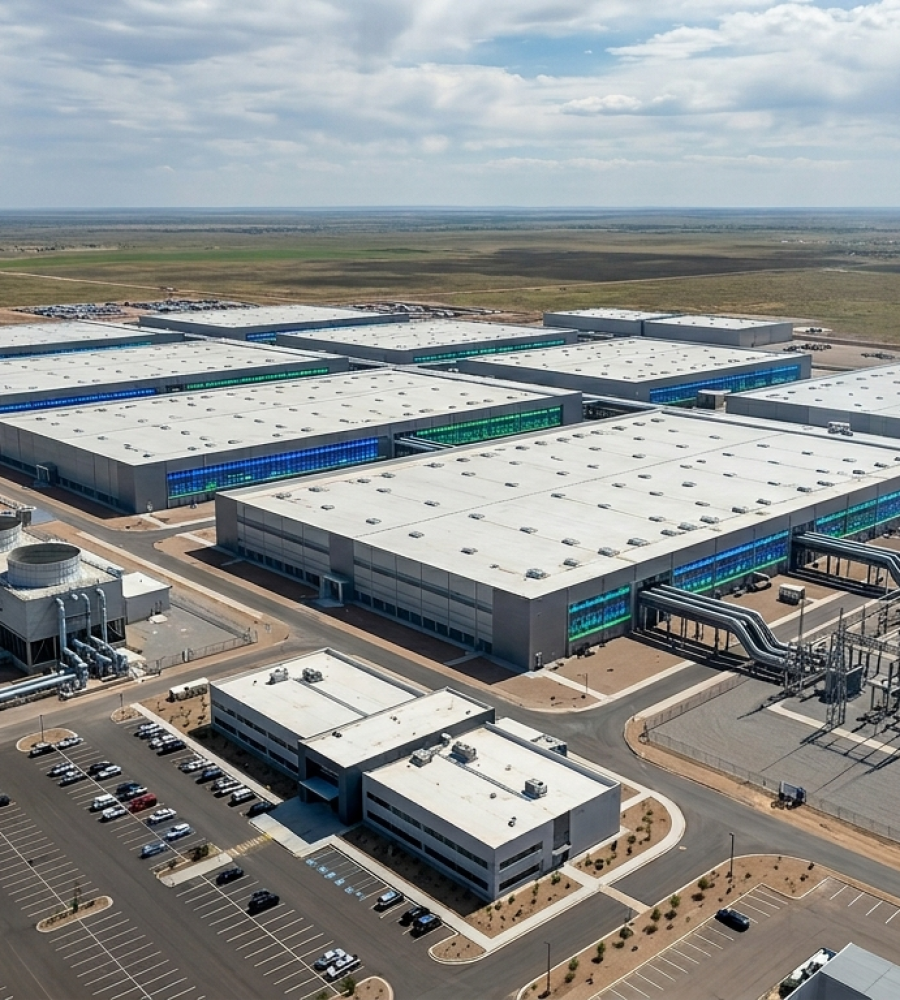

A surprising number of AI infrastructure decisions still begin with land, tax incentives, fiber routes, and power capacity. Those variables remain important, yet they no longer explain whether a training cluster will become operational when planned or whether it will sustain continuous execution once energized. Transmission reliability increasingly influences the practical value of available capacity because power system performance affects when and how electricity can be delivered to large loads under real operating conditions. Boards evaluating large-scale AI investments therefore face a question that rarely appeared in earlier generations of digital infrastructure planning. The question is not simply whether power exists, but whether the transmission network can deliver it predictably under stressed operating conditions.
The shift emerges from the growing concentration of computational demand behind a relatively small number of transmission delivery points. Modern AI environments can consume substantial amounts of electricity while requiring predictable operating conditions across extended training windows. Interruptions that once represented manageable operational events can now influence model schedules, hardware utilization, and deployment sequencing. Power infrastructure has become a more prominent consideration in deployment planning as large AI workloads increase dependence on timely and reliable power delivery. Transmission performance therefore enters discussions that traditionally focused on compute architecture and software optimization.
Capacity considerations often receive significant attention during site selection, although transmission reliability can also influence long-term operational outcomes. That approach overlooks the reality that a 230kV interconnection represents a connection into a dynamic network governed by contingency planning, congestion management, voltage control practices, maintenance schedules, operating limits, and regional reliability standards. Every one of those elements can influence the operational experience of an AI campus after construction concludes. Siting decisions therefore require a deeper examination of transmission behavior than the traditional review of available megawatts and projected energization dates. Reliability characteristics often become visible only after detailed engineering and utility engagement begin.
230kV Interconnection Terms and AI Training Schedule Risk
Transmission interconnection agreements often receive attention during legal review, yet their operational implications frequently extend far beyond contract execution. Every milestone embedded within an interconnection process influences the timing of power availability, and power availability ultimately determines when training environments can begin operating at scale. A project may complete site preparation, electrical design, and hardware procurement while still remaining dependent on transmission milestones controlled by external parties. The resulting schedule dependency can create significant planning uncertainty when compute deployment timelines assume a fixed energization date. Delays rarely emerge from a single event because transmission projects involve multiple engineering, construction, approval, and commissioning stages. AI infrastructure planners therefore benefit from understanding the transmission schedule with the same level of rigor applied to hardware deployment planning.
Interconnection processes increasingly rely on structured study frameworks that evaluate the network impacts of new connections before construction authorization progresses. Those studies determine whether additional transmission upgrades, protection modifications, transformer additions, or substation changes become necessary before service can commence. Required upgrades may appear technically straightforward while still introducing lengthy sequencing dependencies across multiple stakeholders. A project that expects power delivery within a certain planning window can therefore encounter delays unrelated to its own execution performance. Schedule discipline inside the AI program cannot eliminate delays originating from transmission readiness requirements.
Curtailment provisions can create operational exposure depending on transmission service arrangements, contractual terms, and regional operating rules, making detailed review important before final investment decisions occur. Transmission providers often retain operational authority to protect system reliability during specific conditions affecting network security or stability. Such provisions may seem remote during site selection discussions because they address abnormal operating scenarios rather than routine service delivery. Their significance changes when AI workloads rely on sustained compute availability across extended training periods. Temporary limitations on power delivery can affect operations whose performance depends on sustained access to electrical capacity.
Energization Milestones and Capacity Rollout Timing
Energization represents one of the most misunderstood milestones in large-scale AI infrastructure development. Many project schedules treat energization as a single event, yet utilities typically view it as a sequence of engineering, testing, protection validation, switching coordination, and operational readiness activities. Each stage requires successful completion before the next can proceed. Dependencies often extend beyond the project boundary and into broader transmission construction programs. That reality introduces schedule risk that cannot be mitigated solely through local execution excellence.
Construction readiness does not automatically translate into transmission readiness. A campus may complete electrical infrastructure while awaiting substation modifications, transmission line work, protection system integration, or network upgrades occurring elsewhere on the grid. Delays affecting those activities can shift energization dates despite successful completion of all site-level obligations. Capacity planning models that assume a direct relationship between construction progress and power availability therefore risk overstating deployment certainty. Reliable forecasting requires visibility into the broader transmission execution path rather than the campus construction schedule alone.
Training schedules often depend on synchronized availability of power, networking, cooling infrastructure, and compute hardware. A delay affecting any one of those elements can influence the productivity of the entire deployment. Transmission milestones deserve equal consideration because they represent the final prerequisite for productive operation. Effective planning therefore treats energization sequencing as a core business risk rather than a purely electrical milestone. Organizations that incorporate transmission schedule analysis early typically gain a clearer understanding of realistic deployment timelines.
The practical implication for AI siting decisions is straightforward. Transmission agreements should be reviewed not only for commercial terms but also for operational constraints, milestone dependencies, curtailment language, study requirements, and upgrade obligations. Those details often reveal risks that remain invisible in high-level capacity discussions. Reliability begins long before the first electron reaches a data hall because project schedules themselves depend on transmission execution. A location with slightly lower headline capacity can sometimes offer a more predictable deployment path than a location promising larger future power allocations.
Looking Beyond Available Megawatts
Substation selection often begins with available capacity, transmission proximity, and land development considerations. Those factors matter, yet they do not necessarily indicate how consistently power will remain available under varying system conditions. Reliability assessment requires a broader investigation into operational history, maintenance practices, redundancy design, outage patterns, and utility performance indicators. Many site selection teams evaluate the physical infrastructure while dedicating less attention to the operational environment surrounding that infrastructure. The result can be an incomplete understanding of actual service resilience.
Utilities frequently publish reliability indicators such as SAIDI, SAIFI, and MAIFI to describe customer service performance across portions of their systems. These metrics primarily originate from distribution reliability frameworks rather than transmission-specific reliability analysis. Their value therefore lies in providing contextual insight into utility operating performance rather than direct measurement of 230kV transmission reliability. Careful interpretation remains essential because transmission-connected AI campuses may experience reliability characteristics that differ from distribution-served customers. Site selection teams should understand what these metrics measure before drawing conclusions from them.
Historical outage records, maintenance history, and restoration performance can provide operational information that is not visible through capacity assessments alone. Maintenance strategies, vegetation management practices, restoration performance, weather exposure, protection philosophies, and asset age can all influence reliability outcomes over time. Understanding these factors requires engagement beyond public marketing materials and high-level utility presentations. Technical due diligence becomes especially important when AI workloads depend on continuous availability over long execution windows. Reliability evaluation therefore benefits from a multidisciplinary approach combining electrical engineering, operations analysis, and transmission planning expertise.
Reliability Context at the Delivery Point
A transmission delivery point exists within a larger network whose behavior changes as generation patterns, demand conditions, outages, and maintenance activities evolve. Evaluating a site therefore requires understanding not only the substation itself but also the surrounding transmission topology. Network structure can influence the consequences of equipment outages and operating contingencies. Delivery points that appear similar from a capacity perspective may perform differently during stressed system conditions. Those differences become increasingly relevant as AI infrastructure scales.
Transmission-connected infrastructure benefits from examining contingency performance alongside conventional reliability indicators. N-1 planning standards establish important reliability expectations, yet actual operating conditions can involve more complex combinations of outages and constraints. Network congestion, maintenance activities, severe weather events, and regional disturbances can influence system behavior beyond routine planning assumptions. Reliability analysis therefore requires examining both design standards and operational realities. Effective site selection recognizes the distinction between planned reliability objectives and real-world operating conditions.
The most resilient AI locations often emerge from detailed examination of network characteristics rather than simple capacity rankings. Transmission access, restoration pathways, substation design, operational flexibility, and utility performance collectively influence long-term reliability outcomes. Decisions made before land acquisition can therefore shape operational resilience for many years afterward. Reliability assessment works best when it becomes a primary screening criterion rather than a late-stage validation exercise. That shift helps align infrastructure deployment plans with realistic transmission performance expectations.
N-1 Contingency Planning at Transmission Voltage
N-1 contingency planning remains one of the foundational concepts in transmission system reliability because it requires the grid to continue operating after the loss of a single critical component. Utilities, transmission operators, and reliability coordinators use this framework to evaluate network resilience under a defined set of foreseeable conditions. The approach provides an important baseline for system planning because it helps identify weaknesses before they become operational problems. N-1 compliance is widely used within transmission planning as an important indicator of system reliability performance under single-contingency conditions. That assumption can overlook the distinction between planning criteria and actual operating conditions that emerge during periods of regional stress.
A transmission network rarely experiences stress in a neatly isolated manner. Maintenance outages, equipment failures, severe weather events, generation limitations, and congestion patterns can occur simultaneously across different portions of a region. Operators may therefore manage conditions that extend beyond the assumptions embedded within standard contingency studies. AI training environments connected to a 230kV delivery point remain dependent on how the broader network performs during those periods. Reliability analysis that focuses exclusively on single-contingency scenarios may underestimate operational exposure when multiple constraints interact at the same time.
Large training clusters introduce a different reliability profile than many traditional commercial electrical loads. Compute infrastructure often operates continuously while consuming substantial power across extended periods. Interruptions can affect model development schedules, resource utilization plans, and deployment sequencing in ways that differ from conventional industrial operations. Grid reliability assessments therefore benefit from considering workload characteristics alongside transmission design criteria. N-1 compliance remains valuable, yet it should represent the beginning of reliability evaluation rather than its conclusion.
Regional Stress Scenarios and Multi-Site Dependencies
Regional stress events reveal characteristics of transmission systems that routine operating conditions often conceal. A network may perform exactly as intended during normal conditions while exhibiting different operational behavior when multiple constraints emerge simultaneously. Extreme weather, generation shortfalls, fuel supply disruptions, and transmission outages can alter power flows across large geographic areas. System operators respond through a combination of operational tools designed to preserve grid stability. Those actions can influence large electrical consumers even when their local infrastructure remains physically intact.
Many AI deployment strategies assume that distributing workloads across multiple sites inherently reduces operational risk. Geographic diversification certainly provides benefits, yet correlated transmission exposure can undermine some of those advantages. Separate campuses may depend on common transmission corridors, shared substations, overlapping balancing authorities, or interconnected regional networks. A disturbance affecting one portion of the system can therefore influence several locations simultaneously. Reliability planning requires understanding how transmission dependencies connect sites that appear independent on a map.
Transmission planners increasingly evaluate reliability through broader scenario analysis rather than relying solely on isolated equipment failures. AI infrastructure planning benefits from adopting a similar perspective because workload continuity depends on system behavior across a range of conditions. Assessing transmission diversity, restoration pathways, operator procedures, and regional grid characteristics provides a more complete understanding of risk exposure. Such analysis often reveals vulnerabilities that traditional capacity assessments fail to identify. Strategic siting decisions become stronger when informed by both contingency standards and real-world operational dynamics.
The practical lesson is not that N-1 planning lacks value. The lesson is that AI infrastructure increasingly operates within electrical environments where multiple variables can influence availability at the same time. Reliability therefore depends on how transmission systems perform beyond minimum planning requirements. Organizations that examine only compliance standards may miss important operational realities. Understanding network behavior during stressed conditions provides a more accurate foundation for long-term AI deployment decisions.
Operational Consequences of Grid-Directed Load Reduction
Transmission-connected electrical loads operate within systems that prioritize overall grid reliability during emergency conditions. System operators possess a range of tools designed to maintain frequency, voltage stability, and transmission security when operating margins become constrained. Load reduction programs represent one of those tools because reducing demand can help prevent broader reliability problems from developing. AI campuses connected at transmission voltage therefore exist within an operational framework where grid requirements can occasionally override individual consumption preferences. Understanding that relationship forms an important part of transmission risk evaluation.
Economic dispatch mechanisms determine how generation resources operate across organized electricity markets under normal conditions. Operators seek to balance supply and demand while respecting transmission constraints and maintaining reliability standards. Congestion, generation availability, and changing demand patterns influence dispatch outcomes throughout the operating day. Most of the time these processes remain invisible to end users because they occur within the broader management of the power system. Their effects become more visible when system conditions tighten and reliability concerns begin influencing operational decisions.
Certain large-scale AI training workloads may have operational characteristics that make sustained power availability an important consideration during active training cycles. A manufacturing process may pause certain operations while maintaining others, but AI training workloads frequently depend on sustained computational continuity. Power reductions therefore create operational consequences that extend beyond immediate energy consumption. The interaction between transmission reliability requirements and workload continuity becomes a strategic planning consideration rather than a purely technical concern. Reliability risk assessment must therefore account for both electrical and computational dependencies.
Contractual Exposure During Reliability Events
Transmission service agreements often contain provisions that define operating responsibilities under reliability-related conditions. These provisions may address curtailment procedures, emergency operations, restoration priorities, and system protection requirements. Contract language frequently reflects the reality that transmission operators must preserve reliability across the broader network. Understanding these provisions becomes important because operational obligations can influence how a site experiences grid-directed actions.Operational interpretation of transmission service provisions may benefit from technical review alongside legal review.
Emergency operating procedures vary among regions because each system possesses different resource mixes, transmission structures, and reliability challenges. Operators may implement specific actions designed to address local circumstances while still complying with broader reliability standards. AI infrastructure planners benefit from understanding how those procedures function within the regions under consideration. Historical operating practices can provide insight into how system operators respond when reliability margins narrow. Such analysis helps transform theoretical transmission risk into a more practical operational assessment.
Load reduction exposure should not be evaluated solely as a probability question. The operational consequences associated with an event often matter as much as the likelihood of occurrence. A relatively infrequent reliability action can still create meaningful disruption if it affects a critical training period or deployment milestone. Planning therefore requires examining the relationship between grid operating practices and workload requirements. Effective siting decisions emerge when electrical reliability considerations and computational objectives are evaluated together rather than independently.
The broader implication extends beyond emergency events themselves. Grid-directed operational actions illustrate how transmission-connected AI infrastructure remains linked to the realities of regional power system management. Reliability planning therefore benefits from understanding operator authorities, contractual obligations, and operational procedures before deployment begins. Sites with similar power allocations may present very different operational characteristics during stressed conditions. Those differences can influence long-term infrastructure performance more than headline capacity figures suggest.
Voltage Regulation Events and Large-Scale Synchronous Training
AI infrastructure discussions often focus on power availability while devoting less attention to power quality. Availability determines whether energy reaches a site, but power quality influences how effectively equipment operates once connected to the electrical system. Voltage regulation therefore occupies a critical position between transmission reliability and computational stability. A campus may receive continuous power while still experiencing operating conditions that require electrical systems to absorb fluctuations occurring elsewhere on the network. Understanding that distinction becomes increasingly important as AI clusters grow in scale and density.
Transmission systems continuously balance changing demand patterns, generation output, reactive power requirements, and network operating conditions. Operators rely on voltage control equipment to maintain acceptable system performance across a broad geographic area. Transformers equipped with on-load tap changers, capacitor banks, reactors, static reactive resources, and generation assets all contribute to voltage management. These actions support reliability objectives at the transmission level while influencing electrical conditions experienced downstream. AI campuses connected through multiple transformation stages therefore operate within an environment where voltage regulation activities occur routinely.
Many transmission-level voltage events remain well within established operating limits. Their significance lies not in representing reliability failures but in demonstrating the dynamic nature of large interconnected power systems. Electrical infrastructure inside AI campuses must therefore accommodate changing conditions while maintaining stable delivery to compute equipment. Engineering teams often focus on the ability to survive severe disturbances, yet repeated smaller variations can also influence long-term operational behavior. Reliability planning benefits from considering how transmission system dynamics propagate through the electrical architecture supporting AI workloads.
Synchronous Training and Electrical Stability Dependencies
Large-scale synchronous training environments depend on coordination across thousands of computational elements operating simultaneously. Hardware, networking, storage systems, cooling infrastructure, and power systems all contribute to the stability required for sustained execution. Electrical disturbances do not necessarily produce immediate outages to create operational consequences. Changes in operating conditions can influence supporting infrastructure that ultimately affects workload continuity. Power quality considerations can form part of site selection and infrastructure design because electrical performance characteristics influence the operating environment of connected equipment.
Voltage regulation events illustrate the broader reality that transmission reliability encompasses more than binary concepts of power on and power off. Electrical systems continuously adapt to changing operating conditions across the grid. AI campuses inherit the effects of those adjustments through the transmission and distribution infrastructure connecting them to generation resources. Effective design therefore requires understanding not only capacity requirements but also the characteristics of the electrical environment delivering that capacity. Power system behavior becomes part of the operational context in which AI workloads execute.
Site evaluation increasingly benefits from examining voltage performance characteristics alongside traditional reliability metrics. Historical operating experience, transmission topology, reactive power resources, and utility operating practices can all influence local electrical conditions. These factors may not appear in high-level development discussions despite their relevance to long-term operational stability. AI infrastructure planners therefore gain value from engaging power system expertise early in the siting process. Such engagement helps identify considerations that become difficult and expensive to address after deployment begins.
The strategic takeaway extends beyond individual voltage events. Transmission-connected AI infrastructure operates within a living electrical system that continually balances competing operational requirements. Reliability planning therefore benefits from understanding how routine grid management activities influence local operating conditions. Power quality assessment should sit alongside capacity planning rather than follow it as a secondary consideration. That perspective aligns infrastructure design more closely with the realities of large-scale power system operation.
Transmission Corridor Diversity in AI Footprint Design
Geographic separation often creates an impression of infrastructure diversity. Two AI campuses may reside in different counties, states, or market regions while appearing independent from an operational perspective. A deeper review of transmission topology can reveal a different reality. Multiple sites may ultimately depend on common high-voltage corridors, shared substations, overlapping transmission rights-of-way, or interconnected network elements. Physical distance alone therefore does not guarantee electrical independence.
Transmission corridors function as critical pathways that move electricity across large regions. Their importance extends beyond individual customers because they often support numerous substations, generation resources, and load centers simultaneously. Outages affecting a major corridor can therefore influence a broad collection of connected assets. AI infrastructure planners evaluating multi-site deployment strategies benefit from understanding how transmission pathways connect their locations. Network relationships that remain invisible in conventional site comparisons can become significant during reliability events.
Common-mode failure risk deserves particular attention when assessing transmission diversity. Multiple sites may appear resilient because each possesses separate local infrastructure, yet a shared upstream dependency can introduce correlated exposure. Transmission line outages, substation disruptions, protection system issues, severe weather impacts, and regional operating constraints can affect several locations simultaneously. Reliability planning therefore requires identifying not only individual vulnerabilities but also shared dependencies across the portfolio. The objective is to reduce shared dependency exposure by understanding how transmission assets and network pathways are interconnected.
Mapping Grid Topology as a Strategic Exercise
Transmission topology analysis provides a more sophisticated view of reliability than simple assessments of available power. Understanding how electricity reaches a site requires examining network configuration, contingency pathways, substation relationships, corridor structures, and regional operating characteristics. These elements influence how the system behaves when equipment outages or operating constraints occur. AI infrastructure planning increasingly benefits from incorporating transmission engineering perspectives during the earliest stages of site evaluation. Such analysis helps identify strengths and weaknesses that capacity assessments alone cannot reveal.
Regional transmission systems evolve over time as operators add new lines, substations, generation resources, and network upgrades. Those changes can alter reliability characteristics across an area even when local infrastructure remains unchanged. Long-term AI deployment strategies therefore benefit from understanding planned transmission developments alongside current network conditions. Future corridor additions or reconfigurations may strengthen resilience, while growing demand can introduce new operational considerations. Strategic planning requires visibility into both present and emerging transmission realities.
Transmission diversity ultimately represents a risk management exercise rather than a construction exercise. The goal is not simply connecting multiple campuses to different substations. Effective diversity seeks to reduce the likelihood that a single event can affect multiple locations simultaneously. Achieving that objective requires detailed understanding of corridor relationships, operating practices, and network dependencies. AI infrastructure portfolios become more resilient when transmission topology receives the same level of scrutiny applied to compute architecture and network design.
The growing scale of AI workloads increases the importance of these considerations. A disruption affecting several campuses at the same time can create consequences that exceed the impact of an isolated outage at a single location. Transmission corridor analysis therefore becomes a strategic component of reliability planning rather than a niche engineering activity. Infrastructure resilience depends not only on the strength of individual sites but also on the relationships connecting them. Understanding those relationships provides a stronger foundation for long-term deployment decisions.
230kV Queue Position and Energization Sequencing
The discussion around AI power procurement often centers on the amount of capacity available within a region. Capacity availability alone does not determine when that power can support productive workloads. Transmission interconnection queues establish a sequencing framework that influences the order in which projects move through study processes, upgrade assessments, engineering reviews, and eventual energization. Queue position therefore affects deployment timing in ways that extend beyond simple administrative scheduling. AI infrastructure planning increasingly requires a detailed understanding of how transmission development pipelines operate.
Transmission providers evaluate proposed interconnections through structured study processes designed to preserve system reliability and operational integrity. New loads may require transmission upgrades, protection modifications, transformer additions, or substation enhancements before service can commence. The timing of those activities often depends on the progression of other projects sharing portions of the network. Queue dynamics can therefore influence infrastructure deployment even when a project itself remains fully prepared for construction. Understanding those dependencies helps align power planning with realistic execution timelines.
AI infrastructure programs frequently involve substantial capital commitments across land acquisition, electrical systems, cooling equipment, networking infrastructure, and compute hardware. Delays affecting energization can influence the utilization of those investments because operational value depends on power availability. Queue analysis therefore becomes a strategic planning activity rather than a regulatory formality. Evaluating transmission readiness alongside construction readiness helps create a more accurate view of deployment risk. That perspective supports better coordination between infrastructure development and workload planning.
Substation Bay Availability and Rollout Phasing
Substation infrastructure represents another factor that can influence energization sequencing. A transmission connection requires physical integration into existing electrical systems, and that integration often depends on available substation positions, protection arrangements, switching configurations, and expansion plans. Bay availability may appear to be a local engineering detail, yet it can directly affect deployment schedules. Projects competing for access to constrained infrastructure may encounter timing considerations unrelated to broader capacity discussions. Reliability planning therefore benefits from understanding physical integration requirements early in the process.
Transmission development rarely occurs as a single isolated activity. Utilities coordinate multiple construction programs across substations, transmission lines, protection systems, and control infrastructure. Changes affecting one element can influence schedules elsewhere within the network. AI campuses awaiting energization may therefore experience indirect impacts from unrelated projects sharing common infrastructure dependencies. Recognizing those relationships provides a more realistic understanding of transmission deployment risk. Site selection becomes stronger when supported by visibility into the broader infrastructure development landscape.
Capacity rollout strategies increasingly depend on phased energization rather than immediate delivery of full planned electrical demand. Transmission constraints, construction sequencing, and infrastructure availability can influence the pace at which additional power becomes accessible. AI planners therefore benefit from evaluating not only ultimate capacity targets but also the pathway required to reach them. A location offering substantial future capacity may still present near-term deployment challenges if energization sequencing remains uncertain. Understanding both destination and timeline improves infrastructure planning outcomes.
The significance of queue position extends beyond project approval. Queue dynamics influence capital deployment schedules, infrastructure utilization, operational readiness planning, and workload migration strategies. Reliability therefore begins with transmission development processes long before steady-state operations commence. AI infrastructure planners who incorporate queue analysis into site evaluation gain a clearer understanding of practical deployment timelines. That understanding often proves as valuable as the capacity allocation itself.
Designing AI Operations for Variable 230kV Availability
Many infrastructure strategies assume that electrical service exists in one of two states. Power is either available or unavailable, and operational planning proceeds accordingly. Transmission-connected AI environments operate within a more nuanced reality because availability can vary based on maintenance activities, congestion patterns, contingency conditions, operational restrictions, and regional reliability actions. The objective therefore shifts from eliminating variability to managing it effectively. Organizations that recognize this dynamic often develop more resilient deployment strategies.
Variable availability does not imply unreliable infrastructure. Modern transmission systems maintain high reliability standards while still experiencing operational conditions that influence power delivery characteristics. Maintenance outages occur because infrastructure requires periodic inspection and renewal. Operating constraints emerge because system operators must preserve broader grid stability. Transmission-connected AI campuses therefore benefit from planning approaches that acknowledge these realities rather than treating them as exceptional events. Reliability planning becomes stronger when it aligns with actual system behavior.
Workload architecture can contribute to infrastructure resilience through the way computational activities are distributed and managed across available resources. AI training environments already distribute computational activity across multiple systems to support performance, scalability, and fault tolerance objectives. Similar thinking can inform operational strategies related to power system variability. Planning frameworks that consider workload placement, scheduling flexibility, deployment sequencing, and regional diversity may improve resilience under changing transmission conditions. Electrical reliability and computational strategy increasingly intersect within large-scale AI environments.
Aligning Infrastructure Strategy With Grid Reality
Infrastructure design traditionally focuses on redundancy within the campus boundary. Backup systems, electrical distribution architecture, cooling redundancy, and network resilience all contribute to operational continuity. Transmission reliability introduces another layer because events occurring beyond the site perimeter can influence local operating conditions. Effective planning therefore requires visibility into both internal and external dependencies. A highly resilient campus can still remain exposed to vulnerabilities originating elsewhere on the grid.
Contractual frameworks also influence resilience outcomes. Transmission service agreements, interconnection arrangements, maintenance coordination processes, and operating procedures collectively shape how a site interacts with the broader electrical system. Understanding those relationships helps organizations anticipate operational scenarios before they occur. Reliability planning becomes more effective when legal, operational, engineering, and infrastructure perspectives converge around a common understanding of transmission risk. Such integration supports more informed decision-making throughout the infrastructure lifecycle.
The future of AI infrastructure development will likely place greater emphasis on transmission awareness during site selection and expansion planning. Power demand growth continues to attract attention, yet reliability characteristics increasingly determine the practical value of available capacity. Transmission topology, energization pathways, operational constraints, corridor diversity, and voltage performance all contribute to the operational experience of a site. Infrastructure planning therefore benefits from evaluating how power reaches a campus rather than focusing exclusively on how much power is available. Reliability becomes a strategic differentiator when viewed through that broader lens.
The most effective AI infrastructure strategies acknowledge that the transmission network forms part of the operating environment rather than merely serving as an external utility service. Every training cluster ultimately depends on a chain of substations, transformers, protection systems, transmission corridors, control centers, and operating procedures that extend far beyond the campus fence line. Decisions regarding siting, scaling, and deployment therefore benefit from understanding the reliability characteristics of that chain in detail. For some power-intensive deployments, predictable power delivery may be as important as the size of the available power allocation. The board-level conversation around AI infrastructure increasingly centers on this distinction because execution certainty depends upon it.