India’s digital infrastructure market is entering a new phase where execution speed, scalability, and industrialized delivery models are becoming as important as capacity growth itself. Against this backdrop, PRASA has inaugurated a dedicated data center manufacturing facility in Pune, positioning itself to capitalize on rising demand from hyperscale operators, cloud providers, telecom companies, enterprises, and emerging artificial intelligence deployments.
The new facility, located in the Mulshi industrial region near Pune, represents an initial investment of more than ₹20 crore. The company plans to increase total investment in the project beyond ₹60 crore as it expands manufacturing capabilities and production capacity over the coming years. The move reflects a broader industry trend toward prefabrication and modular construction as operators seek faster deployment cycles amid surging digital infrastructure requirements. India’s accelerating adoption of cloud services, AI workloads, digital platforms, and data localization frameworks continues to create substantial demand for new infrastructure across the country.
Manufacturing Facility Targets Faster Infrastructure Deployment
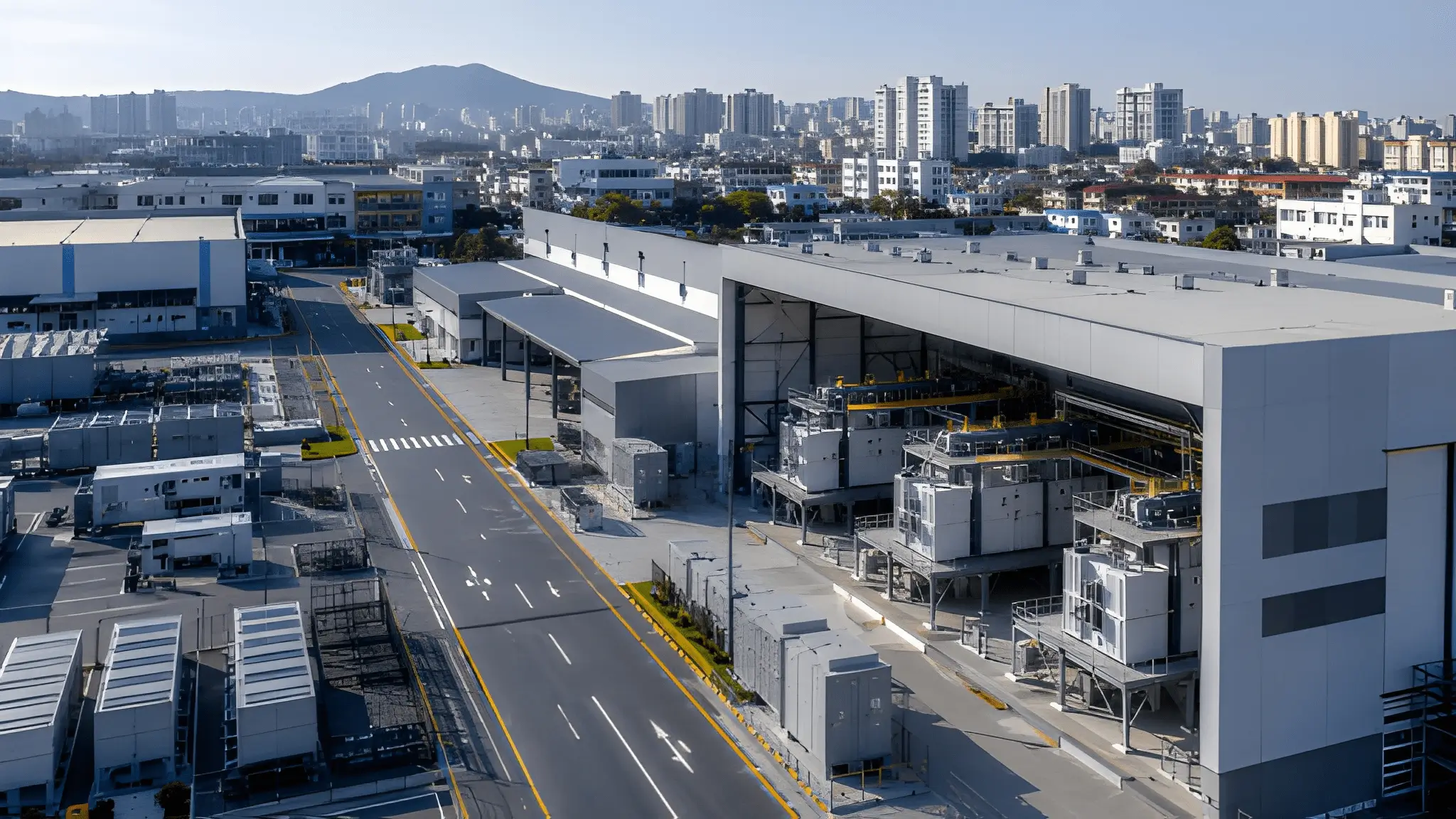
Spread across nearly 40,000 square feet, the plant ranks among a limited number of facilities in India dedicated exclusively to modular data center infrastructure manufacturing. The facility incorporates Design for Manufacturing and Assembly (DfMA) principles, enabling the production of standardized infrastructure components in a controlled environment before deployment to project locations. The manufacturing portfolio includes containerized data centers, modular utility skids, cooling skids, power skids, prefabricated steel structures, and integrated infrastructure systems designed for mission-critical operations. By shifting a significant share of construction activity away from project sites and into a factory-controlled setting, PRASA aims to improve project predictability while reducing deployment timelines.
The approach also supports tighter quality control, repeatability, and greater execution efficiency across large-scale infrastructure developments. The strategy arrives at a time when data center developers face increasing pressure to bring capacity online faster. Lengthy construction schedules and complex site execution requirements have emerged as key challenges for operators attempting to keep pace with expanding digital demand. Factory-built infrastructure offers a potential solution by enabling parallel manufacturing and site preparation activities.
PRASA Sees Advanced Manufacturing as the Future of Infrastructure Delivery
Commenting on the inauguration, Jay Burse, Chief Vision Officer (CVO), PRASA, said, “India’s digital transformation will be defined not only by software innovation but also by the strength of the physical infrastructure supporting it. As AI, cloud, and enterprise technologies continue to scale, the industry requires faster, smarter, and more predictable approaches to infrastructure delivery. This facility reflects our conviction that the future of data center infrastructure will be increasingly driven by advanced manufacturing.”
The statement underscores a growing belief across the sector that industrialized construction methods will play a larger role in supporting next-generation digital infrastructure. As operators pursue larger campuses and increasingly complex AI-focused deployments, the ability to standardize and replicate infrastructure at scale has become a strategic advantage. Consequently, manufacturers capable of delivering modular solutions stand to benefit from long-term infrastructure expansion plans across India. PRASA said the facility will serve a broad customer base, including hyperscale operators, colocation providers, cloud service providers, telecom operators, enterprises, and AI-driven projects. While the company confirmed ongoing engagement with ecosystem stakeholders, it did not disclose customer-specific details.
Employment Generation and Industrial Growth Form Part of Expansion Strategy
Beyond manufacturing output, the Pune facility is expected to create more than 650 direct and indirect jobs. The employment impact spans engineering, fabrication, project management, quality assurance, logistics, and supply chain operations. The workforce expansion highlights the increasing importance of domestic manufacturing capabilities within India’s digital infrastructure ecosystem. As the country continues to attract investment in data centers, supporting industries such as fabrication, electrical systems, cooling technologies, and modular construction are also experiencing growth. The facility strengthens local supply chains while creating specialized industrial employment opportunities tied to the digital economy.
Industry participants increasingly view manufacturing capacity as a critical component of infrastructure resilience. Localized production can help reduce dependency on extended supply chains and improve project execution certainty in a market characterized by rapid expansion. PRASA has also integrated sustainability objectives into the facility’s development strategy. The plant will initially operate with partial solar energy integration as part of a broader roadmap aimed at increasing renewable energy utilization over time.
The company plans to expand renewable energy adoption as it develops manufacturing operations aligned with global sustainability standards. The initiative reflects growing industry focus on reducing the environmental footprint of both data center operations and the infrastructure supply chains that support them. Energy efficiency, resource optimization, and renewable integration have become increasingly important considerations across the digital infrastructure value chain. The sustainability roadmap aligns with broader market expectations as investors, operators, and customers place greater emphasis on environmental performance. Moreover, manufacturing facilities capable of incorporating renewable energy and efficient production processes may gain competitive advantages as sustainability requirements continue to evolve.
Automation Investments Planned Over Next Five Years
PRASA intends to further strengthen the Pune facility through investments in automation, advanced manufacturing systems, precision engineering, and digital production technologies during the next three to five years. These upgrades are expected to enhance manufacturing efficiency while supporting higher levels of standardization and production scalability. The company’s expansion strategy reflects confidence in long-term demand for modular infrastructure solutions across India’s digital economy. AI adoption, cloud expansion, enterprise digitization, and growing data consumption continue to drive infrastructure requirements that extend beyond traditional construction approaches. As India builds the physical foundation needed to support its digital ambitions, manufacturing-led infrastructure delivery models are gaining momentum. PRASA’s new Pune facility positions the company at the intersection of industrial innovation and digital infrastructure growth, creating a platform designed to support the country’s next wave of data center development.