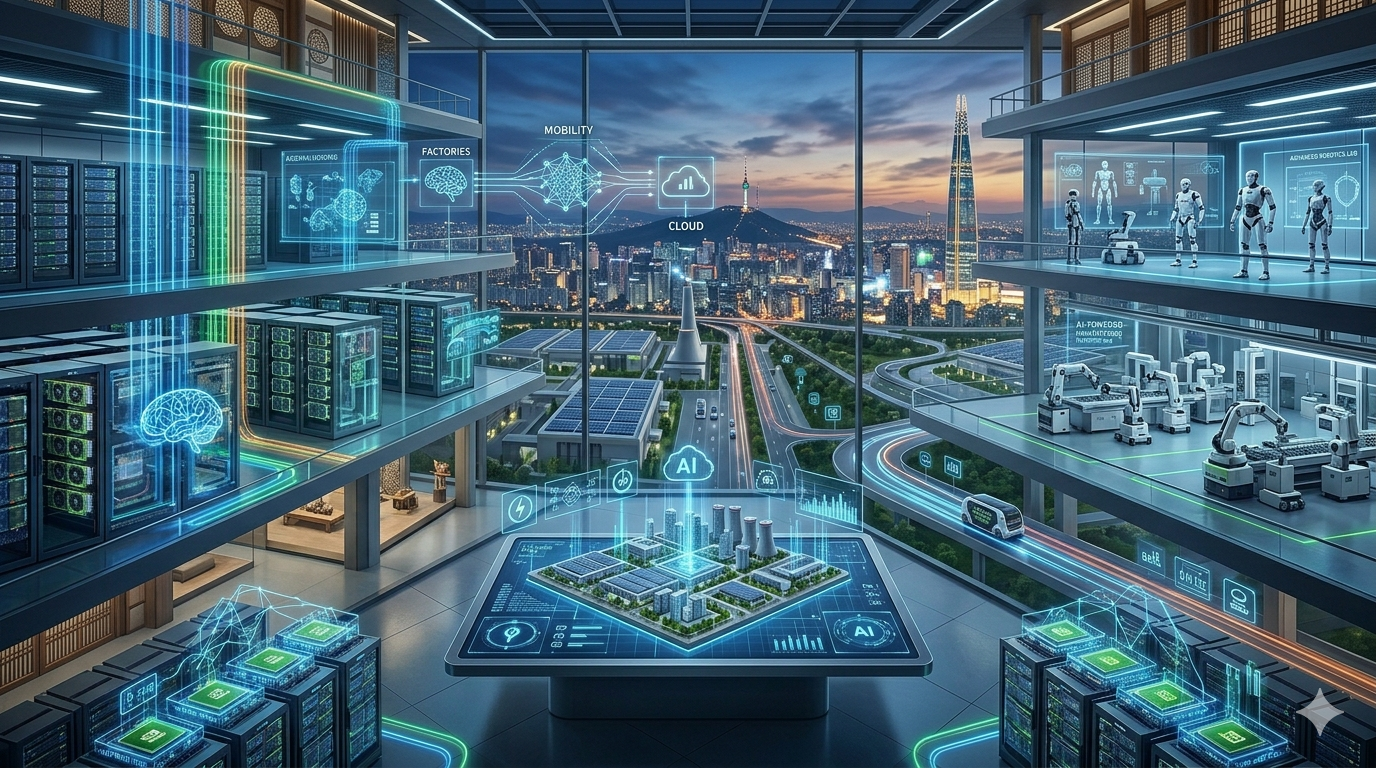
NVIDIA and LG Group are expanding their collaboration beyond traditional AI deployments with plans to build an AI factory designed to support robotics, autonomous driving, data center technologies, GPU cloud services, and sovereign AI initiatives. The project combines NVIDIA’s full-stack AI factory platform with LG Group’s capabilities across electronics, manufacturing, mobility, telecommunications, energy, and enterprise software. Together, the companies aim to create an integrated AI ecosystem that spans model development, simulation, infrastructure deployment, and real-world AI applications.
The announcement reflects a broader shift occurring across the AI industry. As organizations move beyond chatbot deployments and generative AI experimentation, companies are increasingly investing in infrastructure capable of supporting physical AI systems, industrial automation, autonomous machines, and large-scale enterprise AI operations.
AI Factory Infrastructure Becomes the Foundation
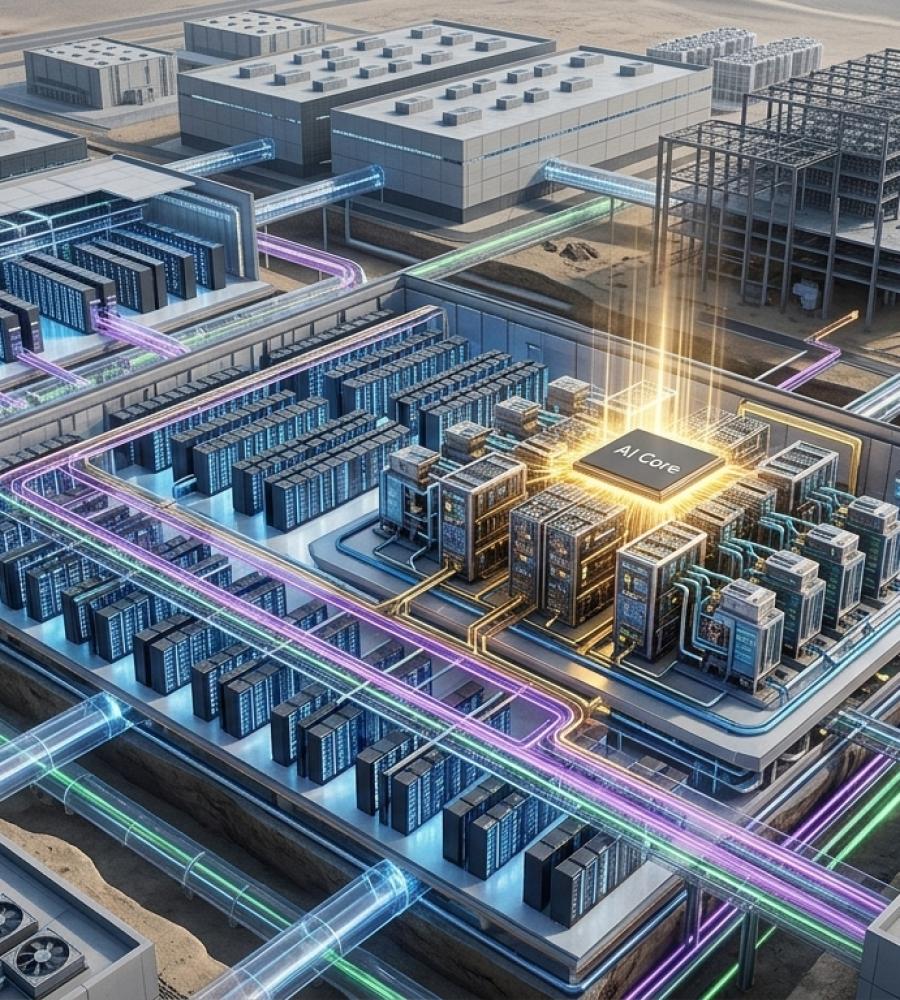
At the center of the partnership is the development of an AI factory environment that will provide accelerated computing resources for AI model training, simulation, validation, and deployment. The companies plan to connect AI model development, synthetic data generation, robot simulation, edge deployment, and factory-scale digital twins into a unified workflow. The goal is to create an infrastructure layer capable of supporting next-generation physical AI applications across multiple industries.
Unlike conventional data centers, AI factories are designed specifically for AI workloads, integrating compute, networking, simulation platforms, and operational software into a single environment optimized for large-scale AI deployment.
Manufacturing Moves Toward Autonomous Operations
One of the partnership’s primary objectives is the development of AI-powered manufacturing environments. LG plans to combine production technology data and operational expertise from its global manufacturing facilities with NVIDIA’s AI infrastructure and digital twin technologies. The companies envision an autonomous manufacturing ecosystem where procurement, production, logistics, and customer delivery systems operate through real-time data and AI-driven coordination. The initiative aligns with a growing industry trend toward intelligent factories that use AI to improve operational efficiency, reduce downtime, and optimize supply chain performance.
Physical AI and Robotics Take Center Stage
A significant portion of the collaboration focuses on robotics and physical AI development. LG Electronics will integrate NVIDIA Isaac Sim and NVIDIA Isaac Lab into its robotics development workflows. These platforms enable engineers to simulate, train, and validate robots in physically accurate virtual environments before deployment in the real world.
The company is also evaluating NVIDIA Isaac GR00T, the robotics foundation model designed to provide advanced reasoning and task execution capabilities for humanoid and intelligent robotic systems. LG’s home robot initiatives, including the CLOiD platform, are expected to benefit from these technologies as the company works to expand AI-powered robotics applications for residential environments.
To address one of the industry’s biggest challenges training data availability LG Electronics is developing a Physical AI Data Factory. The platform will use NVIDIA Cosmos world foundation models to generate and augment synthetic data for robotics and industrial AI projects. Meanwhile, LG CNS plans to integrate NVIDIA Isaac, Cosmos, and GR00T technologies into its PhysicalWorks industrial robotics platform, targeting manufacturing and logistics environments.
NVIDIA DSX Shapes Next-Generation AI Facilities
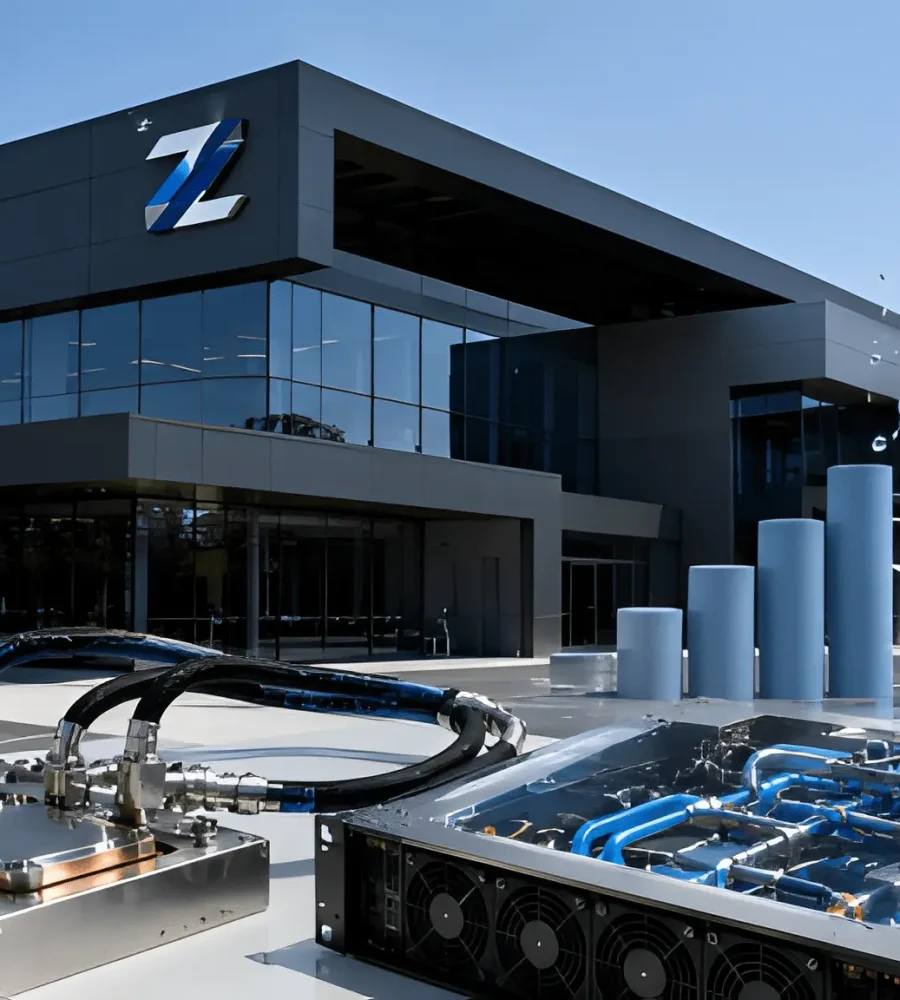
The partnership extends into AI infrastructure and data center development through NVIDIA’s DSX AI factory architecture. LG Electronics will collaborate on advanced cooling technologies, including cooling distribution units (CDUs) and cold plates, while also supporting prefabricated modular infrastructure designs intended to accelerate deployment timelines for future AI facilities.
These technologies are increasingly important as AI workloads drive higher rack densities and greater power requirements across modern data centers. LG Uplus plans to build scalable AI factories and AI cloud infrastructure based on NVIDIA DSX, combining NVIDIA’s accelerated computing technologies with LG’s telecommunications and infrastructure expertise.
LG CNS is also developing high-performance AI factory environments powered by NVIDIA GPUs, while LG Energy Solution is collaborating with NVIDIA on emerging 800-volt direct-current energy technologies designed to support next-generation AI facilities and future GPU deployments.
Autonomous Driving Becomes Another Strategic Focus
Beyond robotics and infrastructure, the companies are expanding collaboration around mobility AI. LG Electronics plans to align its advanced driver-assistance systems and vehicle AI platforms with NVIDIA DRIVE technologies. The effort will focus on sensor integration, computing architectures, software-defined vehicles, and future autonomous driving systems.
The collaboration also includes work around NVIDIA DRIVE Hyperion architecture and DRIVE AGX accelerated computing platforms, which support AI-powered vehicle processing and cockpit applications. LG Innotek will contribute sensing, connectivity, and lighting technologies optimized for NVIDIA’s automotive platforms as demand for AI-enabled mobility solutions continues to grow.
EXAONE Strengthens South Korea’s Sovereign AI Ambitions
The partnership also advances South Korea’s sovereign AI ecosystem through collaboration with LG AI Research. NVIDIA is supporting the development of EXAONE, one of South Korea’s leading AI model families. The model has been built using NVIDIA Blackwell GPUs, NVIDIA NeMo software, NVIDIA Nemotron datasets, and TensorRT-LLM inference technologies.
LG Group is exploring broader adoption of EXAONE and agentic AI systems through internal platforms such as ChatEXAONE, its enterprise AI chatbot service. As governments and enterprises increasingly prioritize sovereign AI capabilities, infrastructure partnerships supporting domestic AI model development are becoming strategically important across global markets.
Market Implications
The NVIDIA-LG partnership illustrates how AI infrastructure is evolving beyond standalone GPU deployments and cloud services. Companies are increasingly pursuing integrated strategies that combine AI factories, robotics, mobility platforms, sovereign AI models, energy systems, and industrial automation. For NVIDIA, the collaboration strengthens its position as a full-stack AI infrastructure provider. For LG Group, it creates a framework for embedding AI across manufacturing, mobility, telecommunications, enterprise software, and data center operations. As AI adoption expands into physical-world applications, partnerships that integrate compute infrastructure with industrial expertise are expected to play a larger role in shaping the next phase of AI deployment.