
GoodVision AI has introduced what it calls the “7-Layer AI Cake” framework, a strategic model that outlines how the company believes AI infrastructure will evolve as the market shifts from a model-centric era toward a token-driven economy. The framework arrives as inference workloads expand rapidly across enterprises, consumer platforms, robotics systems, edge deployments, and autonomous technologies. For much of the past two years, the AI sector has focused on building larger foundation models. Companies competed on parameter counts, reasoning capabilities, and access to increasingly massive GPU clusters. However, GoodVision AI argues that the industry’s next competitive battleground will center on the systems that enable tokens to be produced, routed, optimized, and consumed efficiently.
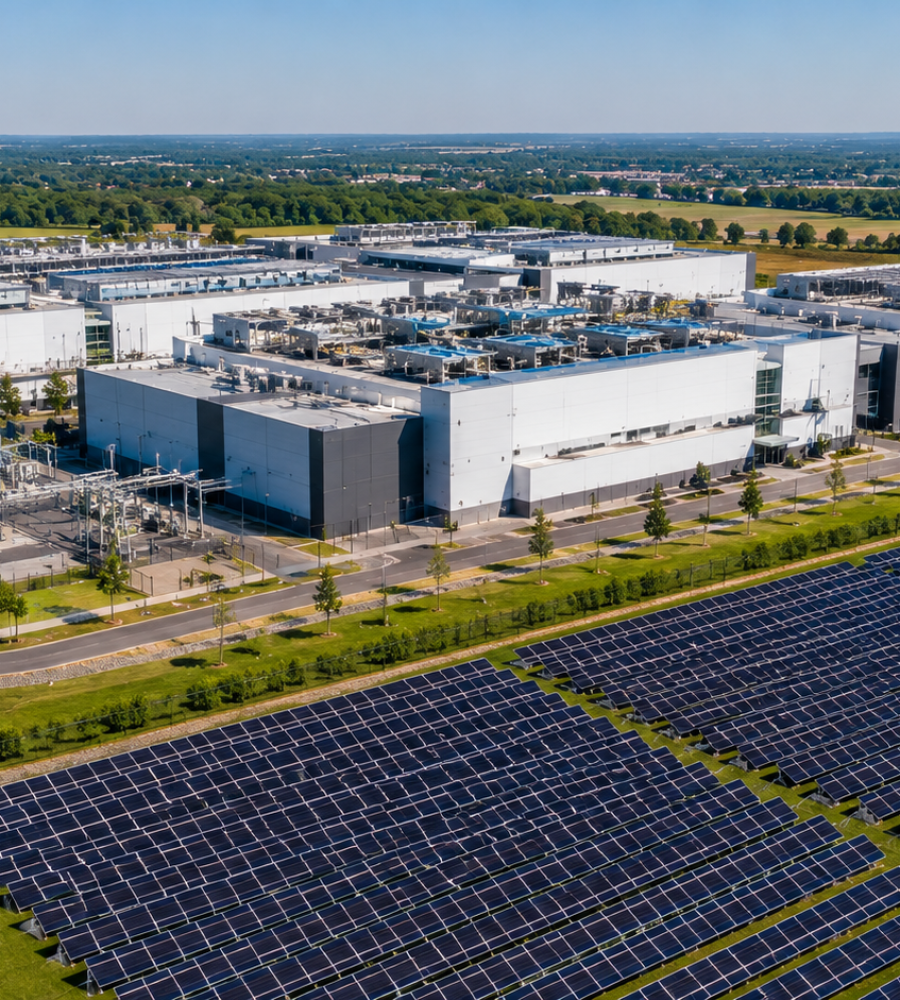
The company describes this transition as the emergence of a large-scale “token industrial system,” where operational efficiency across infrastructure layers becomes as important as model innovation itself. At the foundation of the framework sits energy, which GoodVision AI identifies as one of the most significant constraints facing AI expansion. The company notes that modern AI facilities increasingly consume electricity at levels comparable to entire cities. At the same time, utility infrastructure and grid expansion projects in many regions continue to lag behind rising demand from AI deployments. This widening gap is pushing infrastructure providers to focus more aggressively on long-term energy access and power security. GoodVision AI believes that reliable baseload generation, energy efficiency improvements, and stable power procurement strategies will become strategic differentiators as inference workloads continue to scale. In a token-based economy, access to affordable and dependable energy could shape competitiveness across the entire AI stack.
AI Data Centers Are Evolving Into Industrial Token Factories
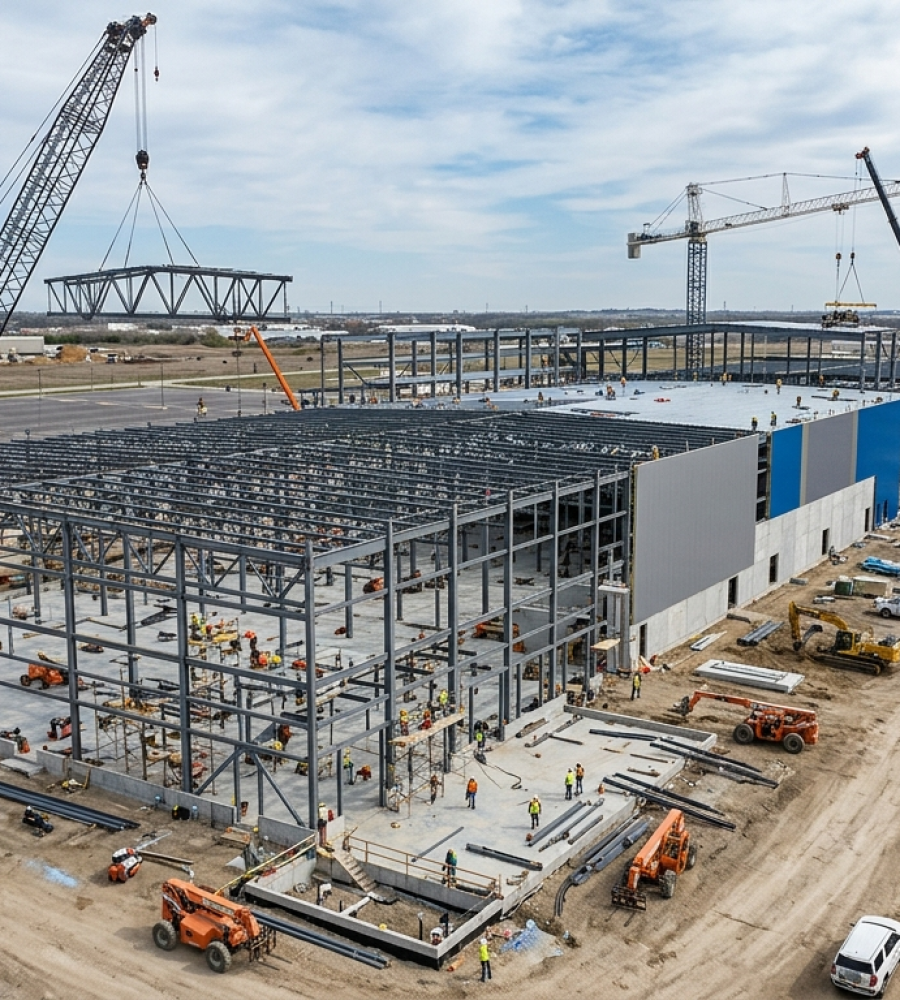
The second layer of the framework positions AI data centers as industrial production hubs for token generation. According to GoodVision AI, modern AI infrastructure increasingly depends on tightly integrated GPU clusters operating at large scale rather than individual processing units. Yet infrastructure deployment timelines remain a challenge. New AI facilities often require years of planning and construction, while power grid upgrades frequently take even longer. The company argues that these constraints are encouraging a shift toward more distributed deployment models. Instead of relying solely on centralized hyperscale architectures, operators are moving compute resources closer to end users through regional and edge-oriented infrastructure strategies. GoodVision AI says its own modular AI Factory approach is designed to support this transition through rapidly deployable inference infrastructure.
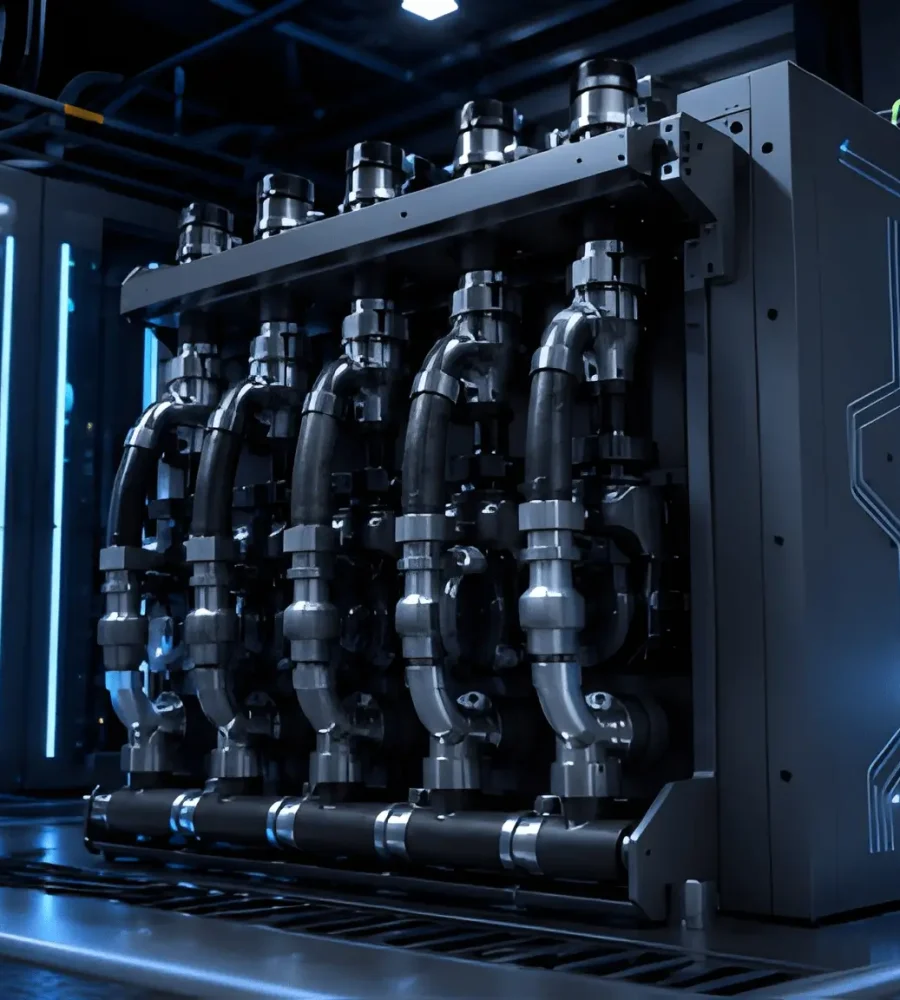
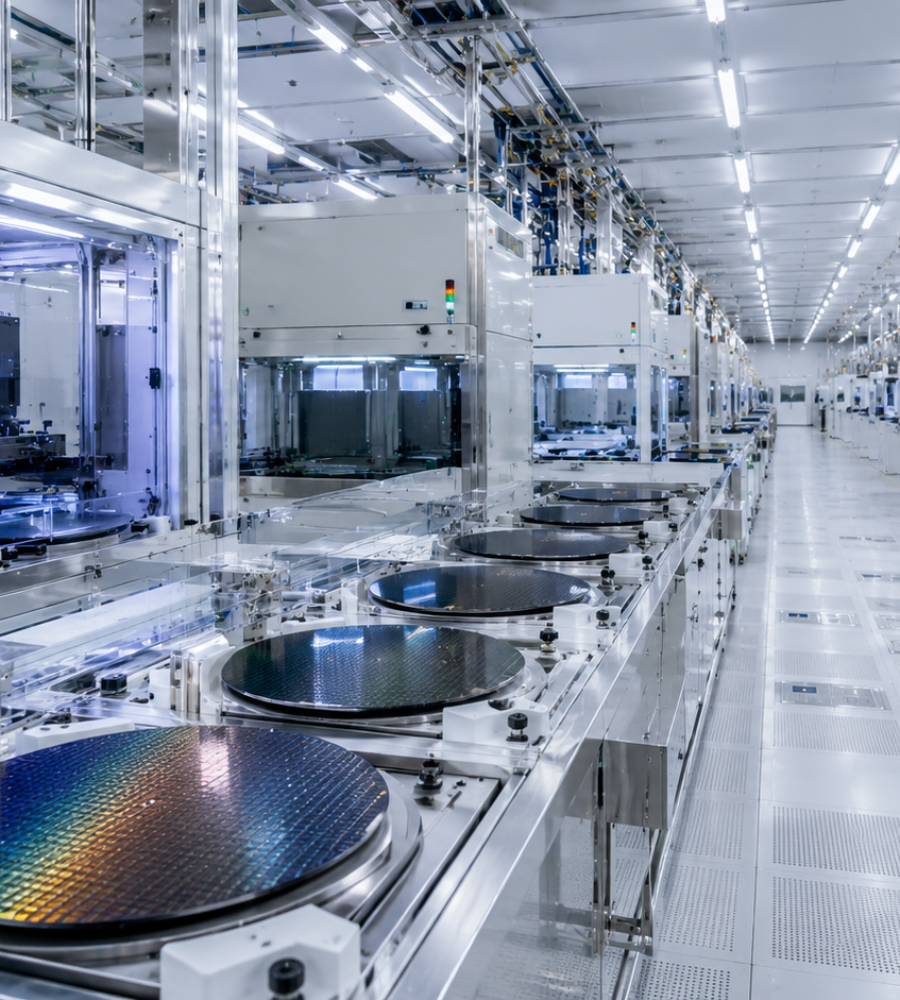
Within the framework, GPUs serve as the production machinery powering token creation. Historically, demand for advanced GPUs stemmed largely from training increasingly sophisticated AI models. That dynamic is beginning to change as inference emerges as the dominant source of infrastructure demand. Unlike training workloads, which remain concentrated among a relatively small number of organizations, inference is expected to spread across countless applications, devices, and services. From robotics platforms and AI wearables to autonomous systems and collaborative AI agent networks, continuous inference requires constant token generation. As a result, infrastructure efficiency is becoming a critical performance metric. GoodVision AI highlights the growing importance of adjacent technologies such as networking systems, liquid cooling platforms, server architectures, optical interconnects, and power management technologies. These supporting layers increasingly determine how efficiently infrastructure can operate at scale.
Models Shift From Intelligence Assets to Token Engines
The fourth layer focuses on the evolving role of large language models. GoodVision AI argues that market competition is gradually moving beyond the pursuit of larger parameter counts. Organizations are increasingly evaluating models based on operational factors including inference efficiency, deployment economics, scalability, long-context processing, and support for distributed AI environments. The company contends that models create value only when they generate useful outputs continuously within real-world applications. Under this view, large language models become “token production engines” rather than standalone technology assets. GoodVision AI also says it is pursuing a strategy that embeds large language models directly within its AI Factory infrastructure. The company believes this approach can support its evolution from a traditional compute provider into a Token-as-a-Service platform.
As AI systems expand globally, the challenge extends beyond generating compute power to distributing it effectively. GoodVision AI’s fifth layer focuses on token distribution networks, which the company compares to electrical grids. These networks could connect fragmented compute resources into unified infrastructure capable of serving global demand. Consequently, the industry is seeing increasing interest in distributed compute architectures designed specifically for inference workloads. The sixth layer centers on intelligent scheduling and orchestration. GoodVision AI argues that future AI systems will depend not only on the availability of compute but also on the ability to route workloads efficiently.
Different workloads may require different models, infrastructure environments, and latency profiles. The company believes future infrastructure will increasingly follow a simple principle: “the right model running on the right compute for the right task.” Under this model, AI infrastructure economics could shift away from raw compute consumption toward optimization, workload routing, and intelligent orchestration.
AI Agents Could Drive the Largest Wave of Token Demand
The final layer of the framework focuses on AI agents, which GoodVision AI views as the largest future consumers of tokens. Unlike conventional applications, AI agents can simultaneously interact with multiple models, APIs, software tools, and inference systems. They perform planning, reasoning, execution, and coordination continuously, often without direct human intervention. This operating model creates substantially greater token demand than traditional human-AI interactions. According to the company, future AI ecosystems may include not only billions of human users but also vast networks of autonomous agents interacting with one another around the clock. In that environment, infrastructure efficiency and orchestration may become more important than raw model capability. GoodVision AI argues that AI agents are evolving into active participants within a broader intelligent economic system, creating a new class of demand that spans compute, networking, and distributed infrastructure.
Despite rapid investment across the AI sector, GoodVision AI believes the industry remains fragmented. Some organizations possess extensive compute resources but face energy limitations. Others operate large-scale facilities yet struggle with orchestration challenges, while model developers continue to grapple with inference costs and latency constraints. The company expects the next phase of industry competition to focus on integrating these disconnected layers into unified infrastructure systems. Rather than centering exclusively on larger models, future AI development may depend on coordinated ecosystems spanning energy, compute, networking, orchestration, and distributed inference. Industry observers increasingly view AI as an emerging industrial platform rather than a purely software-driven market. Within that context, GoodVision AI argues that the strongest long-term players may be those capable of connecting energy, infrastructure, models, and token flows into a single scalable operating system for the inference era.