The African data center market is growing fast. South Africa, Nigeria, Kenya, and Egypt are attracting serious capital. Equinix acquired MainOne for $320 million. Digital Realty bought Teraco and iColo. Vantage, Raxio, and Africa Data Centres are expanding across seven countries. McKinsey projects African data center demand will rise 3.5 to 5.5 times by 2030, requiring $10 to $20 billion in investment.
The infrastructure is real. The investment is real. But most of the capacity being built serves multinational enterprises, hyperscaler CDN deployments, and international cloud providers. It does not primarily serve African organisations or African citizens. Despite all this investment, Africa still accounts for just 0.6% of global data center capacity, and the growth projected will maintain rather than increase that share. The continent is hosting infrastructure that extracts more value than it distributes, and the policy frameworks governing that dynamic have not kept pace with the scale of investment now arriving.
Who Actually Uses the African Data Center Market
AWS, Azure, and Google Cloud have all established cloud regions in South Africa. They serve enterprises with the budget for cloud services at global pricing. South Africa holds 40% of Africa’s total data center capacity, and the majority of that capacity is consumed by financial services firms, telecommunications companies, and multinationals with regional operations. Local SMEs and public sector organisations are largely absent from the customer base.
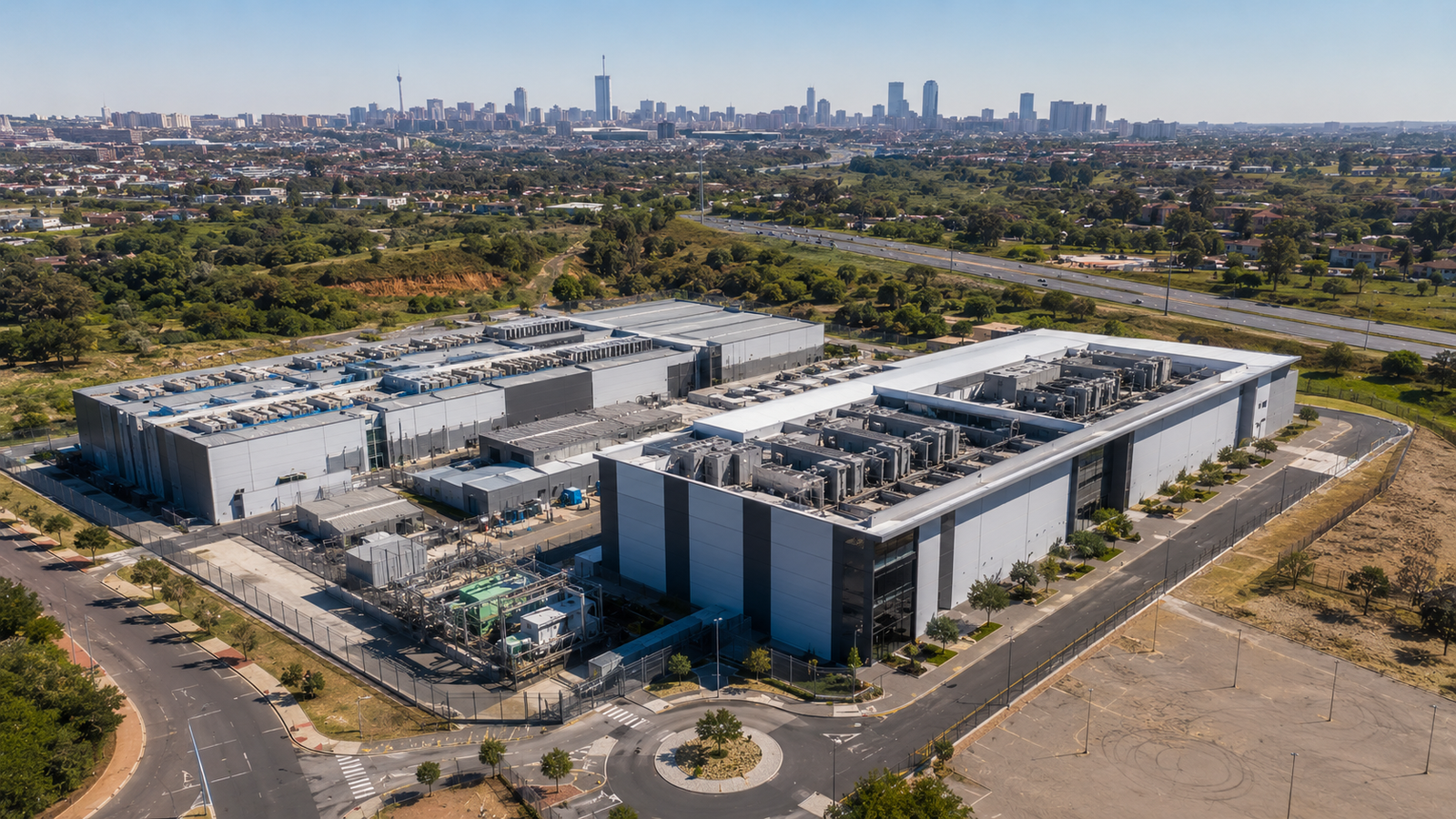
The utilisation pattern is telling. Johannesburg is Africa’s most connected market because it serves as the gateway for multinationals that need African cloud presence. It is not a hub because African businesses have clustered there. The carrier density, the hyperscaler availability, and the colocation options in Johannesburg are calibrated for the international enterprise market, which demands those features and can pay for them. Facilities built to hyperscaler specifications are, as one analyst put it directly, prohibitively expensive and over-specced for local enterprises and SMEs. The costs are simply too high for the vast majority of African businesses.
Local Access Remains Structurally Limited
Only 36% of Africans use the internet today, despite more than 80% of the population living within reach of a broadband signal. The usage gap is driven primarily by affordability, both of devices and data. Cloud adoption by African SMEs remains a fraction of adoption rates in comparable emerging markets like Southeast Asia. Hyperscale providers generally charge in euros or dollars, and high currency volatility makes affordability a persistent concern for businesses and governments operating in local currencies with significantly lower margins.
This is not an indictment of the operators building in Africa. They are rational actors deploying capital where returns are most reliable, which means serving creditworthy international customers first. It is an observation about who benefits from the buildout, and whether the infrastructure wave now arriving accelerates African digital development or primarily deepens the region’s role as a transit point for data flows controlled elsewhere. Africa needs at least 700 new data centers to meet its connectivity and digital economy requirements by 2030. The ones being built now serve a narrow slice of that need.
The Foreign Capital Structure and What It Means
The capital funding Africa’s data center expansion comes primarily from three sources: global private equity, development finance institutions, and hyperscaler balance sheets. Raxio secured $170 million from Proparco and the Emerging Africa Infrastructure Fund. Vantage is backed by DigitalBridge. Teraco and iColo now sit inside Digital Realty. The equity ownership, the financial returns, and the strategic decisions about where capacity goes and who gets to use it flow back to investors based in New York, Paris, and London.
Development finance institutions like Proparco and the IFC bring concessional financing and social return expectations alongside commercial returns. They represent the best version of the foreign capital model because their mandate explicitly includes development outcomes. But they are a minority of the total capital entering the market. The majority arrives with straightforward return requirements and no structural obligation to prioritise local access or local ownership. When the returns are realised and the exits happen, the proceeds leave the continent.
The Data Localisation Opportunity Being Underused
African governments are increasingly passing data localisation laws. Nigeria, Kenya, South Africa, and Egypt all have frameworks in place or advancing. Over 40 African countries have enacted some form of data protection law, according to the African Data Centre Association’s 2026 Economic Report. These frameworks create a structural demand driver for local data center capacity that is genuinely African in character: government data, financial records, health information, and telecommunications data that must stay in-country.
The irony is that the foreign-owned data centers being built to serve international enterprise are also the ones best positioned to serve data localisation requirements. They have the infrastructure quality, the reliability standards, and the connectivity that government and enterprise data localisation demands. The African data center market may generate more local economic benefit through data localisation compliance than through organic African enterprise adoption, at least in the near term. That is a pragmatic outcome. It is not the transformative one the investment narrative tends to describe, and governments that treat compliance as a ceiling rather than a floor are leaving substantial local benefit on the table.
The Skills and Operational Dependency Problem
A data center is not a passive asset. It requires skilled engineers, operations managers, cooling technicians, and network specialists to function reliably. The buildout of physical capacity in Africa is significantly outpacing the development of the workforce needed to operate it. Most large facilities in the African data center market import senior technical talent or rely on remote management from operator headquarters in Europe or North America.
This creates an operational dependency that mirrors the financial dependency. The infrastructure sits on African soil but is managed by expertise that does not reside there. Local hiring and training programmes exist at most operators and are genuine. They are also operating on timelines measured in years while the physical buildout is operating on timelines measured in months. The gap between those two timelines is where the continent’s ability to actually own and develop its digital infrastructure capacity is being lost in practice even when it is being pledged in press releases.
What Local Ownership Would Change
The operators in the African data center market most likely to build durable local economic benefit are the ones creating genuine local ownership structures, investing in workforce development pipelines beyond compliance minimums, and pricing services in ways that bring African enterprise customers into the market. Some are doing this. Raxio explicitly frames its model around digital inclusion in underserved markets. Open Access Data Centres builds on an open-access model designed to lower the cost of connectivity for local operators. These approaches are commercially viable and more aligned with the development narrative the investment community uses to justify the Africa expansion.
The question is whether they scale or remain niche alongside the dominant model. A local provider with appropriately sized data centers, priced for African SMEs, operating in local currency, and staffed by local engineers is a fundamentally different asset than a hyperscale campus built for Microsoft or Amazon. Both are described as African data center investment. They have almost nothing else in common, and conflating them produces a market narrative that overstates the development impact of what is actually being built.
The Policy Gap That Matters Most
The regulatory frameworks governing foreign investment in African digital infrastructure were not written for the scale or speed of what is now arriving. Data localisation laws create demand but do not address ownership structures or profit repatriation. Competition regulation in most African markets does not yet have the tools to assess whether hyperscaler and colocation market positions in data center capacity create barriers to entry for local operators. The African data center market reaching $11.1 billion by 2030 will be built primarily by the operators already building it now.
The policy window for shaping how that investment lands, who it benefits, and what obligations it carries is open now and narrowing. The governments that use it will be in a materially different position in 2030 than the ones that treat foreign data center investment as unconditionally positive and leave the terms entirely to the investors. Infrastructure that serves the continent’s needs, not just the investors’ return requirements, does not happen by default. It happens because the policy environment requires it.