The story the AI infrastructure market has been telling for three years is a story about scale. Bigger models, more parameters, more compute, more power, more infrastructure. Every planning assumption baked into hyperscaler capex forecasts, neocloud GPU procurement strategies, and enterprise AI budgets has been built around the idea that the value of AI correlates directly with the scale of the model delivering it. That assumption powered the $700 billion infrastructure buildout of 2024 and 2025.
In 2026, a different pattern is emerging in enterprise production deployments. Small language models, purpose-built for specific tasks, are outperforming frontier-scale models on narrow workloads at a fraction of the infrastructure cost. That shift does not invalidate the frontier model investment thesis. But it does change the economics of how most enterprises will actually deploy AI at scale, and the infrastructure market has not fully priced what that means.
The Performance Gap That Should Not Exist But Does
The intuition behind frontier model primacy is straightforward: a model trained on more data with more parameters should outperform a smaller model on any given task. That intuition holds for general-purpose reasoning, novel problem-solving, and tasks that require broad world knowledge. It does not hold for narrow, well-defined production tasks where a smaller model trained specifically on the relevant domain consistently matches or exceeds frontier performance at a fraction of the cost.
Microsoft’s Phi-4 mini, with 3.8 billion parameters, outperforms models ten to twenty times its size on mathematics and coding benchmarks. Meta’s Llama 3.2 family, Google’s Gemma 3, and Mistral’s compact models are all demonstrating that specialised training on high-quality domain-specific data produces task performance that frontier models cannot reliably beat on the tasks enterprises actually run in production. Document classification, contract review, customer service routing, code completion, data extraction, and structured report generation are all tasks where a well-trained SLM beats a general-purpose frontier model on speed, cost, and often on accuracy. These are also the tasks that account for the vast majority of enterprise AI inference volume.
What This Means for Infrastructure Provisioning
The infrastructure implications of SLM adoption in enterprise production are direct and significant. A frontier model inference deployment requires GPU hardware capable of serving billions of parameters at latency levels that meet production requirements. That means high-end H100 or Blackwell hardware, high-bandwidth memory, and the cooling and power infrastructure that those chips require at density. A 3.8 billion parameter SLM can run on a fraction of that hardware, in some cases on CPU infrastructure or entry-level GPU configurations that cost orders of magnitude less to procure, operate, and cool.
For enterprise IT organisations evaluating their AI infrastructure posture, the SLM maturation creates a genuine choice that did not exist eighteen months ago. The choice is not between SLMs and frontier models. It is between routing every workload through expensive frontier model API calls or shared GPU infrastructure, versus deploying purpose-built SLMs on lighter infrastructure for the 80% of workloads where frontier capability is genuinely unnecessary. The enterprises making that routing decision intelligently are discovering that their inference infrastructure cost per task drops substantially without any degradation in the output quality that matters for the specific use case.
The Neocloud and Hyperscaler Implication Nobody Is Talking About Loudly
The SLM shift has a specific and underacknowledged implication for the neocloud and hyperscale infrastructure market. The GPU procurement strategies, the power provisioning, and the capacity planning frameworks that neoclouds used to size their fleets were built on the assumption that enterprise AI workloads require frontier-grade hardware. If a meaningful fraction of enterprise inference volume migrates to SLMs running on lighter infrastructure, the demand profile that justified GPU fleet sizes in 2024 does not fully materialise in 2025 and 2026.
This does not mean GPU demand collapses. Training new SLMs still requires substantial compute. Fine-tuning SLMs for specific enterprise domains requires GPU infrastructure. And the frontier model tier continues growing driven by research, multimodal applications, and the genuinely novel tasks that only large models can handle. What it means is that the GPU utilisation rates and rental price assumptions baked into neocloud financial models were built for a world where enterprise inference runs predominantly on frontier hardware. The neocloud customers already paying for compute they are not using face a compounding challenge if SLM adoption further reduces the volume of frontier hardware consumption per enterprise AI deployment.
The Infrastructure Buildout That SLMs Actually Require
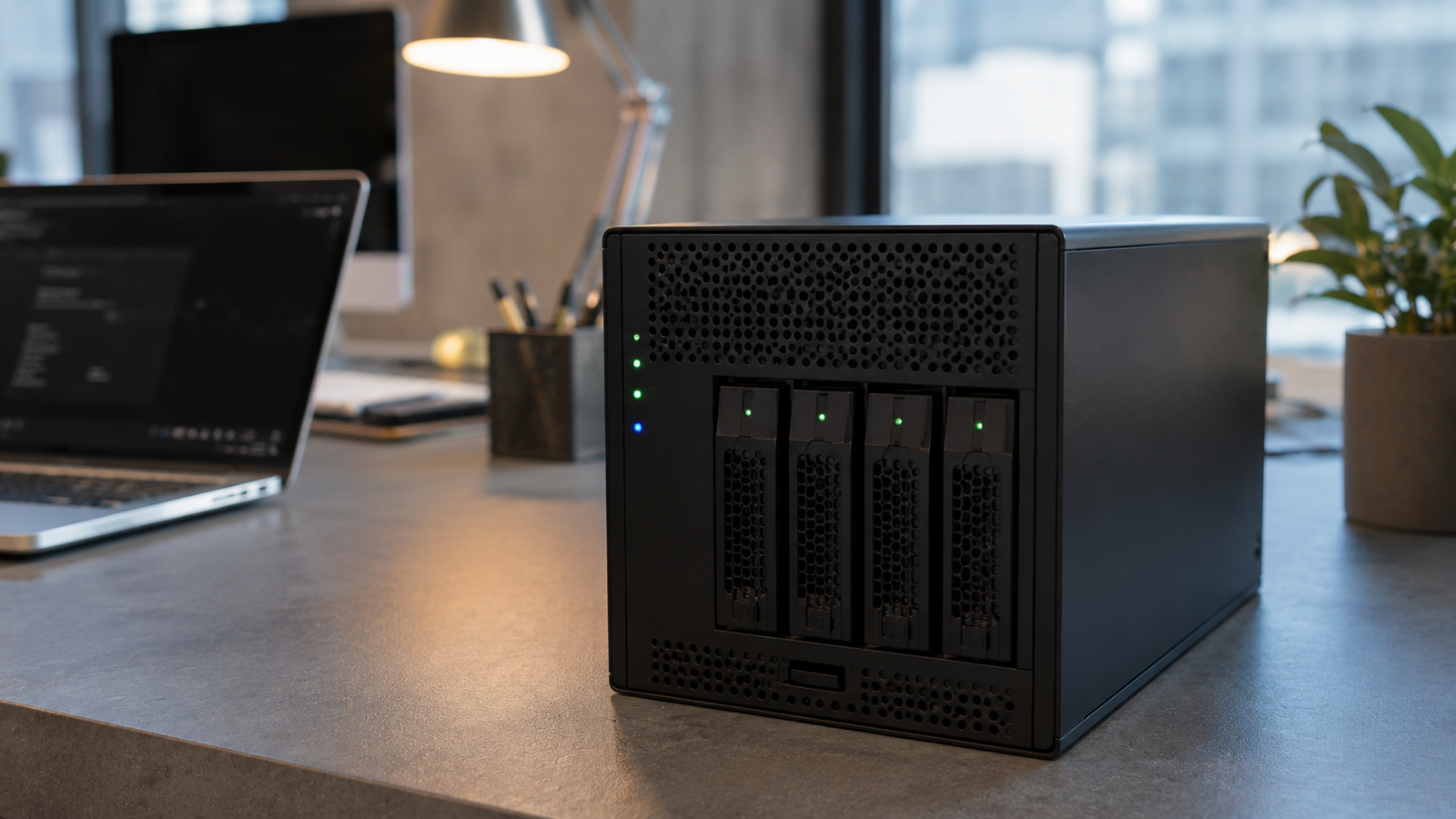
SLM-heavy enterprise AI deployments require a fundamentally different infrastructure stack than the one that drove the 2024 AI buildout. Rather than relying on large-scale, high-end GPU clusters, SLMs run efficiently on mid-range GPU configurations, CPU clusters for the smallest models, and increasingly on edge hardware deployed in enterprise environments to support latency-sensitive applications. They do not require the liquid cooling infrastructure, the megawatt-per-rack power provisioning, or the specialised networking that frontier training and inference clusters demand.
The enterprises that are most advanced in SLM deployment are discovering that their AI infrastructure requirements are more distributed, more heterogeneous, and cheaper per inference task than the frontier model paradigm assumed. That is a good outcome for enterprise AI economics. It is a more complicated outcome for the infrastructure market that sized its capacity against the assumption that every enterprise workload would be served by the highest-capability, most resource-intensive models available. The maturation of SLMs is not a threat to AI infrastructure investment broadly. It is a signal that the infrastructure mix the market is building needs to accommodate a more diverse workload profile than the frontier model narrative has priced in so far.