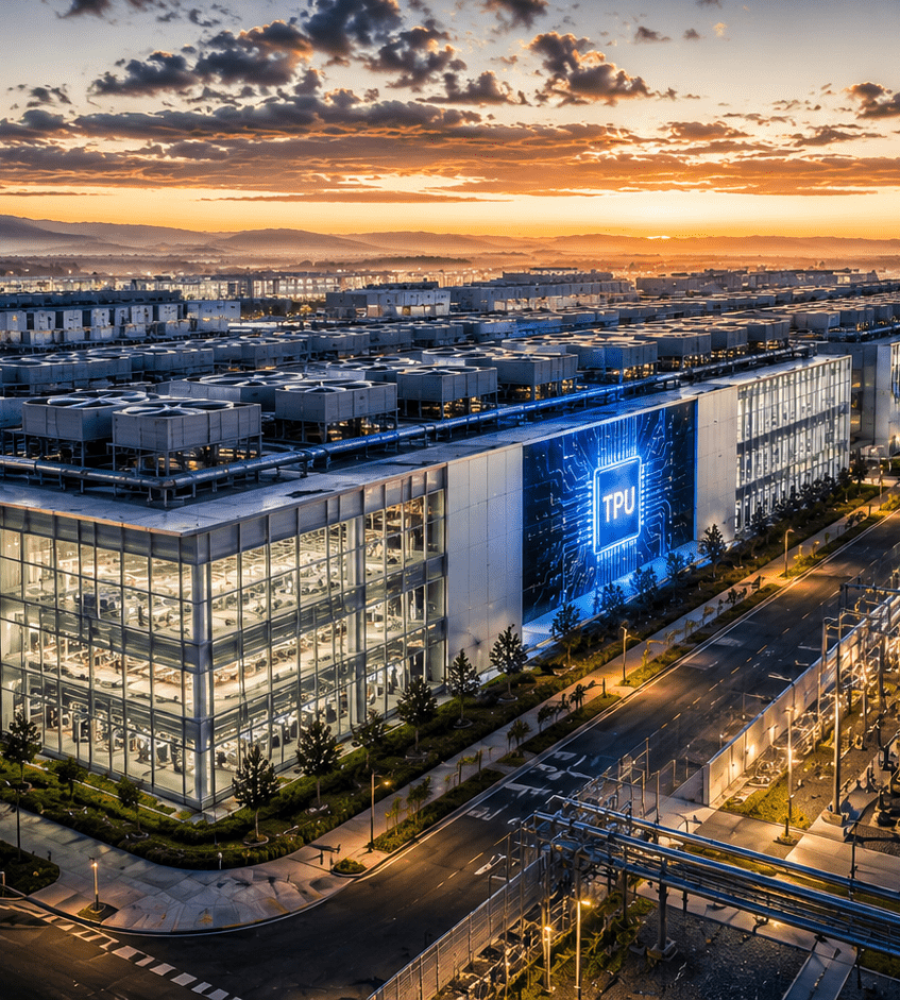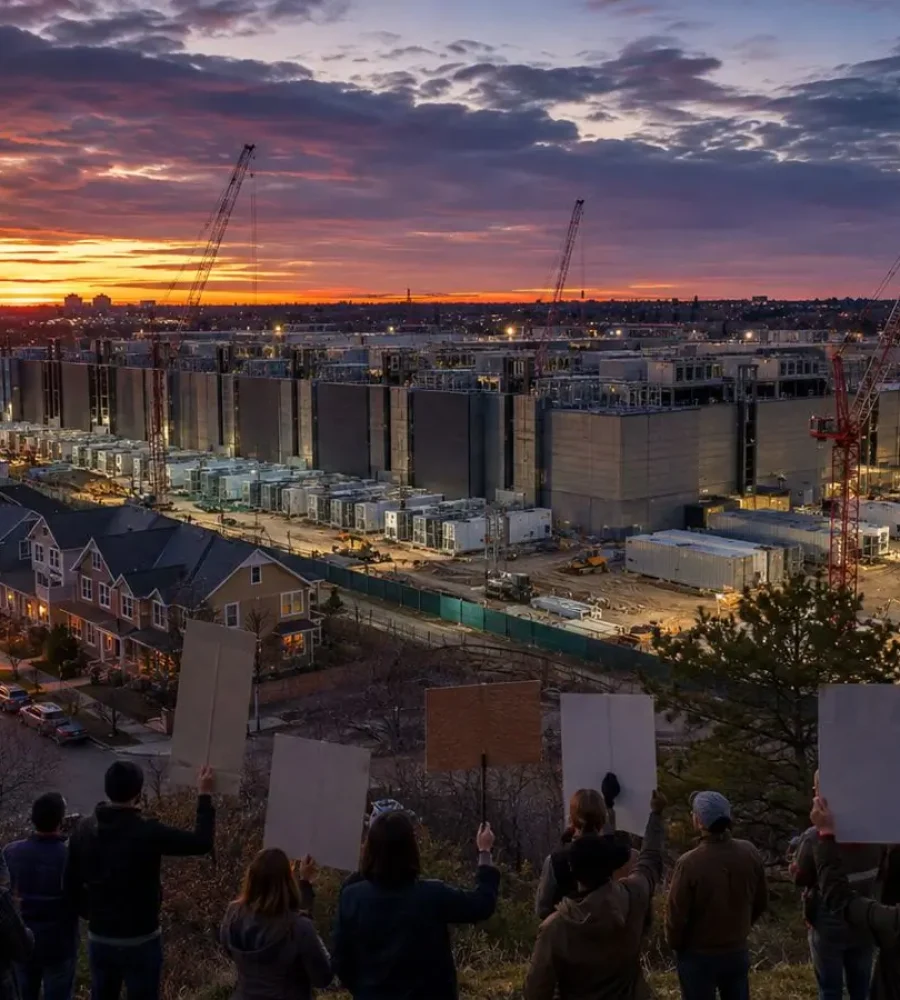
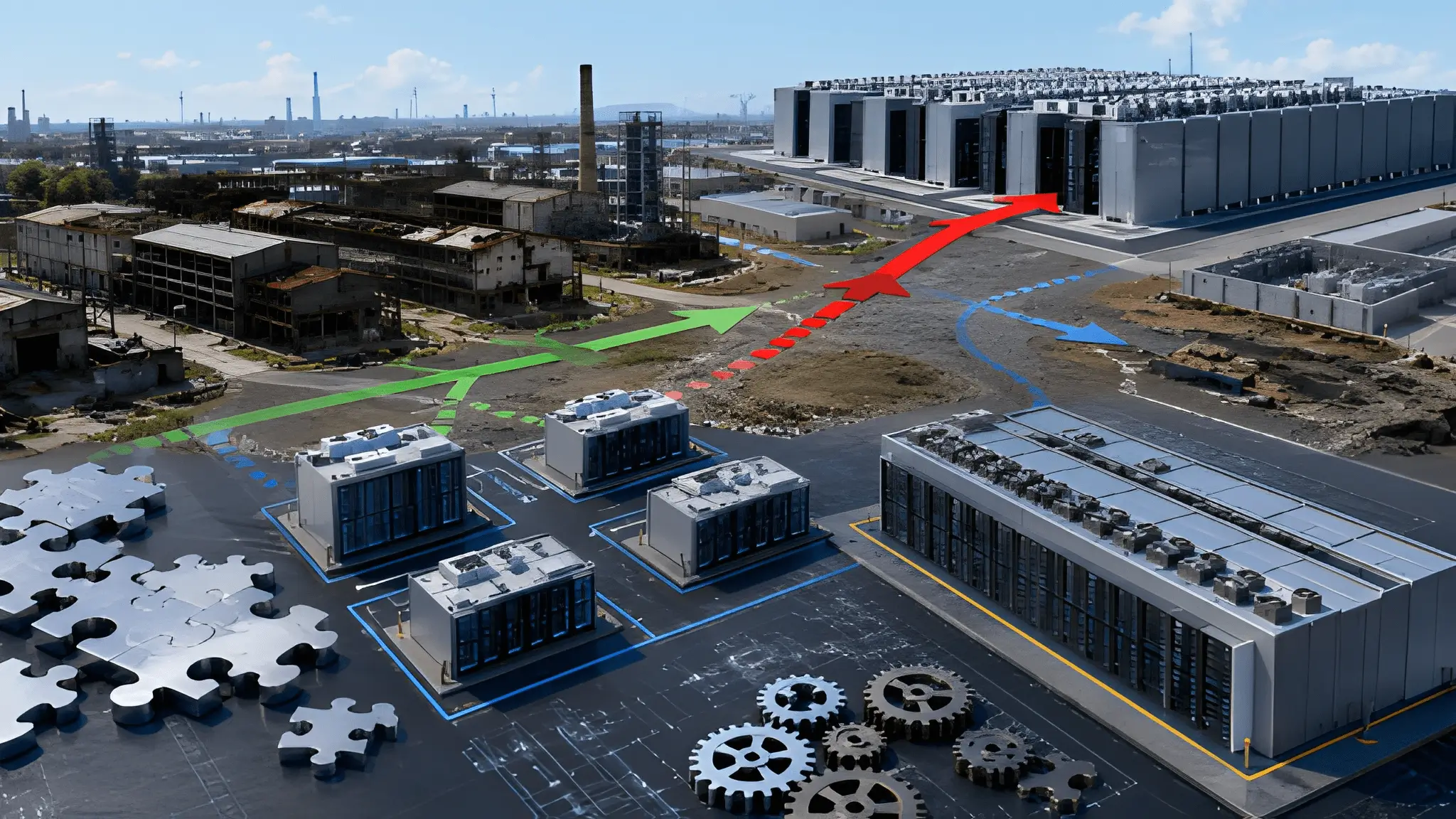
Industrial land near older fiber routes has started attracting more attention than many greenfield megaproject announcements. Operators searching for deployable AI capacity now examine forgotten enterprise estates, secondary telecom exchanges, and dormant manufacturing properties that already hold grid access and network adjacency. Several infrastructure groups have shifted acquisition strategies toward assets that can support immediate energization instead of speculative future expansion. Industry deployment patterns increasingly indicate stronger near-term demand for facilities capable of supporting compact AI clusters within months rather than hyperscale campuses requiring multi-year development cycles. Demand pressure from AI inference workloads continues rising faster than many regional utility upgrade schedules can accommodate. That imbalance has redirected capital toward practical capacity availability instead of theoretical long-term power pipelines.
Public conversations around AI infrastructure still revolve around gigawatt ambitions, sovereign compute announcements, and massive campus masterplans. Investors often interpret those announcements as indicators of immediate market demand despite the fact that most projects remain years away from full operation. Smaller deployments between 10MW and 30MW are increasingly supporting a meaningful portion of active AI infrastructure requirements across emerging deployment markets. Neocloud operators frequently prioritize operational readiness over land scale because revenue generation depends on rapid customer onboarding. Enterprise AI deployments, inference clusters, and model hosting environments rarely require hundreds of megawatts during initial deployment phases. Capital efficiency now depends more on execution speed and infrastructure portability than on headline project size alone.
Large-scale AI campuses continue attracting institutional attention because they resemble previous hyperscale cloud growth cycles. Present market conditions differ because AI-native infrastructure demand behaves less predictably than traditional enterprise cloud expansion patterns. GPU operators increasingly pursue distributed regional capacity strategies that reduce deployment latency and improve commercial flexibility. Infrastructure providers capable of activating moderate-capacity sites quickly now occupy a strategic position within the current supply environment. Utility interconnection queues, permitting delays, and transformer shortages continue limiting rapid development across many major markets. As a result, the most immediate infrastructure scarcity exists inside deployable mid-sized capacity rather than future gigawatt availability.
AI’s Hottest Infrastructure Is Hiding Inside Old Industrial Corridors
Former manufacturing districts have started re-entering infrastructure conversations because many already possess transmission connectivity, transportation access, and industrial zoning classifications. Developers seeking accelerated AI deployment timelines increasingly target brownfield locations where previous industrial activity left behind usable utility frameworks. Older telecom facilities may provide strategic advantages because fiber density and switching infrastructure often remain available even as portions of legacy telecom usage decline. Several secondary markets now support AI infrastructure conversion projects without requiring entirely new regional utility construction. Industrial corridors near rail logistics networks additionally provide advantages for equipment transport and modular deployment staging. Asset repositioning has therefore become a significant component of emerging AI infrastructure strategies.
Enterprise campuses built during previous corporate expansion cycles now offer another source of redeployable infrastructure inventory. Vacant office-adjacent facilities frequently contain substations, backup power systems, and structured connectivity that reduce redevelopment timelines considerably. Operators can often retrofit these environments faster than constructing entirely new hyperscale facilities from undeveloped land parcels. Brownfield conversion projects also reduce certain permitting complexities because municipalities already recognize industrial utility usage within those zones. Regional governments seeking economic redevelopment opportunities increasingly support these conversions because they reactivate underutilized commercial districts. Meanwhile, AI infrastructure deployment timelines continue compressing as operators compete for near-term customer demand.
The traditional hyperscale model concentrated infrastructure development within a limited number of dominant metropolitan hubs. Several operators have started exploring more distributed deployment patterns because growing enterprise inference applications and regional processing requirements continue influencing infrastructure planning. Older industrial zones outside primary cloud corridors now provide operators with more accessible land economics and reduced utility competition. Existing infrastructure assets within these areas can often support phased deployment strategies that align more effectively with evolving GPU procurement cycles. Power availability within secondary industrial markets has consequently become more valuable than undeveloped acreage in saturated hyperscale regions. Those market dynamics continue accelerating brownfield redevelopment across multiple infrastructure sectors.
Neoclouds Don’t Want Campuses. They Want Move-In Ready Capacity
AI-native cloud operators increasingly evaluate infrastructure through operational readiness metrics rather than long-term real estate accumulation strategies. Revenue cycles inside GPU hosting markets often move rapidly because many customers prioritize immediate infrastructure access over long-term contractual commitments. Neocloud providers therefore seek facilities that already contain energized infrastructure, cooling frameworks, and scalable network connectivity. Construction-heavy campus developments often fail to match the deployment speed requirements associated with fast-moving AI workloads. Smaller operational facilities provide greater flexibility for incremental expansion while limiting capital exposure during uncertain demand cycles. Speed-to-revenue has effectively become one of the most influential infrastructure variables within the current AI market.
Several neocloud operators now deploy infrastructure strategies resembling logistics optimization rather than traditional hyperscale real estate planning. Operators distribute capacity across multiple regional facilities to support lower latency, customer redundancy, and flexible commercial scaling. Deployable infrastructure inventory therefore carries greater strategic value than undeveloped land banks with delayed energization timelines. GPU supply constraints additionally encourage operators to prioritize facilities capable of immediate rack deployment once hardware becomes available. Infrastructure providers that maintain pre-permitted, modular-ready sites increasingly attract interest from AI-focused hosting firms. Consequently, operational flexibility has started influencing infrastructure valuation models across private markets.
Long development timelines also create forecasting risks because AI infrastructure economics continue evolving at a rapid pace. Operators committing billions into large campuses face uncertainty surrounding hardware density, cooling architecture, and regional demand concentration several years into the future. Mid-sized deployments allow infrastructure providers to adjust expansion pacing according to actual customer utilization trends. Smaller facilities can also support mixed deployment models that include inference hosting, enterprise AI environments, and sovereign workloads simultaneously. Investors increasingly recognize that adaptable infrastructure strategies may outperform rigid hyperscale expansion plans under current market conditions. The emphasis on operational readiness therefore continues reshaping infrastructure acquisition behavior across the AI sector.
Mid-Sized AI Sites Are Quietly Rewriting Data Center Finance
Mid-sized AI facilities increasingly occupy a challenging financing position because many projects require capital commitments that may exceed smaller operator capacity while remaining operationally complex for some traditional institutional investors. Development costs between roughly $100 million and $200 million frequently create financing gaps that established infrastructure lenders do not always address efficiently. This market condition has opened opportunities for private operators capable of aggregating multiple moderate-capacity deployments into scalable portfolios. IInfrastructure roll-up strategies increasingly share characteristics with consolidation approaches previously observed within logistics and telecom sectors. Capital markets have therefore started adapting to a different style of AI infrastructure growth.
Private infrastructure groups now pursue repeatable acquisition models focused on operational standardization across distributed facilities. Portfolio economics improve when operators apply consistent cooling systems, deployment architectures, and procurement frameworks across multiple sites. Aggregated mid-sized facilities can collectively deliver substantial operational capacity while reducing concentration risk associated with single mega-campus developments. Investors also gain optionality because facilities can scale incrementally according to regional customer demand patterns. Financing structures increasingly reward operators capable of demonstrating repeatable deployment execution instead of speculative future scale projections. Standardization has consequently become a significant competitive advantage inside AI infrastructure finance.
Debt markets additionally evaluate moderate-capacity AI facilities differently because customer concentration profiles remain more diversified than certain hyperscale leasing structures. Neocloud tenants often expand capacity gradually across multiple regions rather than committing immediately to massive single-site occupancy agreements. That deployment behavior supports phased infrastructure financing models aligned with real operational growth patterns. Mid-sized projects can therefore achieve stronger utilization resilience during periods of shifting hardware demand or changing model economics. Several private infrastructure platforms now actively assemble geographically distributed AI portfolios designed for future institutional acquisition. However, many public market narratives still remain disproportionately focused on gigawatt-scale announcements.
Data Centers Are Starting to Scale Like Logistics Networks
Infrastructure operators increasingly treat AI deployment as a repeatable industrial process rather than a sequence of isolated construction projects. Standardized site blueprints now enable faster commissioning timelines because engineering, procurement, and deployment workflows become easier to replicate across regions. Logistics companies previously demonstrated how operational consistency could accelerate network expansion while improving capital efficiency. AI infrastructure developers have started applying similar principles to cooling systems, power distribution layouts, and modular rack configurations. Repeatability reduces deployment uncertainty while improving supply chain coordination for critical equipment procurement. Infrastructure scale therefore increasingly depends on execution discipline rather than headline campus size.
Regional deployment portfolios also provide operational redundancy advantages that single-site campuses cannot always replicate efficiently. Distributed infrastructure networks improve customer flexibility because workloads can migrate between facilities according to power pricing, latency requirements, or hardware availability. AI operators increasingly value infrastructure resilience because model hosting environments require consistent uptime under volatile demand conditions. Portfolio-based expansion additionally supports phased regional market entry without forcing operators into oversized initial commitments. Several infrastructure firms now organize expansion planning around repeatable deployment clusters instead of singular flagship developments. The sector increasingly reflects certain characteristics associated with logistics network optimization rather than purely traditional real estate accumulation.
Supply chain constraints further reinforce the importance of standardized deployment methodologies across AI infrastructure portfolios. Transformer shortages, switchgear lead times, and cooling equipment procurement delays continue affecting large portions of the market simultaneously. Operators using repeatable infrastructure templates can often streamline procurement negotiations and accelerate equipment integration across multiple facilities. Consistency also simplifies workforce training and operational management as infrastructure footprints expand regionally. Portfolio operators increasingly measure success through deployment velocity, uptime consistency, and utilization efficiency rather than singular project scale. That operational mindset continues redefining infrastructure competitiveness across emerging AI markets.
Why 10MW Quietly Became AI’s Most Strategic Capacity Tier
Facilities within the 10MW to 30MW range increasingly support the practical expansion requirements associated with modern AI infrastructure deployment cycles. Inference clusters, regional enterprise environments, and sovereign compute initiatives frequently require moderate operational footprints rather than hyperscale scale-outs during early phases. Mid-sized facilities provide operators with faster energization timelines while supporting commercially viable GPU density levels. Regional deployment also improves latency performance for enterprise AI applications that process localized workloads. Several infrastructure providers now prioritize scalable modular designs specifically optimized for this operational tier. Demand behavior increasingly indicates that moderate-capacity deployments represent the current center of market activity.
Neocloud operators additionally favor this capacity range because it aligns effectively with phased hardware procurement strategies. GPU supply availability often arrives incrementally, making flexible deployment environments more practical than oversized campus commitments. Facilities at this scale may support faster occupancy activity because customers can secure meaningful compute capacity without assuming extremely large contractual obligations immediately. Regional governments pursuing sovereign AI strategies frequently prefer moderate-capacity deployments because they integrate more realistically into existing utility ecosystems. Smaller deployments additionally reduce infrastructure concentration risks while improving geographic diversification opportunities. Therefore, this operational tier continues attracting substantial strategic attention despite limited public visibility.
Operational economics within this range have also improved because modern cooling and rack density technologies allow substantial compute concentration inside relatively compact environments. AI infrastructure operators can now achieve commercially attractive utilization rates without requiring hyperscale campus footprints. Moderate-capacity facilities additionally create expansion optionality because operators can replicate deployments across multiple markets according to evolving customer demand. Infrastructure agility has become increasingly valuable as AI commercialization patterns continue changing rapidly across sectors. Investors focused exclusively on massive future developments may therefore overlook the most active deployment segment within the current market cycle. The immediate infrastructure shortage exists where deployable capacity can actually activate today.
The Quiet Builders May End Up Owning the AI Boom
The infrastructure race surrounding AI increasingly depends on practical deployment execution rather than public announcements about theoretical future scale. Operators quietly assembling energized mid-sized facilities appear to occupy an increasingly important position because immediate customer demand continues pressuring available deployable capacity. Brownfield redevelopment, standardized deployment frameworks, and distributed infrastructure portfolios have started reshaping how the market evaluates operational value. Many AI-native cloud operators prioritize occupancy readiness, flexible scaling, and regional expansion capabilities above long-term campus visibility. Infrastructure strategies centered around moderate-capacity deployment increasingly align more closely with current AI commercialization patterns. The market’s most influential growth layer may therefore emerge from disciplined execution rather than headline megaproject ambitions.
Capital allocation patterns will likely continue evolving as investors recognize the operational advantages associated with repeatable infrastructure deployment models. Mid-sized AI facilities already support a substantial portion of near-term inference growth, enterprise adoption, and sovereign compute expansion activity. Infrastructure firms capable of aggregating scalable regional portfolios may ultimately achieve stronger utilization and deployment efficiency than operators focused exclusively on massive flagship campuses. The competitive landscape increasingly rewards execution velocity, energization readiness, and infrastructure adaptability across multiple markets. Investors concentrating only on future gigawatt narratives risk overlooking the segment currently generating the most immediate operational value. Quiet infrastructure builders may consequently emerge as the defining winners of the next AI expansion cycle.