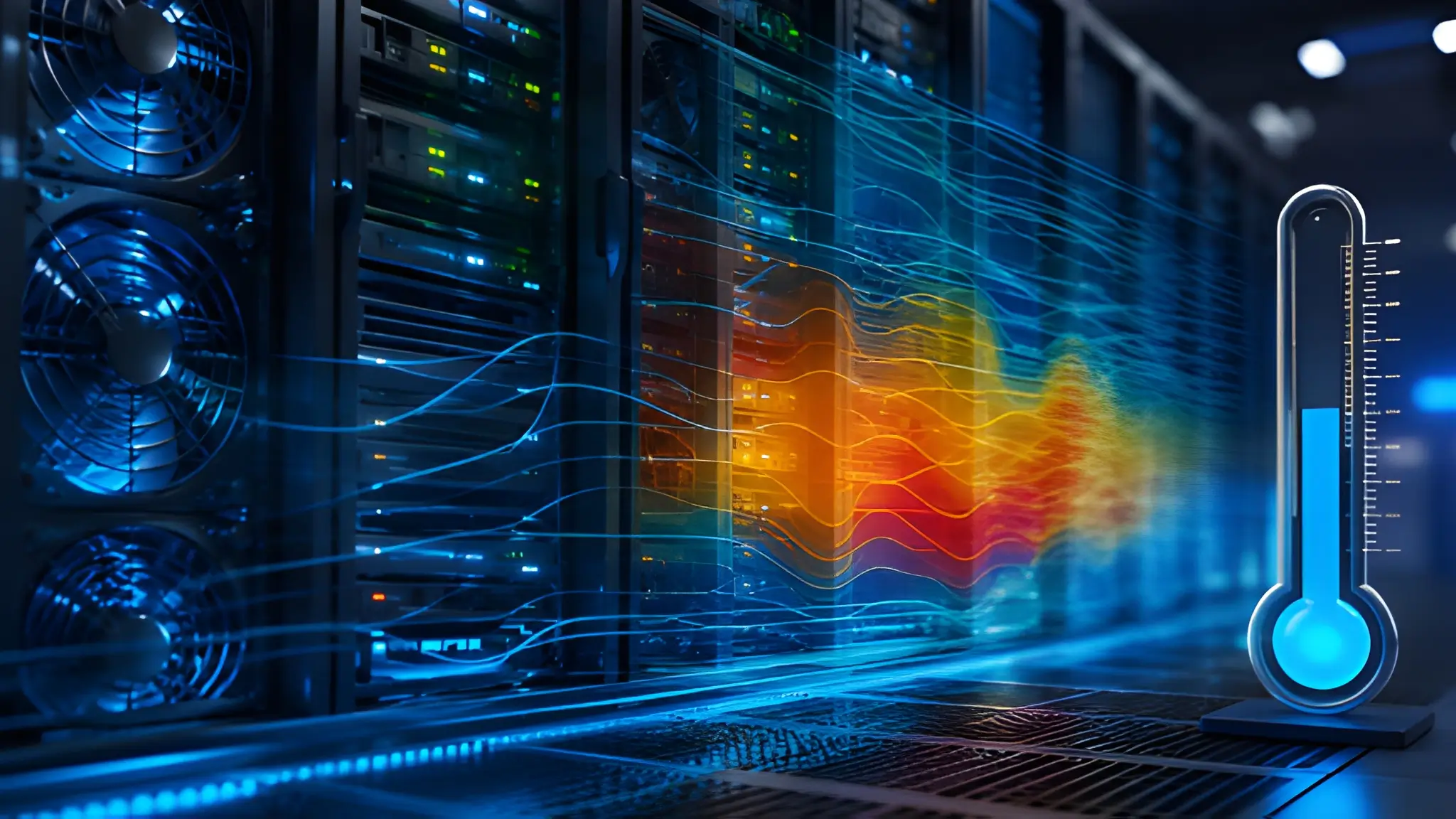
Today’s facilities can no longer rely on predictable thermal behavior. Rising compute density, intensive AI processing cycles, and highly variable workloads are changing how heat is generated, distributed and managed across infrastructure environments. Facilities that once depended on fixed cooling thresholds now face conditions where thermal patterns shift several times within a single operational window. High-density deployments generate concentrated thermal bursts that legacy environmental presets cannot absorb without performance inefficiencies or reliability concerns. Operators increasingly recognize that cooling infrastructure behaves more like a live operational system than a background utility layer inside modern compute environments. Thermal management strategies now require continuous interpretation of airflow behavior, equipment response, and fluctuating rack-level demand instead of static environmental assumptions. The transition away from “set-and-forget” cooling reflects a broader operational shift toward infrastructure that continuously adapts itself under changing digital workloads.
Cooling Can’t Run on Fixed Thresholds Anymore
In an era of more stable workloads, traditional cooling frameworks operated effectively when workloads followed relatively stable utilization patterns and hardware generated predictable thermal output across facility environments. Those conditions have changed because AI clusters, accelerated computing systems, and high-density rack architectures now create rapid fluctuations in heat concentration throughout operational spaces. Static temperature bands often respond too slowly because localized thermal conditions can shift before centralized systems recognize meaningful environmental changes. Many facilities still rely on environmental presets designed around average operating conditions even though modern compute infrastructure rarely operates near average utilization levels anymore. Cooling systems that depend entirely on threshold-based activation frequently overcool low-demand zones while simultaneously undercooling areas experiencing sudden processing intensity. Operators now prioritize dynamic thermal response platforms that continuously interpret changing environmental signals rather than waiting for predefined thresholds to trigger mechanical adjustments.
Environmental variability inside modern facilities also extends beyond server output because airflow distribution, rack arrangement, containment strategy, and equipment cycling behavior continuously influence localized thermal conditions. Facilities with mixed infrastructure generations often experience uneven cooling efficiency because older environmental frameworks cannot interpret the thermal complexity introduced by newer high-performance systems. Legacy thermal models assumed relatively balanced heat distribution patterns across aisles, yet modern compute environments produce concentrated hotspots that move dynamically across different operational zones. Cooling infrastructure designed around static assumptions often struggles to maintain efficiency because the facility itself no longer behaves in a thermally predictable manner. Consequently, operators increasingly integrate sensor-driven orchestration layers that analyze airflow movement and equipment behavior in near real time across the entire environment. Adaptive cooling logic is increasingly becoming an operational priority rather than a secondary optimization layer because environmental stability now depends more heavily on continuous thermal responsiveness.
Cooling Systems Are Learning to React Before Heat Spikes
Modern cooling infrastructure increasingly relies on predictive operational models that identify thermal instability before equipment temperatures rise beyond acceptable operating conditions. Facilities now deploy dense sensor networks that continuously capture airflow pressure, inlet temperature variation, humidity changes, and rack-level thermal movement across high-density environments. These sensor ecosystems generate operational intelligence that allows cooling systems to anticipate thermal escalation instead of reacting after heat accumulation already affects infrastructure stability. Predictive cooling logic analyzes historical workload behavior alongside live environmental conditions to identify recurring operational patterns that precede thermal stress events. Machine learning frameworks increasingly support this process by recognizing correlations between workload scheduling, compute intensity, and environmental response throughout the facility. Cooling operations are increasingly evolving beyond delayed-response mechanical systems toward more adaptive control architectures designed to stabilize infrastructure conditions proactively.
Facilities also coordinate airflow dynamically through intelligent containment systems, adaptive fan controls, and workload-aware cooling distribution mechanisms that respond to changing operational pressure points. Traditional systems often activated additional cooling only after thermal thresholds registered elevated temperatures within targeted equipment zones. Modern facilities now use predictive coordination models that adjust airflow trajectories before concentrated heat accumulation reaches critical operational levels. Sensor-driven orchestration platforms continuously evaluate airflow efficiency across aisles to prevent stagnant thermal pockets from developing around dense infrastructure clusters. Furthermore, advanced cooling environments increasingly synchronize facility management systems with workload orchestration platforms so thermal adjustments align directly with compute activity patterns. This operational convergence allows cooling infrastructure to maintain stability with greater precision while reducing unnecessary energy expenditure across underutilized facility sections.
Data Centers Are Starting to Cool by Behavior, Not Temperature
Modern facilities increasingly evaluate operational behavior patterns instead of relying exclusively on environmental readings because thermal conditions now evolve directly alongside workload characteristics. AI training clusters, accelerated processing systems, and distributed compute architectures generate highly irregular thermal behavior that traditional temperature-focused management models cannot interpret effectively. Some advanced cooling environments now adapt according to how equipment behaves during active processing cycles instead of relying exclusively on fixed temperature measurements. Workload-aware cooling systems analyze utilization rhythms, processing intensity changes, and application scheduling behavior to anticipate how heat will distribute across infrastructure environments. These systems identify operational sequences that historically correlate with thermal escalation and adjust cooling resources before environmental conditions deteriorate. Facilities adopting behavioral thermal management models often achieve greater airflow efficiency because cooling distribution aligns more closely with actual infrastructure activity patterns.
Behavior-driven cooling operations also improve infrastructure resilience because they reduce the lag between workload shifts and environmental stabilization throughout high-density facilities. Legacy cooling frameworks typically interpreted temperature increases only after heat concentration already intensified around active compute clusters. Adaptive operational models instead evaluate workload transitions continuously so cooling adjustments occur alongside evolving infrastructure demand rather than after environmental imbalance develops. Thermal management systems increasingly map heat movement behavior across facilities to understand how processing intensity influences airflow disruption within specific infrastructure zones. Meanwhile, operators now recognize that identical temperature readings can represent entirely different operational risks depending on workload distribution and compute activity patterns. Cooling infrastructure is gradually evolving toward more context-aware environmental management models where operational behavior supports traditional thermal measurements during cooling decisions.
The Age of Manual Cooling Adjustments Is Quietly Ending
Technician-led thermal balancing once formed the operational backbone of facility cooling management because infrastructure environments changed slowly enough for manual intervention to remain effective. Modern compute environments no longer provide that operational stability because thermal conditions shift continuously as workloads migrate dynamically across infrastructure systems. Manual cooling adjustments struggle to maintain environmental consistency because human response speed cannot match the pace of modern workload fluctuation. Facilities increasingly deploy automated thermal management platforms that recalibrate airflow behavior, cooling intensity, and environmental distribution throughout operational cycles. These systems continuously evaluate live facility conditions without waiting for operators to identify developing thermal imbalance through periodic observation. Autonomous cooling infrastructure now supports operational continuity by maintaining consistent environmental adaptation even during rapid workload volatility.
The operational shift away from manual cooling management also reflects the growing complexity of infrastructure ecosystems that contain mixed hardware densities, varied cooling architectures, and constantly changing compute allocation patterns. Older facilities often depended on localized technician adjustments because environmental conditions remained relatively static across infrastructure zones during predictable workload cycles. Modern facilities instead require continuous recalibration because localized thermal conditions evolve minute-by-minute based on processing demand and airflow behavior. Consequently, autonomous orchestration systems now integrate directly with building management infrastructure to coordinate thermal response across cooling equipment, containment systems, and airflow distribution layers simultaneously. Real-time environmental automation also improves operational efficiency because cooling resources adjust according to live demand instead of fixed scheduling assumptions. Many high-density facilities now view thermal automation as an increasingly important operational capability rather than a supplemental infrastructure enhancement.
Invisible Heat Pockets Are Becoming a Bigger Operational Threat
Localized thermal buildup increasingly threatens facility reliability because modern infrastructure environments generate uneven heat concentration patterns that centralized monitoring frameworks often fail to detect early. High-density compute clusters create microclimates where airflow stagnation, rack obstruction, and containment imbalance produce concentrated thermal accumulation within relatively small operational areas. Traditional monitoring systems frequently overlook these conditions because they depend on generalized environmental averages instead of granular thermal mapping across infrastructure zones. Invisible heat pockets may persist temporarily without triggering facility-wide alerts even while localized equipment temperatures continue rising near critical operational thresholds. These microthermal conditions can gradually reduce hardware stability, disrupt airflow efficiency, and increase long-term infrastructure stress throughout densely populated compute environments.
Microclimate instability also creates operational uncertainty because thermal buildup rarely follows consistent physical boundaries inside modern facilities with mixed-density deployments and variable airflow behavior. Environmental dead zones may emerge unexpectedly around cable concentrations, containment gaps, inactive airflow corridors, or tightly packed infrastructure assemblies that restrict thermal dispersion. Static monitoring architectures often struggle to interpret these evolving thermal irregularities because they measure environmental conditions too broadly across operational spaces. Adaptive cooling systems increasingly use granular thermal telemetry combined with airflow simulation modeling to identify areas vulnerable to hidden thermal accumulation. Nevertheless, facilities must continuously recalibrate environmental monitoring strategies because compute architectures continue evolving faster than traditional cooling assumptions anticipated. The growing operational importance of localized thermal visibility now influences both facility design strategy and long-term infrastructure reliability planning across modern compute environments.
Modern Cooling Infrastructure Can No Longer Stay Static
Cooling infrastructure now operates inside environments where thermal conditions evolve continuously alongside shifting compute demand, changing workload intensity, and increasingly concentrated processing architectures. Fixed environmental assumptions no longer align with operational reality because modern facilities experience dynamic thermal movement across nearly every infrastructure layer. Facilities adopting adaptive thermal operations gain greater environmental responsiveness because cooling systems interpret infrastructure behavior continuously instead of reacting after instability develops. Real-time orchestration platforms, predictive cooling intelligence, and workload-aware environmental coordination now define how advanced facilities maintain operational stability under variable processing conditions. Static cooling strategies continue losing relevance because modern compute environments no longer behave in predictable thermal cycles that fixed thresholds can manage efficiently. The future of facility cooling depends on continuously responsive thermal ecosystems designed to evolve minute-by-minute alongside the infrastructure environments they support.