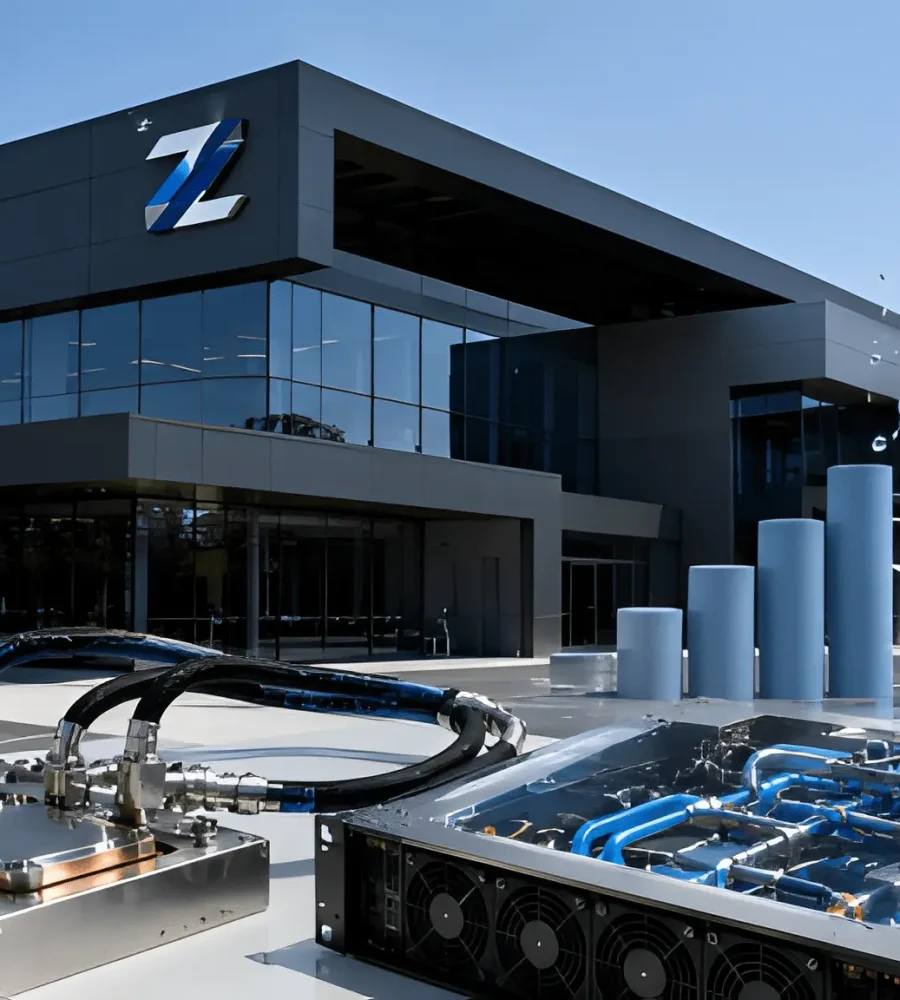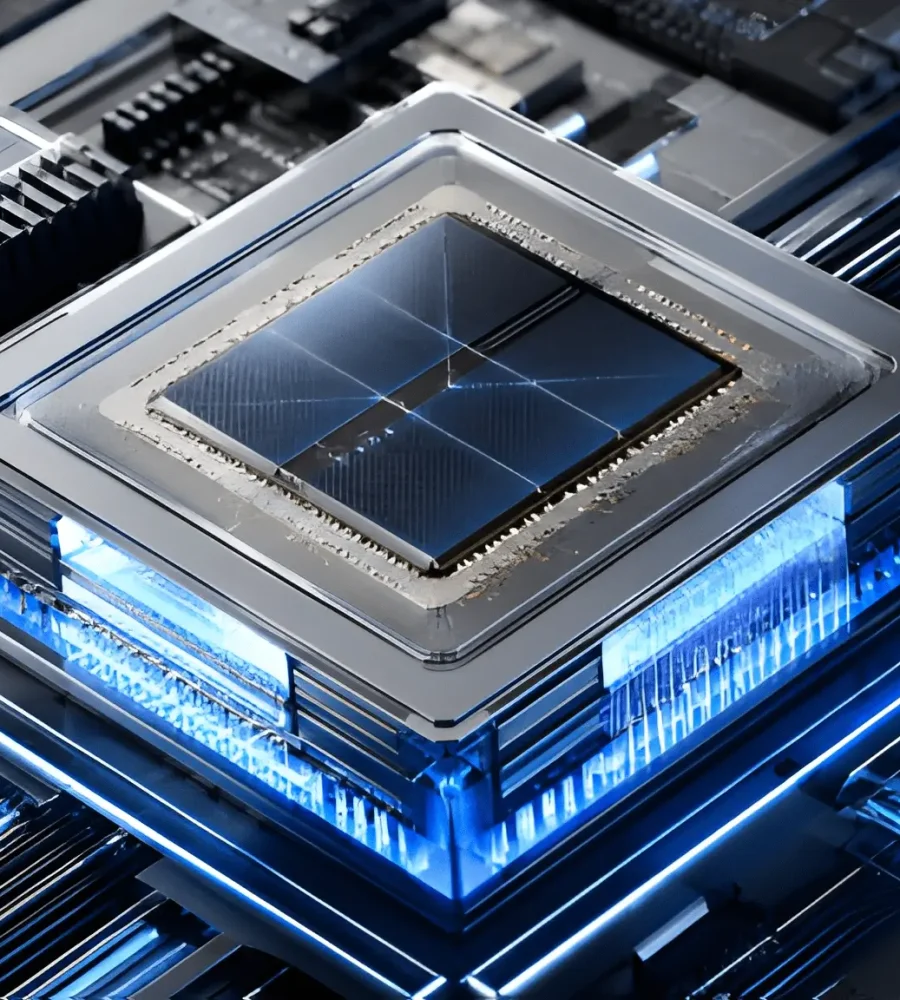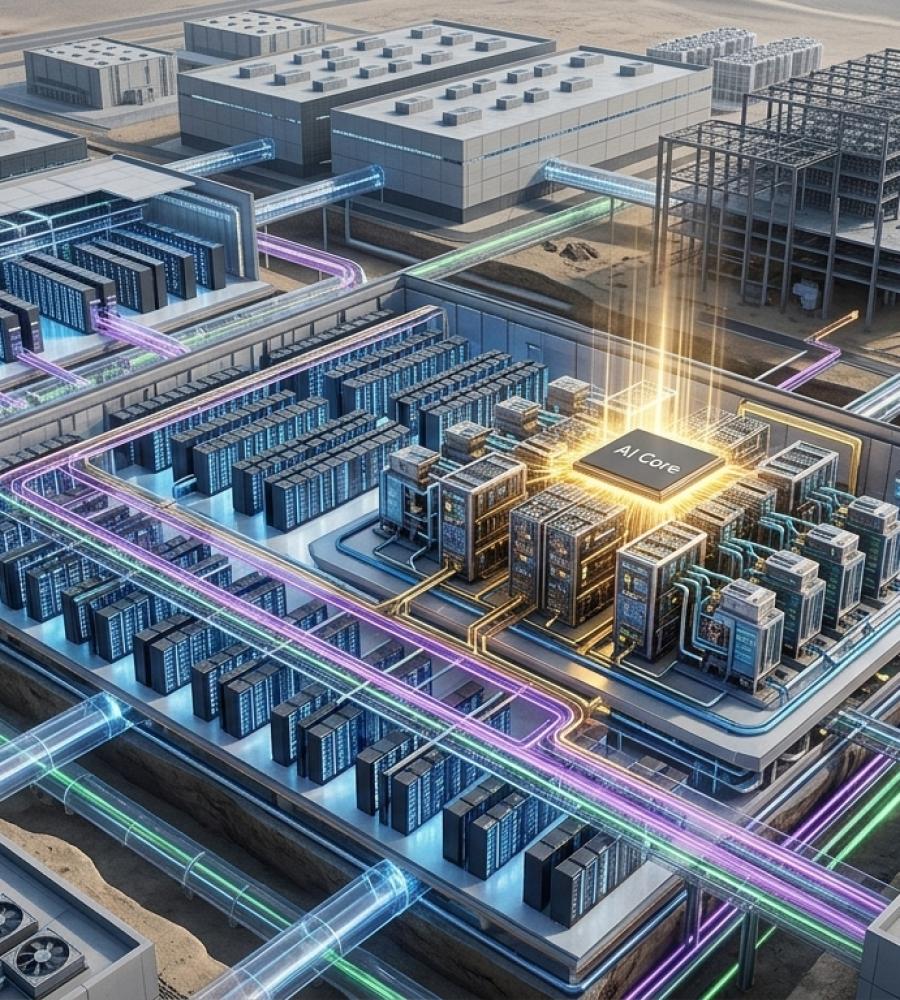
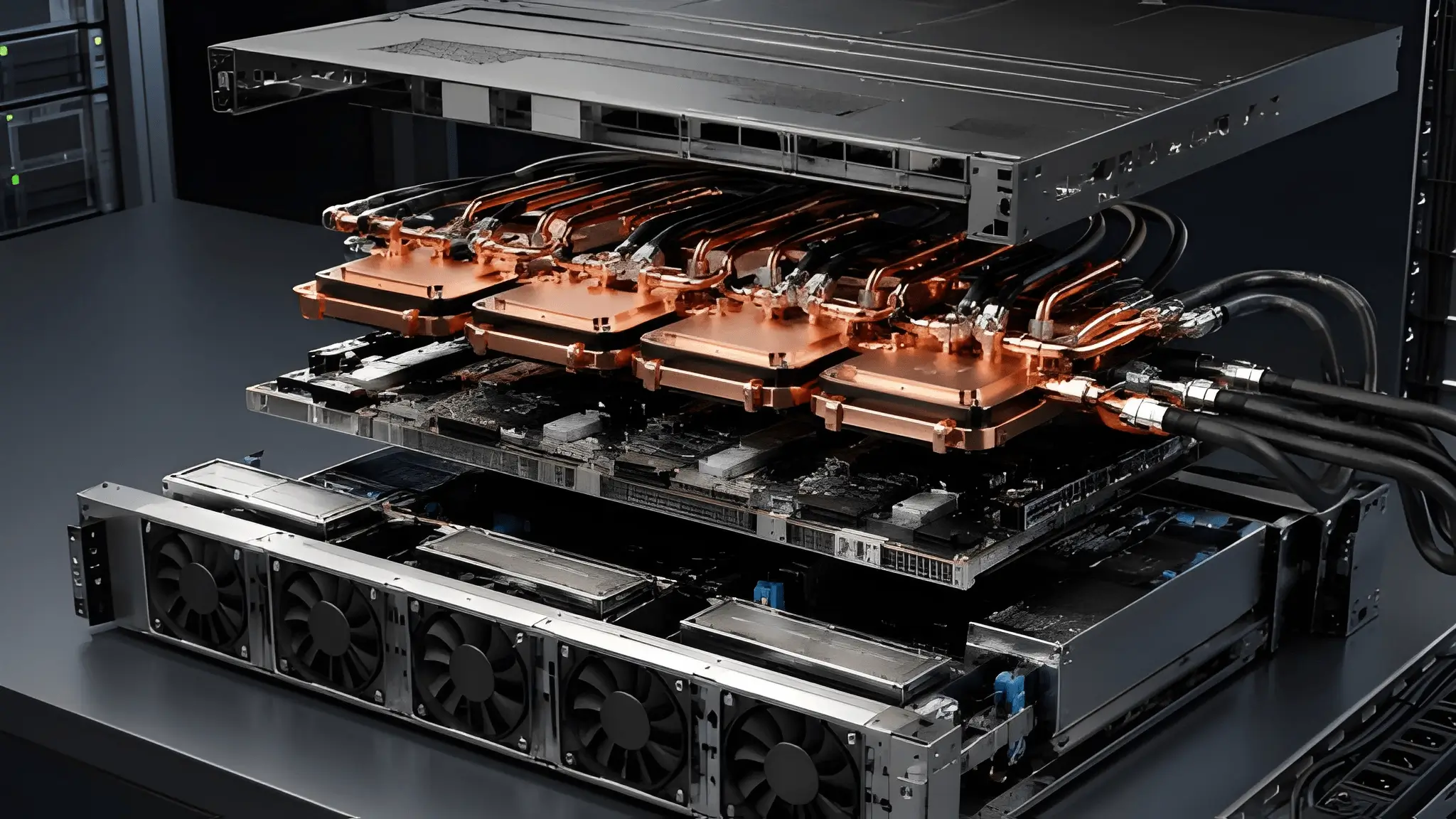
Modern servers no longer evolve around processors alone because thermal management has moved directly into the center of hardware architecture decisions. Traditional air-cooled systems once treated cooling hardware as a secondary layer wrapped around compute components, yet direct-to-chip liquid cooling has started reversing that relationship inside modern AI infrastructure. Cold plates now occupy structural territory that previously supported airflow channels, service clearances, and portions of internal hardware routing within many high-density AI server designs. Engineering teams increasingly redesign physical server geometry around coolant movement before they finalize board layouts or chassis dimensions. Mechanical constraints now shape compute density in ways that resemble industrial equipment design more than legacy enterprise hardware development. The physical shape of servers has therefore entered a new transition period driven largely by thermal engineering rather than processor scaling alone.
Older server platforms relied on predictable airflow behavior because fans, heatsinks, and ducting systems scaled relatively well across standard rack dimensions. Direct liquid cooling changed that balance after accelerators, memory subsystems, and high-density processors started generating concentrated thermal loads across uneven regions of the motherboard. Cooling hardware therefore stopped acting like a supporting subsystem and started becoming a structural layer embedded into the server itself. Tubing paths, manifolds, quick disconnect systems, and reinforced retention brackets now compete for physical volume alongside storage devices and compute hardware. Internal mechanical tolerances have consequently tightened across modern AI systems where even small routing decisions influence coolant accessibility and maintenance procedures. The modern server chassis now reflects thermal compromises visible in nearly every physical dimension under the lid.
Cold Plates Are Consuming the Last Empty Space Inside Servers
Older server chassis designs preserved open internal zones to support airflow movement, cable routing, and accessible servicing around major compute components. Cold plate integration has steadily consumed many of those empty regions because liquid cooling systems require dedicated tubing paths, retention assemblies, and fluid distribution hardware throughout the chassis interior. Compute density therefore no longer expands into unused space freely because thermal hardware already occupies substantial portions of the available physical envelope. Engineers increasingly compress storage placement and power delivery hardware simply to maintain workable coolant routing geometries inside constrained server dimensions. Clearance zones that once improved technician access now frequently accommodate manifolds or quick disconnect assemblies positioned near accelerator clusters. Internal server architecture has consequently become denser, mechanically layered, and physically more difficult to simplify around standard layouts.
Direct-to-chip cooling also changes vertical spacing inside the chassis because cold plate stacks add physical height above processors and accelerators. Traditional heatsinks distributed thermal mass vertically while airflow moved horizontally through the system, yet cold plates require fluid channels, mounting hardware, and reinforced contact structures around the silicon package itself. Designers therefore lose flexibility in adjacent component positioning because tubing access points demand specific mechanical clearances above the board surface. Accelerator spacing becomes harder to optimize once coolant pathways intersect with service access regions or power cable routing. Mechanical interference analysis now extends beyond electrical compatibility because thermal routing paths can physically block upgrade or replacement procedures. Hardware development cycles increasingly include fluid pathway simulations alongside conventional board validation workflows.
Chassis Density Now Depends on Fluid Path Engineering
Server density discussions historically focused on processor count, storage integration, or rack-level power delivery efficiency across standardized footprints. Cold plate systems shifted much of that conversation toward fluid path engineering because coolant distribution directly affects how tightly hardware can physically integrate inside the chassis. Engineers now optimize tubing length, connector positioning, and manifold orientation with the same attention previously given to airflow impedance or cable management. Compact layouts often introduce mechanical stress around coolant fittings when routing paths become excessively constrained inside accelerator-heavy systems. Fluid pathway efficiency therefore influences board orientation decisions that once depended mainly on electrical trace optimization. Thermal infrastructure has effectively become a first-order determinant of physical hardware density.
The physical rigidity of coolant tubing also creates layout constraints that differ sharply from flexible airflow-based thermal systems. Air cooling permitted relatively open chassis organization because airflow adapted dynamically around obstructions inside the server enclosure. Liquid systems instead require predictable routing geometry to prevent excessive flow resistance, mechanical vibration, or connector fatigue across long operating cycles. Engineers therefore reduce routing complexity even when those simplifications create asymmetrical motherboard layouts or altered service access regions. Mechanical reliability increasingly shapes hardware positioning because coolant leaks or tubing stress create far greater operational risks than localized airflow inefficiencies. Server interiors now prioritize stable thermal plumbing arrangements over visually symmetrical hardware organization.
The Flat Server Era Is Quietly Breaking Down
Traditional low-profile servers evolved around horizontal airflow assumptions that matched the thermal behavior of earlier processor generations and moderate accelerator deployments. Thin chassis geometries worked effectively because air cooling hardware scaled within relatively predictable dimensional boundaries across standard rack environments. Cold plate systems disrupted those assumptions after direct liquid cooling introduced vertical mechanical layers that no longer fit comfortably inside compressed server profiles. Tubing connectors, fluid manifolds, and reinforced mounting structures now require physical volume that older low-profile platforms rarely reserved during their original architectural planning. Hardware teams increasingly confront situations where vertical space constraints interfere directly with coolant routing efficiency and service accessibility. The flat server model therefore struggles to accommodate modern thermal hardware without significant structural compromises across the chassis interior.
Accelerator density intensified this breakdown because modern AI hardware generates concentrated thermal regions that require larger cooling assemblies than earlier compute generations demanded. Air-cooled platforms historically distributed heatsinks and airflow zones evenly across the motherboard surface, yet direct-to-chip cooling introduces localized mechanical bulk around processors and accelerator packages. Compact chassis dimensions consequently create interference problems between coolant fittings, memory placement, and internal cable routing paths. Engineers now encounter physical conflicts where board components compete directly for the same vertical clearance inside the enclosure. Structural rigidity also becomes harder to maintain once reinforced cold plate assemblies increase localized mass concentrations across the motherboard. Thin server designs increasingly reveal mechanical limitations that airflow-based architectures previously concealed.
Horizontal Airflow Assumptions No Longer Control Server Architecture
Air-cooled servers depended heavily on uninterrupted horizontal airflow channels that moved thermal energy consistently from intake regions toward exhaust zones. Cold plate systems fundamentally alter that design logic because liquid coolant transports heat directly through closed-loop pathways instead of relying on large-scale internal air movement. Internal server layouts therefore no longer revolve primarily around optimizing airflow continuity across every component region. Engineers increasingly prioritize fluid routing efficiency even when those decisions interrupt traditional airflow symmetry or alter component positioning inside the chassis. Thermal architecture now operates through localized liquid transport systems rather than broad directional air circulation across the enclosure. Horizontal airflow has consequently lost its role as the dominant organizing principle inside next-generation AI hardware.
Cooling infrastructure changes also affect fan placement and internal pressure management across liquid-cooled systems. Older servers relied on coordinated fan arrays that established consistent pressure gradients throughout the chassis interior, yet direct liquid cooling reduces dependence on large airflow volumes around major heat sources. Fan systems therefore shrink, relocate, or support secondary cooling tasks instead of functioning as the primary thermal mechanism. Mechanical layouts increasingly reorganize around coolant distribution hardware rather than airflow duct optimization. Certain chassis regions now prioritize tubing accessibility over maintaining uninterrupted air channels across the motherboard surface. The physical logic governing server interiors has therefore shifted toward fluid management engineering rather than aerodynamic balancing alone.
AI Servers Are Starting to Resemble Industrial Machines
Mechanical packaging requirements intensify further once accelerator density increases across multi-processor AI platforms. Cold plates surrounding accelerators often connect through rigid or semi-rigid coolant pathways that demand precise alignment during manufacturing and maintenance operations. Traditional server hardware tolerated modest assembly variance because airflow systems adapted dynamically around physical obstructions inside the chassis. Liquid cooling hardware instead requires carefully controlled connector positioning and stable mounting geometries to maintain leak resistance and predictable coolant flow characteristics. Engineers therefore treat structural rigidity as a critical design parameter alongside compute scalability and electrical efficiency. Physical server construction increasingly resembles precision mechanical assembly rather than lightweight modular electronics integration.
Weight distribution also changes dramatically inside liquid-cooled AI platforms because cold plates, coolant lines, and reinforced support hardware add substantial localized mass around processors and accelerators. Air-cooled systems generally distributed heatsink weight evenly across the motherboard surface, yet dense liquid cooling systems concentrate structural loads around key compute regions. Chassis frames therefore require stronger reinforcement strategies to prevent board flex, connector strain, or long-term mechanical fatigue during operation and transport. Structural engineering now influences rack insertion methods, rail systems, and service handling procedures across many high-density platforms. AI servers consequently behave more like mechanically sensitive equipment assemblies than interchangeable commodity hardware. Thermal infrastructure has effectively transformed server construction into a heavier and more mechanically coordinated discipline.
Cooling Assemblies Are Driving Structural Complexity
Air-cooled servers historically maintained relatively straightforward internal geometries because fans and heatsinks integrated cleanly into standardized rack dimensions with minimal structural adaptation. Cold plate systems introduced complex layered assemblies that require coordinated integration between fluid hardware, compute components, and chassis reinforcement structures. Manifold placement now affects motherboard orientation, while tubing bend radius limits influence internal component spacing across the enclosure. Engineers therefore solve structural packaging problems that resemble compact industrial plumbing design more than legacy airflow optimization. Cooling hardware increasingly dictates the mechanical rhythm of the entire system interior. Physical server organization now emerges from fluid pathway coordination rather than modular board stacking alone.
Manufacturing processes also evolve because liquid cooling systems demand tighter assembly tolerances and more coordinated validation procedures than traditional air-cooled platforms required. Technicians must verify coolant routing integrity, pressure stability, connector alignment, and mechanical retention consistency across increasingly dense assemblies. Structural variability that once remained acceptable in airflow-driven hardware can now create operational risk inside direct liquid cooling environments. Hardware development therefore integrates mechanical reliability testing much earlier in the production cycle. AI server construction increasingly combines principles from electronics manufacturing and industrial equipment assembly within the same platform. The distinction between compute hardware and engineered mechanical infrastructure continues narrowing as cold plate integration expands deeper into server architecture.
Internal Coolant Routing Is Becoming a Bigger Design Problem
Rack density dominated server planning discussions for many years because airflow-based systems focused heavily on maximizing compute hardware inside standardized physical footprints. Cold plate integration shifted much of that engineering attention inward because internal coolant routing now creates tighter design constraints than external rack dimensions in many AI systems. Engineers increasingly spend more effort optimizing tubing geometry, manifold positioning, and connector accessibility than reducing overall chassis width or height. Fluid pathways directly influence component spacing because excessive tubing curvature or routing congestion can reduce coolant efficiency and complicate maintenance procedures. Internal thermal transport therefore governs hardware placement decisions throughout the server enclosure. Physical layout optimization has gradually become a coolant management challenge rather than a purely spatial packaging exercise.
Routing complexity intensifies rapidly inside accelerator-dense platforms because several high-power devices often require coordinated cooling loops within limited physical space. Air-cooled architectures allowed relatively flexible component arrangement since airflow adapted around most internal obstacles without requiring rigid pathway control. Liquid cooling systems instead demand predictable flow behavior through carefully engineered routing geometries that avoid excessive pressure loss or mechanical strain. Engineers consequently alter board orientation, connector placement, and service clearances simply to maintain workable coolant distribution paths. Internal hardware organization increasingly reflects hydraulic logic rather than traditional compute modularity principles. Fluid routing has effectively become one of the dominant structural forces shaping next-generation AI servers.
Tubing Geometry Is Reshaping Component Accessibility
Component accessibility once depended primarily on removable panels, cable organization, and modular board layouts within airflow-cooled server systems. Cold plate integration introduced tubing geometry as a major accessibility constraint because coolant lines often cross directly above processors, accelerators, and memory regions inside compact chassis designs. Technicians now navigate around fluid pathways that require controlled handling procedures during maintenance operations. Engineers therefore preserve specific movement corridors within the chassis to allow safe disconnection and removal of liquid cooling assemblies. Internal hardware positioning increasingly accounts for physical hand clearance and tooling access around coolant infrastructure. Service design has consequently become deeply connected to tubing geometry across modern AI servers.
Tubing bend radius requirements further complicate accessibility because coolant pathways cannot tolerate sharp directional changes inside densely packed hardware environments. Flexible routing strategies common in traditional cable management often become mechanically unsafe or hydraulically inefficient within liquid-cooled systems. Engineers consequently reposition memory modules, storage devices, and power connectors simply to maintain acceptable tubing trajectories throughout the chassis interior. Certain hardware regions now remain intentionally open because coolant line movement or service procedures require unobstructed mechanical space. Compute density therefore competes directly with routing accessibility in ways that airflow systems rarely imposed. Internal server geometry increasingly reflects the physical behavior of coolant transport hardware rather than the compactness goals of conventional rack computing.
Cold Plates Are Making Servers Taller, Heavier, and Harder to Standardize
Traditional server enclosures evolved around lightweight structural assumptions because airflow cooling hardware imposed relatively modest mechanical loads across the motherboard and chassis frame. Dense cold plate assemblies have significantly altered those assumptions by adding concentrated weight around processors, accelerators, and coolant distribution regions. Reinforced mounting structures now support large thermal transfer plates, fluid connectors, retention brackets, and tubing assemblies operating under sustained pressure conditions. Engineers increasingly strengthen server frames to prevent flex behavior that could disturb coolant seals or create uneven contact pressure across high-power silicon packages. Mechanical rigidity therefore becomes essential for maintaining both thermal reliability and long-term structural stability inside liquid-cooled systems. Modern AI server construction now prioritizes reinforced physical architecture in ways earlier airflow platforms rarely required.
Weight distribution challenges intensify further when multiple accelerators occupy a single chassis because cold plates concentrate significant mass across limited motherboard regions. Air-cooled heatsinks often spread mechanical load relatively evenly through broad mounting systems, yet liquid cooling hardware creates localized structural stress around densely packed compute zones. Chassis engineers consequently add bracing structures, reinforced rails, and stronger board support mechanisms throughout the enclosure. Rack insertion procedures also change because heavier systems place greater strain on sliding hardware and service handling workflows. Physical server management increasingly resembles industrial equipment handling rather than routine modular IT maintenance. Structural engineering has therefore become inseparable from thermal integration across next-generation AI hardware platforms.
Rack Compatibility Is Becoming More Complex
Standardized rack ecosystems historically simplified hardware deployment because air-cooled servers generally conformed to predictable dimensional and airflow requirements across multiple generations. Cold plate integration disrupts that consistency because liquid-cooled systems introduce varying manifold configurations, tubing exits, and service clearance demands between platforms. Rack compatibility now extends beyond width and mounting dimensions into fluid distribution alignment and maintenance accessibility considerations. Engineers increasingly design server hardware around cooling loop integration requirements that differ substantially from one infrastructure environment to another. Mechanical standardization may become more difficult as coolant architecture becomes increasingly integrated into physical server design. The rack ecosystem itself now adapts around thermal infrastructure rather than merely housing interchangeable compute hardware.
Rear chassis depth has become particularly important because tubing assemblies and coolant connectors often extend beyond the compact footprints associated with earlier server generations. Air-cooled systems primarily reserved rear clearance for airflow exhaust and cable management, yet liquid-cooled platforms additionally require space for fluid routing and connector movement during maintenance operations. Rack layouts consequently evolve around coolant accessibility instead of purely maximizing hardware density within confined floor space. Service corridors and maintenance procedures now reflect the physical demands of liquid infrastructure alongside compute scaling objectives. Mechanical integration between server and rack systems has therefore become far more interdependent than previous airflow-driven environments required. Physical infrastructure planning increasingly begins with thermal routing considerations rather than compute deployment density alone.
AI Servers Are Starting to Bend Around Coolant Paths
Flow efficiency has emerged as a major design objective because uneven coolant distribution can create localized thermal instability across dense accelerator systems. Engineers therefore organize internal server geometry around balanced coolant transport pathways that minimize resistance and maintain predictable thermal transfer behavior. Air-cooled systems historically relied on broad airflow movement that tolerated moderate internal irregularities without severe performance consequences. Liquid cooling systems instead require carefully coordinated routing strategies because small geometric disruptions can influence pressure behavior and thermal consistency throughout the loop. Internal component organization consequently follows hydraulic efficiency principles alongside traditional electrical design requirements. Physical server layouts increasingly resemble engineered flow systems carrying compute hardware through constrained thermal corridors.
Flow balancing requirements become even more complicated when several accelerators share interconnected coolant distribution networks within the same chassis. Engineers must maintain relatively stable flow behavior across multiple cold plates while preserving accessible service pathways and manageable tubing geometry. Certain layout decisions therefore prioritize coolant equilibrium over maximizing theoretical compute density or maintaining conventional board symmetry. Manifold placement additionally shapes internal geometry because distribution hardware often occupies central structural regions inside the enclosure. Thermal engineering now directly influences the architectural skeleton of dense AI servers rather than acting as a surrounding support system. Physical server structure increasingly emerges from fluid coordination logic instead of purely electronic packaging strategies. Maintenance procedures reinforce many of these geometric changes because servicing operations require stable coolant routing and safe movement clearances around tubing assemblies.
The Real AI Infrastructure Shift Is Happening Under the Server Lid
Compute performance historically dominated server development conversations because processor scaling and accelerator integration defined most visible infrastructure advances across the industry. Direct liquid cooling has quietly shifted much of the architectural complexity beneath the chassis lid where thermal engineering now shapes nearly every physical hardware decision. Cold plates, coolant pathways, manifold systems, and reinforced retention structures increasingly determine how servers organize internal space before electrical layouts even reach finalization. Engineers therefore approach hardware development through thermal constraints first rather than treating cooling systems as secondary integration layers. Physical server architecture now emerges from coordinated heat transport requirements operating within extremely dense mechanical environments. The most significant transformation in AI infrastructure consequently occurs inside the chassis rather than through external rack appearance alone.
Many of these changes remain visually subtle from outside the rack because external server dimensions often conceal the extensive internal restructuring caused by cold plate integration. Traditional airflow systems relied on relatively generic internal layouts that adapted across multiple hardware generations without major architectural disruption. Liquid cooling systems instead require deeply customized internal geometries tailored around specific thermal loads, flow pathways, and service accessibility requirements. Engineers now redesign board orientation, support structures, and routing strategies around coolant behavior unique to each accelerator configuration. Thermal infrastructure therefore influences physical hardware identity far more aggressively than earlier airflow-driven environments ever demanded. Modern AI servers increasingly function as specialized thermal transport systems carrying compute hardware inside them. This hidden transformation also affects infrastructure planning beyond the server itself because internal cooling architecture influences rack design, maintenance procedures, and deployment workflows throughout the data center environment.
Compute Scaling Now Depends on Mechanical Coordination
Processor advancements alone no longer guarantee practical infrastructure scaling because thermal transport limitations increasingly constrain how densely hardware can operate within standard physical environments. Cold plate systems changed this relationship by making mechanical coordination central to overall compute scalability inside modern AI servers. Engineers now balance coolant flow behavior, tubing accessibility, structural rigidity, and service procedures alongside electrical performance optimization. Internal server development therefore resembles multidisciplinary mechanical system design rather than isolated electronics engineering. Compute expansion increasingly succeeds only when thermal infrastructure remains physically manageable under dense operational conditions. Mechanical coordination has consequently become inseparable from future AI hardware scaling strategies.
Service operations reveal many of these coordination challenges because maintenance workflows now involve complex interaction between compute hardware and integrated thermal systems. Traditional servers often supported straightforward component replacement without significantly disturbing surrounding infrastructure inside the chassis. Cold plate platforms instead require controlled handling around coolant pathways, retention systems, and fluid connectors during nearly every major repair procedure. Engineers consequently design servers around coordinated maintenance movement rather than purely maximizing hardware density within fixed rack dimensions. Mechanical access strategies now shape infrastructure scalability alongside performance and power delivery considerations. AI hardware architecture increasingly reflects the physical realities of heat transport engineering hidden beneath the server lid.
Cold Plates Are Quietly Ending Symmetrical Server Design
Symmetrical server architecture dominated hardware design for decades because airflow cooling benefited from evenly distributed components and predictable thermal movement across the chassis interior. Dense AI accelerators disrupted that balance by generating concentrated thermal regions that vary significantly between processors, memory systems, and interconnect hardware. Cold plate integration amplifies these differences because coolant pathways must adapt directly to localized heat behavior instead of relying on generalized airflow distribution. Engineers therefore arrange hardware asymmetrically to optimize coolant routing efficiency and maintain practical service accessibility around high-power regions. Internal layouts increasingly prioritize thermal response patterns over visual or structural symmetry. Some modern AI server layouts increasingly reflect uneven heat distribution instead of the balanced organization principles common in earlier computing systems.
Accelerator placement often drives these asymmetrical configurations because certain compute zones require substantially more aggressive thermal management than surrounding hardware regions. Air-cooled systems could frequently maintain mirrored layouts despite moderate thermal variation because broad airflow patterns averaged temperature behavior across the enclosure. Liquid cooling systems instead respond directly to localized heat intensity through dedicated cold plate assemblies and tailored coolant routing paths. Engineers consequently offset memory banks, connector regions, and power hardware to accommodate irregular thermal infrastructure arrangements inside the chassis. Board organization increasingly follows cooling logic unique to each compute density profile rather than preserving traditional geometric consistency. Traditional physical symmetry in some server hardware designs is becoming less common as cold plate systems expand deeper into AI infrastructure.
The Next Rack Density Battle Will Happen Inside the Chassis
Rack density once depended largely on how many servers operators could physically install within standardized enclosure heights and power delivery limits. Liquid cooling systems changed that equation because internal accessibility now determines whether dense AI hardware remains serviceable, maintainable, and mechanically stable during long deployment cycles. Engineers increasingly discover that compute compactness alone provides little value when technicians cannot safely access coolant interfaces or replace hardware inside tightly packed chassis interiors. Tubing pathways, manifold clearances, and removal trajectories now consume valuable internal space that older airflow-driven systems rarely reserved for maintenance movement. Internal service geometry therefore shapes practical hardware density more aggressively than external rack dimensions in many modern AI platforms. The next major density challenge consequently unfolds beneath the server lid rather than at the rack level itself.
Dense accelerator systems intensify this transition because several high-power devices often share interconnected cooling infrastructure within confined physical environments. Air-cooled platforms generally allowed relatively direct component replacement procedures even inside compact rack deployments because airflow hardware imposed limited mechanical obstruction around major compute regions. Cold plate systems instead introduce layered physical dependencies where coolant hardware must often move before processors, accelerators, or memory modules become accessible. Engineers therefore allocate increasing amounts of internal chassis space toward controlled maintenance pathways and structural stabilization around thermal infrastructure. Service accessibility now competes directly with theoretical compute density inside many AI server designs. Internal mechanical organization increasingly determines how much hardware can realistically operate within a deployable enclosure.
Rack Depth Is Expanding Around Cooling Infrastructure
Rack depth historically remained relatively stable because airflow cooling systems generally concentrated thermal management hardware within predictable server footprints. Certain liquid-cooled AI deployments require additional rear and side clearance regions because tubing exits, manifold assemblies, and coolant distribution hardware occupy more physical space. Engineers now redesign rack spacing around fluid accessibility and connector movement rather than relying solely on cable management allowances behind the chassis. Physical infrastructure planning therefore changes alongside server architecture as cooling hardware expands outward from the motherboard itself. Rack systems increasingly function as integrated thermal environments instead of passive mounting structures for interchangeable compute hardware. Cooling infrastructure now shapes external deployment geometry as directly as internal server organization.
Coolant distribution architecture additionally influences rack depth variation because manufacturers implement different manifold orientations and fluid entry strategies across liquid-cooled hardware ecosystems. Certain systems centralize coolant connections near the rear chassis boundary while others distribute fluid interfaces more broadly throughout the rack structure. Technicians therefore encounter diverse accessibility conditions depending on the thermal integration philosophy behind each platform. Standardized rack geometry becomes harder to preserve once liquid infrastructure begins shaping deployment clearances so extensively. Physical infrastructure planning increasingly adapts around coolant logistics unique to specific hardware designs. The next generation of rack density competition will likely depend less on external dimensions and more on how effectively engineers organize thermal infrastructure within the chassis itself.
Future Servers Will Be Built Around Heat Before Compute
Server architecture once began with compute scaling targets because processors, accelerators, and memory density defined the direction of most infrastructure development cycles. Liquid cooling systems have gradually reversed that sequence by forcing engineers to solve thermal transport problems before optimizing broader hardware integration strategies. Cold plates, tubing geometry, manifold positioning, and coolant accessibility now establish many of the physical boundaries surrounding motherboard layouts and chassis proportions. Engineers therefore approach AI server development through heat management requirements first rather than adapting cooling systems afterward. Mechanical coordination increasingly shapes how much compute hardware can physically coexist inside a stable enclosure. Future AI server platforms may increasingly emerge from thermal engineering priorities alongside performance scaling requirements.
This transition reflects a deeper infrastructure reality because modern accelerators generate concentrated thermal conditions that conventional airflow systems struggle to manage within practical density limits. Direct liquid cooling introduced an entirely different architectural logic where coolant pathways behave almost like structural infrastructure embedded into the server itself. Internal component placement increasingly follows hydraulic efficiency, tubing accessibility, and service stability rather than preserving symmetrical layouts or legacy form factors. Engineers consequently redesign hardware around the physical movement of heat through constrained mechanical environments. Thermal transport now acts as a governing force across nearly every layer of server organization beneath the chassis lid. AI infrastructure evolution increasingly depends on mastering physical heat management instead of simply increasing computational capability.
Heat Management Will Define the Next Era of Hardware Identity
Server identity historically centered on processor architecture, rack density, and computational throughput because thermal systems remained largely invisible support infrastructure behind the hardware itself. Cold plate integration has changed that relationship by making heat management one of the defining characteristics of modern AI platforms. Chassis proportions, motherboard organization, service workflows, and structural reinforcement strategies increasingly originate from cooling system requirements rather than purely electronic considerations. Engineers now design around the physical realities of coolant transport with the same seriousness once reserved exclusively for compute scalability. Thermal infrastructure has effectively become inseparable from the hardware identity of next-generation servers. AI systems increasingly reveal their cooling architecture through their physical shape and mechanical organization.
Future rack ecosystems will likely reflect this transformation because deployment environments must adapt around fluid distribution infrastructure, maintenance access requirements, and evolving chassis geometries. Air-cooled hardware succeeded partly through broad physical standardization that simplified integration across different computing environments for many years. Liquid cooling systems can encourage greater architectural diversity because platforms often balance thermal density, serviceability, and mechanical integration differently. Engineers consequently experiment with alternative structural arrangements shaped directly by coolant routing logic and localized thermal behavior. Rack infrastructure therefore evolves alongside server interiors rather than remaining a static external framework. Physical AI infrastructure will increasingly resemble coordinated thermal ecosystems instead of collections of interchangeable compute devices. The broader significance of this shift extends beyond cooling efficiency because thermal engineering now influences how humans physically interact with compute hardware throughout its operational lifecycle.