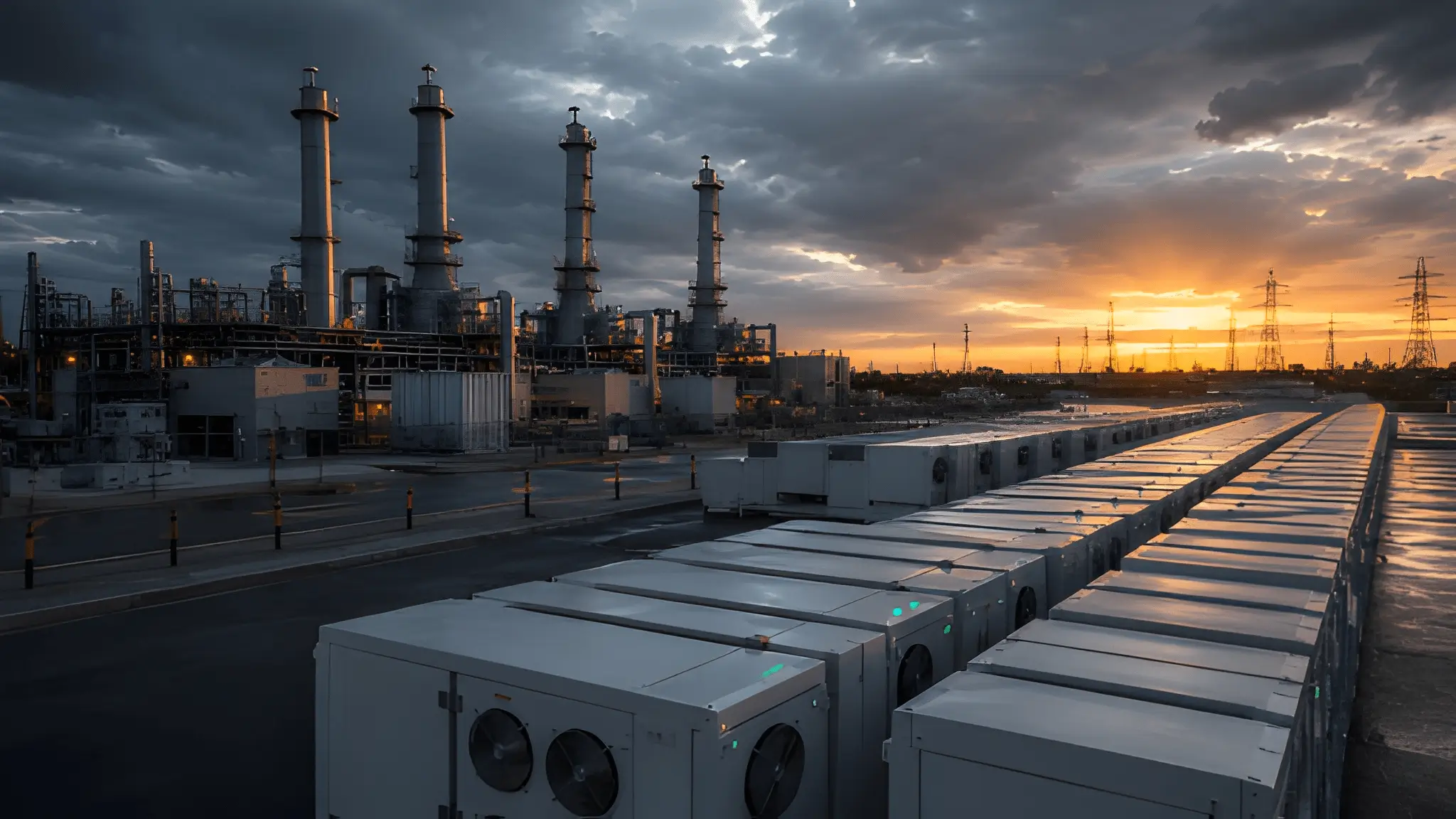
There is a growing difference between having access to power on paper and having access to power that can actually support revenue-generating compute. Across several major infrastructure markets, development teams continue securing land, permits, network connectivity, and customer commitments only to encounter a final obstacle that sits outside their direct control. Grid connection schedules increasingly determine when capacity can enter service, when customers can deploy workloads, and when investments begin producing returns. The challenge has shifted from building digital infrastructure to energizing it within commercially relevant timelines. As AI deployments accelerate and power requirements expand, the economic value of certainty continues rising across infrastructure planning decisions. Dublin illustrates this transition particularly well. The city remains one of Europe’s most established digital infrastructure markets, yet grid constraints have altered how developers evaluate growth opportunities.
Connection policies now require closer alignment between new demand and power-system capability, while operators increasingly explore self-supplied generation, battery storage, and private energy strategies to reduce dependence on uncertain interconnection timelines. What once appeared to be a contingency option has started evolving into a core infrastructure model. Energy architecture increasingly influences commercial competitiveness as much as real estate, networking, or cooling design. The economics behind that shift extend far beyond backup power. Modern battery-plus-gas microgrids increasingly function as deployment accelerators, revenue protection mechanisms, resilience platforms, and long-term decarbonization frameworks. Their value emerges not only from generating electricity but from eliminating delays that affect customer onboarding, infrastructure utilization, and capacity monetization. The financial conversation therefore moves away from generator procurement costs and toward broader questions surrounding deployment certainty, capital efficiency, and growth predictability. In constrained markets, power independence increasingly behaves like a strategic asset rather than an engineering feature.
Interconnection Delays as a P&L Line Item: Quantifying Time-to-Revenue
Traditional infrastructure models often treated grid connection as a project milestone. Developers secured utility agreements, completed construction, and waited for energization before beginning customer deployment. Current market conditions expose the financial limitations of that sequence. When grid schedules stretch beyond original assumptions, every month of delay affects occupancy timelines, infrastructure utilization, and revenue realization. The result transforms interconnection uncertainty into a measurable commercial variable rather than a technical consideration. Power access increasingly influences earnings potential long before facilities become operational.
AI infrastructure magnifies these dynamics because customer demand rarely waits for transmission upgrades. Training clusters, inference deployments, and accelerated computing environments often require deployment windows aligned with product launches, model development cycles, or regional expansion plans. Capacity that becomes available after those windows may still hold value, yet delayed availability can affect customer acquisition opportunities that cannot easily be recovered. Infrastructure owners increasingly recognize that deployment timing carries economic significance equal to capacity itself. Earlier energization frequently creates advantages that extend well beyond the initial occupancy period.
Battery-plus-gas microgrids can alter that equation by creating an alternative path toward operational readiness in markets where regulatory frameworks, permitting conditions, and fuel availability support on-site generation. Rather than waiting exclusively for full grid capacity, operators can energize portions of a campus through on-site generation and storage systems designed to support phased deployment. This approach shifts infrastructure economics from dependency toward control. Revenue generation can begin when workloads become available rather than when external network upgrades reach completion. Development schedules gain flexibility because energization no longer depends entirely on utility sequencing decisions. Commercial planning therefore becomes more predictable.
The most significant economic benefit often emerges from opportunity preservation. Infrastructure projects carry financing costs, land carrying costs, construction expenditures, and customer acquisition investments long before occupancy begins. Every delay extends the period between capital deployment and revenue generation. Self-powered infrastructure reduces exposure to that gap by compressing the timeline separating construction completion and operational activation. Many infrastructure operators and investors increasingly evaluate microgrids through this lens because deployment certainty can produce broader financial benefits than fuel savings alone. The conversation therefore centers on business acceleration rather than energy procurement.
Dublin’s evolving regulatory environment further strengthens this perspective. Recent connection policies continue emphasizing generation adequacy, storage participation, renewable integration, and location-specific constraints. Operators planning future growth increasingly account for these realities during site selection and infrastructure design. Energy independence no longer serves purely as contingency planning because it can directly influence whether capacity reaches customers according to commercial schedules. Grid interaction remains important, yet self-supplied capability increasingly determines competitive positioning.
Phased Capacity Release: Matching Power Availability to Customer Demand
Infrastructure rarely reaches full utilization on the first day of operation. Customer deployments typically follow staged growth patterns as workloads migrate, applications scale, and operational requirements mature. Traditional campus models often create a mismatch between available infrastructure and actual consumption because large portions of capacity remain idle while awaiting future demand. Power architecture increasingly influences how effectively operators manage that transition. The ability to release capacity incrementally has become an important economic advantage.
Microgrid-enabled Energy Centres support a different deployment philosophy. Instead of energizing an entire campus simultaneously, operators can commission generation assets in phases that correspond with customer onboarding schedules. Battery systems, gas generation modules, switchgear, and control platforms can enter service through structured deployment stages aligned with actual demand growth. This strategy reduces stranded infrastructure while improving capital utilization. Power systems therefore evolve alongside occupancy rather than preceding it by several years. The operational benefits extend beyond cost management. Customer deployment plans often change as AI training requirements evolve, inference demand shifts geographically, or application architectures mature. A phased energy strategy provides flexibility because power infrastructure can adapt to changing consumption patterns without requiring immediate large-scale expansion. Operators gain the ability to align commissioning schedules with confirmed customer demand rather than speculative forecasts. Infrastructure growth becomes more responsive to market behavior. That adaptability increasingly carries strategic value.
The commercial impact becomes even more visible when infrastructure teams coordinate directly with customer ramp schedules. AI deployments rarely consume their ultimate power allocation immediately because compute environments typically scale through successive installation waves. Energy Centres designed around modular generation can mirror that progression without forcing operators to commission unnecessary capacity ahead of demand. This alignment improves utilization across both the energy and compute layers of the campus. Customer onboarding becomes smoother because available power arrives when workloads are prepared to consume it. The result creates stronger synchronization between infrastructure investment and revenue-producing activity. Fuel strategy plays a central role in making phased deployment economically viable. Modern gas-fired generation systems offer dispatchable power that can respond rapidly to changing demand conditions, while battery storage manages transient loads, peak shaving, and operational optimization.
Operators can therefore maintain high power quality without oversizing generation assets during early deployment stages. As occupancy expands, additional generation modules can enter service without disrupting existing workloads. The architecture supports gradual growth while preserving operational resilience. Capital deployment remains closely tied to actual consumption requirements rather than projected demand curves. This model also supports future decarbonization pathways more effectively than many observers initially assume. Gas generation provides immediate dispatchable capacity, yet operators increasingly design Energy Centres to accommodate renewable fuels, expanded battery systems, demand response participation, and future low-carbon technologies. Infrastructure built around modularity creates room for technological evolution without requiring complete redesign. The roadmap therefore focuses on progressive emissions reduction while maintaining deployment certainty. Energy independence and sustainability planning can increasingly advance together when operators incorporate storage expansion, renewable integration, and lower-carbon fuel pathways into long-term infrastructure strategies.
Operating Through Grid Moratoriums: How Self-Powered Campuses Keep AI Expansion Moving
Grid constraints increasingly influence infrastructure development decisions across multiple regions, yet few examples illustrate the challenge more clearly than markets where connection restrictions directly affect new capacity growth. Policy-driven limitations emerge when electricity systems face concerns regarding generation adequacy, transmission capability, or long-term network stability. Under those conditions, traditional expansion strategies encounter obstacles regardless of customer demand. Operators may possess land, capital, connectivity, and committed customers while lacking a clear path toward sufficient utility power. Infrastructure growth therefore becomes constrained by external system limitations rather than market opportunity.
Self-powered campuses can address that mismatch by providing operational flexibility while preserving future integration opportunities where permitting frameworks and fuel supply arrangements support on-site generation strategies. On-site generation combined with battery storage allows operators to create deployable capacity independent of immediate grid expansion schedules. This approach does not eliminate the importance of utility interconnection because long-term infrastructure strategies still benefit from network participation. What changes is the ability to continue development activity while broader system upgrades progress. Operators gain greater control over growth sequencing because energization becomes less dependent on external milestones. Capacity planning shifts toward execution rather than waiting.
AI infrastructure requirements make this capability particularly valuable. Compute demand continues expanding faster than many electricity systems can accommodate through conventional planning cycles. Training clusters, inference platforms, and accelerated computing environments require substantial power availability within commercially relevant timeframes. Waiting for multi-year utility upgrades may conflict with customer deployment schedules or strategic expansion objectives. Self-powered campuses address that mismatch by providing operational flexibility while preserving future integration opportunities. Energy architecture therefore becomes an enabler of growth rather than a constraint upon it.
The economics of this strategy extend beyond merely avoiding delays. Infrastructure owners increasingly view self-generation assets as productive components of the campus rather than temporary stopgaps. Generation systems support operational continuity, enhance resilience, provide dispatch flexibility, and contribute to long-term energy strategies even after grid capacity expands. The assets continue creating value throughout their operational life. Their financial contribution therefore derives from multiple functions rather than a single deployment event. This broader perspective strengthens the investment case in constrained markets.
Fuel diversification further improves long-term viability. Operators increasingly evaluate pathways that combine natural gas generation with renewable gas, hydrogen blending potential, expanded storage capacity, and future low-carbon technologies. The objective involves building infrastructure that supports immediate deployment while remaining adaptable as energy systems evolve. Self-powered campuses therefore function as transitional platforms capable of supporting both present operational requirements and future decarbonization objectives. Growth does not need to pause while broader energy transitions unfold. Infrastructure planning gains additional flexibility as a result.
Insurance and Uptime: How Self-Powered Campuses Redefine Infrastructure Risk
Power resilience increasingly influences how infrastructure risk is evaluated because digital workloads now support critical commercial operations, AI development environments, and latency-sensitive services. Traditional risk assessments focused heavily on redundancy within the facility boundary through backup generators, UPS systems, and network diversity. Modern infrastructure planning extends that analysis beyond the campus itself. External dependencies such as transmission availability, grid congestion, and regional power constraints now contribute meaningfully to operational risk profiles. Insurance providers may evaluate those factors alongside facility-level resilience measures when assessing exposure and operational risk characteristics.
Self-powered campuses introduce a different risk framework because they reduce dependence on external power availability. On-site generation combined with battery storage creates additional operational layers capable of supporting workloads during wider grid disturbances or supply disruptions. This architecture improves energy autonomy while increasing visibility into power-system performance. Operators can collect extensive operational data regarding generation reliability, battery behavior, load profiles, and maintenance outcomes. That information supports more sophisticated risk management strategies. Insurance evaluations increasingly value demonstrable operational evidence over theoretical redundancy assumptions.
Islanding capability represents one of the most significant differentiators within this model. A campus capable of maintaining operations independently during external disruptions possesses resilience characteristics that differ substantially from infrastructure relying exclusively on utility supply. Insurers evaluate not only whether backup systems exist but also whether the overall architecture supports sustained operation under adverse conditions. Detailed testing records, maintenance histories, and performance metrics strengthen those assessments. Operational transparency therefore becomes a valuable asset. Risk profiles increasingly reflect measured performance rather than design intent alone.
Customer expectations contribute additional pressure toward resilient architectures. AI workloads often operate within environments where downtime affects training schedules, model deployment timelines, and service availability commitments. Organizations selecting infrastructure providers increasingly evaluate resilience characteristics alongside location, connectivity, and capacity availability. Strong uptime performance therefore supports both operational objectives and commercial differentiation. Self-powered campuses benefit because resilience becomes a visible feature rather than an invisible insurance policy. Reliability increasingly influences customer purchasing decisions.
Operational data has become particularly important in this environment. Continuous monitoring of generation assets, battery systems, switchgear performance, and load management behavior creates measurable evidence regarding infrastructure reliability. Insurers, investors, and customers increasingly prefer environments supported by documented performance rather than assumptions about future outcomes. Self-powered campuses naturally generate large volumes of operational insight that can strengthen confidence across multiple stakeholder groups. Infrastructure risk therefore becomes more quantifiable. Predictability grows alongside resilience.
The broader implication extends beyond insurance pricing alone. Resilient energy architectures increasingly contribute to customer retention, commercial positioning, and long-term infrastructure value. Operators capable of demonstrating sustained operational continuity may attract customers seeking stronger deployment assurance in uncertain power environments. Reliability becomes part of the product itself. Infrastructure strategy therefore expands beyond capacity delivery toward risk reduction. Self-powered campuses increasingly compete on certainty as much as scale.
Water Independence: The Next Constraint After Power
Power dominates most infrastructure discussions today, yet water availability increasingly emerges as another critical variable shaping long-term deployment strategies. Cooling systems remain essential to high-density compute environments, and regional resource constraints continue attracting greater attention from regulators, communities, and infrastructure planners. Markets capable of supporting large-scale digital infrastructure must increasingly demonstrate sustainable resource management beyond electricity consumption alone. Water resilience therefore joins power resilience as a strategic consideration. Operators now evaluate both resources through a long-term operational lens.
Rainwater harvesting represents one pathway toward reducing dependence on municipal water systems. Properly designed collection infrastructure can supplement cooling operations, support non-potable usage requirements, and improve resource resilience during periods of supply stress. Operators increasingly integrate harvesting systems into campus master planning because water security influences long-term operational continuity. The objective involves creating flexibility rather than complete independence. Alternative water sources strengthen resilience by diversifying supply options. Infrastructure planning therefore becomes less vulnerable to single-source dependencies.
On-site treatment systems provide an additional layer of capability. Advanced treatment technologies allow operators to recycle process water, reduce freshwater demand, and improve overall resource efficiency. Modern systems increasingly support circular water strategies that align operational requirements with sustainability objectives. Infrastructure owners gain greater visibility into consumption patterns while reducing exposure to external supply disruptions. Resource management becomes more controllable. Long-term planning benefits from improved operational predictability.
Alternative cooling strategies further expand the range of available options. Liquid cooling technologies, closed-loop systems, and advanced heat management architectures can significantly reduce dependence on traditional water-intensive approaches when deployed appropriately. Operators increasingly evaluate these technologies alongside energy planning because compute density continues rising across AI environments. Cooling architecture now influences both sustainability performance and operational resilience. Resource optimization therefore extends beyond electricity consumption into broader infrastructure design decisions. Water strategy becomes an integral component of campus economics rather than a secondary environmental consideration.
Dublin and similar constrained markets illustrate why this issue deserves greater attention. Regions capable of supporting substantial digital infrastructure growth increasingly face simultaneous pressures related to power availability, resource management, and sustainability expectations. Infrastructure planners who address only one constraint risk encountering another as deployments scale. Water resilience therefore complements energy resilience within a broader operational framework. Long-term competitiveness increasingly depends on managing both variables effectively. Resource independence evolves into a multidimensional infrastructure strategy.
The economic rationale remains straightforward despite the technical complexity involved. Infrastructure capable of maintaining stable cooling operations under changing resource conditions protects uptime, supports sustainability commitments, and reduces exposure to operational disruption. Alternative water strategies therefore contribute directly to infrastructure reliability rather than serving solely environmental objectives. Customers increasingly value those capabilities because operational continuity depends upon multiple interconnected systems. Resource resilience becomes part of the overall service proposition. Water independence increasingly follows the same strategic trajectory that power independence began following several years ago.
Fast-Track Capacity: How Temporary Power Becomes Permanent AI Infrastructure
Temporary power once occupied a narrow role within infrastructure development. Operators traditionally deployed mobile generation systems during construction phases, commissioning activities, or emergency situations before transitioning entirely to permanent utility supply. Current market conditions have altered that relationship considerably. Power scarcity, interconnection delays, and accelerating AI demand increasingly encourage operators to view temporary energy infrastructure through a different lens. What begins as an interim deployment often evolves into a long-term operational asset. In some markets, temporary power increasingly serves as an early stage of broader infrastructure strategies when operators face deployment schedules that outpace utility delivery timelines.
The primary advantage lies in deployment speed. Mobile generation units, modular gas systems, and battery storage platforms can often be installed faster than traditional grid infrastructure upgrades. Operators gain the ability to energize portions of a campus while broader utility work continues in parallel. Customer onboarding can therefore begin earlier, allowing workloads to enter production environments without waiting for complete site buildout. Revenue generation starts sooner because operational readiness arrives faster. Infrastructure economics increasingly reward that acceleration.
AI deployments particularly benefit from this approach because demand frequently materializes faster than infrastructure planning cycles. Organizations developing large-scale compute environments often prioritize deployment certainty over theoretical future capacity. Temporary power systems create a pathway toward immediate occupancy while preserving options for future expansion. Customers gain access to compute resources when they need them rather than when every long-term infrastructure component reaches completion. Development schedules become more responsive to market requirements. Time-to-market improves substantially.
Many operators report that these assets can retain value after utility connections become available by supporting resilience, operational flexibility, and power management objectives. Battery systems continue supporting load balancing, power quality management, and resilience objectives. Gas generation assets provide dispatchable capacity that can supplement utility supply during peak demand periods or support islanded operation when necessary. Infrastructure initially acquired to bridge a deployment gap evolves into a permanent component of campus energy architecture. The investment therefore serves multiple operational purposes throughout its lifecycle. Economic value extends well beyond the initial deployment phase.
This transition aligns naturally with broader decarbonization roadmaps. Operators increasingly deploy modular systems capable of supporting future renewable integration, expanded storage deployment, and alternative fuel adoption. Energy infrastructure can evolve incrementally without requiring disruptive replacement programs. The architecture supports both near-term deployment objectives and longer-term sustainability strategies. Flexibility remains embedded within the design from the beginning. Infrastructure investments therefore retain relevance across changing energy environments.
Financial discipline represents another important benefit. Capital deployed toward temporary energy assets increasingly contributes to long-term operational capability rather than becoming stranded expenditure. Boards and investors evaluate these systems differently when they function as enduring infrastructure rather than short-lived deployment tools. The investment case strengthens because multiple value streams support the same asset base. Operational flexibility, resilience, deployment speed, and energy security all contribute simultaneously. Temporary power increasingly earns a permanent position within AI infrastructure planning.
Selling Certainty: Why Customers Pay Premiums for Self-Powered Capacity
Infrastructure markets have historically rewarded scale, location, and connectivity. AI deployment requirements increasingly add another factor to that list. Customers now place significant value on certainty because deployment schedules often influence product launches, model development programs, regional expansion plans, and competitive positioning. Capacity that arrives according to schedule frequently creates more value than larger capacity delivered later. Predictability therefore becomes a commercial differentiator. Infrastructure providers increasingly compete on execution assurance rather than infrastructure specifications alone.
Self-powered campuses support this value proposition by reducing exposure to variables outside operator control. Grid connection schedules, transmission upgrades, regional capacity shortages, and broader network constraints exert less influence when on-site energy resources support deployment plans. Customers evaluating infrastructure options increasingly recognize the significance of that distinction. The question extends beyond available megawatts toward confidence in deployment timing. Certainty becomes a measurable feature of the offering. Infrastructure value therefore expands beyond physical capacity alone.
AI workloads amplify the importance of reliable deployment schedules because computational requirements often support initiatives operating within defined commercial windows. Delayed access to compute resources can affect model training cycles, application deployment schedules, and broader business objectives. Organizations increasingly evaluate infrastructure providers according to their ability to eliminate those risks. Self-powered campuses offer an advantage because energy availability remains more directly under operator control. Customers gain confidence that deployment commitments can be fulfilled. Commercial attractiveness increases accordingly.
Resilience contributes additional value beyond deployment speed. Customers increasingly seek environments capable of maintaining stable operations despite external disruptions affecting energy systems or utility networks. Battery storage, dispatchable generation, and islanding capabilities strengthen those assurances. Infrastructure providers can therefore offer a more comprehensive reliability proposition. Operational continuity becomes part of the service package rather than an assumed baseline condition. Customers frequently assign tangible value to that distinction.
When customers assign additional value to deployment certainty, that preference often reflects risk reduction considerations rather than infrastructure exclusivity. Organizations deploying AI workloads may willingly pay more for environments that reduce deployment uncertainty, improve uptime expectations, and support predictable growth pathways. Infrastructure decisions increasingly resemble risk-management decisions because operational disruption can carry significant consequences. Self-powered campuses address those concerns through architecture rather than contractual assurances alone. Reliability becomes embedded within the physical infrastructure. Commercial differentiation follows naturally.
Long-term customer relationships also benefit from this model. Operators capable of delivering capacity consistently according to agreed schedules establish credibility that extends beyond individual deployments. Successful execution strengthens customer confidence while creating opportunities for future expansion within the same ecosystem. Infrastructure providers increasingly recognize that predictability supports customer retention as effectively as technical capability. The commercial value of certainty therefore compounds over time. Self-powered capacity increasingly commands attention because it directly supports that objective.
Independence as a Capital Discipline, Not a Technical Experiment
The conversation surrounding microgrids has changed substantially over the past several years. Early discussions often focused on technical feasibility, backup power capability, or niche deployment scenarios where grid access remained limited. Current market conditions place the topic within a very different commercial context. Infrastructure operators increasingly evaluate energy independence through the lens of capital efficiency, deployment certainty, and long-term growth execution. The underlying question no longer centers on whether self-powered campuses can operate successfully. Attention increasingly focuses on how organizations should balance dependence on grid expansion timelines with investments that may improve deployment certainty and operational flexibility.
Boardrooms increasingly encounter a reality where energy infrastructure directly influences commercial performance. Site acquisition, customer demand, financing availability, and construction readiness can align successfully while power delivery remains outside organizational control. That dynamic introduces uncertainty into deployment schedules, revenue forecasts, and capital planning assumptions. Microgrids address that challenge by creating an additional pathway toward operational readiness. Operators gain greater influence over their own timelines while reducing exposure to external infrastructure dependencies. Energy architecture therefore becomes part of broader business strategy rather than a standalone engineering discipline.
The economic argument becomes particularly compelling when viewed through the lens of opportunity cost. Delayed capacity does not simply postpone infrastructure utilization because it can also affect customer acquisition, workload deployment, and market positioning. Revenue opportunities often emerge within specific windows that may not align with transmission upgrade schedules or utility planning cycles. Self-powered infrastructure reduces exposure to those timing mismatches. Organizations gain the ability to bring capacity online according to commercial requirements rather than external infrastructure availability. Deployment certainty increasingly functions as a source of competitive advantage.
Battery-plus-gas architectures play a central role in that transition because they combine dispatchable power with operational flexibility. Gas generation provides dependable capacity capable of supporting demanding compute environments, while battery systems improve efficiency, resilience, and power quality. Together they create an energy platform capable of supporting phased deployment strategies and long-term operational objectives. The architecture also provides room for future evolution as storage technologies improve and alternative fuels become more commercially viable. Infrastructure owners therefore avoid locking themselves into a single technological pathway. Flexibility becomes embedded within the energy strategy from the outset.
Decarbonization considerations further reinforce the strategic value of modular energy systems. Organizations increasingly face pressure to support sustainability objectives while maintaining deployment velocity and operational reliability. Self-powered campuses allow those goals to progress simultaneously rather than forcing a choice between growth and environmental performance. Operators can expand battery capacity, integrate renewable resources, participate in demand response programs, and evaluate lower-carbon fuel options over time. The roadmap evolves incrementally while supporting immediate infrastructure requirements. Energy independence therefore becomes compatible with long-term emissions reduction strategies.
Resource resilience extends beyond electricity and increasingly encompasses cooling, water management, and broader operational sustainability. Markets facing power constraints frequently encounter additional pressures related to environmental resources, permitting complexity, and infrastructure scalability. Operators capable of addressing these variables through integrated planning frameworks gain meaningful advantages. Rainwater harvesting, on-site treatment, alternative cooling approaches, and modular energy systems all contribute to a more resilient operating model. Infrastructure planning therefore becomes multidimensional rather than focused exclusively on grid access. Long-term competitiveness increasingly depends on managing multiple constraints simultaneously.
Insurance markets, financing partners, and customers increasingly respond to this shift in thinking. Infrastructure supported by resilient energy architectures often demonstrates characteristics that improve operational confidence and reduce perceived risk exposure. Stakeholders gain visibility into performance through operational data, testing records, and demonstrated resilience capabilities. Self-powered campuses therefore create value that extends beyond energy procurement alone. Reliability, predictability, and execution confidence become measurable commercial assets. Infrastructure quality increasingly reflects the ability to manage uncertainty effectively.
Dublin serves as an important example of why this evolution matters. The market continues attracting demand because of its strategic connectivity, established ecosystem, and role within the broader European digital economy. At the same time, grid limitations have demonstrated how energy availability can influence infrastructure growth regardless of customer demand. Operators exploring self-powered strategies are not necessarily attempting to replace the grid. Most are seeking additional control over deployment schedules and operational outcomes. Energy independence can therefore remain compatible with long-term emissions reduction strategies when operators pursue lower-carbon fuels, storage deployment, and renewable energy integration over time.
The same principle increasingly applies across other constrained markets worldwide. Infrastructure demand continues expanding as AI adoption accelerates, yet utility expansion programs often operate according to longer planning horizons. That gap creates a growing premium on deployable capacity capable of entering service without waiting for every external dependency to align. Self-powered campuses address this challenge by converting energy infrastructure into a deployment accelerator. Operators gain the ability to move from construction completion to customer occupancy with greater confidence. Commercial performance increasingly benefits from that capability.
Ultimately, the strongest argument for microgrid adoption is not technological innovation but capital discipline. Infrastructure investments generate value only when they support operational workloads, customer commitments, and revenue-producing activity. Every decision that reduces uncertainty between capital deployment and commercialization improves the efficiency of that process. Battery-plus-gas microgrids increasingly accomplish exactly that in constrained markets where power availability dictates growth timelines. Independence therefore represents a practical business tool rather than a technical experiment. When deployment certainty, resilience requirements, customer demand, and long-term flexibility converge, operators may determine that controlling one hundred and ten megawatts of self-supplied capacity offers a more attractive commercial pathway than relying exclusively on uncertain grid connection timelines.