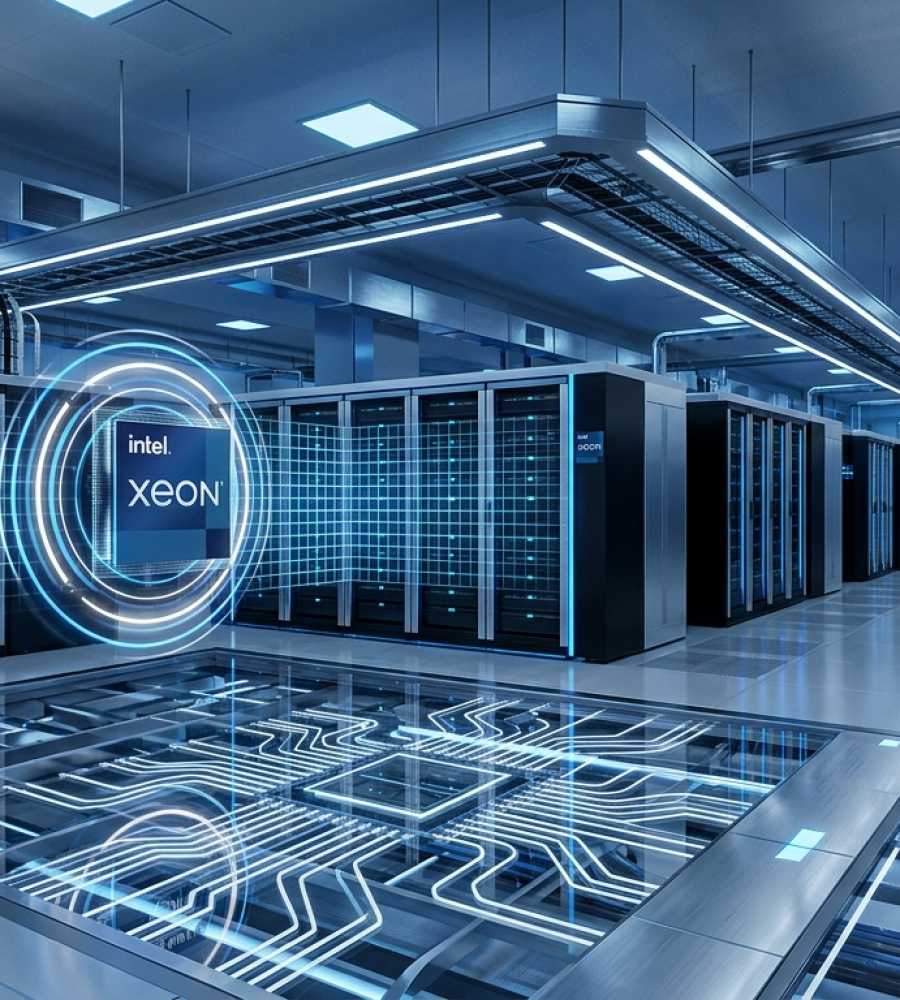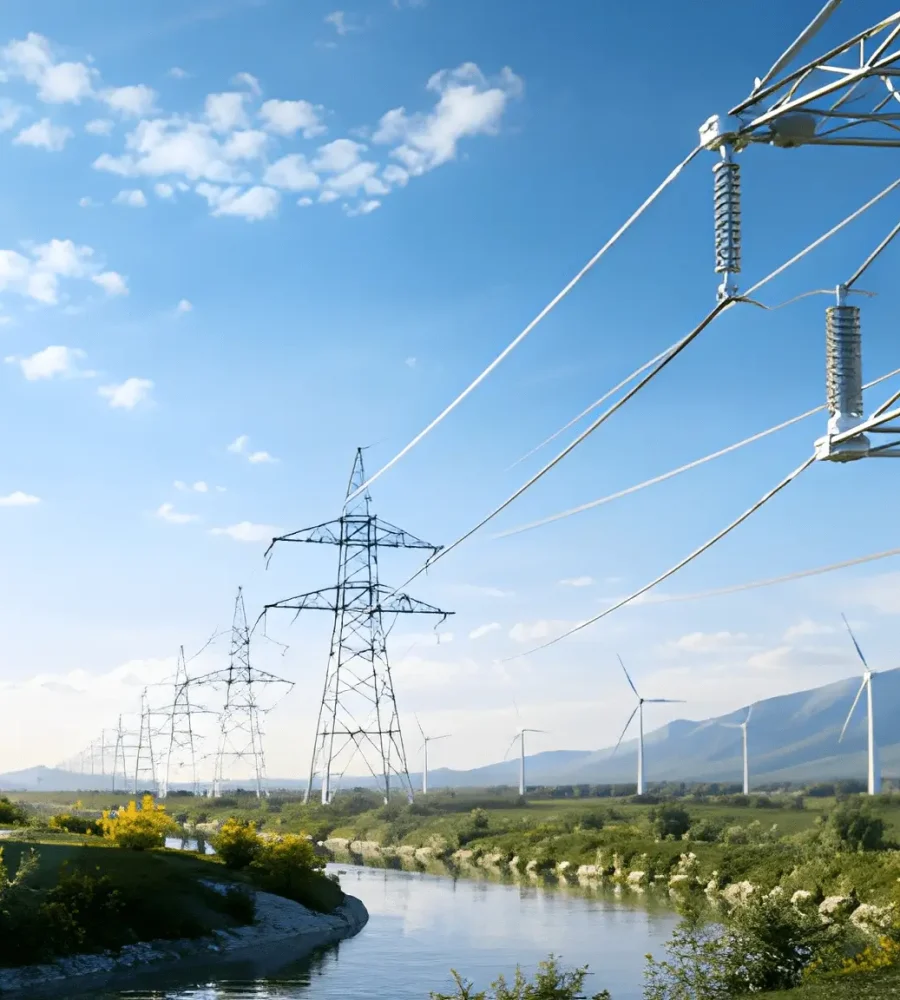
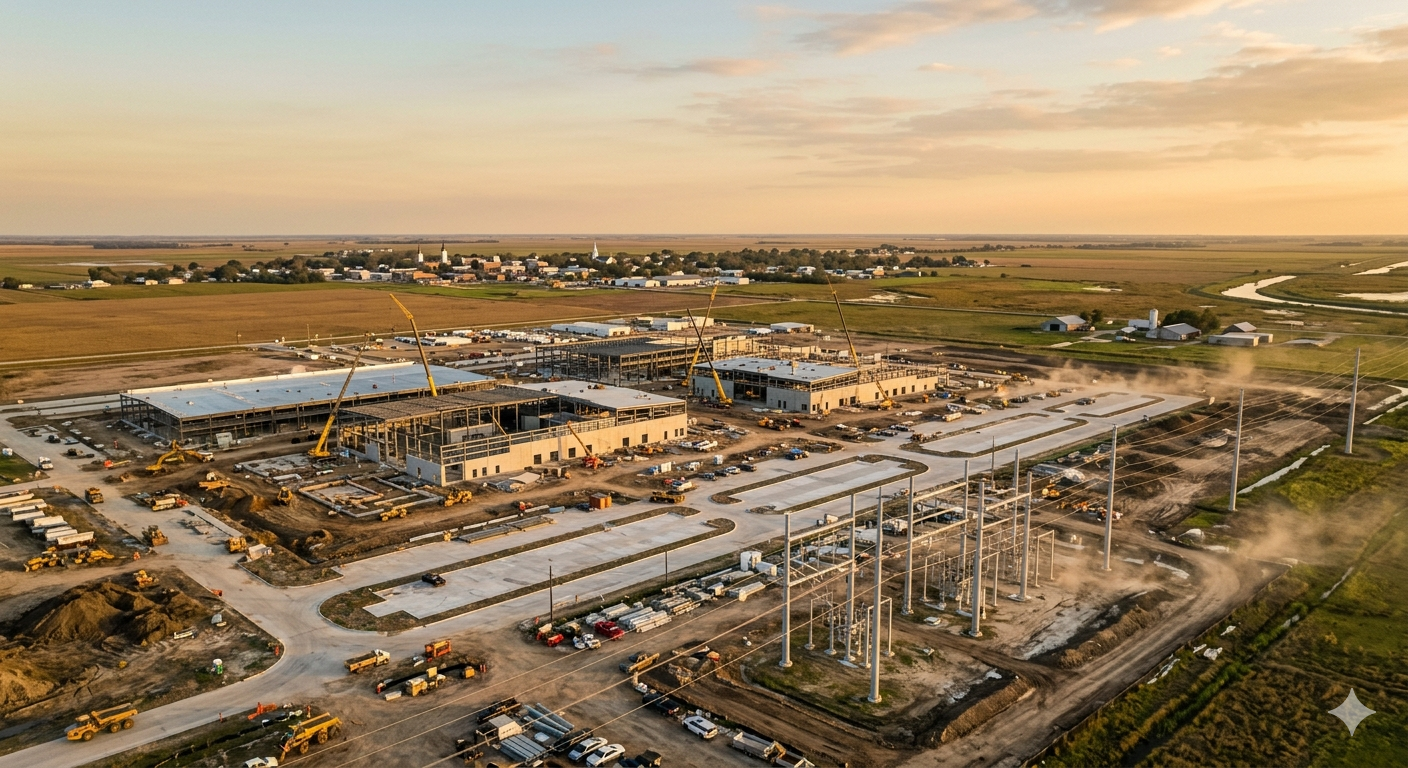
For decades, data center site selection followed a familiar logic: build near fiber hubs, near enterprise customers, near established markets. Northern Virginia, Silicon Valley, Singapore, Frankfurt the same names appeared on every shortlist. Artificial intelligence has broken that logic entirely. Today, the primary criterion driving site selection is not proximity to customers or fiber density. According to JLL’s 2026 Global Data Center Outlook, it is speed to power — specifically, how fast a developer can get reliable megawatts to a facility. That single shift is redrawing the global data center map, and the operators who understand it earliest are securing the infrastructure positions that will define competitive advantage for the next decade.
Why Legacy Markets Are Under Pressure
Northern Virginia home to Loudoun County’s Data Center Alley, the single largest concentration of data center capacity on Earth is no longer the uncomplicated development environment it once was. The county holds approximately 26 million square feet of operational data center space, with roughly 5 million more under development. Data center equipment taxes account for nearly half of Loudoun County’s property tax revenue in fiscal year 2026. The financial dependency is significant, but so is the resistance it has generated.
In March 2025, the Loudoun County Board of Supervisors eliminated by-right development for data centers, requiring all new projects to obtain special exception approval through a legislative review process that includes public hearings before both the Planning Commission and the Board of Supervisors. Earlier, Dominion Energy had signaled it could not meet power delivery timelines for new data center developments in eastern Loudoun County due to transmission infrastructure constraints a gap driven not by generation shortfall but by the physical inability to move power through existing high-voltage lines to Ashburn fast enough. The Virginia General Assembly advanced legislation in January 2026 to restrict future data center construction to industrially zoned areas, and the Virginia State Corporation Commission created a new electricity rate class for the largest power users in November 2025, placing grid upgrade costs directly on data centers rather than general ratepayers. Northern Virginia is not unique. Reno, Nevada enacted a temporary moratorium on new data centers in August 2024. Grid interconnection queues in London and Amsterdam now run eight to ten years for a new 50 MW facility, according to construction analysis published in April 2026. California, Oregon, Iowa, and Nebraska are each projected to see material declines in relative market share as power availability, permitting complexity, and interconnection timelines restrict large-scale expansion.
Speed to Power: The New Site Selection Imperative
JLL’s research identifies speed to power as the primary site selection criterion in 2026, followed by community support, latency, and proximity to customers. That ordering is a structural departure from how developers evaluated sites even three years ago. A March 2026 Bloom Energy survey found that time-to-power now runs 1.5 to 2 years longer than previously expected in key markets. At least 36 U.S. states now offer targeted incentives for data center development tax exemptions, abatements, and accelerated permitting reflecting direct competition to attract AI infrastructure investment. However, as the survey data confirms, incentives alone cannot substitute for power. State incentives can improve a project’s financial profile, but they cannot close a seven-year grid interconnection queue.
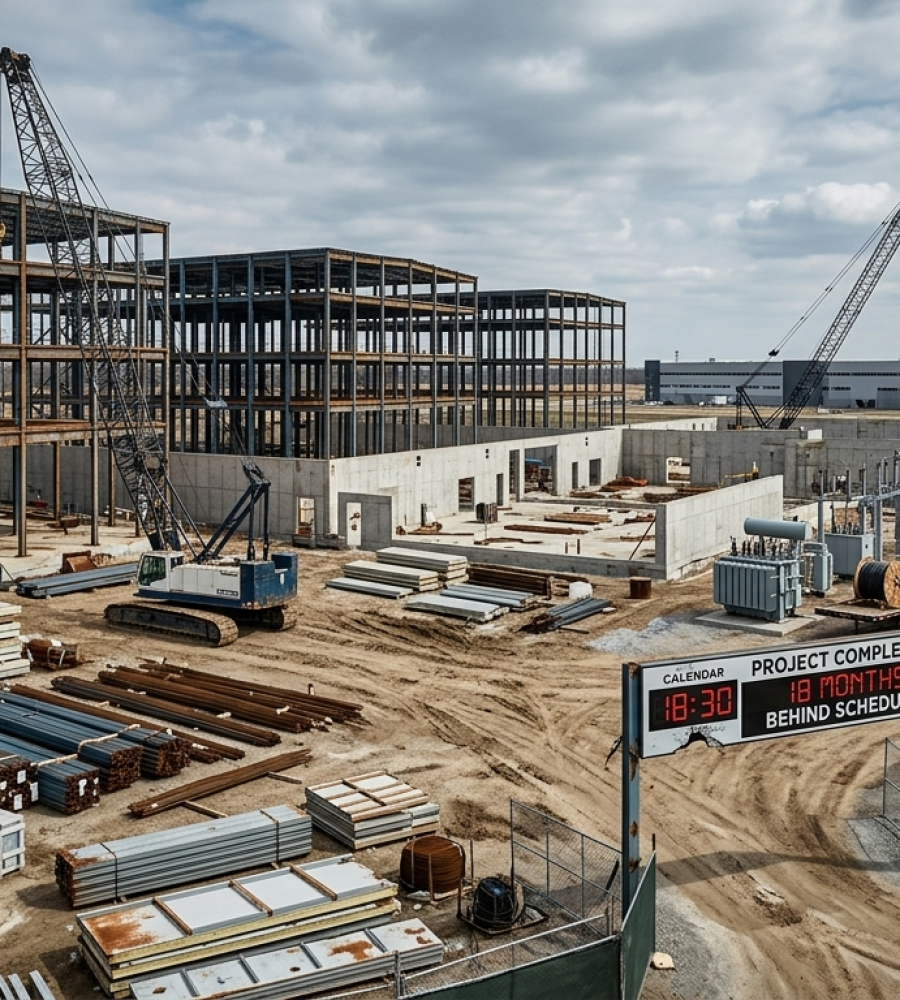
The construction cost environment reinforces the pressure. Average global data center construction costs rose from $7.7 million per megawatt in 2020 to $10.7 million per MW by 2025 a 7% compound annual growth rate. JLL projects that figure will increase another 6% in 2026, reaching $11.3 million per MW for shell and core alone. For AI-optimized facilities incorporating high power density and liquid cooling, all-in build costs including GPU fit-out can reach $30 to $40 million per MW. Power infrastructure accounts for 30 to 40% of total facility cost, which means grid access and equipment selection carry more financial risk than civil construction in most large-scale projects. Against this backdrop, Ropes & Gray’s analysis of the IMN Data Centers Private Equity conference in 2026 summarized the industry consensus directly: power availability not capital — is the primary constraint on data center development. Grid interconnection timelines stretching to four years in standard U.S. markets are making bring-your-own-power configurations an operational necessity for projects that cannot absorb those delays.
The Secondary Market Surge
The constraints on primary markets are creating measurable momentum in secondary and tertiary locations. Cushman & Wakefield’s H2 2025 Americas Data Center Update analyzed 107 markets using 24 weighted variables and concluded that secondary and tertiary markets particularly those with abundant land and power resources are positioned to capture a larger share of hyperscale and single-tenant campus development over the coming years.
Cushman & Wakefield’s John McWilliams identified Texas as the standout market to watch in 2026, citing strong power infrastructure under the ERCOT grid and favorable development economics. Central Washington has emerged on site-selection shortlists due to some of the lowest energy costs in the country, derived from hydroelectric generation on the Columbia River. The Carolinas offer strong fiber infrastructure, development economics that compare favorably to nearby markets, and a geographic position between the largest data center concentration on the East Coast and the growing Southeast cluster. Indiana and Mississippi have attracted major hyperscale commitments: a Compass data centers project in Mississippi secured 500 MW of power supply from Mississippi Power Company with a ten-year state income and franchise tax exemption package approved by state regulators. Meta’s $10 billion campus in Louisiana signals the same energy-first logic applied at an even larger scale.
The shift toward AI inference workloads is accelerating secondary market growth through a separate mechanism. CBRE’s H2 2025 North American data center report notes that inference workloads which require lower latency and proximity to end users — are driving demand for regional and distributed data center capacity, not just hyperscale training hubs. As AI inference overtakes training as the dominant workload type, projected by JLL for sometime in 2027, the geographic distribution of demand will broaden further by necessity.
Global Expansion: The Middle East and Europe Reposition
Outside North America, the geographic shift is equally pronounced. Cushman & Wakefield’s 2025 global comparison ranked Abu Dhabi and Dubai as the top two emerging data center markets worldwide, with power availability, fiber connectivity, and political stability among the cited factors. Microsoft and Abu Dhabi-based G42 announced a 200 MW expansion of data center capacity in the UAE, with capacity expected online by end of 2026. The UAE data center market is projected to grow at 21.7% annually through 2030, expanding from approximately $1.39 billion in 2025 to $3.90 billion by 2030. Microsoft’s $15.2 billion investment in the UAE alongside hyperscale cloud regions operated by AWS, Google, and Oracle in Abu Dhabi and Dubai reflects a strategic decision to build in markets where power availability and government support actively accelerate delivery timelines. Saudi Arabia’s $6 billion data center investment plan and HUMAIN sovereign AI initiative are positioning Riyadh as a comparable destination, leveraging the Kingdom’s subsea cable landings in Jeddah and Dammam that connect Europe, Asia, and Africa.
In Europe, the traditional FLAP-D cluster Frankfurt, London, Amsterdam, Paris, Dublin faces the same power and regulatory constraints reshaping U.S. primary markets. Grid connection waits in Amsterdam now exceed ten years for mid-scale facilities. Spain and Italy have emerged as the strongest European growth zones, according to JLL’s EMEA head of data center research, supported by favorable infrastructure, government incentives, and new subsea cable landings that improve latency profiles. Berlin, Milan, Madrid, and Warsaw are attracting new development as operators seek markets with faster energization timelines and fewer entitlement hurdles.
Investment Outlook
The scale of committed capital makes the site selection stakes clear. JLL projects that the global data center sector will require up to $3 trillion in infrastructure investment by 2030, with approximately 97 GW of new capacity anticipated between 2025 and 2030 effectively doubling global data center capacity in five years. That figure represents $1.2 trillion in real estate asset value creation, with tenants expected to spend an additional $1 to $2 trillion on technology fit-out.
For investors and operators, the primary risk variable in this cycle is not demand AI workload growth remains structurally intact but deliverability. Of the 16 GW of U.S. data center capacity announced for 2026 completion, only 5 GW was under active construction as of April 2026 tracking data. The gap between announced and built capacity across 2026 and 2027 exceeds 50 GW. Projects with secured power procurement, confirmed grid interconnection, or on-site generation capability carry materially lower development risk than those dependent on future utility capacity. Community support increasingly a gating factor in markets experiencing residential pushback — has moved to the second-ranked site selection criterion in JLL’s framework, directly above latency. That positioning reflects a real shift: zoning opposition and ratepayer protection legislation are now material variables in project underwriting, not peripheral concerns. The operators that will capture disproportionate value in this cycle are those treating location as a supply chain problem. Power, land, permitting, fiber, incentives, and community relations are the components. The markets that can align all of them on a timeline that matches hyperscaler buildout schedules are where the next generation of AI infrastructure will concentrate.