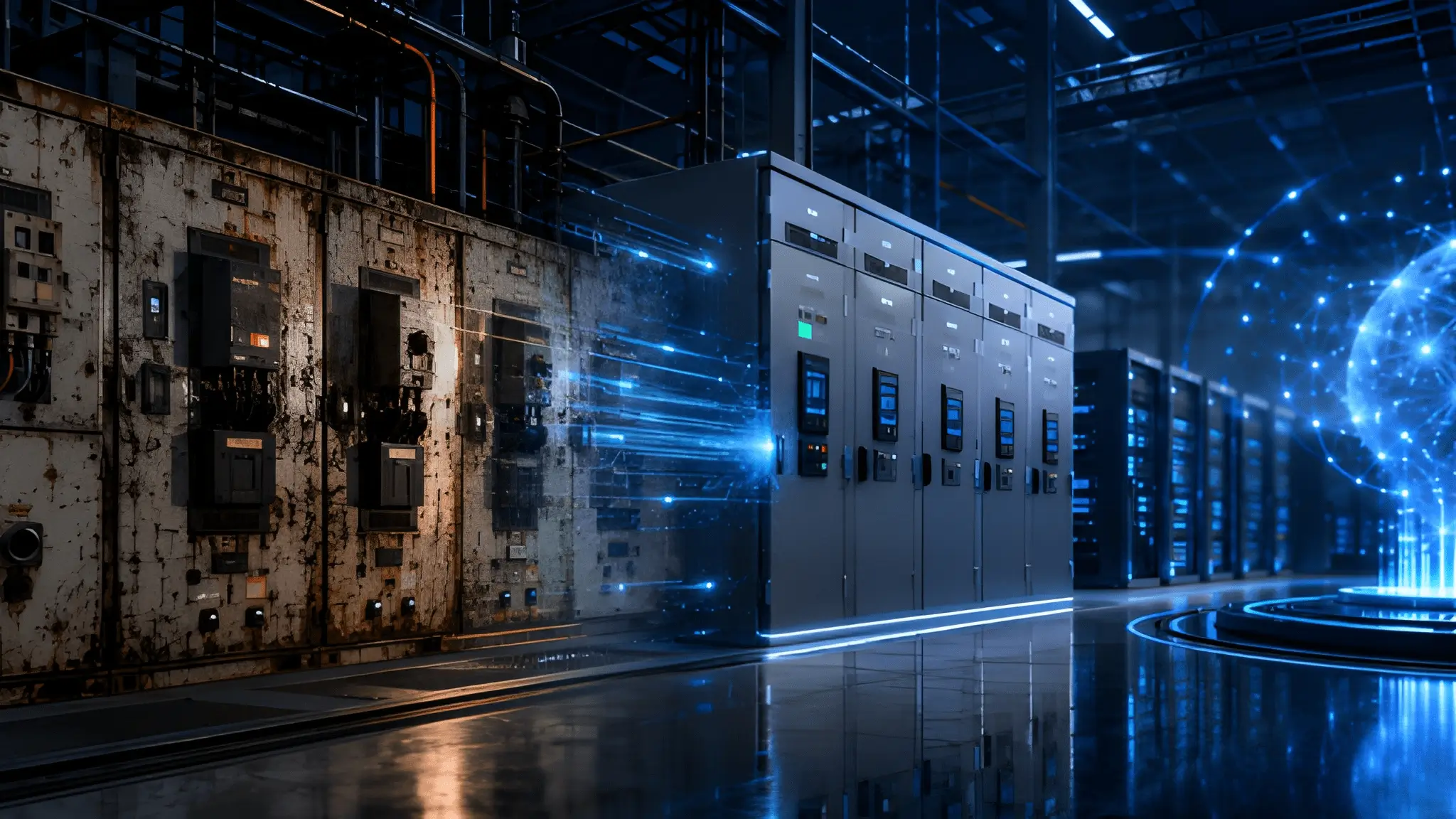
Modern AI infrastructure discussions rarely begin inside the electrical room. Attention gravitates toward accelerators, liquid cooling architectures, optical networking, and power procurement strategies because those elements visibly shape computational capability. Yet the operational continuity of an AI campus often depends on equipment that receives far less attention during planning reviews. Between the incoming utility connection and the server hall sits a medium-voltage distribution layer responsible for routing, protecting, isolating, and restoring power under conditions that have become increasingly demanding. That layer now operates under stress profiles very different from those assumed when many conventional switchgear designs entered service. Electrical distribution historically benefited from predictable load behavior. Traditional enterprise computing environments exhibited fluctuations, maintenance windows, and utilization patterns that provided protective systems with operating margins. Large AI clusters introduce a different reality.
Power demand remains elevated for extended periods, load ramps can occur rapidly, and dense compute environments create operational conditions that continuously exercise protective equipment. Circuit breakers, bus systems, protection relays, and transfer schemes increasingly function as active determinants of infrastructure availability rather than passive supporting assets. The consequence is a shift in risk concentration from the server hall toward the medium-voltage lineup feeding it. Many infrastructure teams continue to evaluate resilience through familiar lenses such as generator redundancy, cooling architecture, or utility diversity. Those factors remain important, yet modern outage investigations increasingly reveal that failures often propagate through protection systems, switchgear compartments, breaker mechanisms, and coordination settings before they ever reach computing equipment. A power source may remain available while an interruption still occurs because the distribution layer cannot safely transfer, isolate, or clear an abnormal condition quickly enough
Breakers at Breaking Point
Medium-voltage circuit breakers were designed around assumptions regarding load diversity, operating cycles, fault frequency, and maintenance intervals. Those assumptions emerged from electrical environments where peak demand periods alternated with lower utilization conditions. AI campuses increasingly challenge that model because high-density compute clusters can sustain elevated electrical demand continuously. The breaker therefore spends more time carrying substantial current, experiencing higher thermal stress, and operating closer to long-duration design boundaries. Wear mechanisms that once unfolded gradually now accumulate under far more persistent operating conditions. The issue extends beyond simple current carrying capability. Modern vacuum circuit breakers rely on mechanical systems that must remain precisely calibrated throughout years of operation. Contact wear, lubrication degradation, spring mechanism aging, and repeated switching events gradually affect performance characteristics. Under conventional operating patterns these changes often remain manageable through established maintenance schedules. Breakers may remain within nameplate ratings while still aging faster than operational models anticipated.
A nuisance trip inside a conventional commercial environment typically creates localized disruption. The same event inside a large AI cluster can trigger cascading operational consequences because thousands of synchronized processes may depend on uninterrupted power delivery. Training jobs can terminate unexpectedly, distributed inference environments can lose node availability, and recovery processes can consume significant time even when power restoration occurs quickly. Electrical interruptions therefore carry consequences that extend well beyond the duration of the outage itself. The operational cost of a breaker event increasingly reflects computational disruption rather than electrical repair effort. Protection coordination introduces another challenge. Traditional settings often balance equipment protection with acceptable operational flexibility. AI campuses increasingly seek narrower tolerances because the consequences of unnecessary interruptions have become more severe. Engineers must therefore navigate a complex tradeoff. Conservative protection settings reduce equipment exposure during abnormal conditions, yet aggressive sensitivity may increase the likelihood of unwanted trips.
Maintenance philosophies are changing as a result. Time-based inspection cycles increasingly struggle to reflect actual equipment conditions because operating stress varies significantly between installations. Breakers supporting continuously loaded AI infrastructure may accumulate meaningful degradation long before a calendar-based maintenance interval arrives. Operators increasingly evaluate condition-based approaches that incorporate operational history, thermal exposure, contact condition, and switching behavior. This shift reflects recognition that electrical reliability now depends on understanding equipment health in real time rather than assuming performance between maintenance events. The broader implication is difficult to ignore. For many years, computational growth primarily required additional servers and supporting infrastructure. Current deployment patterns increasingly require reexamining the electrical protection layer itself. A breaker that once represented routine infrastructure now sits directly on the critical path between utility power and AI service availability. Reliability engineering therefore begins long before electricity reaches a processor.
When Milliseconds Matter More Than Megawatts
Electrical resilience discussions traditionally focused on capacity. Infrastructure teams concentrated on available megawatts, backup generation capability, and redundancy architecture because those variables defined whether sufficient power could reach the load. AI workloads increasingly introduce a different concern. Power availability alone does not guarantee continuity. Extremely short disturbances can now affect tightly synchronized computational environments even when overall electrical capacity remains abundant. Arc faults illustrate this challenge clearly. An internal arc inside switchgear generates intense thermal and mechanical stress within fractions of a second. Traditional protection systems clear faults effectively, yet the clearing interval may still allow substantial equipment damage. Modern arc-flash detection systems seek to compress response times dramatically through optical sensing, current monitoring, and dedicated protection logic. The objective is no longer merely clearing the fault. The objective is extinguishing it before broader operational consequences emerge.
Ultra-fast transfer schemes have gained attention for similar reasons. Modern AI environments often depend on multiple power sources connected through sophisticated switching architectures. During abnormal conditions, the distribution system may need to transfer load between sources without introducing disturbances that propagate downstream. Conventional transfer logic can satisfy reliability objectives in many industrial environments. AI campuses increasingly require faster and more deterministic behavior because application sensitivity continues to rise. Protection engineering therefore becomes tightly coupled with workload availability. This evolution reflects a broader infrastructure reality. Electrical systems historically existed to support computing environments. AI deployments increasingly force electrical systems to operate at computing speeds conceptually, even if not physically. Engineers now evaluate fault response, transfer performance, protection coordination, and restoration sequences through the lens of computational continuity. Milliseconds have become operationally significant because digital workloads increasingly react to events that earlier generations of infrastructure would have considered inconsequential.
The Hidden Heat Inside the Electrical Room
The discussion around AI power density usually centers on what happens inside the white space. Engineers evaluate rack cooling strategies, liquid distribution networks, chip thermal envelopes, and airflow containment because those factors directly affect compute performance. Much less attention goes toward the thermal behavior of the electrical infrastructure supporting those environments. Medium-voltage switchgear rooms increasingly experience operating conditions that differ substantially from those anticipated when many facilities were originally designed. As rack densities climb, the thermal consequences travel upstream through the entire power distribution chain.Current creates heat throughout an electrical system, and switchgear is no exception. Busbars, cable terminations, breaker connections, contact assemblies, and internal conductors all generate heat proportional to operating conditions. Traditional load diversity often allowed temperatures to fluctuate within predictable ranges because demand varied throughout the day.
Busbar systems represent one of the most important examples. Electrical designers size busbars according to current carrying requirements while accounting for allowable temperature rise. Actual performance depends not only on conductor dimensions but also on ventilation effectiveness, enclosure design, ambient conditions, and equipment arrangement. Higher sustained currents can push operating temperatures toward thermal design limits even when the system technically remains within rated capacity. Available electrical headroom therefore begins shrinking before operators recognize any visible indication of stress. Compartment-level heating introduces additional complexity. Modern switchgear lineups contain multiple heat-generating components located within confined spaces. Breakers, current transformers, voltage transformers, protection relays, and cable interfaces all contribute to internal thermal conditions. Heat accumulation becomes increasingly difficult to manage when surrounding infrastructure continuously operates near design loading. Localized hot spots can emerge long before room-level temperature monitoring reveals a problem.
AI infrastructure expansion occasionally encounters an unexpected limitation at this stage. Operators may possess adequate utility power, sufficient cooling resources, and available computing hardware while still confronting electrical distribution constraints. Thermal derating inside switchgear can reduce practical capacity even when theoretical capacity appears available on design documents. Expansion decisions therefore increasingly require detailed analysis of electrical room thermal performance rather than focusing exclusively on generation and cooling systems. The deployable megawatt frequently depends on what the switchgear can continuously support rather than what the utility can deliver. Equipment lifespan also becomes closely linked to thermal behavior. Elevated temperatures accelerate insulation degradation, affect contact performance, and influence the long-term reliability of numerous electrical components. The impact rarely appears immediately. Instead, degradation accumulates gradually until reliability margins narrow enough for operational consequences to emerge.
Digital monitoring technologies have started changing visibility into these conditions. Continuous temperature sensing, thermal analytics, and equipment-level monitoring platforms allow operators to identify developing issues before equipment reaches critical thresholds. These tools provide insight into how electrical infrastructure behaves under actual AI workload conditions rather than assumed operating profiles. The resulting data frequently reveals that thermal behavior inside the switchgear lineup deserves the same level of attention already applied to compute and cooling systems. The broader implication extends beyond equipment health. Thermal limits inside the electrical room increasingly define practical infrastructure scalability. Every additional cluster, training workload, or inference deployment ultimately depends on distribution equipment capable of supporting continuous power delivery without excessive temperature rise. The medium-voltage lineup therefore serves as a thermal gatekeeper for AI growth, even though that role often remains hidden from discussions about future capacity expansion.
From Preventive to Predictive: Sensing Inside the Cabinet
Electrical maintenance traditionally relied on scheduled intervention. Equipment received inspection, testing, cleaning, lubrication, and calibration according to predetermined intervals because operators lacked continuous visibility into internal conditions. That approach worked reasonably well when operating environments remained relatively predictable. AI infrastructure increasingly challenges those assumptions because equipment condition now evolves according to highly variable loading patterns that cannot always be captured through calendar-based maintenance strategies. Partial discharge monitoring has emerged as one of the most important developments in medium-voltage asset management. Partial discharge occurs when localized electrical breakdown develops within insulation systems without creating a complete fault path. The phenomenon often precedes insulation failure, making it a valuable early warning indicator. Traditional inspection methods frequently identify problems only after degradation becomes substantial. Continuous monitoring systems can detect abnormal discharge activity much earlier, providing operators with actionable information before reliability becomes compromised.
Infrared sensing has followed a similar trajectory. Periodic thermographic inspections remain common across electrical infrastructure, yet they capture only a snapshot of operating conditions. Continuous temperature monitoring allows engineers to observe thermal behavior across changing load profiles and environmental conditions. Connections that appear healthy during an inspection may exhibit abnormal heating under different operating scenarios. Persistent monitoring therefore provides a more complete picture of equipment condition than periodic surveys alone. Acoustic monitoring technologies add another layer of visibility. Many developing electrical problems generate ultrasonic signatures before becoming visible through thermal or operational symptoms. Sensors capable of detecting these signals allow operators to identify loose connections, insulation defects, corona activity, and other emerging issues at an early stage. The technology effectively transforms the switchgear cabinet into a continuously observed environment rather than an asset evaluated only during maintenance windows.
The significance of these developments becomes clearer when viewed within AI operating environments. Large compute clusters can magnify the consequences of relatively small electrical failures because thousands of dependent systems share common infrastructure. Early detection therefore creates disproportionate value. Identifying a deteriorating connection weeks before failure occurs may prevent a disruption affecting an entire distribution segment. Predictive awareness becomes substantially more valuable than reactive troubleshooting once workloads reach sufficient scale. Data integration increasingly drives this transition. Modern sensing platforms aggregate information from temperature probes, discharge detectors, breaker monitoring systems, environmental sensors, and protection devices into unified operational views. Engineers gain the ability to correlate equipment condition with loading behavior and infrastructure events. Patterns that previously remained invisible begin emerging from the combined dataset. Electrical maintenance consequently evolves into a condition-driven discipline supported by measurable evidence.
The shift toward predictive operation also changes outage planning. Instead of waiting for equipment deterioration to reach unacceptable levels, operators can schedule intervention based on observed trends. Maintenance activities become more targeted because teams focus resources on assets demonstrating measurable degradation. Infrastructure availability improves because fewer unnecessary interventions occur while genuine risks receive earlier attention. Reliability therefore benefits from both increased visibility and improved operational efficiency. A medium-voltage cabinet increasingly resembles a monitored operational asset rather than a passive electrical enclosure. Sensors now observe thermal behavior, insulation health, mechanical performance, environmental conditions, and fault precursors continuously. That visibility reflects a broader transformation within AI infrastructure. Operators no longer seek merely to restore service after problems occur. They increasingly aim to identify developing conditions before computational workloads ever experience disruption.
Fault Currents Climbing the Stack
Electrical fault studies once followed relatively stable assumptions. Utility supply represented the dominant fault current source, while backup generation contributed under defined operating scenarios. Protection systems, breaker interrupting ratings, and coordination studies developed around these predictable architectures. AI campuses increasingly introduce a different electrical landscape because distributed energy resources now occupy a larger role within infrastructure design. The resulting changes affect not only power availability but also fault behavior throughout the distribution system. Battery energy storage systems, on-site generation resources, and advanced power architectures contribute additional fault current into electrical networks under certain conditions. These contributions may vary according to equipment design, system configuration, operating mode, and protection strategy. The cumulative effect can alter available fault current levels throughout the medium-voltage distribution network. Infrastructure originally designed around one set of assumptions may therefore operate under substantially different fault conditions after successive modernization projects occur.
Fault current ratings matter because every protective device possesses defined interrupting capabilities. Circuit breakers, switchgear assemblies, relays, current transformers, and associated equipment must safely withstand and interrupt fault energy under worst-case conditions. When available fault current approaches or exceeds equipment ratings, the resulting risk extends beyond reliability concerns. Compliance, personnel safety, equipment survivability, and operational continuity all become relevant considerations. Many AI campus expansions occur incrementally. New generation assets, battery systems, or power infrastructure additions may arrive over several deployment phases. Each change affects the electrical model supporting protection studies and equipment ratings. Problems emerge when infrastructure evolves faster than the engineering reviews governing fault calculations. Legacy assumptions can persist long after system characteristics have changed, creating hidden vulnerabilities within otherwise modernized environments.
Protection coordination becomes more complicated under these conditions. Engineers must account for multiple fault current sources, dynamic operating modes, and changing network configurations while preserving selective coordination throughout the system. Achieving that objective requires continuous analysis because fault behavior can shift as new infrastructure enters service. Static protection philosophies increasingly struggle to keep pace with rapidly evolving electrical architectures. The challenge extends beyond engineering calculations. Procurement decisions often involve equipment lead times measured over extended periods. Switchgear selected early in a project lifecycle may eventually support electrical systems far different from those envisioned during specification development. Operators therefore face growing pressure to evaluate future fault scenarios during initial design stages rather than relying exclusively on present operating conditions.
The Commissioning Gap Nobody Tests
Commissioning has traditionally focused on proving that infrastructure performs according to design intent. Teams validate mechanical systems, electrical distribution paths, backup power operation, cooling performance, network connectivity, and integrated operational sequences before production workloads enter service. Those procedures remain essential, yet many commissioning frameworks evolved around conventional data center operating patterns rather than the distinctive electrical behavior associated with large-scale AI environments. As a result, infrastructure can successfully complete extensive testing programs while still carrying protection risks that emerge only after sustained AI load arrives. Integrated systems testing often validates redundancy transitions, utility failures, generator operation, breaker functionality, and distribution resilience under controlled conditions. The process demonstrates that equipment performs correctly during predefined events. AI campuses increasingly introduce operating profiles that differ from those assumptions because compute clusters can create prolonged periods of elevated utilization, rapid workload ramping, and highly synchronized power consumption behavior.
Protection systems illustrate the challenge clearly. Relay settings may appear fully coordinated during standard testing scenarios while behaving differently under sustained high-current operating conditions. Time-current curves, selective coordination assumptions, and transfer sequences often receive validation through simulations and controlled events. Real-world AI deployment can reveal interactions that remain invisible until multiple electrical systems operate simultaneously under production loading. The gap does not originate from inadequate engineering. It originates from the growing complexity of electrical environments that evolve faster than historical testing methodologies. Load-bank testing provides another example. Electrical infrastructure frequently undergoes validation using temporary resistive or reactive load systems designed to simulate operational demand. Those tests remain valuable, yet synthetic loads rarely reproduce every characteristic associated with modern AI clusters. Compute environments can exhibit dynamic behavior that interacts with electrical systems in ways difficult to emulate during commissioning exercises.
Transfer schemes deserve particular attention in this context. Modern AI campuses increasingly depend on complex electrical architectures involving multiple utility sources, standby generation systems, energy storage assets, and automated switching logic. Each transition sequence may function correctly when evaluated independently. Challenges emerge when multiple events overlap or occur during periods of elevated demand. A protection sequence that appears reliable during commissioning may exhibit entirely different behavior when subjected to production-scale operating conditions. Understanding those interactions requires testing approaches that extend beyond traditional pass-fail validation models. The increasing use of digital electrical infrastructure adds another dimension. Modern relays, monitoring platforms, communication networks, and automation systems exchange large volumes of operational data throughout the distribution environment. Commissioning frequently validates functionality but may not fully examine how those systems interact under abnormal operating conditions over extended periods.
Operational history repeatedly demonstrates that many infrastructure vulnerabilities emerge not during isolated component testing but during full-scale production operation. AI deployments amplify this reality because computational density compresses the margin for electrical error. Small coordination gaps can affect far larger portions of the environment than similar issues affected in previous generations of computing infrastructure. Commissioning strategies increasingly require a deeper focus on operational realism rather than simply confirming equipment functionality. The industry therefore faces a growing need to modernize commissioning philosophy alongside infrastructure design. Electrical systems that support AI workloads must be evaluated against the conditions they will actually encounter rather than the conditions traditionally used to verify readiness. The distinction may appear subtle on paper. In practice, it increasingly determines whether switchgear remains invisible during operation or becomes the source of the next unexpected outage event.
Redundancy Theater vs Electrical Reality
Redundancy diagrams often communicate a reassuring narrative. Multiple utility feeds, alternate distribution paths, standby generation systems, backup switching arrangements, and diverse power sources create the impression that infrastructure can withstand virtually any electrical event. These diagrams remain useful planning tools, yet they frequently simplify operational realities that become critically important once infrastructure enters service. Electrical resilience depends not only on the existence of redundant components but also on how those components interact under actual operating conditions. A medium-voltage one-line diagram may show multiple available paths to the same load. Operational flexibility appears straightforward when viewed at that level. The practical reality often involves breaker interlocks, protection dependencies, maintenance restrictions, synchronization requirements, transfer sequences, and procedural limitations that influence how redundancy functions during real events. Infrastructure may technically possess alternate paths while remaining operationally constrained in ways that reduce the availability of those paths under specific circumstances.
Maintenance bypass strategies provide a useful example. Electrical systems frequently include provisions that allow equipment servicing without interrupting critical operations. Those provisions appear effective during design review because alternative pathways exist. Actual maintenance activities can reveal dependencies that are difficult to appreciate from diagrams alone. Temporary operating configurations may alter protection coordination, increase fault exposure, or introduce procedural complexity that affects resilience. The difference between theoretical redundancy and operational redundancy becomes increasingly significant as electrical systems grow more sophisticated. Interlocking schemes create similar considerations. Mechanical and electrical interlocks prevent unsafe operating conditions by controlling how equipment can be switched or isolated. These protections are essential for safety and reliability. At the same time, they influence how quickly infrastructure can respond during abnormal events. Understanding those constraints requires detailed examination of operational sequences rather than high-level architecture diagrams.
AI environments magnify the importance of these details because electrical disturbances can affect large compute populations simultaneously. A distribution architecture may satisfy redundancy requirements while still containing operational bottlenecks that influence recovery speed. The existence of backup capacity does not automatically guarantee seamless continuity if switching logic, protection settings, or procedural limitations delay access to that capacity. Infrastructure resilience increasingly depends on sequence execution rather than component quantity alone. Generator systems illustrate this distinction particularly well. Standby generation capacity often receives substantial attention during design discussions because it represents a visible resilience investment. Successful operation depends on much more than available generation. Protection coordination, transfer logic, synchronization processes, breaker operation, and distribution sequencing collectively determine whether power reaches the intended loads without disruption. Each layer introduces operational dependencies that remain largely invisible within simplified redundancy representations.
The concept of redundancy theater emerges when resilience assessment stops at architecture diagrams rather than examining operational behavior. Electrical infrastructure does not respond according to design intent alone. It responds according to actual device settings, physical configurations, interlocking logic, maintenance conditions, and human operating procedures. AI campuses increasingly require detailed understanding of these factors because computational continuity depends on their successful interaction. Modern resilience planning therefore extends beyond counting redundant assets. Engineers increasingly focus on validating switching sequences, testing operational scenarios, reviewing protection interactions, and evaluating maintenance conditions under realistic operating assumptions. This approach recognizes that uptime depends on how electrical systems perform during stress rather than how redundancy appears during design review. The medium-voltage lineup often reveals that distinction more clearly than any other infrastructure layer.
Uptime’s New Gatekeeper
The infrastructure conversation surrounding AI has largely revolved around computational capability. Organizations compete to deploy larger clusters, support denser rack architectures, expand power availability, and accelerate deployment schedules. Those objectives remain important because compute ultimately drive value creation. Yet the practical ability to operate that compute increasingly depends on an infrastructure layer that rarely occupies the center of strategic discussions. Medium-voltage switchgear has quietly become one of the most consequential determinants of operational success across modern AI campuses. Every significant infrastructure trend points toward this conclusion. Continuous high-density loading affects breaker aging in ways that challenge traditional maintenance assumptions. Thermal behavior inside electrical rooms increasingly influences deployable capacity. Arc-flash protection systems and ultra-fast transfer schemes grow more important as workloads become less tolerant of interruption. Fault current management becomes more complicated as distributed energy resources enter the electrical ecosystem.
The traditional hierarchy of infrastructure risk is therefore changing. Earlier generations of computing environments often concentrated reliability discussions around servers, storage platforms, cooling systems, and network architecture. Those systems remain essential, yet modern AI campuses increasingly discover that electrical distribution determines whether all downstream infrastructure can perform as intended. A perfectly functioning compute environment offers little value if power cannot be delivered, protected, transferred, or restored reliably. Switchgear consequently moves from supporting role to operational gatekeeper. Design standards are already beginning to reflect this reality. Infrastructure teams devote greater attention to protection engineering, digital monitoring capabilities, thermal performance modeling, condition-based maintenance strategies, and advanced commissioning methodologies. These investments acknowledge that future uptime depends on more than adding capacity. Reliability increasingly emerges from understanding how electrical systems behave under the unique demands created by AI workloads. The distribution layer must evolve alongside the compute layer it supports.
This shift carries implications for infrastructure planning as well. Electrical equipment selection can no longer rely exclusively on present operating requirements. Future fault levels, expansion pathways, distributed energy integration, monitoring capabilities, and protection flexibility all influence long-term resilience. Decisions made inside the electrical room increasingly shape how effectively an AI campus can grow over time. The medium-voltage lineup therefore becomes a strategic infrastructure asset rather than a fixed engineering component installed and forgotten. Operational teams are arriving at similar conclusions. Visibility into equipment condition now matters as much as equipment specification. Real-time monitoring, predictive analytics, continuous sensing, and digital asset management tools provide insight into risks that traditional maintenance approaches often missed. Infrastructure operators increasingly seek awareness rather than reaction because the consequences of unexpected electrical failures continue rising alongside computational density. Preventing disruption has become more valuable than recovering from it.
The forgotten middle layer is no longer merely an electrical necessity positioned between the utility and the load. It has become the point where infrastructure ambition meets operational reality. As AI campuses continue expanding, the determining factor behind uptime may not be the server, accelerator, cooling plant, or power source. The deciding factor increasingly resides inside the medium-voltage lineup that connects all of them together. In the emerging AI infrastructure era, switchgear modernization is not an electrical upgrade. It is a foundational uptime strategy.