A region-by-region deep dive into the infrastructure crisis reshaping the AI era
When Intelligence Runs Hot
There’s a paradox at the heart of the artificial intelligence revolution. The systems we build to think faster, work smarter, and solve harder problems are generating a problem that is decidedly low-tech in nature: heat. Enormous, expensive, hard-to-move heat.
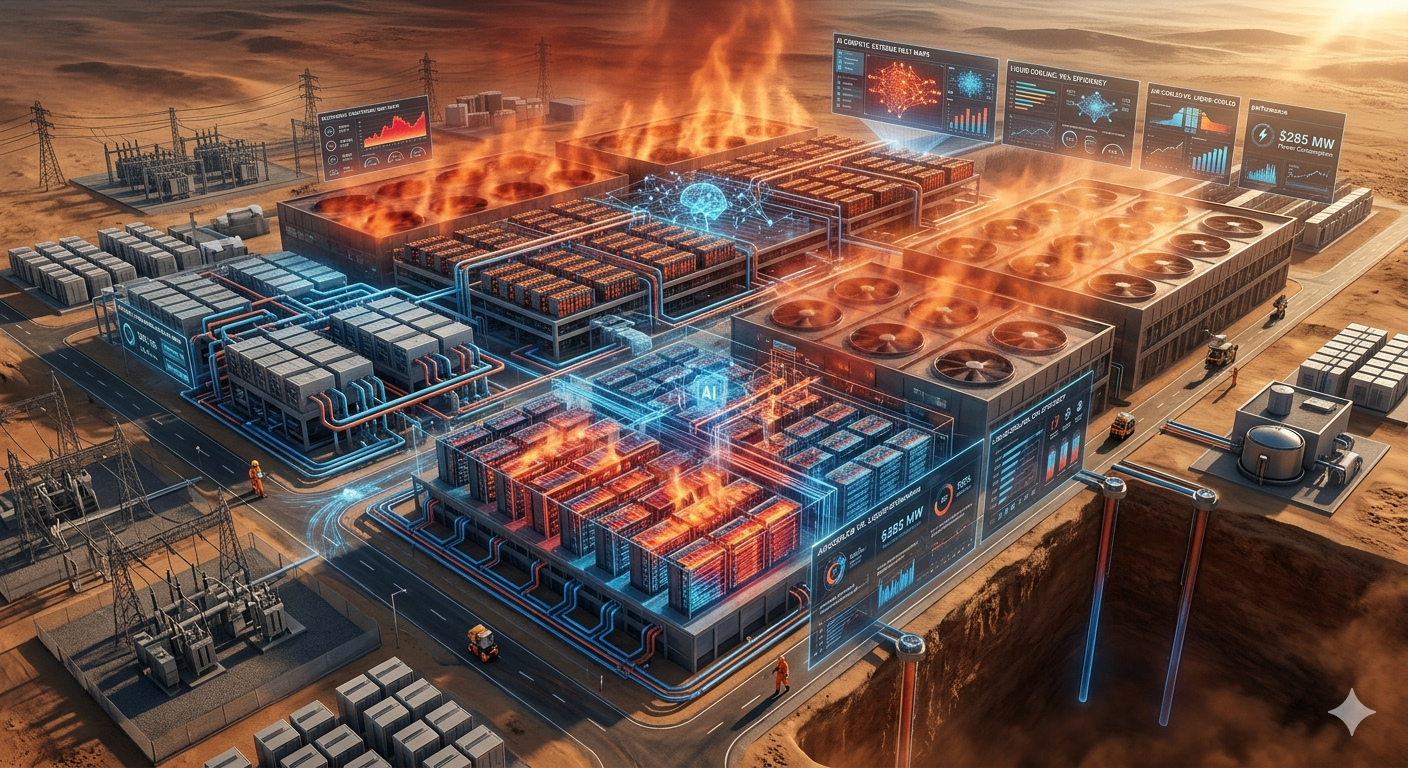
GPU thermal design power is approaching the 1,000-watt-per-chip threshold by 2026–27, and rack densities are routinely breaching 100 kW conditions that make air cooling structurally inadequate for high-density AI clusters. The fan-and-raised-floor architectures that served data centers for decades were simply not designed for this world. The industry’s answer is liquid water, dielectric fluids, refrigerants flowing through cold plates, immersion tanks, and purpose-built distribution units, pulling heat directly off silicon before it can cascade into a thermal crisis. This is not a niche engineering story. It is a story about geopolitics, energy policy, investment capital, and national competitiveness. The countries and companies that solve the heat problem will determine who leads the next decade of AI. Those that don’t will find their ambitions limited not by algorithms or data, but by the capacity of their power grids and cooling infrastructure. This piece examines where that race stands today across North America, Europe, and Asia-Pacific and what the stakes look like heading into the second half of 2026.
The Scale of the Problem
Before diving into regional dynamics, it’s worth establishing just how large the numbers have become. The global data center liquid cooling market was valued at USD 4.8 billion in 2025 and is set to expand from USD 6 billion in 2026 to USD 27.1 billion by 2035, growing at an 18.2% CAGR over that period. That trajectory reflects a fundamental shift in how data centers are designed and operated, not a gradual evolution.
Goldman Sachs forecasts that liquid-cooled AI servers will increase from 15% in 2024 to 54% in 2025, rising to 76% in 2026, driven largely by soaring demand for next-generation, full-rack liquid-cooling solutions. That is a near-total transformation of the industry’s thermal architecture within a three-year window. The driver is well understood: the AI boom. The International Energy Agency projects that global data center power consumption could reach as much as 1,050 TWh by 2026, largely due to the growing demands of AI workloads and the use of GPUs, which are significantly more energy-intensive than traditional CPUs. Managing that power, and the heat it produces has become one of the defining engineering challenges of the era.
As Angela Taylor, Chief of Staff and Head of Strategy at LiquidStack, puts it: “As AI workloads continue to drive power densities ever higher, data center operators will seek out more powerful, modular liquid cooling systems that can be easily deployed and scaled incrementally as thermal regulation needs grow.” There are broadly three technologies competing for dominance in the liquid cooling space. Direct-to-chip cooling routes coolant through cold plates mounted directly on processors the most common first deployment because it can be retrofitted into existing facilities. Single-phase immersion cooling submerges servers entirely in dielectric fluid that remains liquid, capturing heat across the whole board. Two-phase immersion uses fluid that boils and condenses in a closed loop, extracting significantly more heat per unit volume. Both single-phase and two-phase dielectric fluid systems are scaling rapidly; two-phase commands a premium for extreme-density builds.
North America: Spending at a Scale the Grid Cannot Match
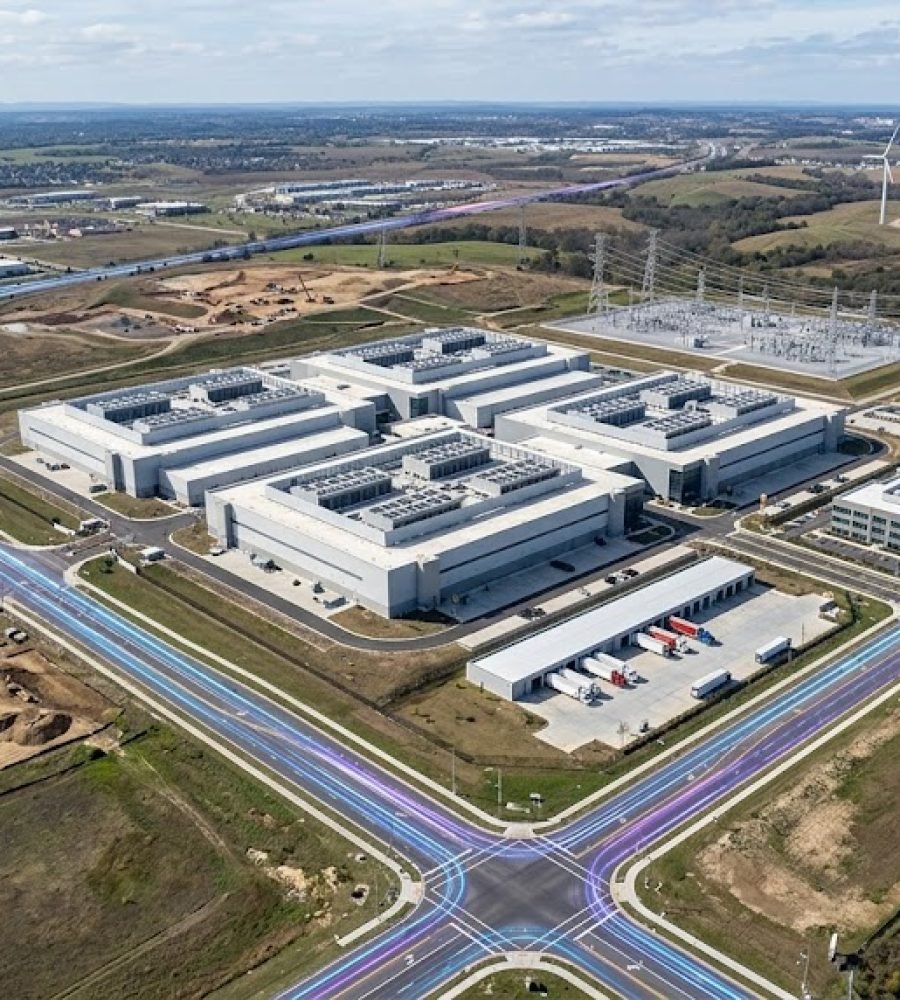
If there is a single number that captures the moment in North American AI infrastructure, it is the combined capital expenditure of the four hyperscalers Amazon, Google, Meta, and Microsoft for 2026. Google, Amazon, Microsoft, and Meta collectively plan to spend $725 billion on capex in 2026, up 77% from last year’s record $410 billion, according to first-quarter earnings compiled by the Financial Times. Drill into those individual commitments and the ambition is staggering. Amazon projects $200 billion in capital expenditures for 2026, versus $125 billion last year. Google guided to $175–185 billion, up from $91 billion in 2025. Meta raised full-year capex guidance to $115–145 billion. Microsoft is tracking toward $110–120 billion in 2026. These are not incremental infrastructure investments. Roughly 75%, or around $450 billion of that spend is directly tied to AI infrastructure servers, GPUs, data centers, and equipment rather than traditional cloud. And yet there is a brutal constraint cutting across all of this ambition: the electrical grid cannot keep up.
Of around 140 large-scale data center projects representing approximately 12 gigawatts of power planned to go live in the US in 2026, only a third are under construction. As of April 2026, approximately half of all planned US data center builds this year are projected to be delayed or cancelled outright not because of a shortage of capital or demand, but because the electrical grid cannot support them. A March 2026 Brookings Institution report documented that electricity costs have risen 42% since 2019, significantly outpacing inflation. The power problem is driving hyperscalers into unusual territory. Microsoft has signed long-term power purchase agreements with nuclear operators, including Three Mile Island, specifically for AI data center load. Meta signed a massive power purchase agreement with Vistra for its Comanche Peak nuclear facility.
Liquid cooling, in this context, is not just a thermal management tool it is a power efficiency strategy. Advanced cooling technologies such as direct-to-chip liquid cooling, immersion cooling, and two-phase cooling systems have demonstrated the ability to reduce cooling-related power consumption by as much as 50–60 percent in some tests. In a world where the grid cannot supply enough power, that kind of efficiency improvement is operationally significant.
The waste heat question is also beginning to surface as a policy issue in the US. In March 2026, the Virginia Assembly passed the first US law focused on data center heat reuse, requiring the state’s energy department to identify heat reuse opportunities, facilitate communication between data centers and heat users, and make recommendations for local and state policies. Illinois’ legislature is also considering a law that would require data centers to develop heat-reuse plans, including supplying heat to communities. These are nascent moves, but they signal a broader recognition that data centers are energy borrowers, not just energy consumers and that the heat they produce can be a resource rather than a problem. Regionally, the concentration of hyperscale investment continues to be heaviest in Virginia (home to the world’s densest data center corridor in Northern Virginia), Texas, Georgia, and the Pacific Northwest. Mexico’s data center market is also growing rapidly, driven by nearshoring of manufacturing and business processes from Asia to North America, with Querétaro, Mexico City, and Monterrey attracting investment in liquid-cooled facilities supporting local AI and edge computing requirements.
Europe: Regulation as Both Headwind and Tailwind
Europe occupies a structurally different position in the global data center landscape. Its regulatory environment is among the most demanding in the world, and that creates friction for new builds but it is also accelerating the adoption of precisely the kind of advanced, efficient infrastructure that liquid cooling represents.
The UK’s £500 million Sovereign AI fund and OpenAI’s withdrawal from Stargate UK citing energy costs — are symptoms of the same underlying reality: securing power infrastructure is now a greater competitive moat than algorithmic innovation. Europe, which operates under stricter energy efficiency regulations and land-use restrictions, faces an even more acute version of the power constraint seen in North America.
Europe’s data center market is undergoing a structural realignment as it enters 2026. The European Data Centre Association estimates colocation facilities generated nearly $35 billion in GDP in 2023, with forecasts approaching $100 billion by 2030, and projects a total investment pipeline of about $114 billion by decade-end with electricity demand growth of roughly 15% annually. The Frankfurt-Amsterdam-London-Paris-Dublin corridor known as FLAP-D has long been the continent’s dominant data center geography. These markets are expected to continue attracting latency-sensitive enterprise and inference workloads, while large-scale AI training deployments gravitate toward regions with abundant, cost-effective renewable energy. Markets such as Milan, Madrid, Brussels, and the Nordic capitals are poised to gain share, with interest also growing in Manchester and Lisbon.
The regulatory picture is simultaneously complex and clarifying. The European Commission proposed a Data Centre Energy Efficiency Package in Q1 2026, alongside the Strategy Roadmap on Digitalisation and AI, with the aim of achieving carbon-neutral data centers by 2030. The EU is also expected to publish a Cloud and AI Development Act aimed at tripling EU data center processing capacity within five to seven years, with streamlined approvals and public funding for energy-efficient facilities. Europe’s market is heavily influenced by stringent regulations on energy conservation and carbon emissions reduction, and those regulations are directly shaping thermal management choices. The EU Energy Efficiency Directive’s PUE specifications, national renewable energy goals, and infrastructure from the Frankfurt-Amsterdam-London Data Centre Triangle are structuring demands on the cooling sector.
Perhaps the most interesting regulatory development is around waste heat. Under the recast EU Energy Efficiency Directive, facilities with total IT power above 1 MW must conduct and submit a waste heat recovery feasibility assessment to national authorities before commissioning, implement waste heat reuse measures unless a certified infeasibility assessment demonstrates barriers, and report annually on actual waste heat recovered and reused as a percentage of total thermal output. This is not advisory, it is mandatory. The practical implications are significant. Direct liquid cooling systems remove heat at the GPU die, and coolant exits at 55°C–65°C within the direct-injection range of most fourth-generation district heating networks without any heat boosting. This convergence of higher rack temperatures, native compatibility with district heating, and regulatory obligation has moved district heating integration from sustainability pilot to standard design consideration for any new European AI campus above 1 MW in 2026.
The proof of concept is already operating. Since 2023, the Technological University of Dublin’s Tallaght campus has been among a growing number of buildings in southwest Dublin to be heated by waste heat from a nearby Amazon Web Services data center. A company called Nexalus, which patented its technology from Trinity College Dublin, uses jet impingement liquid cooling to capture heat from GPUs and CPUs at around 55–60 degrees Celsius — hot enough to be reused directly for district heating without heat pumps. This approach transforms a cost center into an energy asset.
The EU’s scientific advisory bodies are now pushing further. Researchers have conducted detailed thermodynamic, economic, and emissions analyses of possible end uses for low-grade waste heat from data centers (typically 30–70°C), evaluating six potential applications: district heating, heat-to-electricity conversion, sorption chillers, thermal water purification, atmospheric water harvesting, and direct air capture of CO₂. The two most promising in both climate impact and economic potential were direct air capture potentially removing 50–1,000 megatonnes of CO₂ annually and thermal water purification. Germany has also taken steps beyond the EU minimum. The country now mandates the use of renewable electricity for data centers on a balance-of-account basis, creating an additional incentive to minimize overall energy consumption and by extension, to maximize cooling efficiency. For investors and operators, the European market in 2026 represents a high-friction but high-reward environment. The capex required to meet regulatory requirements is substantial, but the regulatory floor also means competitors face the same constraints, and compliance creates durable advantages over time.
Asia-Pacific: The Fastest-Growing Front
If North America is the spending epicenter and Europe is the regulatory laboratory, Asia-Pacific is where the growth curve is steepest. In APAC, which is the fastest-growing region for liquid cooling in AI data centers, the push is driven by government-led digital transformation and the need for high-density computing in urban centers, leading to increased adoption of single-phase cooling and immersion cooling. The region has witnessed a surge in hyperscale and colocation data center investments driven by digital transformation across finance, healthcare, and telecommunications. Singapore, Japan, and South Korea have emerged as early adopters due to their high energy costs and limited physical space for large-scale facilities. As governments in India and China push for sustainable infrastructure development, there is growing interest in next-generation cooling methods that align with environmental goals.
Singapore’s position as a regional hub deserves particular attention. Bridge Data Centres is among the first hyperscale operators in the region to deploy advanced liquid cooling technologies at scale, including cold plate liquid cooling, to support high-density and AI-driven workloads. One facility achieved an annualised Power Usage Effectiveness of below 1.2. BDC is also the first in Southeast Asia to incorporate Prefabricated, Prefinished Volumetric Construction, an innovative method that assembles large building sections off site, enabling completion 40% faster than traditional methods. Singapore continues to lead as a regional data hub, with companies like Equinix and Digital Realty expanding facilities and investing in liquid cooling and modular UPS systems to meet green data center guidelines. Japan is experiencing a surge of its own. EdgeConneX entered the Japanese market in 2025 by securing land in the greater Osaka-Kyoto area in collaboration with Kagoya Asset Management, to build a sustainable, AI-ready data center highlighting Japan’s push to support robust digital and AI infrastructure. Blackstone and ESR have developed AI-based data centers in Japan, while NEXTDC announced AI-focused infrastructure in Sydney.
India presents a particularly dynamic picture. The market for liquid cooling is expected to gain from advantageous regulatory frameworks, government incentives, and a growing focus on sustainable data center operations as nations like China, India, Japan, and Singapore continue to invest in digital infrastructure and smart technologies. India’s government has been explicit about its ambitions to build domestic AI infrastructure, and the country’s rapidly expanding digital economy is creating genuine demand for high-density compute demand that local operators are increasingly addressing with liquid cooling from the ground up, rather than retrofitting existing air-cooled facilities.
China occupies a complex position in the global cooling landscape. Chinese system suppliers such as Envicool, a Huawei-certified partner, and Megmeet, an Nvidia-certified PSU provider, are rapidly expanding as the domestic ecosystem matures. China’s domestic AI build-out driven by Alibaba, Tencent, Baidu, and a range of state-backed initiatives is creating massive demand for cooling infrastructure, particularly as US export controls on advanced chips push Chinese operators toward denser configurations of whatever hardware they can access. In the APAC area, where urban density and real estate costs can be constraining, the capacity of liquid cooling systems to boost computing power without requiring significant physical expansions or expensive infrastructural overhauls is particularly attractive. This is not an incidental advantage — in markets like Singapore and Tokyo, where land is both scarce and expensive, the density gains from liquid cooling translate directly into economic advantage.
The Technology Landscape: Who’s Building What
The liquid cooling market is no longer a niche. It has attracted major established players and a growing cohort of specialized innovators. The competitive landscape is evolving rapidly, with Vertiv leading the liquid cooling market and established players such as CoolIT, nVent, and Boyd maintaining strong market share positions. Schneider Electric, which has been manufacturing electrical infrastructure for nearly two centuries, has brought its global supply chain to bear on direct-to-chip cooling. Submer Technologies, headquartered in Barcelona, is growing its direct-to-chip footprint through hybrid approaches, with a focus on sustainability and “Smart Coolant” chemistry that allows operators to handle extreme heat loads while maintaining high energy efficiency.
LiquidStack, recently acquired by Trane Technologies, has built a “Data Centre-as-a-Service” vision around two-phase immersion, with solutions designed for extreme densities exceeding 100 kW per rack. Their cooling technology integrates with advanced control software that automatically adjusts to real-time compute loads, providing thermal management that delivers some of the lowest PUE ratings in the industry. In the European ecosystem, DCX is a dynamic Polish provider delivering direct-to-chip and immersion cooling technologies, initially catering to high-density cryptocurrency operations but now addressing the surging thermal requirements of AI and hyperscale data centers.
The fluids themselves are also an area of active innovation. In June 2025, Shell introduced its DLC Fluid S3 chip-level cooling product for demanding AI applications. Engineered Fluids specializes in dielectric thermal management fluids for single-phase liquid immersion cooling. The choice of coolant increasingly affects not just thermal performance, but safety, environmental compliance, and the economics of heat recovery particularly for European operators subject to district heating regulations. Two-phase direct liquid cooling is expected to expand gradually, with adoption accelerating once chip-level TDPs and thermal flux exceed the practical limits of single-phase systems. Immersion cooling is finding its place through selective adoption, where its architectural trade-offs are justified by performance or operational requirements. For operators designing new facilities, the dominant early choice is direct-to-chip cooling lower upfront complexity, easier integration with existing rack infrastructure, and a technology stack that most major server vendors now support natively. Immersion is moving from pilot to production for the most extreme density requirements, particularly in AI training clusters where the economics of the hardware justify the additional infrastructure investment.
The Bigger Picture: Energy, Sovereignty, and Sustainability
Underneath the technology choices and market forecasts, a more fundamental contest is playing out. Access to power and cooling infrastructure is becoming a determinant of national competitiveness in AI as significant as talent pipelines, regulatory regimes, or chip supply chains. Securing power infrastructure is now a greater competitive moat than algorithmic innovation. The companies and nations that solve the energy problem first will define the AI era. That observation, from a European business analysis published in April 2026, captures what is increasingly a consensus view among infrastructure investors and policymakers. The liquid cooling market is the most visible expression of this reality. But behind it are deeper questions about how societies want to manage the environmental footprint of AI infrastructure and whether the heat, the power consumption, and the water use can be turned from liabilities into assets. Reusing waste heat could reduce a data center’s energy consumption and related costs by 10–30%, and can also reduce the energy consumption of neighboring facilities by receiving some of the excess heat. The European framework for mandating waste heat feasibility assessments is the most developed attempt globally to encode this logic into law. But the concept is spreading groups in the United States are advocating for forward-thinking policies that require data centers to develop heat-reuse plans, including supplying heat to communities.
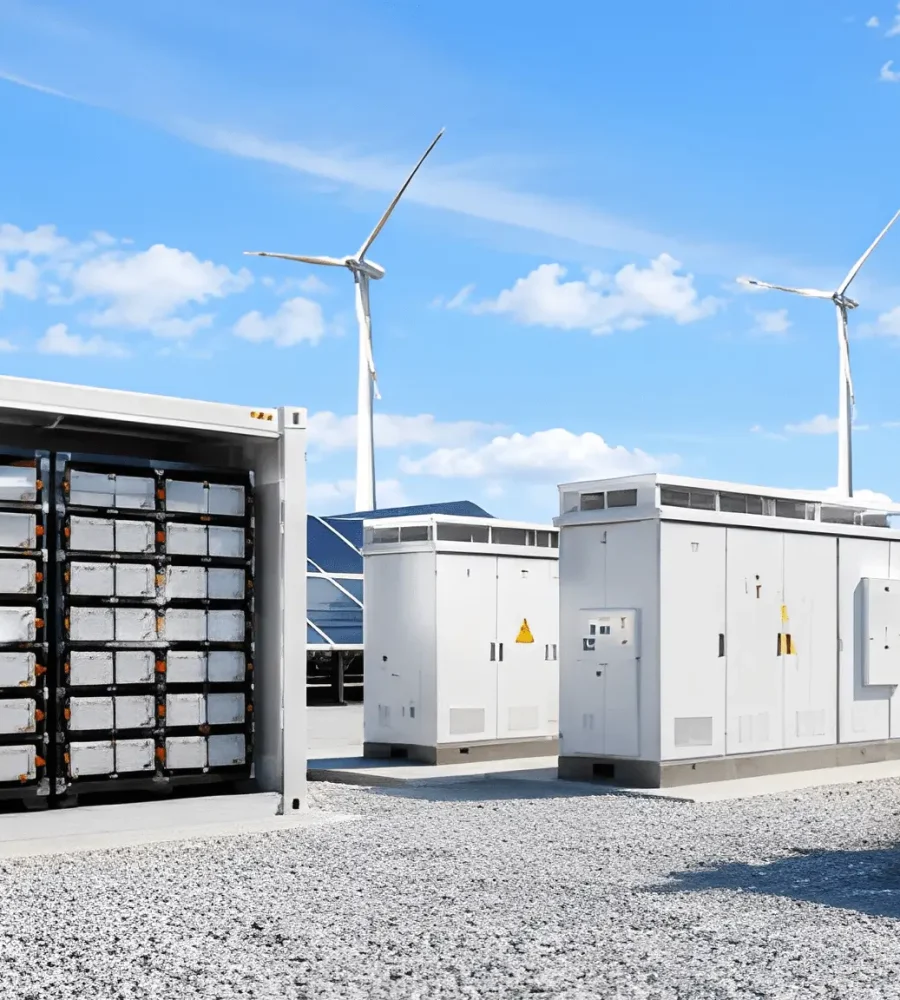
The nuclear question looms over all of this. Small modular reactors represent a potential solution to the power supply problem co-located, carbon-free, and continuous. However, no commercial SMR is yet operational in the United States, and the timeline mismatch is critical: data centers need power now, while SMR technology remains years from commercial deployment. In the interim, natural gas is filling the gap, raising difficult questions about the climate commitments that many technology companies have made.
Conclusion: Infrastructure as Strategy
The transition from air cooling to liquid cooling is not a technical footnote in the story of AI. It is infrastructure strategy playing out at national and corporate scale, simultaneously. In 2026, the ability to deploy and scale advanced cooling infrastructure is a defining competitive advantage. That statement, from Lombard Odier’s analysis of the AI infrastructure investment landscape, understates what is actually at stake. In North America, the power grid is the binding constraint on AI expansion. In Europe, regulation is forcing operators toward efficiency and waste heat recovery in ways that will create structural advantages for compliant early movers. In APAC, a combination of space constraints, government investment, and rapidly maturing supplier ecosystems is making the region the fastest-growing market in the world.
The companies positioned to benefit are not just the hyperscalers spending hundreds of billions. They are the cooling specialists Vertiv, LiquidStack, Submer, DCX, CoolIT, and others who have spent years building the engineering and service capability to deploy these systems at scale. They are the fluid manufacturers. The CDU integrators. The district heating network operators who, in cities like Dublin and Stockholm, are quietly turning AI’s thermal exhaust into heat for homes and universities. The next phase of the AI race will not be won on model benchmarks alone. It will be won or lost in the cooling aisle.