The dominant narrative about AI and jobs in 2026 is displacement. AI tools compressing junior developer hiring. AI-driven automation reducing demand for knowledge workers. The technology sector cutting entry-level software roles as generative AI handles tasks that junior engineers previously performed. That narrative is real and grounded in data. It is also incomplete in a specific and commercially important way.
The AI infrastructure buildout has simultaneously created the most intense demand for electrical engineers in a generation. Not the software engineers who build AI models. Not the data scientists who train them. The electrical engineers who design, build, commission, and operate the physical infrastructure that makes AI compute possible. The Bureau of Labor Statistics projects 9% growth in electrical engineering jobs between 2023 and 2033, more than double the average for all occupations. The data center industry contributed 4.7 million jobs to the US economy in 2023, a 60% increase from 2017. The AI data center construction boom is creating demand for skilled engineers and technicians at a pace that university programmes, apprenticeship pipelines, and certification pathways are unable to match.
The electrical engineering profession is being transformed by the AI era in ways visible in compensation data, career trajectory patterns, skill requirements, and geographic distribution of demand. Understanding those transformations is useful for engineers navigating the AI infrastructure market and for operators competing for the talent the buildout requires.
The Compensation Transformation That Is Reordering Professional Pay
The most immediately visible transformation is compensation. The electrical engineer who specialises in the high-voltage power systems, liquid cooling infrastructure, and data center commissioning that AI campuses require is now among the most compensated professionals in the technology sector. Power electronics engineers command $150,000 to $250,000 annually. Senior commissioning engineers working on hyperscale AI builds routinely clear $200,000 in total annual compensation. Amazon, Meta, and Google are listing electrical design engineering roles at salaries reaching $281,000 for senior specialists with data center experience.
These compensation levels are not the result of a short-term shortage that will normalise as more engineers enter the field. They are the result of a structural imbalance between the rate at which the AI infrastructure buildout is creating demand for specialist electrical engineering talent and the rate at which educational institutions and professional certification pathways can supply it. 76% of employers struggled to find qualified candidates for engineering roles, according to a 2022 Electronic Design survey, a figure that has not improved as the AI buildout has added further demand pressure. Commissioning specialists take over 75 days to fill vacancies, with salaries ranging from $110,000 to $150,000 even for roles that do not reach the hyperscale specialist compensation ceiling.
Why the Blue-Collar Electrical Career Is Having Its Moment
The transformation extends below the professional engineering level to the skilled trades. A journeyman electrician in Northern Virginia working on data center construction earns more than most entry-level knowledge workers in AI-exposed professions. The same AI threatening white-collar jobs has created an acute skilled-trades shortage dramatically raising wages for people who work with their hands. Northern Virginia electricians now earn $120,000 or more annually, a compensation level reflecting a market where data center demand has bid wages to levels making the region one of the highest-paying construction markets in the country.
The trades career path leading to data center electrical work has become one of the most financially attractive options for people entering the workforce without a four-year degree. An electrical apprenticeship programme taking four to five years to complete produces a journeyman electrician who can immediately enter the data center construction market at $80,000 to $100,000 annually, with clear progression to $120,000 or above as data center-specific experience accumulates. That income trajectory compares favourably with a four-year computer science degree leading to a junior software role in a market where AI tools are reducing hiring of junior engineers.
The Skill Set That AI-Era Data Centers Require
The electrical engineering skills the AI infrastructure buildout values most are not the skills conventional electrical engineering training has historically emphasised. The core competencies of the AI-era data center electrical engineer combine traditional power systems engineering with specific knowledge of high-density computing infrastructure that did not exist at commercial scale a decade ago. That combination creates a scarcity that compensation alone cannot resolve quickly.
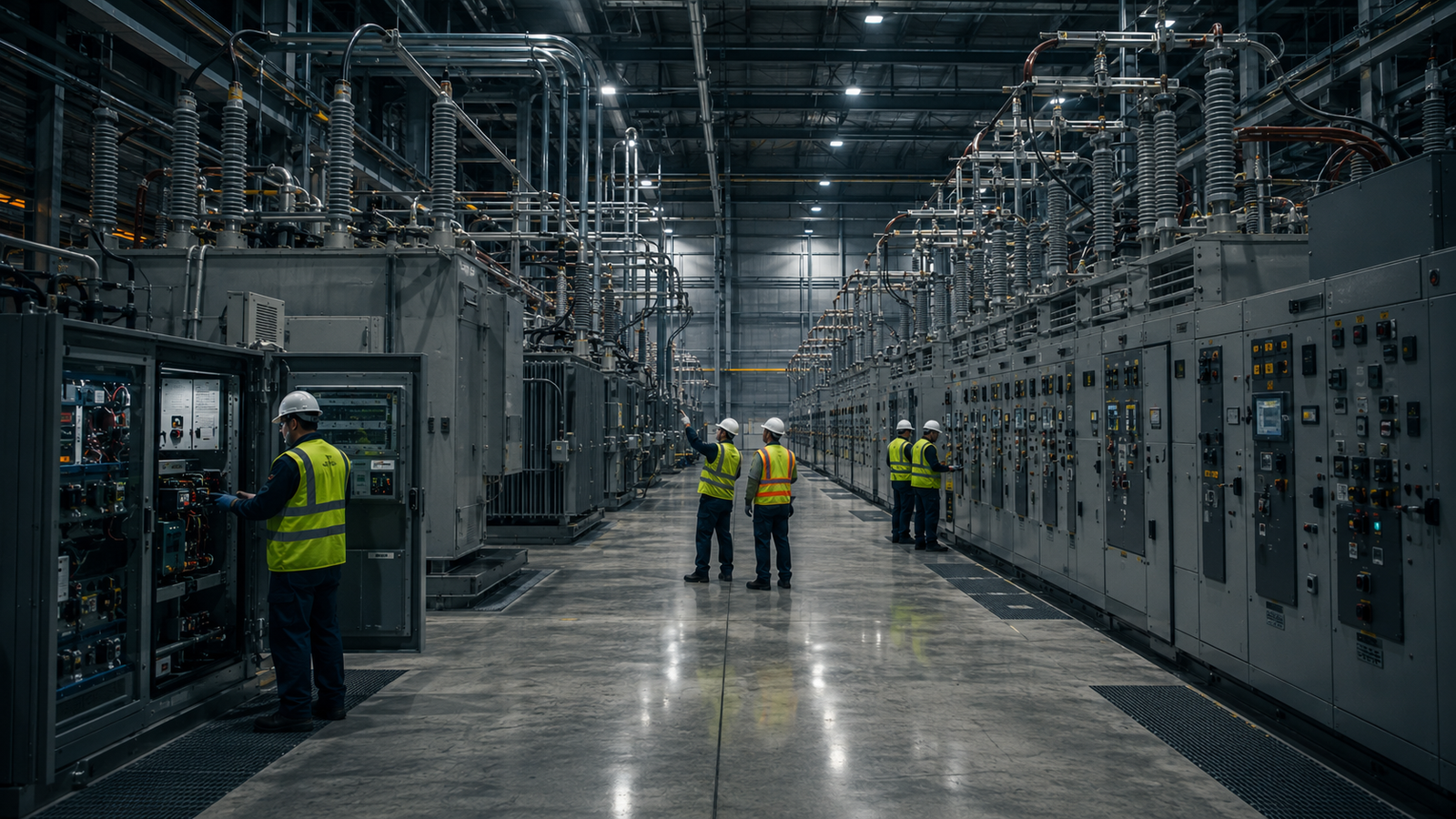
The most critical and scarcest combination is high-voltage power systems expertise combined with data center operations experience. The engineer who can design and commission a 138-kilovolt substation serving a hyperscale AI campus, manage the power quality requirements of a Blackwell GPU cluster, and understand the cooling distribution architecture that the thermal management of that cluster requires is a genuinely rare professional. That combination cannot be developed through academic training alone. It requires years of hands-on experience with live high-voltage systems, accumulated through apprenticeship, mentorship, and progressive exposure to increasingly complex commissioning projects.
Demand for each category of AI infrastructure engineering talent is rising significantly faster than supply, according to Matthew Hawkins, director of education for Uptime Institute. The shortage is not primarily a training pipeline capacity problem. It is an experience accumulation problem. The skills that make an electrical engineer valuable on an AI campus commissioning project cannot be taught in a classroom. Engineers develop those skills through years of working on progressively more complex projects under experienced supervision. The pipeline that produces those engineers moves at the pace professional experience accumulates, which is measured in years rather than months.
The Thermal Engineering Specialisation That Barely Existed Three Years Ago
The liquid cooling infrastructure that AI-era data centers require has created demand for a specialisation that barely existed at commercial scale before 2022. The thermal engineer who understands direct-to-chip cooling system design, CDU sizing and placement, manifold distribution architecture, coolant chemistry management, and the integration of liquid cooling infrastructure with facility-level chilled water systems is a professional whose skills were not in significant commercial demand when universities and employers developed the previous generation of data center engineers.
Commissioning specialists take over 75 days to fill vacancies because the supply of engineers who have actually commissioned liquid cooling systems at hyperscale density is extremely small. The facilities that commissioned the first large-scale liquid cooling deployments in 2021 and 2022 produced a small cohort of engineers who now carry experience that the market values at a significant premium. Those engineers are being competed for actively by hyperscalers, neoclouds, colocation operators, and the mechanical engineering firms serving all of them. The only way to get more of them in the short term is to hire them away from each other.
The Geographic Concentration That Amplifies the Shortage
The AI infrastructure talent shortage is not distributed evenly across geography. It is concentrated in the markets where data center development is most intense, which are exactly the markets where the existing talent pool is already most fully deployed. Northern Virginia, which hosts the world’s largest concentration of data centers and the largest concentration of specialist workforce that operates them, has a talent market that operates more like a closed loop than an open labour market. Every major operator in the market knows every significant candidate. Compensation intelligence flows freely through professional networks.
Labour premiums for major data center projects are now 15% to 20% higher than pre-2022 levels, and the premium has not stabilised because demand is growing faster than the market is producing qualified candidates. The secondary and emerging markets where operators are building to escape Northern Virginia’s capacity constraints are discovering that the talent problem is worse outside the primary markets, not better. San Antonio, Phoenix, Columbus, and other emerging data center markets have smaller existing talent pools, calibrated to the data center industry that existed before the AI buildout. An operator building a 500-megawatt AI campus in San Antonio is not just importing construction materials and GPU hardware. It is importing the operational talent that does not exist in the local market at the required skill level.
The University Response That Is Coming Too Slowly
The AI data center talent shortage has prompted responses from universities, community colleges, and industry training programmes that are genuine and well-intentioned but arriving too slowly to address 2026 demand. Google committed $15 million to the Electrical Training Alliance to expand the electrician pipeline. Siemens committed to training 200,000 electricians and manufacturing experts by 2030. Multiple community colleges have launched data center operations programmes in partnership with regional operators. These are real investments that will produce real graduates.
The challenge is the timeline. A four-year electrical engineering degree produces an engineer who is still three to five years away from having the commissioning experience the AI campus market values most. An electrician apprenticeship programme takes four to five years to produce a journeyman. A data center operations programme at a community college can produce a qualified technician in 18 to 24 months, but the specialised skills required for AI-density operations are still beyond what a two-year programme can reliably develop. The demand is growing at 25 to 60% per year. The training pipeline is growing at 3 to 5% per year. The gap does not close on any near-term horizon.
The Institutional Knowledge Gap That Cannot Be Closed Quickly
The most consequential dimension of the electrical engineering talent shortage in AI infrastructure is not the shortage of entry-level engineers or even of mid-career specialists. It is the shortage of senior professionals who carry the institutional knowledge required to manage the most complex and highest-stakes infrastructure operations. The director of critical operations who has managed a 200-megawatt campus through a regional weather event, a transformer failure, and a cooling system upgrade simultaneously carries knowledge that takes a decade to accumulate and that no organisation can fully pass to a successor in a transition period measured in months.
This institutional knowledge gap is being compounded by demographics. A generation of veteran engineers who built and operated the data centers of the 2000s and 2010s is entering retirement at the same moment that the AI infrastructure buildout is creating the most complex data center operations environments in the history of the industry. The person who is most experienced at running a large-scale data center campus is the person closest to retirement age. The person who most needs that experience is the AI campus commissioning manager responsible for bringing a 500-megawatt facility online for the first time. The mismatch between the engineers who hold that knowledge and the operators who need it is the defining talent challenge of the AI infrastructure era.
The Operators That Will Preserve Their Advantage
The operators who have invested most seriously in knowledge transfer programmes, structured mentorship, detailed documentation of institutional knowledge, and succession planning for senior operations roles are the ones whose facilities will perform most reliably as the demographic transition plays out. By contrast, operators that treat knowledge transfer as a future concern rather than an immediate operational priority are more likely to experience the avoidable operational problems that follow the departure of an experienced operations director and the arrival of someone who is technically capable but institutionally uninitiated.
The institutional knowledge transfer challenge also creates a specific opportunity for the senior engineers who are approaching retirement age. The operators who create structured part-time consulting, mentorship, and knowledge documentation roles for their most experienced retiring engineers, rather than simply accepting their departure, are capturing institutional knowledge that would otherwise leave the organisation permanently. Some of the most valuable talent retention investments in the AI infrastructure sector over the next five years will be the investments operators make in keeping their most experienced departing engineers engaged in knowledge transfer roles rather than in full-time operational roles they are ready to leave.
The Compensation Gap Between Sectors That Is Pulling Talent Away
The electrical engineering talent shortage in AI infrastructure is not just a shortage relative to the data center sector’s own demand. It is a shortage that reflects competition from other sectors that are simultaneously experiencing their own AI-driven demand surge for electrical engineering talent. The electric vehicle charging network expansion requires electrical engineers who understand power quality, grid interconnection, and high-amperage charging infrastructure. The renewable energy buildout requires electrical engineers who can design and commission utility-scale solar, wind, and battery storage projects. The manufacturing reshoring programmes that semiconductor, pharmaceutical, and consumer goods companies are launching require electrical engineers who can design and commission new industrial electrical infrastructure.
All of these demand sources are drawing from the same underlying population of qualified electrical engineers. The data center sector is competing not just with other data center operators for the same talent. It is competing with the entire electrification transition, which is simultaneously the most capital-intensive infrastructure investment programme in the United States since the interstate highway system and the most demanding environment for electrical engineering talent in the profession’s modern history.
AI Infrastructure Is Winning the Compensation Battle
The data center sector’s advantage in this competition is compensation. The $150,000 to $250,000 range that power electronics engineers command in the AI infrastructure market is at the top of the electrical engineering compensation range across all sectors. That premium is attracting engineers from renewable energy, industrial automation, and utility sectors who find that their existing skills translate to data center environments with relatively modest retraining. The renewable energy engineer who understands power electronics and grid interconnection is a strong candidate for the medium-voltage power systems role at an AI campus.
The industrial automation engineer who understands control systems and equipment reliability is a strong candidate for the critical systems operations role. The data center sector is effectively subsidising its own talent pipeline by pulling experienced engineers from adjacent sectors through compensation premiums, and those engineers are arriving with skills that are highly relevant even if they are not data center-native.
The Automation That Is Reshaping What Electrical Engineers Do
The AI infrastructure buildout is not just creating demand for more electrical engineers. It is also changing what electrical engineers do at every level of the profession through the deployment of AI-driven operations systems, predictive maintenance tools, and automated testing and commissioning frameworks that are taking over the most routine and repetitive elements of electrical engineering work.
An electrical engineer who spends 40% of their time manually reviewing switchgear testing data, comparing it against specification, and flagging anomalies for investigation is an engineer whose time is being significantly underutilised relative to their expertise. The AI-driven testing and commissioning tools that operators are deploying across AI data center projects are automating that review process, flagging anomalies automatically, and presenting engineers with the subset of results that require human judgement rather than the full dataset that requires human attention. As a result, engineers shift their time from data review to expert judgement, which is the highest-value component of their work and the component that automation is least effective at replacing.
Why Automation Is Increasing the Value of Engineering Work
This reallocation of engineering time toward higher-value activities is simultaneously making electrical engineers more productive and making the experience of electrical engineering work more intellectually engaging. The engineer who spends most of their working time doing expert-level problem-solving rather than routine data processing is an engineer who is more likely to remain in the profession, more likely to advance rapidly, and more likely to develop the depth of expertise that the AI infrastructure market values most. The automation of routine engineering work is not reducing the demand for electrical engineers. It is increasing the productivity of the electrical engineers who exist and making the profession more attractive to the engineers who are considering it.
The operators who deploy the most sophisticated AI-driven operations, testing, and commissioning tools are attracting the strongest engineering talent because the most capable engineers want to work in environments where their expertise is the scarce resource rather than their time. That talent advantage compounds: the best engineers working with the best tools develop the deepest expertise and produce the best operational outcomes, which generates the data that trains the AI tools to be better, which attracts even stronger engineering talent. The AI infrastructure sector’s operational technology and engineering talent development are becoming mutually reinforcing, and the operators who understand that are building capabilities that their competitors will find very difficult to replicate.
The Workforce Development Ecosystem That Is Being Built From Scratch
The mismatch between the AI infrastructure talent demand and the training pipeline that supplies it has triggered a workforce development response at the institutional level that is more comprehensive than anything the data center sector has previously organised around. Beyond Google’s Electrical Training Alliance commitment and Siemens’ manufacturing expert programme, a broader ecosystem of workforce development initiatives is being assembled across community colleges, industry associations, military veteran programmes, and corporate training partnerships.
The IBEW apprenticeship programmes, which have historically produced the journeyman electricians who do the bulk of data center construction electrical work, are expanding their data center-specific curriculum in partnership with major operators who have a direct interest in increasing the pipeline of qualified workers. The expansion is real, but the limited number of qualified instructors constrains it. Those instructors remain in short supply because operators employ the most experienced data center electrical professionals in operations roles at premium compensation rather than in teaching roles. As a result, the same talent shortage the training pipeline is trying to address also limits how quickly it can expand.
Military veteran programmes have become an important secondary pipeline for data center electrical talent. Veterans with military occupational specialties in electrical systems, power generation, and communications infrastructure carry hands-on experience with high-voltage systems in demanding operational environments that translates well to data center commissioning roles. The operational rigour, documentation discipline, and mission-critical mindset that military electrical training develops are exactly the qualities that data center operators find most valuable in new hires. Multiple major operators have developed structured veteran hiring programmes that provide the data center-specific technical training that bridges military electrical experience and data center operations expertise.
Why Staffing Firms Are Becoming Training Organisations
The engineering staffing firms that serve the data center sector are also evolving from simple placement services into talent development organisations. Firms that previously filled engineering roles by recruiting from the existing pool of qualified candidates are developing their own training programmes, apprenticeship partnerships, and boot camps that turn qualified-but-not-specialised electrical engineers into data center-ready professionals. These programmes are not replacing the institutional training pipeline. They are compressing the time between an engineer graduating from a conventional electrical engineering programme and becoming productively deployable on an AI campus commissioning project.
The workforce development ecosystem that is emerging around the AI infrastructure talent shortage is the most significant organised human capital investment the data center sector has ever made. It is also insufficient to close the gap on the timeline that the buildout demands, which means the compensation premium for the scarce talent that exists will persist for at least three to five more years regardless of how effective the training investments prove to be. The operators who combine investment in long-term pipeline development with competitive compensation for the talent that exists today are the ones managing both the immediate shortage and the structural gap simultaneously.
The Career Opportunity That the Conventional Narrative Misses
The electrical engineering talent market the AI era has created has different implications for operators competing for that talent and for individuals considering whether to enter or transition into the field. For operators, the talent competition has shifted from being primarily a compensation competition to being a career development competition. The engineers who are most mobile and most sought-after are choosing employers based on the technical challenge and professional growth opportunity the role offers, not just the compensation.
A Blackwell campus commissioning project offers technical challenges that a conventional enterprise data center operations role does not. An operator who can credibly offer engineers the opportunity to work on the frontier of AI infrastructure density at scale is recruiting from a different and deeper pool than one offering conventional data center roles at premium compensation. The operators who structure their talent pipelines around the promise of progressively more complex and technically demanding work are the ones whose retention rates are highest, because the engineers who are most capable of doing the hardest work are also the ones most motivated by the opportunity to do it.
The Opportunity Window for Career Changers
For career changers, the electrical engineering AI era is one of the clearest opportunity signals in the 2026 labour market. Engineers who layer AI fluency onto core electrical engineering skills are seeing the fastest salary growth. Electrical engineers from adjacent industries including power generation, industrial automation, and building management systems who develop data center-specific expertise through targeted certification and hands-on experience are finding that their existing skills translate well to the AI campus environment and that the premium over their previous compensation is substantial.
The AI era has produced a paradox that the conventional narrative about technology and employment does not capture. The technology that is most aggressively automating knowledge work is simultaneously creating the most intense demand for skilled physical infrastructure workers in a generation. The electrical engineers who build the AI data centers are among the primary beneficiaries of the AI deployment that the data centers enable. The AI infrastructure talent war documented that the competition for those engineers is intensifying at every level of the market. The profession that once seemed unglamorous relative to software development is now one of the most commercially valuable in the technology economy.
What the Profession Will Look Like in 2030
The transformation of electrical engineering by the AI era is structural rather than cyclical, which means the profession of 2030 will look materially different from the profession of 2020 even after the AI infrastructure buildout reaches a steady state. The skills that are most valued today, high-voltage power systems engineering combined with data center thermal expertise and commissioning experience, will become the established core of the profession rather than a premium specialisation. The compensation levels that currently reflect scarcity will moderate as more engineers accumulate the experience the market values, but they will moderate to a permanently higher baseline than the pre-AI era profession supported.
The engineers entering the profession today who develop AI infrastructure specialisation are not just positioning themselves for a hot market in 2026 and 2027. They are positioning themselves for the foundational role in a physical infrastructure sector whose economic importance to the technology economy will grow throughout the decade. The data centers being built today will require commissioning engineers, thermal specialists, and high-voltage power systems engineers to operate them for 20 to 30 years. The profession is not experiencing a temporary boom. It is undergoing a permanent expansion whose scale and duration are determined by the scale and duration of the AI infrastructure buildout that is driving it.
The Profession That Emerges After the Buildout
The electrical engineering profession that emerges from the AI era will be larger, better compensated, more technically demanding, and more visible in the technology economy than the profession that existed before the AI buildout began. The transformation is the profession’s most significant since the electrification of the 20th century created the demand that built the profession in the first place. Engineers who understand that they are living through a structural transformation of comparable magnitude, rather than a cyclical upturn in an otherwise stable profession, will make career and investment decisions that compound in value over the coming decade.
The engineers who are most valuable in the profession of 2030 will be those who developed deep specialisation in the AI infrastructure environment of 2025 and 2026, when the work was hardest, the constraints were most binding, and the learning was most intensive. The engineers who commission the first 500-megawatt AI campuses are developing operational knowledge that cannot be replicated from textbooks or compressed into training programmes. They are the foundational practitioners of a profession whose next generation will be taught by them.
The economic value of that foundational experience is substantial and durable. The surgeon who trained at the most demanding trauma centres in their specialty commands a career premium that reflects the irreplaceable quality of their training environment. The electrical engineer who commissioned the most demanding AI infrastructure projects of the 2020s will command the equivalent premium in their profession for the same reason. The experience is the credential, and the experience is being accumulated right now by the engineers who are doing the hardest work in the AI infrastructure buildout.
The Permanent Expansion of the Profession
The profession will not always be in the acute shortage that defines its current moment. But the permanent expansion in the scale, compensation, and technical sophistication of electrical engineering that the AI era has produced will outlast the current shortage. The AI infrastructure boom has elevated the electrical engineering profession in the technology economy in a way that is structural rather than cyclical, and the engineers who build their careers at the intersection of power systems expertise and AI infrastructure experience are building in the direction that the structural shift is moving.