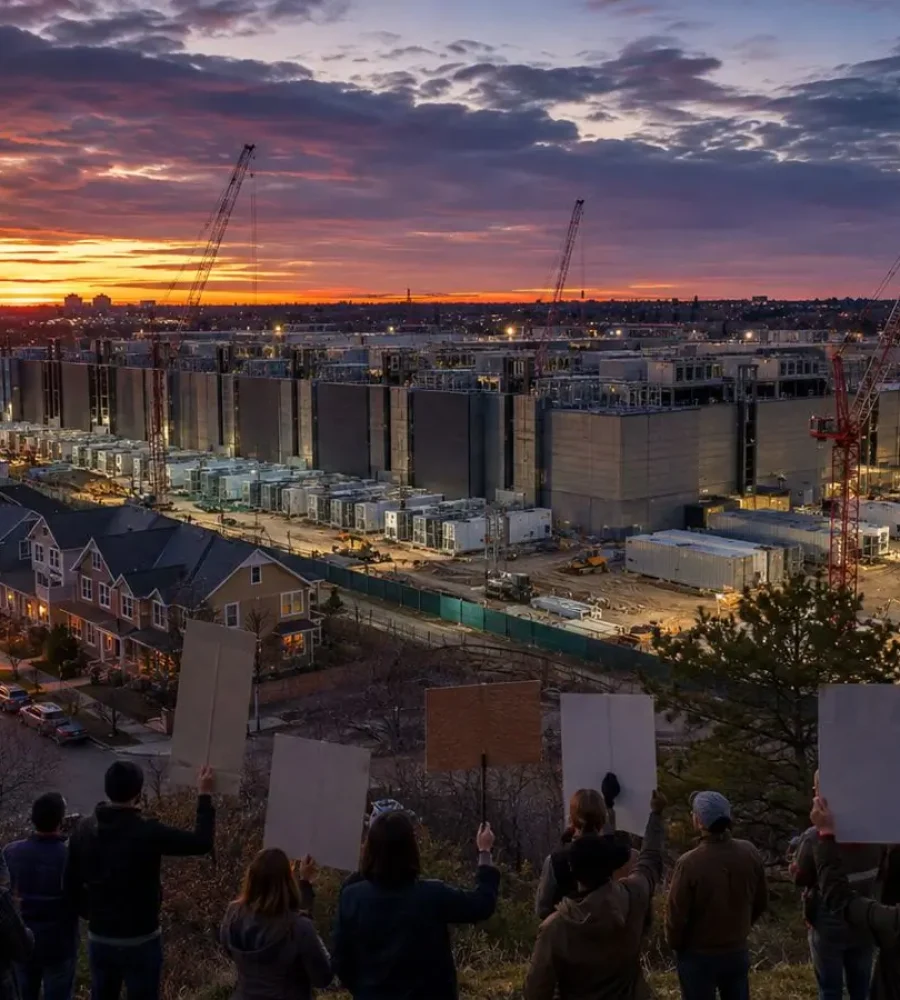
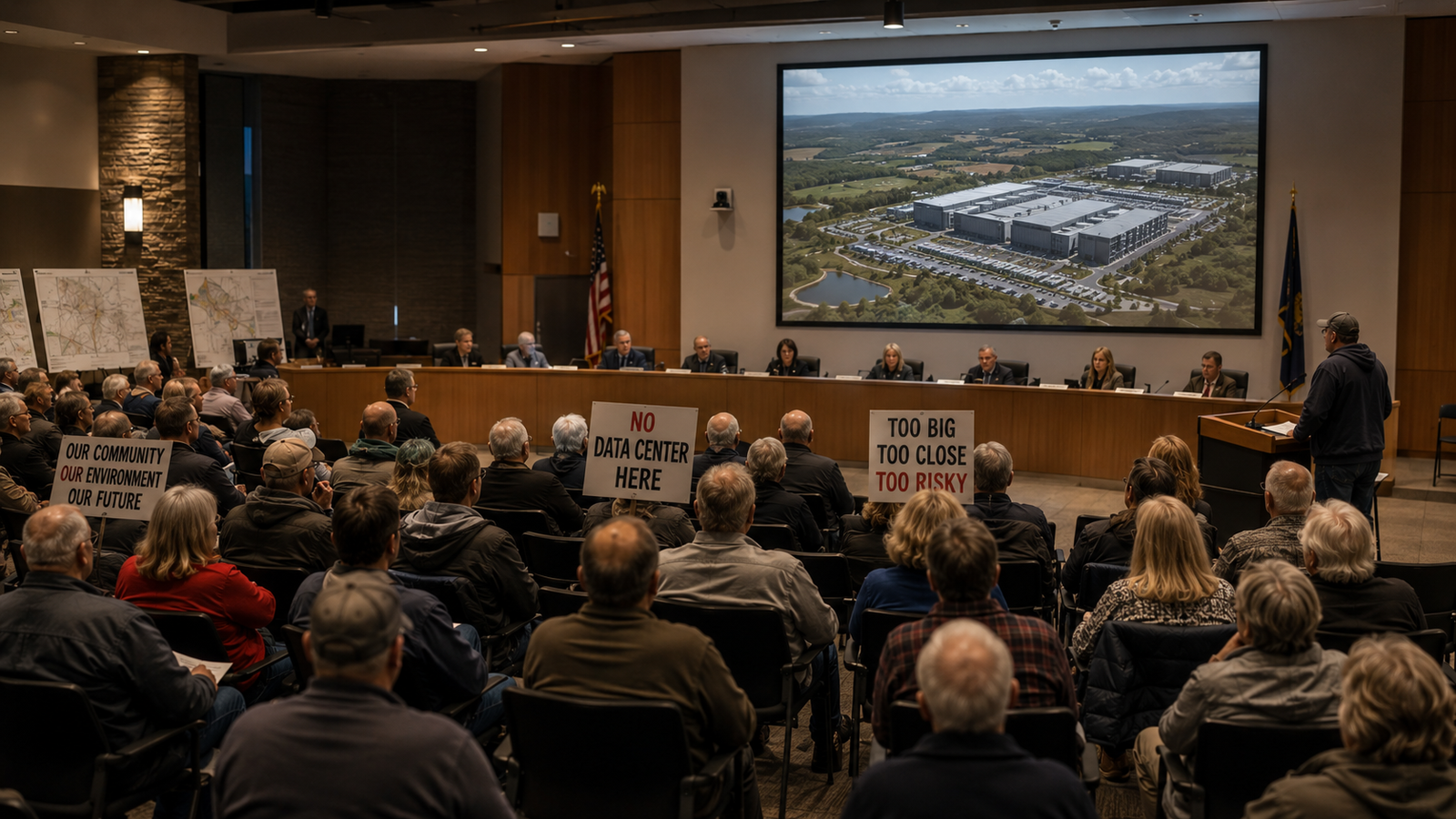
79 AI data center permit denials and restrictions in the first four months of 2026 — already surpassing all of 2025. $85 billion in projects canceled over three years. 142 activist groups organized across 24 states. These are not the statistics of an industry encountering routine regulatory friction. They are the statistics of an industry that has developed a systematic pattern of community relations failures, and that pattern is not improving.
The AI infrastructure industry has responded to the permit denial wave primarily by pointing to its economic contributions: jobs created, tax revenue generated, grid investment made. That response is failing because it addresses the wrong question. Communities that are denying data center permits are not, in most cases, disputing the macroeconomic benefits of AI infrastructure investment. They are responding to specific, local, concrete impacts that data center developers have been proposing, minimising, or failing to adequately mitigate. Noise. Water. Electricity bills. Traffic. Visual impact. The broken promise of permanent jobs that never materialised at the scale that was represented in the permit application.
Understanding why permit denials are increasing requires examining each of those specific objections honestly, assessing where the industry’s responses have been inadequate, and identifying what a more effective community engagement model would look like. The industry that treats permit denials as a public relations problem is missing the point. The industry that treats them as a substantive community design problem is the one that will build in communities where others are being rejected.
The Noise Problem That the Industry Keeps Underestimating
The noise impact of large AI data centers is the objection that the industry has been slowest to take seriously, and it is the one that has produced the most visceral community opposition. Residents frequently cite noise pollution as a primary concern alongside water consumption and electricity costs. The cooling systems, backup generators, and electrical equipment that serve a 100-megawatt AI campus generate continuous noise that is audible beyond the facility perimeter, particularly at night when background noise levels drop and the contrast between the facility’s output and the ambient environment becomes most acute.
Data center developers have a standard response to noise concerns: acoustic modelling showing that projected sound levels at the property boundary comply with local ordinances. That response misses the point in two ways. First, local ordinances were written for a different noise environment. Many communities have never had a continuous industrial noise source at data center scale operating near residential areas. The ordinance that was designed to limit factory shift-change noise at 55 decibels was not designed with a 24/7 cooling tower in mind. Second, noise compliance at the property boundary is not the same as noise acceptability at the neighbour’s bedroom window. A data center that meets the ordinance standard at its fence line may still be audible at a level that significantly degrades quality of life for residents who live two blocks away.
The Mitigation Measures That Are Not Being Offered
The effective mitigation measures for data center noise impact are known and deployable. Acoustic enclosures for cooling equipment, sound barriers along the facility perimeter, orientation of noise-generating equipment away from residential areas, and operational restrictions on the loudest equipment during nighttime hours can collectively reduce the noise impact of a large data center to levels that most residents in most communities can tolerate. These measures cost money. The developers who do not proactively include them in their applications are betting that the permitting process will not require them. Increasingly, that bet is losing.
The communities that have approved large AI data centers in 2025 and 2026 have, in most cases, required specific noise mitigation commitments as conditions of approval rather than accepting developer assurances that the facility will comply with existing ordinances. The developers who offer those commitments proactively, before communities demand them or regulators impose them, are signalling to communities that they take noise impact seriously. The developers who wait until communities or planning authorities ask for those commitments are signalling the opposite, and community planning commissions have become sophisticated enough to read that signal accurately.
The Water Conflict That Is Growing in the Wrong Markets
Water consumption is the data center impact that has produced the most intense opposition in water-stressed markets. Maricopa County approved the proposed $10 billion Baccara Data Center project despite intense community concerns over water usage, electricity demand, and environmental pressure. Arizona is one of the most water-stressed states in the country. Proposing a facility whose cooling systems consume millions of gallons of water annually in a community that is managing a generational water crisis is not an engineering problem. It is a site selection problem.
The water consumption pattern of different cooling technologies varies enormously. A data center using cooling tower evaporation as its primary thermal management strategy consumes water at a rate of 1 to 5 litres per kilowatt-hour of IT load. A facility of the same size using direct-to-chip liquid cooling with a dry cooler rejection system that rejects heat to air rather than to evaporated water consumes a fraction of that. The industry’s failure to consistently propose the lower-water-consumption cooling architecture in water-stressed markets, and its persistence in proposing evaporative cooling in communities that are already managing water stress, is a choice that community planning commissions are increasingly unwilling to accept.
The Jobs Gap That Has Become the Industry’s Credibility Problem
The economic development argument for data center tax incentives and permit approvals has historically relied on job creation commitments that the industry has now delivered for long enough to evaluate directly. The verdict is not favourable. In 2025, local opposition to AI data centers delayed or cancelled projects totalling $156 billion. Much of that opposition came from communities that had previously approved data center developments based on employment commitments that developers did not deliver at the promised scale or quality.
A data center that commits to 200 permanent jobs during the permit application and opens with 45 permanent employees has not simply under-delivered on an economic projection. It has created a community that feels it was misled, and that community will oppose the next permit application from any data center developer in ways that are much harder to overcome than first-time opposition. The industry’s credibility problem on jobs is not a communication failure. It is a commitment design failure. The operators who committed to construction employment figures as permanent employment equivalents, who presented supply chain economic multiplier effects as direct local employment, and who described regional economic impacts as facility-level impacts have collectively eroded the trust that makes the economic development argument persuasive.
What the Successful Approvals Have in Common
The data center developments that have successfully navigated community opposition and obtained permits in 2025 and 2026 share a set of characteristics that are identifiable and replicable. They proposed specific, verifiable, binding mitigation commitments rather than assurances of compliance. Instead of presenting a completed plan for community input, they engaged communities before filing the permit application. They also remained honest about the limitations of their economic development contribution rather than overstating permanent employment or tax benefits. Finally, they proposed designs that reflected genuine responsiveness to site-specific community concerns rather than applying standard templates regardless of context.
The $10 billion Baccara project in Maricopa County moved through approval despite significant opposition in part because the developer committed to specific water conservation measures and community benefit agreements that directly responded to the community’s most substantive concerns. The approval was not easy or automatic. It was the product of negotiation that produced outcomes the community could accept. That model — genuine engagement that produces binding commitments rather than developer assurances — is the one that the permit denial statistics suggest the broader industry has not yet adopted at scale.
The Political Escalation That Is Changing the Stakes
The community opposition movement against AI data center development has moved through three distinct phases in three years. The first phase, in 2022 and 2023, was characterised by ad hoc community organising around individual projects. Residents in Goodyear, Arizona, in Peculiar, Missouri, in Leesburg, Indiana organised locally, challenged specific applications, and in some cases prevailed. But these were isolated victories that the industry could absorb as project-level setbacks without reconsidering its broader development model.
The second phase, in 2024 and 2025, was the emergence of coordinated opposition infrastructure. 142 activist groups organised across 24 states share information, strategy, and legal resources. Organisations like Stop Data Centers produce standardised opposition research that any community can access and adapt. National advocacy groups with environmental, ratepayer, and community development missions have adopted data center opposition as a strategic priority. The individual community fight became a movement with institutional capacity, and the industry’s project-by-project political strategy became inadequate for fighting an organised movement with shared resources and strategies.
The third phase, emerging in 2026, is legislative and regulatory. Statewide moratoriums, large-load tariff legislation, data center tax incentive reform bills, and minimum setback and noise standard legislation are moving through state legislatures across the country simultaneously. The opposition that began as project-level permitting fights is now producing durable regulatory changes that will affect every data center project in a state, not just the ones that attracted organised opposition. Michigan, where more than 27 communities maintain active moratoriums while lawmakers debate statewide legislation, is the most advanced example of this pattern. But the legislative responses in Florida, Georgia, Washington, Connecticut, and New York described in our earlier analysis suggest that Michigan is the leading edge of a trend rather than an outlier.
The Legal Challenge Landscape That Is Adding Complexity
The permit denial wave has also produced a growing legal challenge landscape that adds complexity and cost to data center development in ways that the industry did not anticipate when it was planning its 2025 and 2026 development programmes. Community groups are increasingly challenging approved projects through administrative appeals, environmental impact review litigation, and zoning challenge suits that can delay project commencement by months or years even after permit approval.
The NAACP is suing xAI for illegal air pollution from 33 unpermitted gas turbines powering its Memphis data centers, a case that has attracted national attention and energised opposition in other markets where frontier AI companies are deploying large-scale power infrastructure ahead of regulatory approval. The legal strategy of challenging permits and operational approvals after planning authorities and regulators approve them is extending the effective timeline of community opposition beyond the permitting process and into the operational phase of data center development. The developers who assumed that permit approval was the end of the community engagement process are discovering that it is, in some markets, only the beginning.
The Portfolio Consequences of Legal Challenge Risk
The legal challenge landscape is not uniformly negative for the industry. Challenges that lack merit are dismissed. Environmental impact review litigation that does not identify genuine procedural defects in the review process does not succeed. But the cost of defending approved permits against legal challenges, and the delay that litigation introduces into construction timelines, adds a risk dimension to data center development in contested markets that financial models built in 2023 and 2024 did not fully account for. The operators who are now building legal challenge risk into their project timelines and budgets are managing their 2026 and 2027 portfolios more conservatively than their predecessors managed the 2023 and 2024 portfolios. That conservatism is producing better outcomes for communities that have legitimate concerns and worse outcomes for the minority of cases where community groups base their opposition on factors unrelated to the substantive impact of the proposed facility.
What the Industry Must Change to Stop Losing Permits
The AI data center industry is losing permit applications at an accelerating rate because the communities it is trying to enter have become more organised, more informed, and more confident in their ability to reject developments that do not adequately address their concerns. The tracker recorded only eight moratoriums in May 2025 and 79 rejections in the first four months of 2026, a pattern that describes a community opposition movement that is gaining sophistication faster than the industry is adapting its community engagement model.
The adaptation required is not primarily a communications adaptation. The industry that hires better PR firms and produces more sophisticated economic impact studies is not addressing the substantive reasons why communities are saying no. The adaptation required is a development model adaptation: proposing facilities whose designs, operational commitments, and community benefit agreements reflect genuine responsiveness to the specific concerns of each community rather than standard templates developers created for the average community and then applied across markets.
The operators who make that adaptation will find that the permit process becomes shorter, less expensive, and more predictable. The operators who do not will find that the 79 rejections in the first four months of 2026 become the floor rather than the ceiling. The data center local jobs reality documented, the credibility gap between what the industry promises and what it delivers is the root cause of the political environment that produces moratoriums and permit denials. Closing that gap requires changing the promises, not the framing.
The Electricity Cost Objection That Is Politically the Most Powerful
Of all the community objections to AI data center development, the electricity cost impact is the one that has the broadest political resonance. It is not limited to the neighbours who live adjacent to the facility. It is felt by every ratepayer in the utility service territory. Energy costs can increase anywhere from 20 to 40% after a data center is built in a region, and in markets where grid interconnection of large new loads drives utility infrastructure investment that is recovered through rate increases, the electricity cost impact of data center development is distributed across residential customers who had no say in the permitting decision.
The industry’s standard response to electricity cost concerns is to point to utility infrastructure investment agreements, tax payments, and economic multiplier effects that benefit the broader community. That response is analytically correct at the regional or state level. It is politically inadequate at the community level, where the resident who is asking about electricity cost impact is asking about their personal bill, not the regional economy. The fact that the data center generates $50 million in annual tax revenue that funds local schools is not responsive to the specific question of whether the resident’s electricity bill will increase.
The Commitments That Communities Actually Reward
The data center developments that have most effectively addressed electricity cost concerns are those that have made specific, binding commitments to infrastructure investment that offsets the rate impact on residential customers. NextEra and Dominion committed $2.25 billion in customer bill credits as part of the merger terms, a direct acknowledgment that large-scale data center load additions affect residential rates and that the companies benefiting from that load should contribute to offsetting the cost. That model, specific financial commitment to customer bill relief rather than general economic benefit arguments, is the one that community advocacy groups are increasingly demanding as a condition of supporting development approvals.
The Environmental Review Process That Developers Are Treating as a Formality
The environmental impact review process is the formal mechanism through which communities assess data center development impacts and extract mitigation commitments. It is also the process that data center developers most consistently treat as a procedural obstacle rather than a substantive engagement opportunity. The applications that trigger the most intense opposition are those that submit environmental impact assessments calibrated to meet the minimum standard for regulatory approval rather than to genuinely characterise the full impact of the proposed facility.
A data center environmental impact assessment that models noise impact using optimistic operational assumptions, characterises water consumption using design-intent figures that may not reflect actual operational consumption, and projects job creation using regional economic multiplier models rather than direct facility employment data is not providing communities with the information they need to make an informed decision. It is providing communities with the minimum information required by the regulatory process, in a form designed to minimise the appearance of adverse impact.
Communities have become increasingly sophisticated at identifying the gaps between regulatory-minimum environmental review and honest impact characterisation. Many now retain independent consultants to review developer environmental impact assessments. They also request access to similar facilities in other markets. Increasingly, they contact the planning commissions of communities that have already approved data centers from the same developer to ask what the actual operational impacts turned out to be. The information is available, and the communities that are most actively opposing data center development are the ones that have done the most thorough job of accessing it.
The Zoning Framework That Is Not Built for AI Infrastructure
Much of the permit denial problem has a structural cause that is not the data center industry’s fault in any simple sense: the zoning frameworks that planning authorities use to review data center applications do not match the scale, power intensity, or operational characteristics of AI-era data centers. A zoning code that classifies data centers as light industrial uses subject to standards created for warehouses and light manufacturing applies a regulatory framework that does not fit facilities consuming 100 megawatts of electricity and generating noise and visual impact at hyperscale density.
In Goodyear and Buckeye, Arizona, developer Tract withdrew a $14 billion project after local authorities blocked the rezoning the project required in response to pressure from resident organisers who cited building heights, noise pollution, and the potential strain on local utilities. Local authorities blocked the rezoning not because the project was inherently impermissible but because they applied a zoning framework developed for a different type of development and lacked adequate standards for evaluating and mitigating the specific impacts of a hyperscale AI campus.
The Communities Building Data Center-Specific Standards
The communities and planning agencies that are most effectively managing data center development in 2026 are those that have developed AI data center-specific zoning standards rather than attempting to fit data center applications into frameworks designed for other uses. Those standards address the specific impact categories that large AI data centers create: power consumption limits per acre, noise performance standards measured at specific distances from residential uses rather than at the property boundary, water consumption limits that vary by local water availability, and minimum setback requirements from sensitive uses including residential neighbourhoods, schools, and medical facilities. The communities that have developed those standards are processing data center applications more efficiently because both the developer and the planning authority know from the beginning which conditions they must satisfy to secure approval.
The Community Benefit Agreement That Changes the Dynamic
The community benefit agreement is the instrument through which data center developers can make legally binding commitments to specific community improvements that go beyond the mitigation requirements of the permit. A community benefit agreement that commits the developer to a specific hiring programme for local residents, a specific investment in local school infrastructure, specific noise monitoring and reporting requirements with defined enforcement mechanisms, and specific electricity bill relief for adjacent residents is a fundamentally different community engagement tool from the economic impact study that most developers produce.
Community benefit agreements are not universally required and their enforceability varies by jurisdiction. But in markets where data center opposition has become most intense, local planning commissions are increasingly requiring community benefit agreement negotiation as a condition of application processing. The developers who arrive at those negotiations after defining the community benefit commitments they are prepared to offer make faster progress than those who treat the negotiation as an unexpected obstacle. The communities that can point to completed community benefit agreements from previous data center developments as evidence that the process works are more likely to process future applications constructively than those whose only experience with data center developers has been adversarial.
The Geographic Sorting That Is Already Happening
The permit denial wave is already producing a geographic sorting of AI data center development toward markets that have developed workable regulatory frameworks and away from markets where community opposition has become a systematic barrier to development. Northern Virginia, Dallas-Fort Worth, Phoenix, Chicago, and Columbus have established data center ecosystems with regulatory processes that data center developers understand and communities that have developed experience evaluating and negotiating data center applications. New entrants to those markets are navigating known processes with predictable timelines.
The markets experiencing the strongest opposition, where local governments enacted moratoriums and permit denial rates are highest, are the same markets that experienced the fastest and least well-planned data center expansion in 2023 and 2024. They attracted development at a pace that exceeded their regulatory capacity to evaluate applications thoughtfully and their community capacity to process the scale of change that rapid large-scale data center development produces. The communities that are now most opposed to data center development are, in many cases, the ones that approved too much too fast and are now experiencing the consequences.
The Development Model That Improves Approval Rates
The industry that understands this pattern and responds to it by investing in regulatory and community relationship development in the markets where it wants to build, rather than treating every market as equally accessible, will have a fundamentally different permit success rate from the industry that continues to apply the same development model regardless of local context. In Indianapolis, Google retracted its rezoning request for a data center after months of petitioning and protesting. That retraction cost Google the time and capital invested in the application and the social capital that a rejected application destroys with the community. The developers who spend that social capital before the application by building relationships, understanding community concerns, and designing facilities that reflect genuine responsiveness to those concerns are the ones whose applications will not require retraction.
The permit denial statistics are not an external constraint that the AI data center industry must manage around. They are a signal that the industry’s current community engagement model is failing, and that the failure is accelerating as communities become more organised and more effective at opposing developments that do not adequately address their concerns. The industry that reads that signal as an invitation to adapt its development model will find communities that are willing to be convinced. The industry that reads it as an invitation to improve its political strategy will find communities that are not.
The Long View That the Industry Needs to Adopt
The permit denial wave of 2025 and 2026 will not be the last wave of community opposition the AI data center industry faces. The scale of the buildout, the pace of development, and the intensity of the power and water demands that AI-era data centers create are generating a level of community impact that will continue to produce organised opposition for as long as the industry continues to propose facilities whose designs and community engagement models do not reflect genuine responsiveness to community concerns.
The industry that adopts the long view understands that the communities it is entering today are the communities it will operate in for 20 to 30 years. The operator that develops a data center despite sustained community opposition will spend the next 25 years operating in a community that views the facility, its operator, and every future permit application as adversarial. By contrast, the operator that earns community support through genuine engagement and fulfils the binding commitments it makes will operate in a community that views future development proposals as potential opportunities rather than threats.
The investment in community engagement that distinguishes those two outcomes is not primarily a financial investment. It is an investment in the time, honesty, and genuine responsiveness to community concerns that builds the relationships through which difficult conversations produce acceptable outcomes. The AI infrastructure industry has the capital to build facilities that address community concerns. The question is whether it has the patience and discipline to engage with those concerns before the permit application rather than after it has been denied.