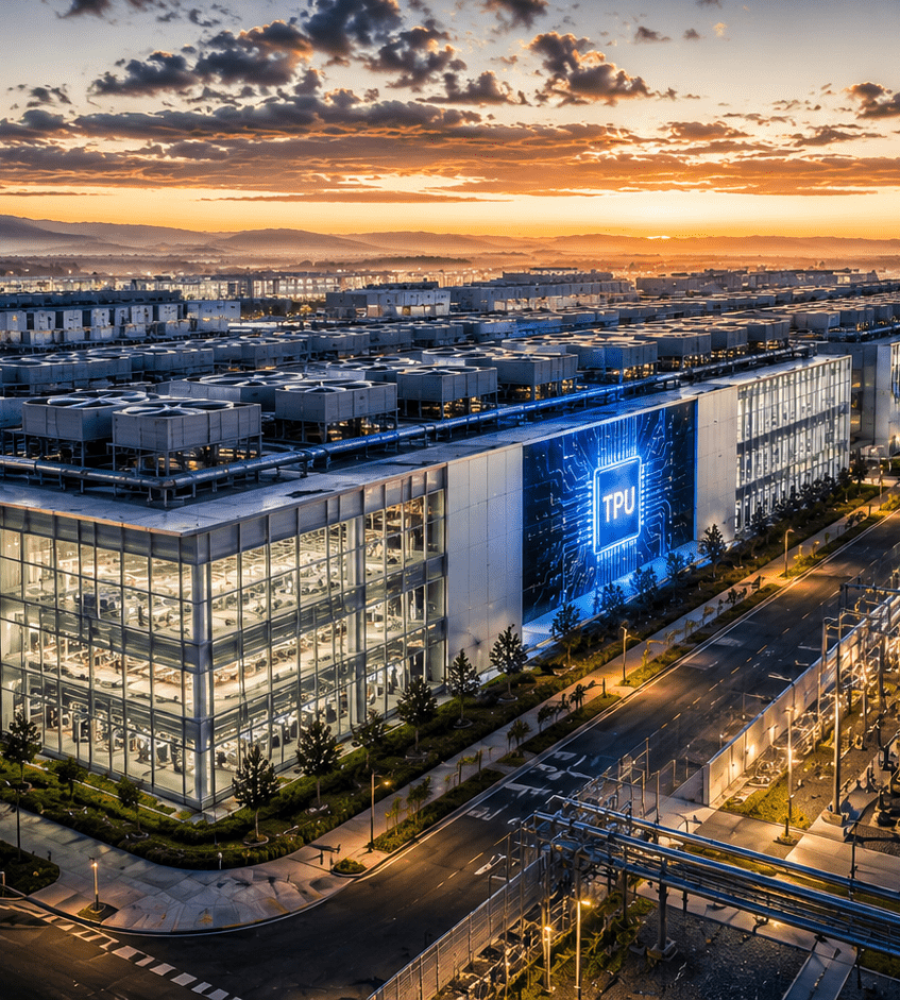
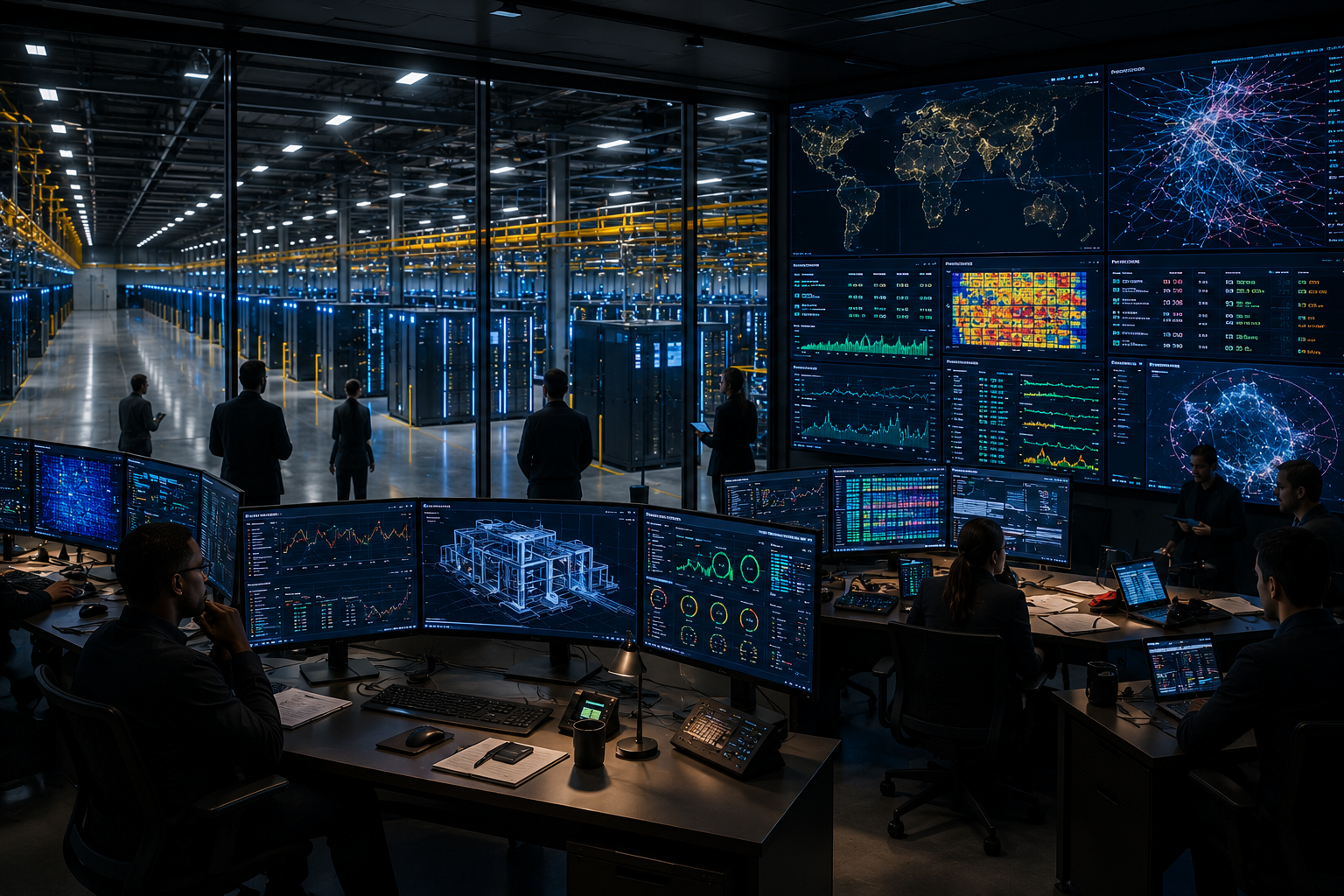
There is a specific irony in the AI infrastructure buildout that the industry does not discuss enough. The companies spending hundreds of billions of dollars to build the physical infrastructure that powers AI are also using AI to operate that infrastructure. The technology they are selling to the world is the same technology managing the cooling systems, predicting hardware failures, optimising power consumption, and scheduling workloads inside the campuses that house it. The AI data center is becoming an AI-operated data center, and that shift has significant implications for how operators design facilities, structure teams, and manage operations.
Google DeepMind’s machine learning system achieved a 40% reduction in the energy used for cooling at Google’s data centers, equating to a 15% reduction in overall PUE overhead. The system uses neural networks trained on thousands of sensor data points covering temperature, power usage, and pump speeds across the facility. It operates in an autonomous feedback loop, calculating optimal cooling adjustments every five minutes, with human operators able to exit AI mode at any time. That result was achieved on facilities that were already considered among the most efficient in the world. The marginal efficiency gain in that environment is significantly harder to achieve than in a conventional facility, which makes the 40% cooling energy reduction more impressive, not less.
What the Systems Are Actually Doing
Google’s cooling optimisation is the most documented case, but it is not the only one. Microsoft has deployed AI-driven predictive maintenance across its data center portfolio, using machine learning models trained on equipment telemetry to predict component failures before they cause downtime. The system flags hardware at elevated failure risk and schedules maintenance interventions during planned windows rather than responding to outages. Amazon Web Services uses AI workload placement algorithms that continuously route workloads across its global fleet to optimise power consumption, thermal load, latency requirements, and hardware utilisation simultaneously. None of these systems existed at scale five years ago. All of them are now standard operational infrastructure at the hyperscaler level.
The operational AI layer sits beneath the infrastructure that customers interact with and above the physical hardware that engineers maintain. It does not replace the engineering workforce. It changes what that workforce does. The engineer whose job was monitoring thermal sensor dashboards and adjusting cooling parameters manually now oversees a system that performs those adjustments autonomously and flags the exceptions that require human judgement. The workload scheduler who once managed job queues by hand now monitors the AI scheduler’s decisions and intervenes when the system encounters edge cases outside its training distribution. The operational AI layer is an amplifier for human expertise, not a substitute for it.
Why This Matters for Facilities Being Built Today
The operational AI layer changes the design requirements for new AI data center facilities in specific ways. Facilities designed to be operated by AI systems from the start can be instrumented more densely, because sensor data is the training input that makes the AI systems better. A facility with 10,000 thermal sensors produces a richer training dataset than one with 1,000. A facility with granular power metering at the rack level enables workload placement algorithms that facility-level metering cannot. The instrumentation investment required to support AI operations is not large relative to total facility cost, but it must be specified at the design stage because retrofitting sensor infrastructure into an operational facility is significantly more expensive than building it in from the foundation.
The facilities that are most likely to benefit from operational AI are the largest and most complex. A 10-megawatt enterprise colocation facility with a stable, predictable workload mix generates relatively little marginal value from AI-driven cooling optimisation, because the operating environment is simple enough that conventional controls produce near-optimal outcomes. A 500-megawatt AI training campus with thousands of GPU racks, variable workload densities, and complex thermal interdependencies between rack clusters is precisely the environment where AI operations systems produce the largest efficiency gains. The scale and complexity of the AI infrastructure buildout is creating the conditions in which operators can use the technology they are building to operate the infrastructure they are simultaneously deploying.
.
What This Means Beyond Efficiency
The adoption of AI operations systems at hyperscale has implications that extend beyond cooling efficiency and predictive maintenance. Facilities that are operated by AI systems accumulate operational data that trains those systems to be better. The hyperscaler that has been running AI cooling optimisation across 50 data centers for five years has a training dataset and a system performance level that a new entrant cannot replicate by purchasing the same underlying technology. The operational AI layer is building a competitive moat that is separate from hardware procurement, real estate, and power access.
This creates a compounding advantage for the operators who adopted AI operations systems earliest and at the largest scale. Their facilities are more efficient, their maintenance costs are lower, their hardware utilisation rates are higher, and their operational teams are more focused on high-value exception handling than routine monitoring. The cost per watt war replacing the PUE arms race documented that the competitive frontier in AI data center operations is moving from physical infrastructure efficiency toward operational intelligence efficiency. The hyperscalers who are furthest along that curve are building operational advantages that will be visible in their infrastructure economics long before they are visible in their public disclosures.
The Competitive Barrier Created by Operational Intelligence
The competitive moat that operational AI is building is also a barrier that will make the AI data center market harder to enter for new operators without the data history to train competitive systems. A new colocation entrant in 2026 can procure the same hardware, build the same facility, and hire the same engineers as the incumbent hyperscalers. It cannot replicate five years of operational AI training data from 50 facilities running at hyperscale density. The operational intelligence layer is becoming the most defensible competitive asset in AI infrastructure, and the operators who have been building it longest are the ones whose cost structures and reliability records will prove hardest to compete with as the market matures.