The standard colocation contract quotes one number above all others: dollars per kilowatt per month. In Phoenix, that figure currently sits around $500 per kilowatt monthly for facilities with available power. Atlanta’s market ranges from $160 to $180. Singapore commands between $310 and $470. The per-kilowatt figure travels across every data center leasing discussion in the world as the primary benchmark for comparing colocation providers, and it has done so for two decades.
That benchmark was designed for a 5 to 10 kilowatt rack. A standard 42U rack with typical enterprise hardware draws 3 to 5 kilowatts, and high-performance environments using 10 to 20 kilowatts spend between $1,000 and $4,000 monthly under conventional pricing. The math is clean, the comparison is straightforward, and the market settled into per-kilowatt pricing because for twenty years it worked. Every rack drew roughly the same power. Operators could use the kilowatt as a fair proxy for total service cost because power consumption closely tracked the infrastructure required to deliver the service.
A Blackwell NVL72 rack draws 120 kilowatts. A GB300 Ultra rack approaches one megawatt. The per-kilowatt pricing model did not break gradually. It became an entirely different product overnight.
Why Per-Kilowatt Pricing Fails at AI Density
The colocation operator serving a 120-kilowatt Blackwell rack is delivering a fundamentally different service from the one serving a 5-kilowatt enterprise rack. But the per-kilowatt pricing framework treats them as comparable — the higher-density customer simply pays more kilowatts at the same rate. That arithmetic ignores three cost dimensions that scale non-linearly with rack density and that operators never built conventional pricing models to recover.
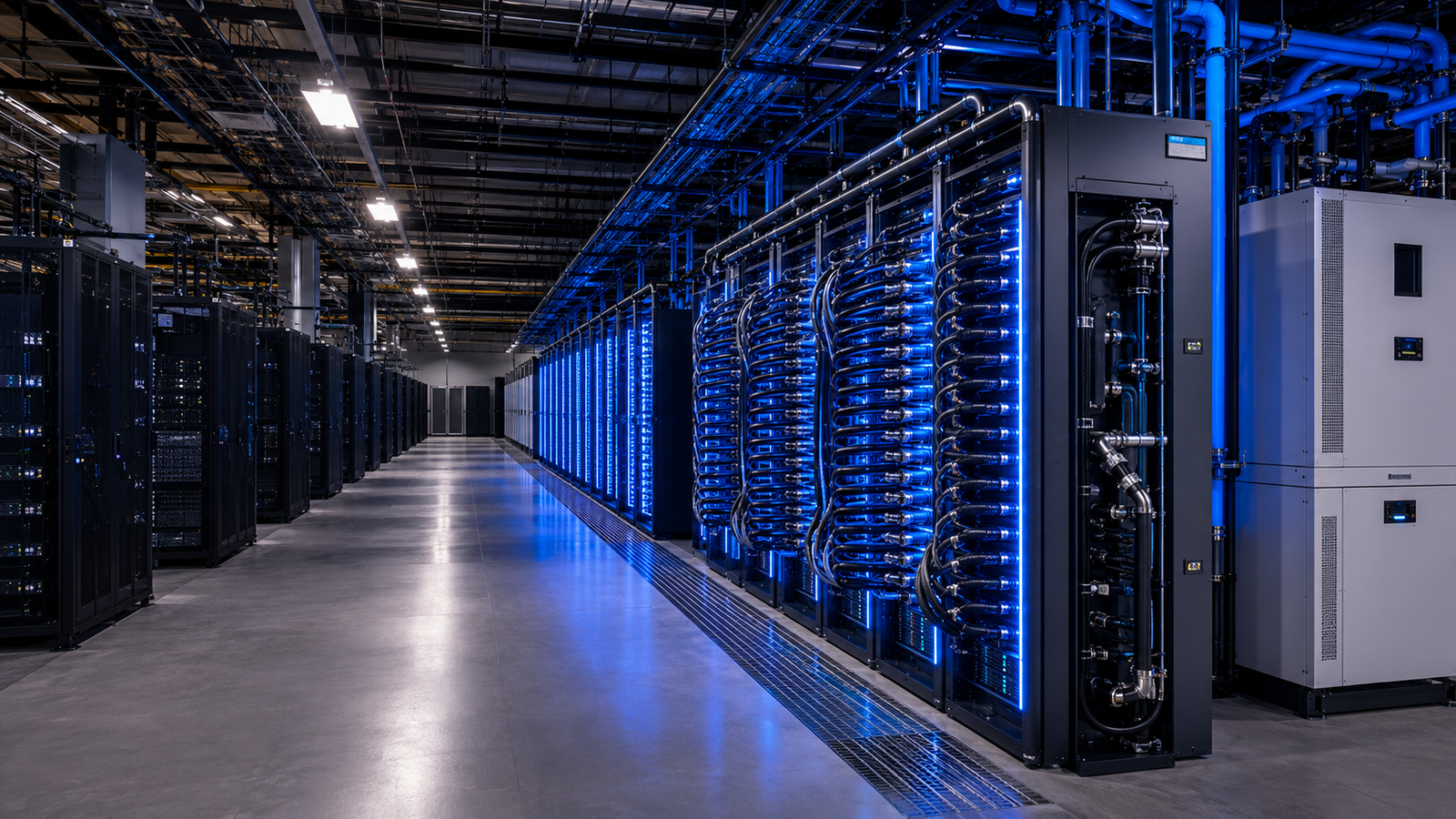
The first is cooling capital. At 5 kilowatts per rack, air cooling is cheap and simple. At 120 kilowatts, air cooling fails physically. A 120kW rack generates 409,000 BTU per hour of heat, equivalent to 34 residential furnaces running continuously. Serving that heat load requires direct-to-chip liquid cooling, CDUs, manifold infrastructure, secondary pumping loops, and cooling distribution systems whose capital cost is an order of magnitude greater than the air cooling that conventional colocation operators originally priced into the per-kilowatt model. Building 100kW-capable infrastructure costs $200,000 to $300,000 per rack. A conventional rack costs a fraction of that to infrastructure. The per-kilowatt rate does not reflect this step change.
The Structural and Network Costs That Compound the Problem
The second dimension is structural load. Average AI racks cost $3.9 million in 2025 versus $500,000 for a traditional rack, a sevenfold increase reflecting the engineering complexity of housing and powering GPU hardware at those densities. CDU weight when flooded reaches three tonnes, requiring 800 kilograms per square metre of floor loading capacity. The structural engineering, electrical distribution upgrades, and fire suppression modifications required to support AI-density racks represent capital investment that a per-kilowatt rate calibrated for conventional racks does not recover.
The third is network infrastructure. AI clusters require five times more fiber infrastructure density than conventional data centers, according to Introl’s analysis. The cross-connects, high-speed switching fabric, and InfiniBand or Ethernet interconnects that AI training clusters require are not standard colocation inclusions. They are billed separately, at rates that can add as much to the monthly bill as the base rack charge. A customer comparing two colocation providers on a per-kilowatt basis and ignoring network infrastructure cost is comparing two fundamentally different commercial propositions as if they were the same product.
What a Rational AI Colocation Pricing Model Looks Like
The operators who are getting AI colocation pricing right in 2026 have moved away from the simple per-kilowatt model toward structures that price each cost dimension independently. Instead of bundling costs into a single rate designed for a different era, operators increasingly price power delivery, cooling infrastructure, structural capacity, network connectivity, and operational support on their own cost basis.
The dominant model for AI and high-density colocation is per-kilowatt per month, with power typically representing 40 to 60% of the monthly bill. That remains true. However, the operators charging per-kilowatt for AI workloads are increasingly building cooling, structural, and network charges on top of the base rate rather than inside it. As a result, a customer taking 120 kilowatts of Blackwell capacity in a well-structured AI colocation agreement is paying for the kilowatts, the liquid cooling infrastructure that serves those kilowatts, the floor loading capability that supports the rack weight, and the network interconnects that the cluster requires. Consequently, each line item is visible and each is priced on its actual cost basis.
This unbundled structure is better for operators because it recovers the true cost of serving AI-density workloads. At the same time, it is also better for customers because it makes the cost of each service component visible and negotiable. For example, a customer who does not need the full cooling package because they are deploying air-tolerant inference workloads should not be paying the same cooling premium as a customer deploying a liquid-cooled training cluster. By contrast, the per-kilowatt model bundles everything together and charges everyone the same rate for fundamentally different service requirements.
The Transition Already Happening in New Contracts
The colocation pricing model will not change overnight. Long-term leases signed at conventional per-kilowatt rates will run their course. But every new AI colocation contract being negotiated today is an opportunity to build a pricing structure that reflects what AI-density colocation actually costs to deliver. The operators who lead that transition will attract the AI customers who understand what they are paying for. The operators who maintain legacy pricing structures will find their AI margins under pressure in ways that their conventional colocation margins never were. The liquid cooling vendor market fragmentation documented that the infrastructure decisions operators make now compound over the life of the customer relationship. Pricing is an infrastructure decision.
The operators who make that transition will also be better positioned when institutional capital demands more granular facility economics. A colocation facility whose pricing structure separates power, cooling, structural, and network costs can demonstrate its margin on each service line independently. That transparency is exactly what infrastructure lenders and asset class investors require when they underwrite long-duration colocation debt. The per-kilowatt rate was adequate for a simpler product. The AI era demands a pricing model that matches the complexity of what is actually being delivered.