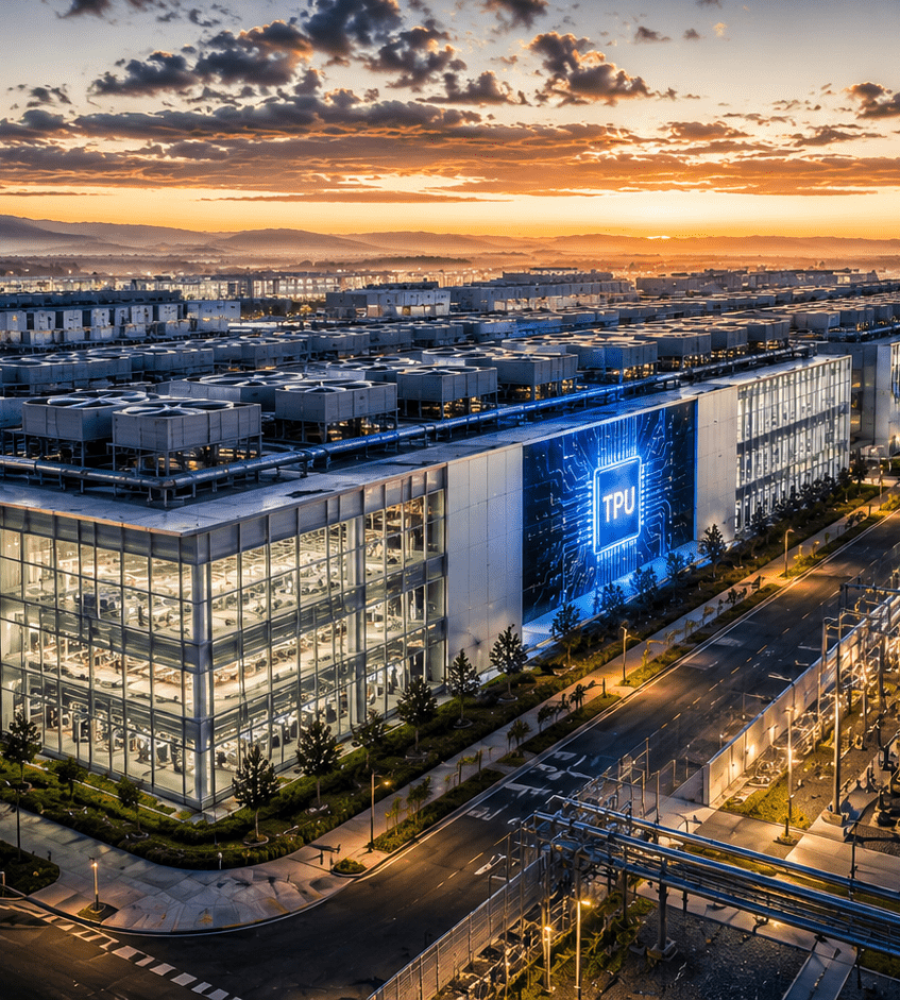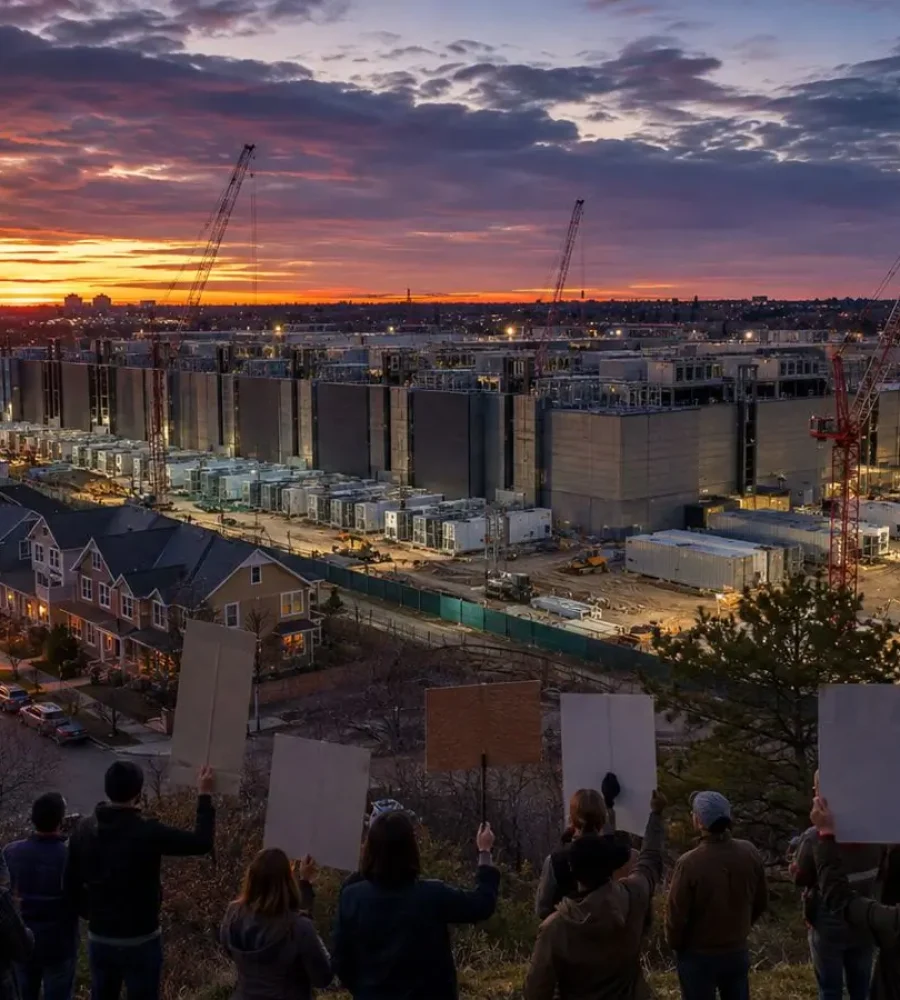
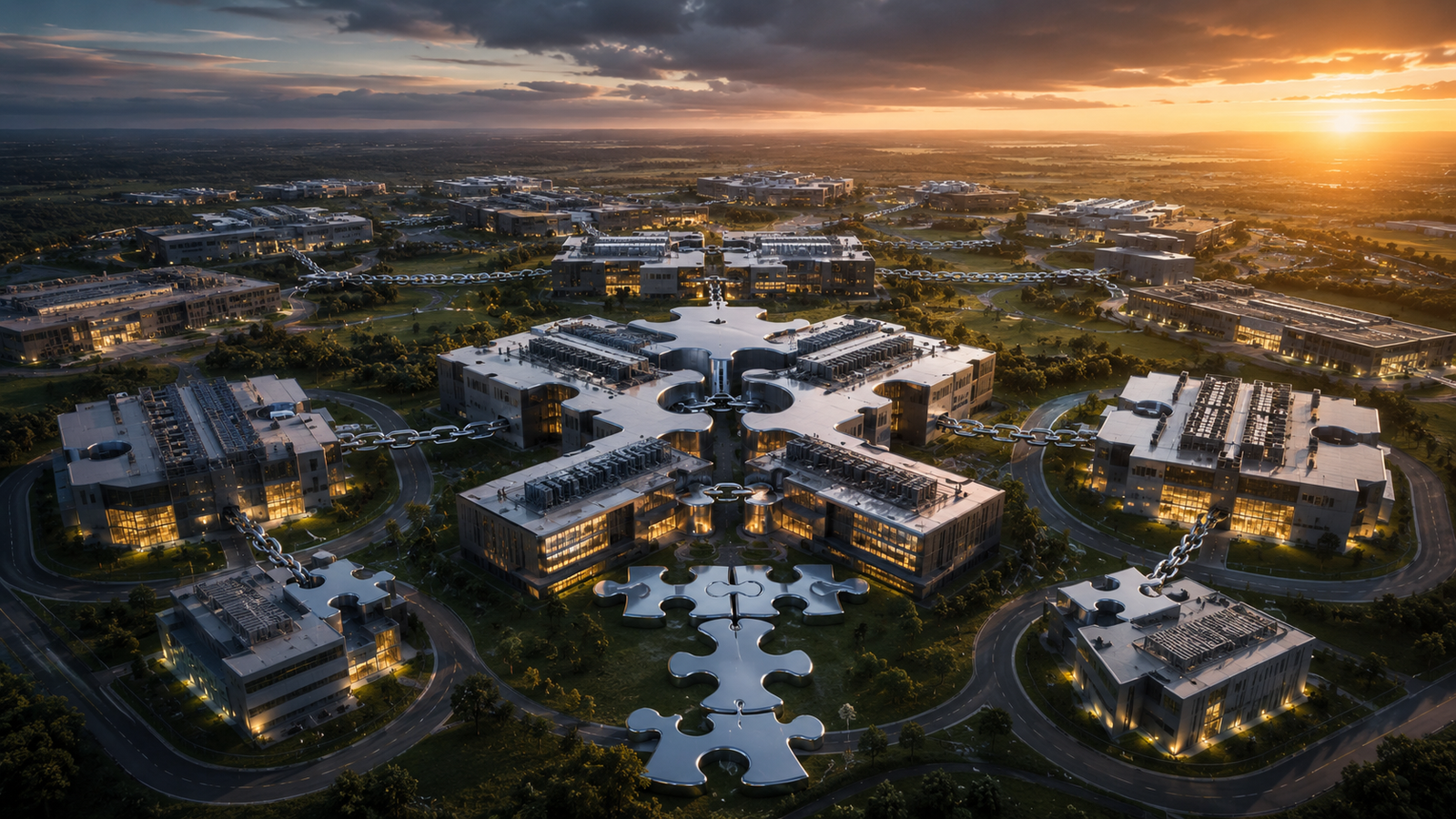
The AI infrastructure buildout has created two parallel markets. One is the market for new capacity — the greenfield campuses, the GPU clusters, the power purchase agreements that dominate the infrastructure headlines. The other is the market for existing capability — the acquisitions, mergers, and strategic investments through which established players are buying the technology, talent, and market position that organic development would take years to produce. The second market is moving at a pace that most of the industry is not tracking systematically, and the strategic logic behind it is reshaping who controls the critical layers of AI infrastructure faster than the headline capex numbers suggest.
Six major acquisitions in the cooling and data center infrastructure space closed between November 2025 and April 2026. Eaton acquired Boyd Thermal for $9.5 billion in November 2025. Daikin acquired Chilldyne the same month. Trane Technologies acquired LiquidStack in February 2026. Ecolab acquired CoolIT from KKR for $4.75 billion in March 2026. Vertiv acquired ThermoKey in March 2026. Vertiv acquired Strategic Thermal Labs in April 2026. Every one of these deals was driven by the same strategic imperative: AI rack densities are rising faster than the existing cooling infrastructure can serve, and the companies that own the right cooling technology at the right scale will be indispensable to the buildout.
The Infrastructure Company Acquisitions That Are Bigger Than Cooling
The cooling M&A wave is the most densely concentrated segment of 2026’s deal activity, but it is not the only one. KKR has announced plans to launch Helix Digital Infrastructure, a $10 billion AI data center operating company led by former AWS CEO Adam Selipsky, backed by sovereign wealth funds and institutional investors. That is not a cooling acquisition. It is the construction of a new class of AI infrastructure operator, assembled through capital aggregation rather than organic development. Blackstone’s $5 billion commitment to the Google-Blackstone TPU cloud joint venture is another expression of the same logic — permanent capital acquiring a strategic infrastructure position rather than building it from scratch.
The pattern across all of these deals is consistent. Established companies with capital, distribution, and customer relationships are acquiring specialist technology capability they cannot develop organically at the pace AI infrastructure demand requires. Ecolab did not build a liquid cooling technology portfolio from scratch. It acquired CoolIT, which had spent a decade building the direct-to-chip cooling systems that hyperscale AI campuses now require. Trane did not develop immersion cooling capability internally. It acquired LiquidStack, which had built proprietary two-phase immersion technology and hyperscale deployment experience. The acquisition is faster, more reliable, and competitively more decisive than the organic alternative in a market where 18-month deployment timelines leave no room for multi-year technology development cycles.
What the Consolidation Means for Operators Making Infrastructure Decisions
The M&A wave is reshaping the vendor landscape for data center operators in ways that directly affect procurement decisions today. Companies that operated as independent procurement options just 18 months ago now operate as subsidiaries of larger platform companies. Consequently, parent organizations now control their product roadmaps, pricing strategies, and support structures instead of the independent competitive dynamics that previously shaped them. As our analysis of the liquid cooling vendor market fragmentation documented, the acquisition activity has not simplified operator procurement decisions. It has changed who the vendors are without resolving the standards and interoperability challenges that make cooling vendor selection one of the most consequential and least reversible infrastructure decisions an operator makes.
The M&A wave also changes the competitive dynamics for the independent specialists that remain. For example, a cooling technology company competing with Ecolab-CoolIT and Vertiv’s expanded thermal portfolio now faces competitors with distribution networks, customer relationships, and balance sheets that are orders of magnitude larger than its own. Consequently, the competitive gap continues to widen as consolidation accelerates across the sector.
At the same time, some of those independent specialists will themselves become acquisition targets as the consolidation trend continues. Meanwhile, others will carve out sustainable positions by focusing on specific customer segments or technical niches that the larger platform companies cannot serve cost-effectively at scale.
The operators who track the M&A wave systematically are the ones who will understand which of their current and prospective vendors are positioned as acquirers, which are positioned as targets, and which have the independence and differentiation to remain viable long-term partners. The wave is not over. It is accelerating.
The Acquirer Logic That Will Drive the Next Wave
The six cooling acquisitions that define the first wave of 2026 M&A share a common acquirer profile: large industrial companies with established manufacturing, distribution, and service infrastructure entering AI infrastructure through acquisition of specialist technology providers. The second wave will likely follow a different logic. The large colocation operators — Equinix, Digital Realty, NTT — have the balance sheets and the customer relationships to acquire specialist AI infrastructure operators that have built operational capability they lack. The hyperscalers themselves, as demonstrated by the Google-Blackstone joint venture, are creating acquisition targets by spinning out infrastructure functions into separate commercial entities that can attract third-party capital. And the PE-backed infrastructure operators who built positions during the 2023-2025 buildout acceleration will eventually need liquidity events, creating an M&A pipeline of operating companies that strategic acquirers will have the opportunity to consolidate.
Global data center investment reached a record nearly $61 billion in 2025, according to S&P Global Market Intelligence, with continued market momentum suggesting elevated transaction activity heading into 2026. The deals announced in the first five months of 2026 alone represent tens of billions in transaction value across cooling, infrastructure operating companies, and capital vehicles. The industry that was built on organic development and greenfield construction is becoming an industry where strategic M&A is as important a competitive lever as capital access or technology capability. The operators and investors who are not systematically tracking the acquisition landscape are making infrastructure decisions without understanding who will control the critical technology layers those decisions depend on in 18 months. The M&A wave does not wait for the infrastructure cycle to slow down. It accelerates with it.