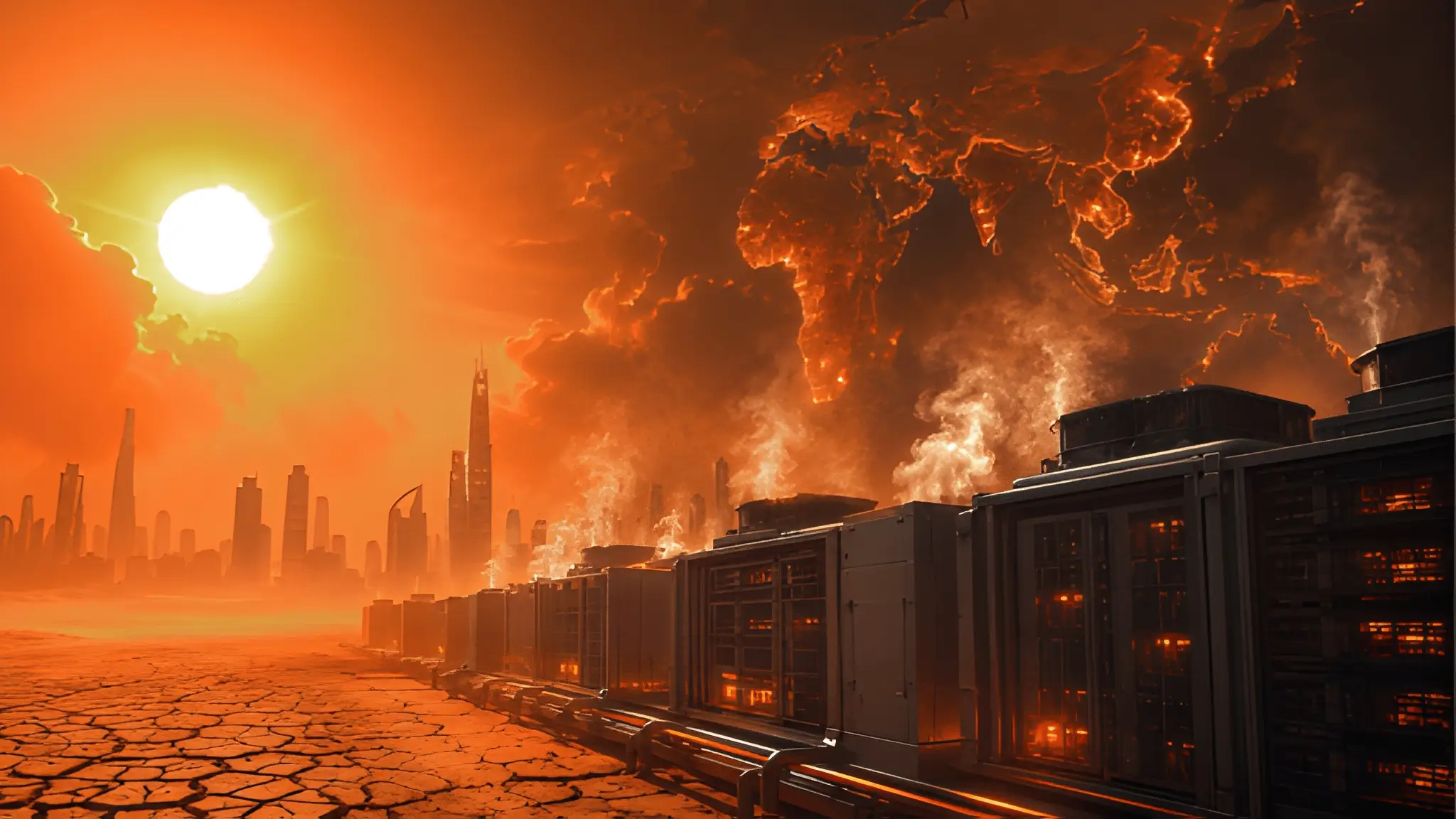
Data center design once relied on environmental assumptions that no longer remain consistent. Historically, operators built large-scale computing infrastructure in colder climates with predictable seasons and moderate atmospheric conditions that allowed thermal systems to function without sustained stress. As a result, companies concentrated facilities in regions where outside air supported economization strategies, night cooling cycles, and stable airflow behavior without heavy mechanical intervention. Those assumptions now fracture as artificial intelligence infrastructure expands into tropical corridors, desert economies, and densely populated megacities where climate behaves differently across every operational layer. High ambient temperatures now persist across longer seasonal windows, while shifting humidity patterns destabilize cooling efficiency in ways legacy architectures never anticipated. Many facilities entering construction today confront environmental conditions that keep conventional airflow engineering under stress for most of the year rather than only during isolated heat events.
Urban expansion compounds the problem because hyperscale infrastructure increasingly grows near population centers that already struggle with trapped heat, constrained airflow, and elevated nighttime temperatures. Tropical economies across India, Southeast Asia, and the Gulf continue demanding low-latency digital infrastructure close to users, financial exchanges, logistics corridors, and sovereign cloud zones despite increasingly severe outdoor thermal conditions. Engineers now confront atmospheric behavior that changes hour by hour through monsoon moisture, stagnant heat layers, salt-laden coastal air, and urban thermal retention across concrete-heavy districts. Cooling systems designed around northern climate assumptions frequently lose efficiency when exposed to moisture-rich environments where evaporation behaves differently and nighttime temperature relief continues weakening across several hotter cities as urban heat retention and atmospheric warming reduce overnight cooling potential. The next era of infrastructure design therefore begins treating climate survivability as a permanent architectural condition rather than an operational inconvenience.
Heatwaves Are Becoming Design Inputs
Data center architects once modeled heatwaves as occasional stress scenarios that backup systems would absorb temporarily before environmental conditions normalized. Modern facility planning increasingly treats prolonged extreme heat as a baseline operating assumption because sustained atmospheric warming alters the reliability envelope of cooling infrastructure itself. Engineers now evaluate how thermal systems behave after consecutive days of elevated outdoor temperatures rather than focusing only on instantaneous peak loads during isolated afternoon spikes. Chiller efficiency curves degrade differently under persistent heat saturation because condenser systems struggle to reject thermal energy into already overheated ambient environments. Airflow behavior inside facilities becomes more difficult to model consistently when outdoor air remains thermally unstable across extended operating periods without sufficient nighttime cooling recovery. These conditions force operators to redesign cooling redundancy, airflow segregation, thermal buffering zones, and heat rejection infrastructure around climates that remain continuously hostile to stable compute operations.
Mechanical infrastructure increasingly reflects these realities through changes in equipment spacing, rooftop arrangement, intake positioning, and airflow isolation strategies designed specifically for hotter operating environments. Cooling towers, dry coolers, and condenser units now require different thermal clearances because recirculated exhaust air accumulates faster under stagnant urban heat conditions. Several facilities entering tropical markets also incorporate larger thermal margins within pipe routing, pump systems, and heat exchanger design because outdoor volatility creates operational instability across traditional cooling loops. Designers increasingly analyze surrounding topography, reflective surfaces, nearby traffic corridors, and urban construction density before finalizing thermal layouts because localized heat behavior directly affects cooling performance. Computational fluid dynamics modeling therefore shifts from an optimization exercise into a foundational climate survival tool that shapes the physical geometry of the site itself.
Climate Volatility Is Reshaping Facility Resilience Models
Heat resilience increasingly influences how operators think about electrical infrastructure because cooling reliability and power stability now interact more aggressively during regional heat events. Grid stress rises sharply during periods of extreme urban cooling demand, yet data centers simultaneously require additional mechanical effort to maintain safe thermal conditions inside server halls. Facilities operating in tropical and desert climates therefore encounter compounding pressure where electrical instability and thermal stress emerge together rather than separately. Infrastructure planners increasingly deploy segmented cooling architectures that isolate thermal failures before they propagate across larger compute clusters during severe outdoor conditions. Several newer facilities increasingly operate redundant cooling systems as active resilience layers supporting atmospheric variability during seasonal transitions. Environmental volatility increasingly influences facility engineering during earlier planning stages rather than remaining only a facilities management concern after deployment.
Long-duration heat exposure also changes maintenance behavior because infrastructure components age differently under constant thermal stress compared with temperate operational environments. Pumps, seals, fan systems, filtration assemblies, and thermal sensors experience accelerated strain when cooling systems rarely enter lower-intensity operating windows that traditionally allowed equipment recovery. Operators increasingly monitor heat accumulation patterns around structural surfaces because trapped thermal energy can alter airflow recirculation behavior across mechanical zones during prolonged warm periods. Material selection therefore receives greater scrutiny across roofing systems, ventilation channels, cable pathways, and exterior cladding because thermal absorption directly influences cooling stability. Several newer facilities in hotter geographies increasingly treat environmental modeling as an operational discipline that continues long after construction rather than ending once the building enters service. The infrastructure industry now recognizes that future compute resilience depends less on surviving isolated heat spikes and more on sustaining thermal predictability inside permanently hotter climates.
Tropical Climates Are Breaking Legacy Cooling Logic
Many conventional cooling strategies evolved around climates where outdoor air frequently supported economization, evaporative assistance, and passive thermal exchange during large portions of the operational year. Tropical regions disrupt those assumptions because ambient temperatures remain elevated while atmospheric moisture severely limits the efficiency of traditional heat rejection methods. Direct outside-air cooling loses effectiveness when intake air already contains excessive heat and moisture before entering conditioning systems. Evaporative cooling approaches also struggle because saturated air reduces the thermodynamic potential required for efficient evaporation and heat transfer behavior. Engineers designing facilities in India, Singapore, and Southeast Asia therefore confront psychrometric conditions fundamentally different from those experienced in colder Western infrastructure hubs. Cooling architecture consequently shifts toward hybrid thermal systems capable of adapting continuously to moisture-heavy environmental variability instead of relying on fixed airflow assumptions.
Legacy facilities optimized around air-side economizers frequently encounter operational inefficiencies when replicated in tropical environments without substantial redesign. Outside-air systems introduce condensation risk, corrosion exposure, and unstable humidity behavior when atmospheric moisture fluctuates aggressively throughout monsoon cycles and coastal weather transitions. Server reliability also depends on maintaining stable dew point behavior because moisture accumulation across sensitive electronic components creates long-term degradation risk even when temperatures remain within acceptable ranges. Engineers increasingly isolate cooling loops from direct atmospheric interaction through closed-loop systems, advanced dehumidification stages, and liquid-assisted heat transfer architectures designed specifically for humid climates. Air management inside server halls also becomes more complex because moisture-rich conditions alter airflow density, heat dispersion, and thermal stratification patterns differently than dry-air facilities. Tropical infrastructure increasingly requires cooling strategies specifically adapted for humid and high-temperature environments rather than relying solely on cooling approaches optimized for temperate climates.
Tropical Infrastructure Requires Adaptive Cooling Intelligence
Operators increasingly integrate dynamic thermal controls because static cooling thresholds fail to accommodate the rapid environmental variability common across tropical regions. Artificial intelligence workloads generate fluctuating thermal density patterns that interact unpredictably with changing humidity, monsoon conditions, and elevated ambient temperatures throughout the operational cycle. Physics-informed cooling models increasingly gain importance because some conventional optimization systems were originally developed around less volatile environmental operating conditions. Advanced facilities increasingly rely on continuous psychrometric monitoring to adjust airflow pressure, cooling distribution, and humidity control behavior in real time as external conditions evolve. Thermal infrastructure also becomes more segmented because localized environmental instability can create uneven cooling performance across different parts of the same facility. These changes push data center engineering toward more adaptive operational frameworks capable of responding continuously to climate-driven thermal variability.
Mechanical systems within tropical facilities increasingly combine liquid cooling pathways, indirect evaporative systems, precision dehumidification, and thermally isolated airflow corridors to maintain operational consistency under hostile atmospheric conditions. Several infrastructure operators now evaluate cooling architecture according to climatic compatibility rather than energy efficiency alone because some traditional optimization techniques simply fail under persistent heat and humidity. Thermal engineering therefore shifts away from singular cooling methods toward layered environmental management ecosystems capable of maintaining resilience despite volatile outdoor conditions. Regional climate behavior increasingly influences facility geometry, ventilation routing, and thermal zoning decisions from the earliest planning stages because atmospheric instability now shapes infrastructure feasibility itself. Data centers operating across hotter regions increasingly function as climate-adaptive mechanical systems that rely heavily on advanced environmental modeling and atmospheric analysis. The tropical expansion of artificial intelligence infrastructure therefore accelerates a broader redesign of how the global industry thinks about cooling logic altogether.
The Urban Heat Island Problem Nobody Planned For
Modern cities increasingly function as artificial heat reservoirs where concrete surfaces, asphalt corridors, reflective glass, and trapped vehicle emissions continuously elevate localized temperatures beyond regional climate averages. Data centers built within dense urban environments therefore operate inside thermal ecosystems that differ substantially from surrounding rural or suburban conditions even before accounting for server-generated heat output. Engineers historically focused on regional weather data when modeling facility cooling requirements, yet urban heat islands create microclimates capable of altering intake temperatures, airflow behavior, and heat rejection efficiency around individual buildings. Rooftop cooling infrastructure often recirculates trapped hot air because surrounding structures restrict natural ventilation pathways that previously dispersed thermal exhaust more effectively. Nighttime conditions also remain warmer across dense metropolitan districts because urban materials slowly release stored heat after sunset instead of cooling rapidly through natural atmospheric exchange.
Hyperscale expansion inside rapidly urbanizing regions intensifies these problems because data centers themselves contribute additional localized heat into already stressed metropolitan environments. Large condenser arrays, rooftop cooling towers, and mechanical exhaust systems release substantial thermal energy into dense districts where airflow circulation already remains constrained by vertical construction patterns. Operators increasingly analyze neighboring building geometry, prevailing wind direction, and surface reflectivity before selecting facility layouts because external urban design directly affects long-term cooling behavior. Vegetation coverage, pavement composition, and rooftop material selection now influence thermal modeling exercises that once focused almost entirely on internal mechanical systems. Some facilities increasingly integrate reflective roofing, landscaped thermal buffers, and separated mechanical elevations to reduce localized heat accumulation around intake systems. Urban thermal management therefore expands beyond the boundaries of the building itself into the broader environmental structure surrounding the infrastructure campus.
Infrastructure Design Now Includes Urban Atmospheric Physics
Facility designers increasingly rely on advanced computational airflow modeling because traditional architectural assumptions rarely capture the thermal complexity of dense urban districts. Wind behavior inside cities changes dramatically when high-rise structures create pressure turbulence, stagnant heat pockets, and constrained ventilation corridors around mechanical infrastructure. Rooftop equipment positioning therefore becomes a highly sensitive engineering decision because poorly placed exhaust systems can recycle hot discharge air directly back into intake pathways. Several facilities now elevate cooling infrastructure or reposition thermal systems across separated structural zones to reduce recirculation behavior caused by urban airflow distortion. Intake filtration strategies also change because dense metropolitan areas introduce higher particulate loads, pollution exposure, and corrosive atmospheric compounds that interact negatively with sensitive cooling hardware. Urban atmospheric behavior increasingly shapes the long-term reliability profile of data center infrastructure in ways earlier facility generations rarely encountered.
Many cities originally designed around residential, commercial, and transportation priorities now face increasing pressure from the concentrated heat rejection demands associated with large-scale artificial intelligence infrastructure. Dense residential and commercial districts often lack the airflow separation distances required for efficient large-scale thermal dissipation, particularly in tropical regions where natural cooling advantages remain limited throughout most of the year. Operators therefore face growing pressure to balance low-latency urban deployment requirements against environmental conditions that continuously undermine cooling performance. Some urban planners increasingly evaluate district-level thermal impacts before approving major infrastructure expansions because concentrated compute growth can interact with broader metropolitan heat retention challenges. Mechanical systems that once operated effectively in isolated industrial parks now confront dense atmospheric constraints that alter cooling reliability at the city scale. Urbanization and artificial intelligence infrastructure consequently begin colliding across a shared thermal landscape neither side originally anticipated.
“Night Cooling” Stops Working in Hotter Cities
Many traditional cooling strategies depended heavily on predictable nighttime temperature declines that allowed facilities to recover thermally after daytime operational stress. Cooler overnight air historically supported economization cycles, reduced chiller loads, and stabilized mechanical systems before the next period of peak daytime demand arrived. Several hotter cities now experience persistently elevated nighttime temperatures that dramatically reduce the effectiveness of those passive thermal recovery assumptions. Urban heat retention, atmospheric warming, and dense construction patterns combine to prevent rapid evening cooling across many tropical and desert metropolitan regions. Mechanical infrastructure therefore continues operating under sustained stress throughout the entire daily cycle rather than entering lower-intensity nighttime conditions that previously improved operational stability. The disappearance of reliable night cooling fundamentally changes how facilities calculate thermal endurance, equipment wear, and cooling redundancy requirements across hotter climates.
Persistent nighttime heat also affects airflow dynamics because intake systems no longer receive sufficiently cool ambient air to support efficient heat exchange during overnight operational windows. Cooling towers struggle to reject thermal energy when outside temperatures remain elevated long after sunset, particularly in high-density urban districts where surrounding infrastructure continuously radiates stored heat. Chillers therefore consume greater mechanical effort across longer operating periods without receiving meaningful atmospheric relief between daytime thermal peaks. Several operators increasingly redesign cooling systems around more sustained high-load operating conditions because warmer nighttime temperatures reduce the effectiveness of traditional day-night cooling cycles. Thermal storage systems, liquid cooling pathways, and predictive cooling algorithms now gain greater importance as facilities lose access to natural overnight environmental stabilization. The broader cooling model increasingly shifts toward permanent active management rather than intermittent passive assistance from the surrounding atmosphere.
Humidity Is Becoming the Silent Infrastructure Tax
Temperature alone no longer defines cooling complexity because moisture-heavy climates introduce operational risks that remain less visible yet equally disruptive to long-term infrastructure reliability. Humidity alters how air absorbs heat, moves through server halls, interacts with cooling coils, and affects sensitive electronic systems operating at high thermal density. Facilities built across tropical and coastal regions increasingly encounter atmospheric conditions where controlling condensation risk becomes just as important as lowering ambient temperature. Warm humid air entering cooling pathways can create unstable dew point behavior that threatens server reliability, cable integrity, and airflow consistency across critical operational zones. Corrosion exposure also rises significantly in moisture-heavy environments because salt-laden coastal air and persistent humidity accelerate degradation across metallic infrastructure components. Thermal engineering therefore expands into broader atmospheric management where moisture control becomes inseparable from cooling performance itself.
Traditional cooling strategies frequently underestimate the operational burden created by humid climates because many systems originally evolved around drier atmospheric conditions common in colder infrastructure markets. Air-side economization loses efficiency when outside air introduces unstable moisture levels that require aggressive dehumidification before entering sensitive computing environments. Cooling coils also experience heavier latent heat loads because systems must remove moisture continuously in addition to sensible heat generated by servers. Mechanical infrastructure therefore consumes greater operational effort maintaining atmospheric stability even before accounting for compute density growth from artificial intelligence workloads. Several operators increasingly deploy tightly sealed cooling architectures that minimize direct environmental exposure because uncontrolled humidity creates cascading reliability risks across thermal systems. Moisture management consequently emerges as a hidden infrastructure tax shaping both operational complexity and long-term facility resilience in hotter regions.
Corrosion And Condensation Reshape Facility Engineering
Humidity-driven corrosion increasingly affects infrastructure planning because long-term exposure gradually weakens mechanical assemblies, electrical systems, and structural materials supporting high-density compute environments. Cooling infrastructure positioned near coastlines or tropical urban districts often encounters airborne contaminants that accelerate material degradation far faster than facilities operating within colder inland climates. Operators therefore evaluate coatings, pipe materials, ventilation pathways, and filtration systems with far greater scrutiny during facility construction and retrofit projects. Moisture infiltration also complicates airflow behavior because condensation inside ducts, cooling units, and enclosed thermal pathways can reduce environmental consistency throughout server halls. Several facilities increasingly isolate sensitive mechanical infrastructure within controlled microenvironments designed specifically to reduce atmospheric interaction under volatile humidity conditions. Thermal resilience therefore depends increasingly on atmospheric isolation strategies alongside conventional cooling performance optimization.
Artificial intelligence infrastructure intensifies these challenges because advanced accelerators generate concentrated heat loads that require highly stable environmental conditions across tightly packed compute clusters. Small atmospheric fluctuations can produce disproportionate cooling instability when high-density systems operate near thermal thresholds inside moisture-heavy climates. Operators increasingly combine liquid cooling systems with precision humidity control technologies because air alone struggles to maintain predictable thermal behavior under tropical environmental conditions. Environmental monitoring networks now track dew point movement, corrosion indicators, and moisture migration patterns continuously across different operational zones within the facility. Cooling design therefore evolves toward integrated atmospheric engineering where thermal stability depends equally on temperature management, humidity control, and material resilience. The rise of hotter and wetter infrastructure markets ultimately forces the industry to rethink the entire environmental model surrounding modern compute operations.
The Hottest Data Centers May Soon Need Seasonal Architectures
Most legacy data centers operate around relatively stable environmental assumptions where cooling behavior changes incrementally between seasons without requiring structural operational shifts. Facilities located in hotter regions increasingly encounter dramatic climate transitions between dry heat, monsoon moisture, coastal storms, and prolonged heatwaves that alter atmospheric behavior across entirely different thermal regimes. Static cooling configurations struggle under these conditions because airflow dynamics, humidity profiles, and heat rejection efficiency can shift substantially within the same facility throughout the year. Engineers increasingly explore seasonal infrastructure architectures where cooling systems dynamically adapt according to changing environmental conditions rather than operating through fixed annual configurations. Thermal zoning, airflow routing, humidity thresholds, and cooling distribution strategies may eventually change automatically between seasonal conditions to preserve stable compute environments. Climate-responsive infrastructure consequently emerges as a practical engineering necessity instead of an experimental optimization concept.
Monsoon periods create particularly complex operating conditions because outdoor humidity rises sharply while atmospheric pressure, rainfall patterns, and airflow stability shift unpredictably across dense urban regions. Facilities designed primarily for dry-season efficiency frequently experience operational strain once moisture-heavy conditions dominate the surrounding atmosphere for extended periods. Air intake behavior, filtration requirements, and thermal exchange performance all change under saturated environmental conditions that reduce evaporative efficiency and increase condensation risk throughout mechanical systems. Several operators increasingly deploy adaptive environmental controls capable of altering cooling pathways, adjusting thermal isolation zones, and redistributing airflow dynamically as seasonal weather behavior evolves. Mechanical infrastructure also requires greater flexibility because thermal performance thresholds during dry heat conditions differ substantially from those experienced during prolonged tropical moisture cycles. Seasonal architecture therefore reflects a broader recognition that climate variability now influences infrastructure behavior continuously throughout the operational calendar.
Adaptive Thermal Zoning Could Redefine Facility Layouts
Future facilities in hotter climates may divide infrastructure into dynamically controlled thermal districts instead of maintaining uniform environmental conditions across entire compute halls. Artificial intelligence workloads already generate uneven thermal density patterns because advanced accelerators concentrate substantial heat within localized operational clusters. Seasonal climate variation further complicates this behavior because different cooling approaches perform optimally under different atmospheric conditions throughout the year. Operators increasingly experiment with segmented thermal zones where airflow rates, cooling intensity, humidity controls, and liquid cooling support adapt independently according to both environmental conditions and workload behavior. Some facilities increasingly evaluate whether compute activity can shift between different thermal regions of a building according to cooling efficiency and environmental operating conditions. Infrastructure design therefore shifts toward climate-aware operational orchestration rather than static mechanical uniformity across the entire facility footprint.
Material selection also changes under seasonal architecture models because surfaces, insulation systems, and ventilation structures experience very different stress profiles during alternating periods of dry heat and moisture-heavy weather. Roof assemblies, external pipe systems, intake channels, and thermal barriers increasingly require adaptive resilience against rapid environmental transitions rather than steady-state operation alone. Several newer facilities incorporate modular cooling layers that operators can scale or reconfigure according to seasonal atmospheric behavior without redesigning entire mechanical systems. Predictive environmental modeling therefore gains importance because facilities must anticipate climate-driven shifts before operational instability appears inside critical compute environments. Seasonal infrastructure logic effectively transforms data centers into adaptive thermal ecosystems capable of responding continuously to environmental variability across hotter regions. Climate behavior increasingly becomes an active operational variable embedded directly into the architecture of future compute infrastructure.
Cities Built for Humans May Not Be Built for AI Heat
Modern cities evolved around transportation, housing density, commercial zoning, and human thermal comfort rather than around the concentrated heat rejection demands generated by large-scale artificial intelligence infrastructure. Dense metropolitan environments therefore struggle to accommodate facilities that continuously release substantial thermal energy into already heat-stressed districts with constrained airflow circulation. Server halls operating at hyperscale densities generate thermal loads that interact directly with surrounding urban conditions instead of remaining isolated within the building envelope itself. Concrete-heavy landscapes trap and radiate heat while traffic congestion, industrial activity, and dense vertical construction further reduce natural atmospheric cooling across many rapidly expanding cities. Facilities positioned within these environments encounter a compounding thermal effect where internal cooling systems must battle both compute-generated heat and hostile surrounding urban conditions simultaneously. Artificial intelligence infrastructure therefore increasingly exposes the mismatch between urban planning assumptions and the thermal realities of modern compute expansion.
The problem intensifies across tropical megacities where population growth, vertical expansion, and rising electricity demand already pressure urban infrastructure before accounting for large-scale data center deployment. Cooling systems positioned near dense residential or commercial districts frequently face restricted ventilation pathways because surrounding structures trap hot exhaust air within confined atmospheric corridors. Rooftop mechanical infrastructure also competes for limited urban airflow with neighboring buildings, industrial systems, and transportation heat emissions concentrated across compact metropolitan zones. Operators increasingly evaluate surrounding urban morphology because building height variation, street orientation, and district-level airflow patterns now influence long-term cooling reliability. Several cities already confront difficult planning questions regarding how concentrated compute infrastructure interacts with broader metropolitan heat management strategies. Urban expansion and artificial intelligence growth consequently begin colliding through a shared thermal constraint few earlier planning models anticipated.
Thermal Conflict Between Cities And Compute Will Intensify
Data centers increasingly require proximity to users, cloud exchanges, financial systems, and telecommunications infrastructure despite worsening urban thermal conditions that undermine cooling efficiency. Latency-sensitive applications encourage operators to remain near dense metropolitan regions even when those environments create long-term atmospheric disadvantages for thermal management. Several cities across India, Southeast Asia, and the Gulf therefore become simultaneously critical for digital infrastructure growth and increasingly hostile to conventional cooling design assumptions. Facilities operating inside these environments often require more aggressive thermal engineering interventions simply to maintain stable operational conditions throughout the year. Urban planners and infrastructure operators increasingly recognize that compute expansion cannot remain disconnected from broader discussions surrounding metropolitan climate resilience and environmental planning. Artificial intelligence infrastructure effectively transforms into a city-scale thermal issue rather than a purely industrial engineering concern.
Future cooling challenges will likely require closer integration between urban design strategies and thermal management systems supporting large-scale compute deployment. District ventilation planning, reflective construction materials, expanded green corridors, and distributed heat rejection infrastructure could eventually become relevant not only for public climate adaptation but also for sustaining reliable digital infrastructure within dense cities. Some planners increasingly evaluate whether future data center growth should cluster around coastal airflow corridors, underground thermal systems, or lower-density urban edges capable of supporting more stable cooling behavior. Artificial intelligence growth effectively forces cities to confront forms of industrial heat concentration that traditional urban planning frameworks rarely considered previously. Cooling infrastructure increasingly affects surrounding urban thermal conditions, particularly within dense metropolitan environments experiencing elevated heat retention. Cities designed primarily for human occupancy now face the challenge of accommodating machine-scale heat production at unprecedented density.
Hotter Regions Could Redefine What “Efficient” Means
The data center industry historically measured operational success through metrics optimized around energy efficiency, utilization rates, and mechanical performance under relatively stable environmental conditions. Facilities operating across hotter climates increasingly prioritize survivability, uptime consistency, and environmental resilience because conventional efficiency benchmarks often fail to capture the operational realities of extreme atmospheric conditions. Cooling systems may consume greater resources maintaining stable compute environments in tropical or desert regions, yet those additional thermal safeguards frequently represent necessary resilience investments rather than engineering inefficiencies. Operators therefore begin reassessing what constitutes effective infrastructure performance inside climates where environmental hostility remains persistent rather than occasional. Mechanical redundancy, humidity control, water resilience, and continuous cooling stability increasingly influence design philosophy alongside traditional optimization goals. Efficiency itself consequently evolves into a more climate-aware concept shaped by regional survivability constraints instead of universal engineering assumptions.
Several hotter regions already demonstrate why conventional benchmarking frameworks struggle under climate-intensive operational conditions. Facilities designed aggressively around minimal cooling overhead may perform efficiently under temperate climates yet experience unstable behavior when exposed to sustained heat, elevated humidity, and urban thermal retention. Engineers increasingly accept that some cooling systems must maintain larger thermal margins simply because environmental unpredictability creates greater operational volatility across hotter regions. Water management strategies also influence this recalibration because evaporative approaches that once improved efficiency can become unsustainable or operationally inconsistent under drought pressure and moisture-heavy climates alike. Infrastructure resilience therefore depends increasingly on balancing thermal reliability, atmospheric adaptability, and resource continuity rather than pursuing singular optimization targets disconnected from environmental reality. The meaning of efficient infrastructure consequently becomes inseparable from the climate conditions surrounding the facility itself.
Climate-Adaptive Performance Models Are Emerging
Operators increasingly evaluate facilities according to how effectively they maintain stable compute behavior across volatile environmental conditions rather than how aggressively they minimize cooling overhead during ideal operating scenarios. Artificial intelligence infrastructure intensifies this shift because advanced accelerators generate dense thermal loads that tolerate far less environmental instability than earlier compute generations. Cooling architectures therefore evolve toward resilience-oriented operating models where thermal predictability outweighs narrow efficiency optimization under hostile climate conditions. Liquid cooling, hybrid heat rejection systems, advanced thermal storage, and adaptive airflow orchestration all support this transition toward climate-aware infrastructure design. Facilities operating in hotter regions increasingly serve as early examples of operational frameworks that other climate-stressed infrastructure markets may study as atmospheric warming expands globally. Extreme climate deployment therefore increasingly functions as a preview of where long-term infrastructure engineering could eventually move worldwide.
This transition also changes how operators think about acceptable infrastructure tradeoffs because resilience measures that once appeared operationally excessive increasingly become necessary for long-term reliability. Greater cooling redundancy, larger environmental buffers, and more sophisticated atmospheric controls may reduce theoretical efficiency under laboratory conditions while substantially improving operational consistency under real-world climate stress. Several facilities now emphasize thermal durability and environmental adaptability over narrowly optimized mechanical minimalism because atmospheric volatility introduces too many unpredictable operational risks. Infrastructure planning therefore becomes more context-sensitive as climate conditions increasingly shape what constitutes practical engineering success across different regions. Hotter environments effectively force the industry to abandon universal assumptions regarding optimal cooling behavior and infrastructure performance. Climate conditions increasingly influence how future data center efficiency and operational resilience are evaluated across different regions.
The Future Data Center May Be Designed Around Climate First
The modern data center industry expanded during a period when climate primarily influenced operational efficiency and cooling economics rather than acting as a major infrastructure constraint. Facilities could optimize around compute density, electrical redundancy, and network proximity because cooling assumptions remained relatively stable across many traditional deployment regions. Hotter cities increasingly dismantle those assumptions as persistent heat, elevated humidity, urban thermal retention, and unstable nighttime cooling begin reshaping the environmental limits of modern infrastructure design. Engineers now confront climates that influence every layer of facility architecture from airflow geometry and material selection to cooling redundancy and atmospheric isolation strategies. Artificial intelligence infrastructure accelerates this transition because advanced compute systems generate concentrated thermal density that tolerates far less environmental instability than earlier generations of digital workloads. Climate therefore moves from the edge of infrastructure planning directly into the center of operational survivability.
The broader cloud economy also begins confronting the limits of abstraction as thermal pressure exposes the material realities supporting artificial intelligence systems. Digital services may appear frictionless through software interfaces, yet every inference request ultimately depends on physical systems capable of dissipating extraordinary amounts of heat continuously. Cooling loops, liquid circulation systems, airflow engineering, thermal telemetry platforms, and environmental controls increasingly define the operational boundaries of large-scale AI infrastructure. Future facilities may increasingly prioritize climate survivability assessments alongside compute density planning because environmental resilience now plays a larger role in long-term infrastructure reliability across hotter regions.The next generation of data center architecture therefore may not emerge primarily from processor innovation or networking breakthroughs alone. Climate conditions increasingly influence how future artificial intelligence infrastructure is planned, cooled, and deployed across different regions.