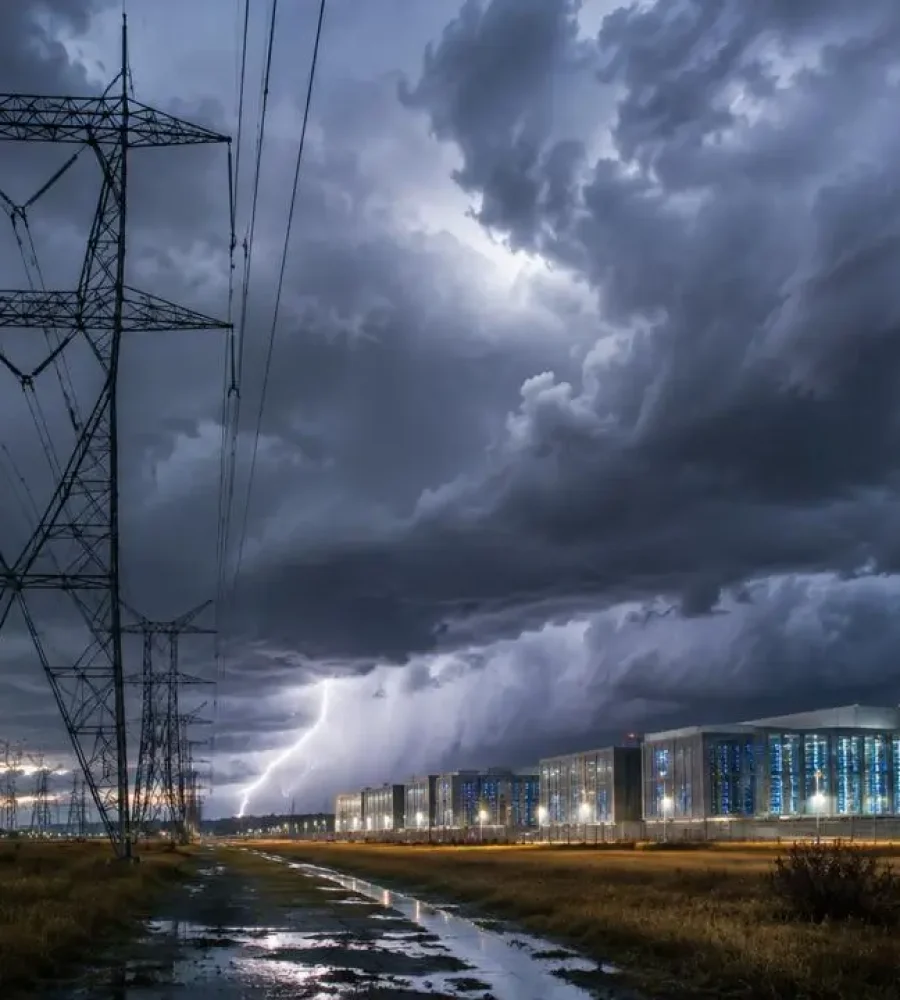

A new layer of competition is emerging inside the global AI infrastructure market, and it has less to do with chips or real estate than the cost of keeping massive systems powered every hour of the day. Financial models behind hyperscale deployments now place electricity in the same strategic category as network connectivity and hardware density because advanced AI environments consume extraordinary amounts of continuous power. That pressure is pushing infrastructure operators to examine which regions can support lower long-term operating expenditure without compromising scalability. India is drawing increasing attention within that equation because several of its major infrastructure corridors still offer comparatively favorable industrial electricity economics against many established hyperscale markets. Large AI facilities no longer operate like traditional enterprise environments where energy costs remained secondary to construction and expansion speed.
India’s advantage does not emerge from a single electricity tariff or one regulatory incentive program because the broader financial equation extends across multiple infrastructure layers. Large-scale AI facilities operate continuously under high utilization conditions, making electricity one of the most persistent cost variables in the entire deployment lifecycle. Hyperscalers therefore analyze power pricing stability, regional grid expansion, transmission reliability, and renewable integration economics before selecting infrastructure markets. India has gradually improved its transmission capacity, renewable generation footprint, and industrial electricity ecosystem during the last decade, creating a more favorable operational profile for sustained digital infrastructure growth. Several Indian states now offer industrial power rates that remain comparatively competitive against premium infrastructure markets such as Singapore, parts of Western Europe, and selected American metropolitan clusters.
Electricity Is Becoming India’s Biggest AI Export
Global infrastructure firms initially approached India as a demand expansion market because of its large internet population and accelerating enterprise digitization trends. That perception has evolved into something materially different as energy-intensive AI workloads begin reshaping infrastructure economics worldwide. Lower electricity costs are increasingly becoming a strategic infrastructure advantage because hyperscalers can potentially reduce long-term operating expenditure by deploying infrastructure in comparatively lower-cost energy regions. India increasingly fits that profile due to its industrial electricity pricing dynamics and expanding renewable energy ecosystem that supports large-scale digital operations. AI clusters operating continuously at high utilization levels require enormous sustained energy input, which amplifies even modest differences in regional electricity costs across multi-year timelines. Financial modeling therefore places increasing weight on operational electricity expenditure rather than solely evaluating upfront construction savings.
Several global operators already evaluate infrastructure markets through long-duration energy pricing projections instead of focusing exclusively on immediate deployment speed. India’s competitive positioning strengthens under that framework because renewable generation capacity continues expanding while industrial power availability improves across major infrastructure corridors. Tamil Nadu, Maharashtra, Gujarat, Telangana, and Karnataka have all emerged as important digital infrastructure regions partly due to improving electricity ecosystems supporting large industrial consumption. Data center operators also increasingly negotiate renewable power purchase agreements to stabilize long-term operational costs, which further improves financial predictability. AI infrastructure investors favor markets where electricity pricing volatility remains manageable because operational unpredictability can materially weaken infrastructure margins over time. Consequently, India’s lower-cost power environment has started functioning as an internationally relevant infrastructure differentiator rather than merely a domestic industrial advantage.
AI Infrastructure Is Starting to Chase Operating Margins
Infrastructure expansion strategies once prioritized proximity to enterprise customers because latency requirements dominated cloud deployment planning. AI infrastructure economics introduced a different equation because training and inference systems now consume massive volumes of electricity over sustained operating periods. Large language models, accelerated processors, high-density racks, and liquid-cooled clusters significantly increase long-term operational expenditure compared with conventional cloud workloads. Investors therefore scrutinize margin sustainability with greater discipline because operational costs directly influence infrastructure profitability at hyperscale scale. India benefits from this transition because lower electricity pricing can improve operational efficiency across extended infrastructure lifecycles. Hyperscalers increasingly analyze whether regional power economics can protect long-term margins before approving future deployment expansions.
European infrastructure markets increasingly face pressure from higher electricity pricing, stricter grid constraints, and rising operational compliance expenses associated with sustainability targets. Singapore also experienced temporary restrictions on data center expansion because of land and power consumption concerns, demonstrating how energy availability can influence infrastructure growth trajectories. American hyperscale markets continue expanding aggressively, although several major clusters now face growing electricity demand pressures linked to AI deployment acceleration. India enters this environment with comparatively favorable operating economics that can support financially intensive AI infrastructure over longer periods. Lower operating expenditure directly affects return-on-investment projections because AI infrastructure requires continuous energy consumption throughout deployment lifecycles. Accordingly, infrastructure investors are placing greater emphasis on regions capable of sustaining economically efficient operations alongside large-scale infrastructure expansion.
India’s Real Infrastructure Edge Starts After Deployment
Many infrastructure discussions still overemphasize construction incentives even though long-term operating economics determine whether facilities remain commercially attractive across decades of utilization. Land acquisition incentives may improve initial project feasibility, but electricity expenditure persists throughout the operational lifespan of every AI deployment. India’s infrastructure advantage increasingly emerges after facilities become operational because sustained electricity affordability can materially lower cumulative expenditure over time. AI clusters consume energy continuously under high-density operating conditions, making long-term electricity costs one of the largest recurring financial obligations. Infrastructure investors therefore evaluate lifecycle economics rather than focusing exclusively on deployment-stage capital expenditure. This financial perspective increasingly favors regions capable of maintaining structurally lower operational costs throughout long-duration infrastructure utilization cycles.
India also benefits from improving renewable integration strategies that help infrastructure operators stabilize long-term energy procurement costs. Renewable energy contracts provide greater predictability for hyperscalers attempting to manage operational expenditure volatility across multi-year deployment timelines. Data center operators increasingly seek blended electricity portfolios combining grid access with renewable procurement agreements to improve both sustainability positioning and financial efficiency. Several Indian infrastructure regions now support this operational framework through expanding solar and wind capacity integrated into industrial energy ecosystems. Meanwhile, improving subsea connectivity and domestic fiber expansion continue strengthening India’s attractiveness as a long-duration infrastructure market. These overlapping factors collectively improve post-deployment operational economics, which increasingly influence global infrastructure placement strategies more heavily than temporary fiscal incentives.
Global Compute Economics Are Quietly Tilting Toward India
Electricity pricing differences between infrastructure markets can produce substantial financial divergence when applied across thousands of accelerated processors operating continuously throughout the year. AI infrastructure economics therefore magnify regional power cost disparities far more aggressively than earlier enterprise cloud deployment cycles. Several European markets continue experiencing elevated industrial electricity costs associated with energy transition investments and broader regional pricing pressures. Singapore faces additional infrastructure limitations linked to land scarcity and sustainability constraints, which can increase deployment complexity for hyperscale operators. Parts of the United States maintain abundant infrastructure expansion activity, although electricity demand growth from AI deployments increasingly pressures local grids and utility planning frameworks. India’s comparatively favorable electricity economics consequently become more significant as infrastructure operators model long-term deployment profitability across multiple global markets.
Infrastructure placement decisions increasingly reflect multi-decade financial assumptions because AI deployments require extensive capital commitments with long operational lifespans. Electricity expenditure compounds continuously throughout those deployment cycles, meaning small pricing advantages can create substantial cumulative savings over time. India is increasingly viewed as a potentially cost-efficient infrastructure market because lower operating expenditure may improve long-term deployment economics for certain AI infrastructure operators. Hyperscalers and infrastructure investors increasingly prioritize markets capable of sustaining financially efficient operations under prolonged high-density utilization conditions. This evolving placement logic could gradually increase infrastructure investment interest in regions with structurally competitive power economics. Therefore, global infrastructure geography could shift progressively toward countries capable of balancing electricity affordability, renewable expansion, and operational scalability simultaneously.
India’s Power Economics Are Rewriting the Global Cost Map
The economics of AI infrastructure increasingly depend on the relationship between electricity pricing, utilization rates, cooling efficiency, and long-term operational predictability. Electricity now influences infrastructure competitiveness with greater intensity because accelerated hardware platforms consume dramatically more energy than traditional server environments. India’s comparatively favorable power economics are becoming increasingly relevant in long-term infrastructure planning discussions beyond domestic demand considerations. Infrastructure firms increasingly model deployment economics around sustained operational efficiency rather than purely evaluating construction feasibility or tax optimization strategies. Lower electricity expenditure improves profitability assumptions for both training infrastructure and inference-oriented deployments operating continuously at scale. This evolving financial framework places countries with favorable energy economics in increasingly strategic positions within the future infrastructure landscape.
India’s expanding renewable capacity also strengthens its infrastructure positioning because hyperscalers increasingly require sustainable energy procurement pathways alongside cost efficiency. Renewable integration reduces exposure to future energy volatility while helping operators align with environmental commitments demanded by enterprise customers and investors. Several infrastructure operators already structure expansion strategies around regions capable of supporting long-duration renewable procurement at economically viable rates. India’s solar and wind expansion trajectory improves the probability that large-scale infrastructure campuses can maintain favorable operational economics over extended periods. Additionally, domestic policy support for industrial digital infrastructure continues improving transmission reliability and regional connectivity required for hyperscale operations. These combined conditions increasingly position India as a financially efficient infrastructure market within the broader global AI expansion cycle.
India’s AI Rise May Be Powered by Economics, Not Hype
AI infrastructure investment cycles often generate headlines focused on valuation surges, processor demand, and geopolitical technology competition. Yet the underlying economics governing long-duration infrastructure profitability increasingly revolve around electricity affordability and operational sustainability. India’s opportunity emerges from that structural financial equation because lower operating expenditure can materially improve infrastructure economics across extended deployment timelines. Global hyperscalers now evaluate infrastructure placement through the lens of lifecycle efficiency rather than purely prioritizing immediate deployment expansion opportunities. Sustained electricity affordability therefore becomes strategically important because AI workloads require continuous energy-intensive operations that amplify long-term cost differentials. India’s infrastructure trajectory may ultimately depend less on speculative enthusiasm and more on whether its power economics remain structurally competitive over the next decade.
The next phase of global AI infrastructure growth will likely reward regions capable of combining operational efficiency, scalable power ecosystems, renewable integration, and predictable infrastructure economics. India increasingly aligns with those requirements because its energy environment supports comparatively favorable long-duration operating conditions for hyperscale deployments. Infrastructure capital historically flowed toward markets offering connectivity and enterprise demand concentration, although operational expenditure now influences placement decisions with much greater weight. AI deployments intensify this transition because electricity consumption directly affects infrastructure profitability throughout deployment lifecycles. India’s emerging role within the global infrastructure ecosystem therefore reflects a broader shift toward energy-centered placement economics rather than temporary investment narratives. Countries capable of sustaining financially efficient digital infrastructure operations are likely to play an increasingly important role in future AI infrastructure expansion strategies compared with markets driven primarily by short-term investment momentum.