Electricity rarely sat at the center of India’s digital infrastructure discussions because land, fiber, and rack density dominated executive attention. That balance has started shifting as AI clusters, accelerated computing deployments, and hyperscale campuses push power demand into territory once associated with heavy industry. Operators increasingly evaluate electricity procurement as a strategic operational variable because energy volatility now influences margins, expansion timelines, and uptime planning. Several infrastructure firms have stopped treating electricity as a static monthly utility bill and instead view it as a dynamic input that requires continuous market strategy. Trading platforms, renewable contracts, battery systems, and direct sourcing structures have started moving from energy-sector terminology into mainstream infrastructure boardrooms. India’s next wave of digital infrastructure expansion may depend as much on procurement intelligence as it does on server density or land acquisition strategy.
Power Shopping Comes to Data Centers
India’s evolving power exchanges have introduced shorter-duration procurement mechanisms alongside renewable market participation and contingency sourcing. Large infrastructure operators with flexible load management capabilities may eventually shift selected non-latency-sensitive workloads toward lower-cost power windows to improve operating efficiency. Broader electricity market reforms have expanded procurement flexibility for industrial consumers seeking alternatives to conventional utility arrangements. Some large commercial power consumers increasingly evaluate time-of-day pricing structures because AI-oriented workloads can create uneven consumption patterns that affect operational expenditure at scale. Energy procurement considerations now play a larger role in infrastructure planning as electricity purchasing decisions increasingly affect deployment economics for new campuses. purchasing decisions begin affecting deployment economics for new campuses.
Evolving power exchanges have introduced mechanisms that support shorter-duration electricity procurement alongside renewable market participation and contingency sourcing. Day-ahead markets, real-time trading windows, and green electricity segments provide infrastructure operators with tools that resemble portfolio management more than traditional utility procurement. Data center operators with flexible load management capabilities may eventually shift portions of non-latency-sensitive workloads toward lower-cost power windows to improve operating efficiency. The country’s electricity market structure has gradually expanded participation among industrial consumers seeking procurement flexibility beyond fixed distribution utility arrangements. Market-linked procurement also creates optionality during periods of regional supply imbalance because operators can source electricity through multiple pathways instead of relying on a single provider. Meanwhile, energy procurement sophistication may become a differentiating factor between operators competing for hyperscale expansion and AI infrastructure deployments in India.
Bilateral Deals Are Rewriting India’s Power Playbook
Long-term bilateral agreements between infrastructure operators and renewable generators have started reshaping electricity procurement across India’s digital infrastructure market. Direct power purchase agreements provide greater pricing visibility over extended periods while helping operators secure cleaner electricity supplies for future expansion plans. Renewable developers also benefit from these arrangements because hyperscale infrastructure creates stable long-duration demand profiles that improve financing conditions for generation projects. Open access frameworks now allow eligible commercial consumers to procure renewable electricity directly from generators under evolving regulatory structures. Large infrastructure campuses with predictable consumption patterns are increasingly exploring bilateral structures to reduce exposure to short-term market volatility and distribution utility pricing uncertainty. These agreements have started becoming central to infrastructure planning discussions as operators seek predictable energy economics for facilities expected to operate continuously for decades.
Renewable procurement strategies now extend beyond sustainability positioning because electricity availability has become tightly connected to future capacity expansion. Wind, solar, hybrid generation, and storage-backed supply agreements increasingly support infrastructure planning in regions where utility networks face growing demand pressure from industrial electrification and digital infrastructure growth. Corporate PPAs also allow operators to negotiate customized structures around pricing tenure, supply scheduling, and renewable integration requirements. Banking arrangements, hybrid generation portfolios, and energy storage integrations are gaining relevance because continuous digital infrastructure operations require stable electricity availability across all hours. Several developers now evaluate renewable-rich regions not only for sustainability objectives but also for long-term procurement resilience and future scalability. Consequently, bilateral electricity contracting has started evolving into a core infrastructure strategy rather than a secondary sustainability exercise within India’s digital infrastructure ecosystem.
Behind-the-Meter Is Becoming the New Hyperscale Strategy
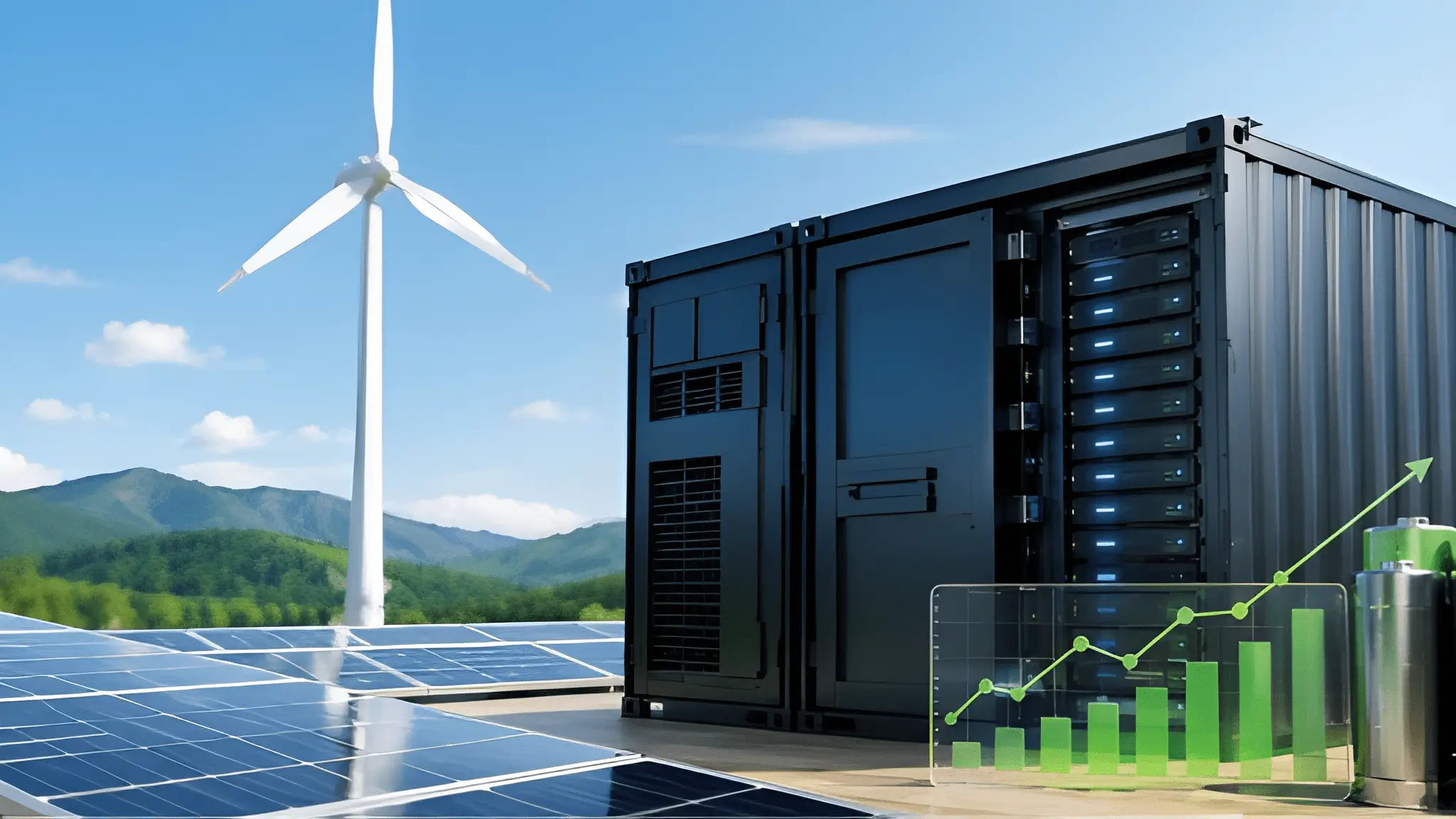
Infrastructure operators increasingly seek tighter operational control through captive generation assets, battery systems, private substations, and dedicated backup infrastructure integrated directly within large campuses. Behind-the-meter strategies reduce dependence on external grid variability while improving resilience during transmission disruptions or regional supply constraints. Solar installations, gas-based backup systems, and battery storage deployments now appear alongside discussions around rack density and cooling infrastructure in large-scale campus planning. Some operators also evaluate hybrid systems capable of combining renewable generation with storage and grid imports depending on market conditions throughout the day. Private substations and dedicated transmission connectivity provide greater operational autonomy for facilities managing highly sensitive workloads with stringent uptime requirements. These strategies reflect a broader industry movement toward vertically integrated energy management rather than passive electricity consumption.
Captive infrastructure becomes especially important when operators plan campuses requiring hundreds of megawatts of continuous electricity availability across multiple expansion phases. Battery systems increasingly support peak shaving, contingency management, and renewable integration rather than functioning solely as emergency backup infrastructure. Large operators also view private energy assets as protection against future electricity volatility because AI-oriented facilities may face rapidly increasing power intensity over time. The rise of integrated power infrastructure mirrors strategies already visible in several global hyperscale markets where energy procurement and generation planning operate as unified business functions. India’s infrastructure market now shows early signs of similar structural evolution as operators prioritize greater control over electricity reliability and procurement economics. Furthermore, behind-the-meter infrastructure may eventually influence investor confidence because energy resilience increasingly affects long-term operational stability for large digital campuses.
India’s State Policies Are Quietly Reshaping Power Procurement
Electricity procurement flexibility differs sharply across Indian states because open access regulations, wheeling charges, renewable incentives, and approval timelines vary between jurisdictions. Infrastructure developers increasingly compare state-level electricity frameworks before finalizing large campus investments because procurement economics can significantly affect long-term operating costs. Some states provide relatively smoother renewable procurement pathways while others maintain more restrictive frameworks around open access participation and cross-subsidy charges. Variations in policy implementation create uneven competitive conditions across India’s emerging infrastructure corridors. State-level electricity policies now influence site selection decisions alongside connectivity, land availability, and construction readiness. Regulatory fragmentation therefore plays a growing role in shaping where future digital infrastructure capacity may concentrate across the country.
Recent policy developments also indicate that some states aim to position themselves aggressively as preferred destinations for large-scale digital infrastructure investments. Andhra Pradesh recently introduced a framework allowing qualifying large data centers to operate as deemed distribution companies within designated project areas, providing greater sourcing flexibility for electricity procurement. The policy enables operators to source electricity from renewable generators, captive plants, bilateral contracts, and power exchanges while maintaining renewable consumption requirements. Such measures demonstrate how electricity regulation increasingly intersects with infrastructure investment competition between Indian states. Policy flexibility around procurement, transmission connectivity, and renewable integration may influence the next generation of hyperscale expansion more directly than conventional tax incentives alone. India’s evolving digital infrastructure market now sits at the intersection of electricity reform, industrial policy, and long-term energy transition planning.
India’s Data Centers Are Entering the Energy Trader Era
India’s digital infrastructure industry no longer operates within a framework where electricity functions as a predictable background utility disconnected from strategic decision-making. Operators increasingly evaluate power procurement through the lens of portfolio diversification, timing optimization, renewable contracting, and infrastructure control because energy exposure now affects competitiveness directly. The next generation of infrastructure campuses may rely on procurement teams capable of navigating exchanges, bilateral agreements, captive generation, and state-level regulatory complexity simultaneously. Electricity sourcing strategies could eventually influence workload placement decisions as operators respond dynamically to pricing conditions, renewable availability, and regional grid constraints. The infrastructure companies that adapt fastest to this evolving energy landscape may gain advantages in operational resilience, cost stability, and long-term scalability across India’s rapidly expanding digital economy. India’s future infrastructure operator may therefore resemble an industrial-scale energy strategist managing real-time power portfolios as much as a traditional infrastructure developer building server capacity.