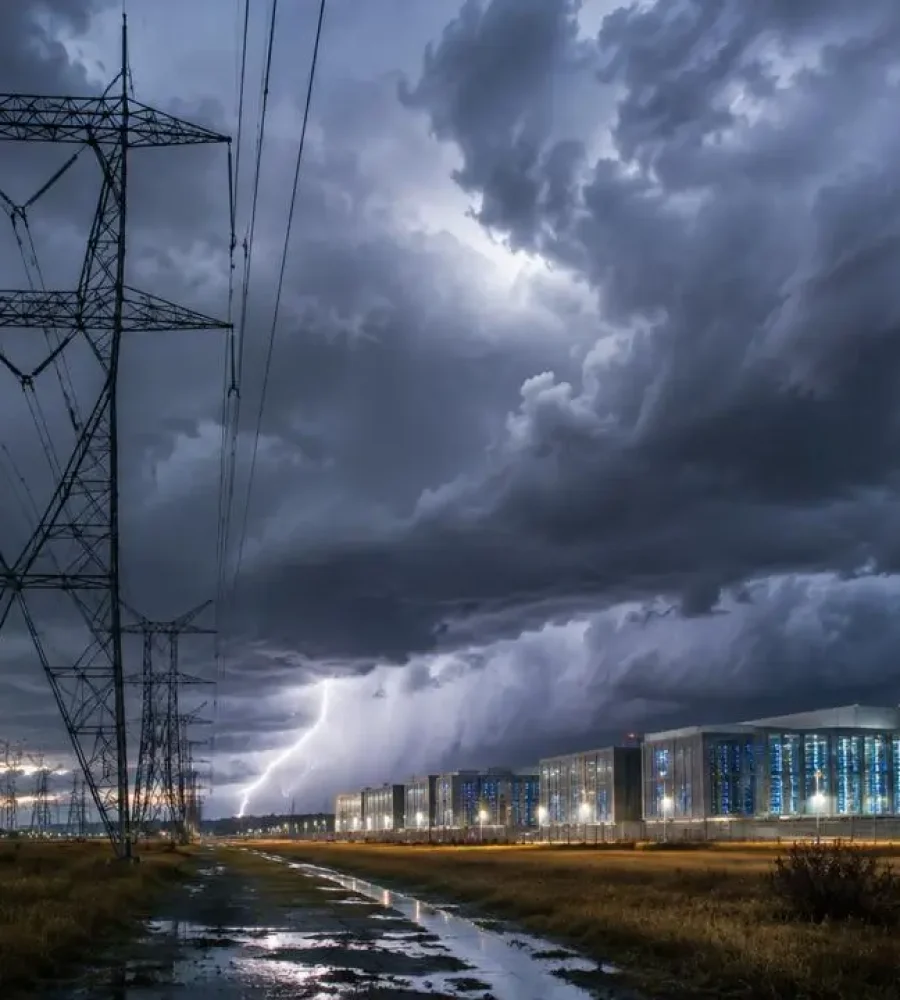

The economics of digital infrastructure have reached an inflection point where physical systems can no longer remain invisible beneath software growth curves. Large-scale data centers now operate with power densities that rival industrial clusters, yet their cost structures often remain partially socialized through public utilities. North Carolina’s proposed legislative move reflects a recalibration of this imbalance by directly linking infrastructure burden to the entities driving demand expansion. Policymakers have started to quantify how AI-driven workloads reshape electricity consumption patterns, water dependencies, and long-term grid planning assumptions. The bill introduces a structural shift that reframes hyperscale operators not as passive consumers but as active cost centers within utility ecosystems. This shift carries implications for capital allocation, site selection, and long-term infrastructure design across the broader data center industry.
Structural Shift in Utility Cost Allocation
The proposed “Ratepayer and Resource Protection Act” introduces a framework where large data centers must absorb the full marginal and embedded costs associated with their operations. Utilities traditionally distribute infrastructure expenses across a wide customer base, which allows industrial-scale consumers to benefit from averaged pricing structures. This legislation attempts to dismantle that model by requiring hyperscale operators to pay rates aligned with the actual cost of service delivery. Transmission upgrades, substation expansions, and grid reinforcement investments would no longer diffuse into residential or small business billing structures. This approach reflects a more granular cost attribution model that aligns pricing with demand intensity and infrastructure strain. Moreover, it establishes a precedent for other jurisdictions evaluating similar pressures from rapid digital infrastructure growth.
The financial implications extend beyond electricity tariffs into broader infrastructure financing mechanisms tied to grid resilience. Data centers operating at hundreds of megawatts require dedicated transmission corridors and redundancy systems that impose long-term capital costs on utilities. The bill mandates that these costs remain directly tied to the originating demand source rather than distributed across general ratepayers. This creates a scenario where hyperscale operators must internalize both upfront infrastructure investments and ongoing maintenance obligations. Cost transparency becomes a defining feature of this model, enabling regulators to track how infrastructure investments correlate with specific industrial loads. However, such transparency may also introduce pricing volatility as utilities recalibrate cost recovery frameworks.
Water Usage and Environmental Constraints
Water consumption has emerged as a critical constraint in data center expansion, particularly in regions experiencing population growth and climate variability. Cooling systems for large facilities often rely on consistent water supply, which can introduce competition with municipal and agricultural usage depending on local conditions. The proposed legislation introduces stricter oversight mechanisms that link water consumption permits directly to operational scale and efficiency metrics. Operators may need to demonstrate advanced cooling technologies or recycling systems to secure long-term approvals. This regulatory layer transforms water from a secondary consideration into a primary factor in site viability. Consequently, infrastructure planning must integrate hydrological constraints alongside power availability.
The bill also addresses environmental externalities by introducing expectations around on-site clean energy integration. Data centers may need to offset portions of their demand through renewable generation or energy storage systems deployed within or near their campuses. This requirement aligns with broader decarbonization goals while ensuring that incremental demand does not disproportionately increase emissions intensity. Grid operators must balance intermittent renewable inputs with the continuous demand profiles typical of large-scale digital infrastructure. Therefore, the legislation implicitly encourages hybrid energy architectures that combine grid supply with localized generation assets. These changes reshape how operators design energy procurement strategies and long-term sustainability commitments.
Impact on Hyperscale Expansion Strategies
North Carolina has attracted hyperscale investment due to favorable land pricing, tax incentives, and robust fiber connectivity, as reflected in multiple large-scale data center deployments. The proposed bill challenges this model by reducing the financial advantages associated with large-scale deployments in the region. Operators must now evaluate total cost of ownership with greater emphasis on infrastructure obligations rather than initial incentives. This recalibration could shift investment toward regions offering alternative regulatory environments or different resource availability profiles. Site selection models will likely incorporate more complex variables, including grid capacity forecasts and water stress indices. However, the state’s existing infrastructure base may still provide competitive advantages despite the regulatory shift.
The legislation also influences how companies approach capacity scaling within existing campuses. Instead of continuous expansion, operators may adopt phased development strategies that align infrastructure investments with incremental demand growth. This reduces exposure to large upfront costs associated with grid upgrades and utility commitments. Capital expenditure planning becomes more dynamic, reflecting regulatory constraints and evolving demand projections. Meanwhile, companies may invest more heavily in efficiency improvements to reduce per-unit resource consumption. These adjustments indicate a broader transition from rapid expansion to optimized growth within constrained infrastructure environments.
Grid Stability and Long-Term Planning
Grid operators face increasing challenges in balancing supply and demand as large data centers introduce highly concentrated load centers. The proposed bill addresses these concerns by ensuring that infrastructure expansion aligns with system stability requirements. Utilities must evaluate whether existing transmission networks can accommodate new demand without compromising reliability for other users. This introduces more rigorous interconnection studies and approval processes for large-scale projects. The legislation reinforces the need for coordinated planning between utilities, regulators, and industrial consumers. Consequently, grid expansion becomes a collaborative process rather than a reactive response to demand spikes.
The long-term implications extend into how energy markets price capacity and reliability services. Data centers with predictable, continuous demand profiles may influence capacity planning decisions and reserve margin calculations. By assigning infrastructure costs directly to these operators, the bill creates clearer signals for investment in generation and transmission assets. This could improve overall system efficiency by aligning financial incentives with actual usage patterns. Meanwhile, utilities may develop new tariff structures tailored specifically to high-density industrial loads. These structural changes indicate a shift toward more precise and data-driven energy market frameworks.
Policy Signaling Across Regions
North Carolina’s legislative approach reflects a broader trend where states reassess the balance between economic development and infrastructure sustainability. Governments previously prioritized attracting hyperscale investment through incentives and favorable regulatory conditions. The current shift emphasizes protecting public resources and ensuring equitable cost distribution across all users. Policymakers in other regions are closely monitoring these developments as they face similar pressures from expanding digital infrastructure. This creates a policy feedback loop where regulatory innovations in one state influence decision-making elsewhere. As a result, the industry may encounter increasing fragmentation in regulatory environments across different jurisdictions.
The bill also signals a transition toward more interventionist approaches in managing infrastructure-intensive industries. Regulators are moving beyond passive oversight into active cost allocation and resource management frameworks. This reflects growing recognition that digital infrastructure carries physical consequences that extend beyond corporate balance sheets. Investors and operators must adapt to a landscape where regulatory risk plays a central role in strategic planning. Therefore, long-term competitiveness will depend not only on technological capabilities but also on the ability to navigate evolving policy environments. These dynamics will shape the next phase of global data center expansion and infrastructure investment.