
The Capital Has Arrived. The Kilowatts Have Not.
There is a specific kind of infrastructure story that plays out across emerging economies when global capital arrives faster than the physical systems required to absorb it. Roads are built before the towns they connect. Ports are expanded before the hinterland rail lines that feed them. The buildings go up before the water and sewage infrastructure beneath them catches up. India’s data centre moment in 2025 and 2026 follows a version of this same pattern, with a specificity that makes it more consequential and more urgent than the standard narrative of emerging market infrastructure lag. The commitment has been made at a scale and by actors whose credibility is not in question.
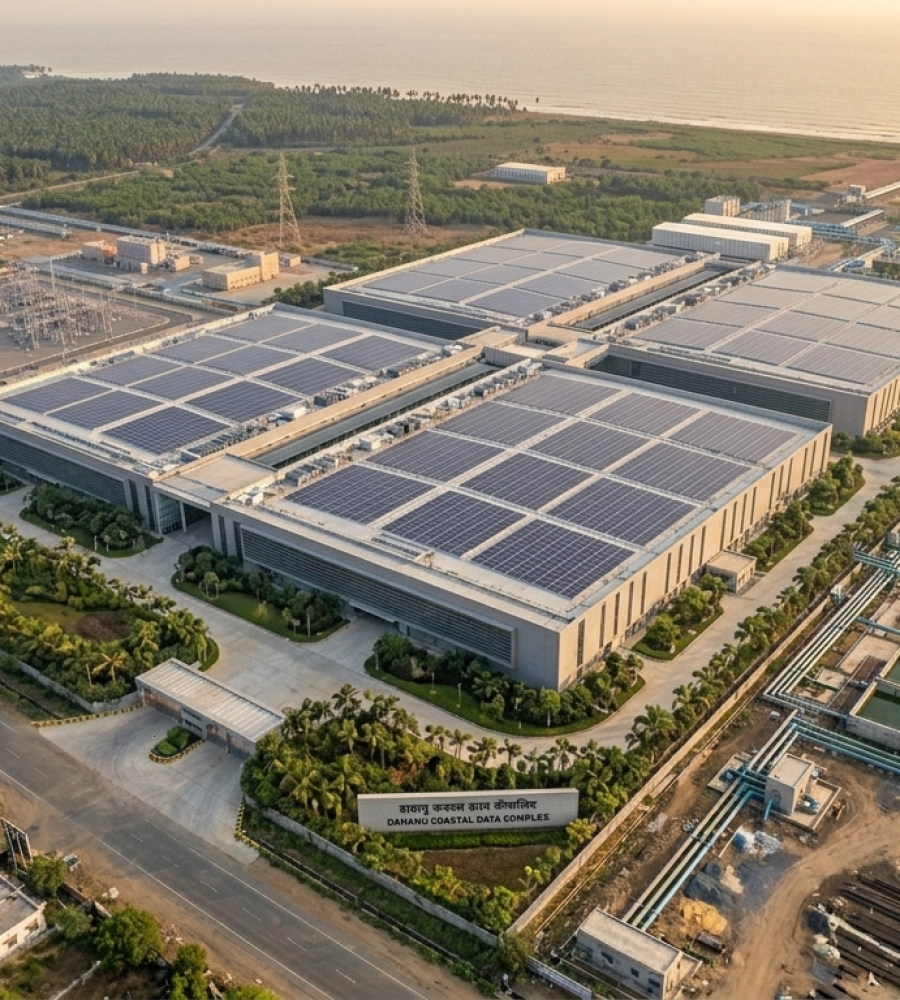
Google has committed to India’s first gigawatt-scale AI hub, anchored in Visakhapatnam, supported by subsea cable networks and a clean energy mandate. Microsoft’s largest India facility in Hyderabad has come online, part of a multi-year investment trajectory across its existing data centre regions in Pune, Mumbai, and Chennai. Amazon has signalled a commitment extending to 2030 that would represent one of the largest single-country infrastructure investments any hyperscaler has ever made. Meta has signed a major power deal with Reliance in Jamnagar to anchor its own Indian footprint.
The aggregate capital flowing into India’s AI and data centre ecosystem over the past year makes a figure that would have seemed implausible during any prior discussion of India as a digital infrastructure destination. This is not speculative investment from early-stage funds trying to catch a trend. It is strategic capital from the world’s most sophisticated technology companies, each of which has done substantial due diligence on the market opportunity, the regulatory environment, and the infrastructure conditions they are deploying into. That capital has arrived not because India’s infrastructure is ready to absorb it at scale, but because the market opportunity is large enough and the competitive cost of waiting long enough that the world’s largest technology companies have decided the infrastructure gap is a problem worth managing rather than a reason to delay.
The infrastructure gap in question is not land, which India has in abundance relative to the alternatives across Asia. It is not regulatory environment, which the central government and multiple state governments have been actively making more favourable through dedicated data centre policies, single-window clearances, and infrastructure status designations. The gap is power: the combination of grid reliability, interconnection access, renewable energy availability at the quality and consistency that data centre operators actually require, and the transmission infrastructure needed to move generation from where it exists to where the facilities are being built.
India’s power sector has made extraordinary progress by any reasonable historical benchmark, crossing the threshold where more than half of installed capacity comes from non-fossil fuel sources and adding record renewable capacity in a single financial year. That progress, however remarkable, does not automatically resolve the specific and acute power delivery problem that data centre operators face when they try to commission large, continuously operating AI compute facilities inside the Indian grid environment.
The Geography of the Problem
Why Mumbai Dominates but Cannot Scale Alone
India’s data centre geography has been shaped by the same logic that shaped every prior wave of digital infrastructure investment across the country: proximity to the subsea cable landing stations that connect India to the global internet backbone, access to reliable commercial power from urban grids, and the presence of a critical mass of enterprise and technology customers who generate the demand that justifies the facility investment. Mumbai has dominated India’s data centre market for exactly these reasons, holding the largest share of national colocation capacity, followed by Chennai, Delhi NCR, Hyderabad, and Bengaluru. The city’s position at the junction of multiple international subsea cable systems, combined with its role as India’s commercial and financial centre, created a self-reinforcing concentration that has proven difficult to redistribute toward secondary markets even as those markets have developed their own demand.
The constraint that Mumbai’s dominance now creates is a version of the same constraint that Frankfurt, Amsterdam, and Dublin face in the European context: a primary market so heavily developed that the power grid serving it cannot accommodate further large-scale data centre load without the kind of substation and transmission infrastructure upgrade that takes years rather than months to plan, approve, and construct. Mumbai’s commercial grid, managed through a combination of state distribution companies and private utilities, was not engineered with the expectation that a single category of commercial customer would eventually generate demand at the scale that hyperscale AI campuses require. The city’s power infrastructure serves a vast and diverse load, from residential consumers to heavy industry, with data centres representing a growing but not yet dominant share of that mix, which means that upgrades to accommodate data centre load must compete for investment priority with the full range of other infrastructure requirements that urban Maharashtra’s grid serves.
The response from hyperscalers and large domestic operators has been to look beyond Mumbai toward markets where land is cheaper, power access timelines are shorter, and state governments are offering more aggressive incentives to attract the investment anchor that a major data centre represents. Hyderabad’s emergence as a credible alternative, backed by Telangana’s dedicated data centre policy and its status as India’s technology services capital, reflects this logic. Visakhapatnam’s selection as the site for Google’s gigawatt-scale AI hub reflects both the coastal location that subsea cable connectivity requires and the Andhra Pradesh government’s active courting of anchor tenants for what it calls a green data corridor. The geographic diversification of India’s data centre investment pipeline, from a Mumbai-centric market toward a multi-city landscape that now includes Pune, Hyderabad, Chennai, Bengaluru, and emerging secondary locations, is positive for the resilience of the overall ecosystem and for distributing the economic benefits of the investment more broadly across Indian states.
The Transmission Gap That State Boundaries Create
Beyond the primary market congestion problem, India faces a structural grid challenge that its federal architecture makes particularly difficult to address: the transmission infrastructure that would allow power to flow from regions of renewable energy abundance to regions of data centre concentration crosses state boundaries governed by different electricity regulatory authorities, different distribution company structures, and different power purchase agreement frameworks. The states richest in solar and wind resources, Gujarat, Rajasthan, Tamil Nadu, and Andhra Pradesh, are not always the states with the highest concentration of data centre demand, and moving power between them requires interstate transmission capacity that India’s Green Energy Corridor programme has been building, but not at a pace that matches the scale and urgency of the new data centre investment pipeline.
India’s Central Electricity Regulatory Commission and the Central Transmission Utility, Grid India, have been working to expand interstate transmission capacity, but the Bharat Climate Forum’s 2026 assessment of India’s energy transition identified transmission congestion and overly cautious grid operations as the main barriers to scaling renewable energy, rather than shortages in generation capacity itself. The observation that the barrier is now the wires rather than the turbines or the panels is a specific and operational version of the broader grid readiness problem. India has been building renewable generation capacity at a genuinely impressive pace, adding substantial solar and wind capacity in each successive year, but the transmission infrastructure required to move that generation from where it is produced to where it is consumed, including the new data centre facilities consuming extraordinary amounts of power, has not kept pace with generation growth.
This mismatch between generation and transmission creates a phenomenon that grid operators describe as renewable energy curtailment: situations in which solar or wind generators must reduce or halt their output not because demand is insufficient but because the transmission network lacks the capacity to carry the power from the point of generation to the point of consumption. India experienced measurable solar curtailment in 2025, with Ember’s analysis describing how the highest daily solar curtailment events resulted from grid-security measures rather than from any fundamental problem with generation assets themselves. For data centre operators that have signed power purchase agreements to source renewable electricity for their facilities, curtailment events represent a direct challenge to their sustainability commitments, because periods during which their contracted renewable source is curtailed require them to draw from the broader grid mix, whose carbon intensity reflects coal’s continued significant share of India’s power generation.
The Reliability Standard That Data Centres Demand
Five Minutes of Downtime Per Year Is Not Negotiable
The power reliability standard that data centres operate to is categorical in a way that most commercial and industrial power consumers do not approach. A data centre targeting Tier III or Tier IV classification requires designed-in redundancy that limits unplanned downtime to a level measured in minutes per year across its entire operational life. The AI inference and training workloads now arriving in Indian data centres are not forgiving of power interruptions in the way that some manufacturing processes or commercial office loads can absorb a brief outage and recover without lasting consequence. A GPU training cluster interrupted mid-run does not simply pause and resume from where it left off; it requires recovery procedures, checkpoint restoration, and in some cases a complete restart of the training job, with the associated time and compute cost that represents a direct financial loss for the operator and the enterprise customer whose workload was running.
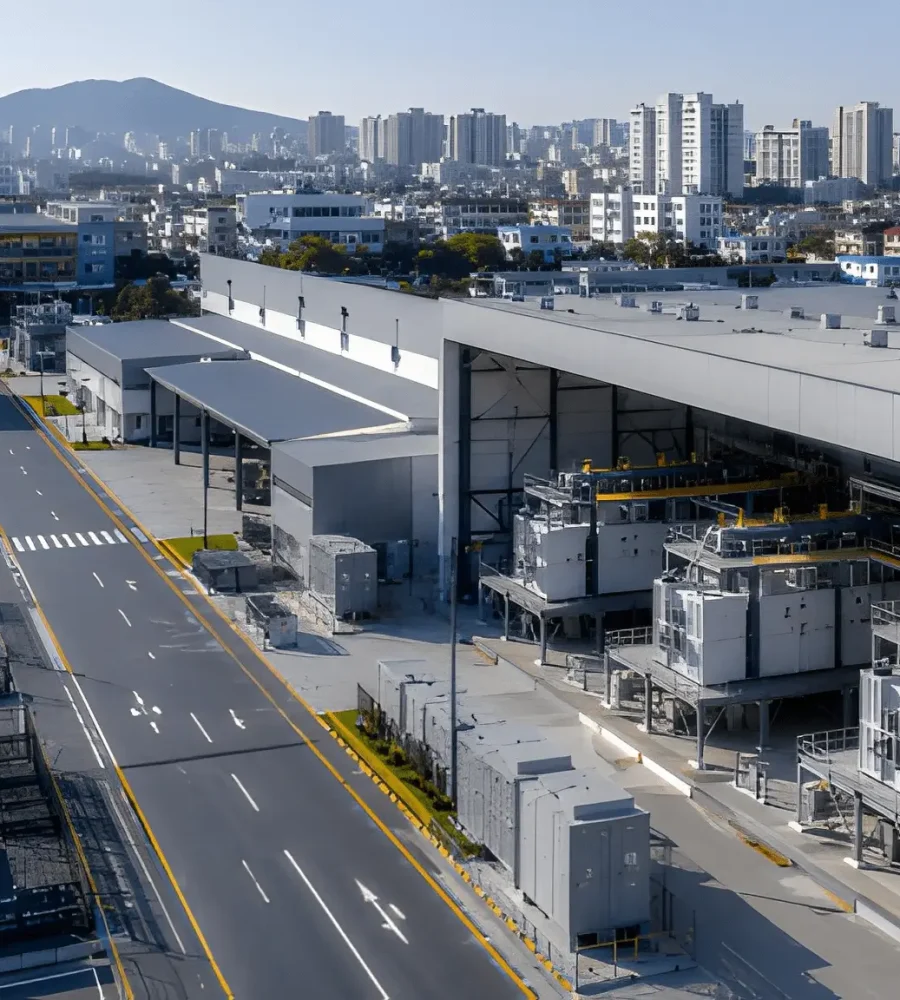
This reliability requirement creates a fundamental tension with the grid environment that India’s primary data centre markets operate in. India’s distribution-level grid, despite substantial improvement over the past decade through the DDUGJY and Saubhagya programmes, still experiences outage frequencies that would be unacceptable to data centre operators relying on utility power as their sole supply. The response that Indian data centre operators have almost universally adopted is a combination of on-site diesel generator backup capacity sized to carry the full facility load for extended periods, uninterruptible power supply systems that bridge the gap between a grid interruption and generator startup, and in more advanced facilities, dedicated captive power plants or direct connections to captive renewable generation that provide a degree of insulation from the distribution grid’s reliability profile.
The economic consequence of this self-supply requirement is significant and represents a competitive disadvantage relative to locations where the utility grid provides sufficient reliability that operators can depend on it without maintaining the equivalent of a small power plant on-site. The capital cost of the backup generation infrastructure, the ongoing fuel cost of diesel generators during outages and testing, the space that generation infrastructure consumes within what are expensive, power-dense facilities, and the operational complexity of managing a sophisticated on-site power system alongside the IT infrastructure itself all represent cost layers that do not apply at the same magnitude in grid environments where reliability is a utility-provided baseline rather than a self-provisioned supplement. Indian data centre operators have absorbed these costs because the market opportunity justifies it and because the hyperscalers commissioning their facilities accept it as a feature of the Indian market. As the scale of investment grows and the facilities become larger and more power-intensive, the economics of self-supply become more strained.
The Renewable Energy Paradox
Green on Paper, Brown on the Grid
India’s renewable energy achievement is genuine and should not be undercharacterised. The country reached a threshold where more than half of its installed power generation capacity comes from non-fossil fuel sources, added record renewable capacity in a single financial year, and has established itself as one of the world’s most important markets for solar and wind deployment by any measure of scale. Consequently, when a data centre operator in Chennai or Hyderabad signs a renewable power purchase agreement, the contract is not a fictional instrument pointing at non-existent generation. There are solar and wind assets in Tamil Nadu, Andhra Pradesh, Gujarat, and Rajasthan generating substantial clean power, and the PPA market connecting that generation to large commercial and industrial consumers has developed considerably from the nascent state it was in five years ago.
The paradox emerges at the hourly level rather than the annual average level, and it is this hourly dimension that matters most for a data centre running continuously at full utilisation. Solar generation peaks between mid-morning and mid-afternoon, falls sharply in the evening, and produces nothing at night. Wind generation varies by season and geography. The data centre’s load profile does not track either of these patterns: it runs at consistently high utilisation twenty-four hours a day, seven days a week, with variation driven by workload scheduling rather than by natural generation cycles. When the contracted renewable source is not generating at sufficient output to match the data centre’s consumption, the facility draws from the grid, and the grid’s carbon intensity at those moments, shaped by the coal and gas capacity that India maintains to handle baseload and evening demand, is substantially higher than the renewable PPA implies on an annual average basis.
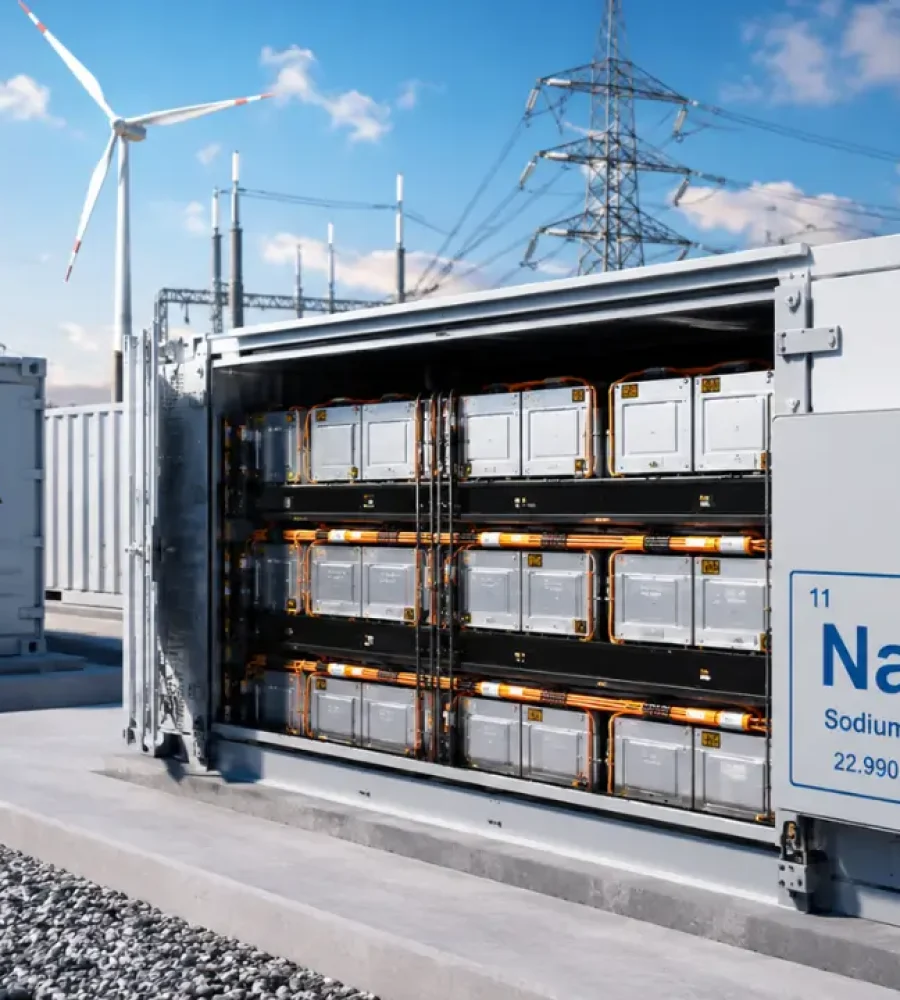
The solution that would resolve this gap, battery energy storage at sufficient scale and duration to time-shift renewable generation from periods of surplus to periods of deficit, is technically available and increasingly economically viable as battery costs continue falling, but has not been deployed at the scale that data centre operators’ needs require in most Indian markets.
India’s Draft Electricity Rules of 2026 are working to mandate Battery Energy Storage Systems for solar prosumers above certain capacity thresholds, a regulatory direction that acknowledges the storage imperative, but mandates targeted at rooftop solar installations do not automatically produce the large-scale, co-located storage deployments that utility-scale data centre loads require. The CtrlS Datacenters commitment to develop a renewable energy project through an MoU with NTPC Green Energy illustrates the direction that leading Indian data centre operators are moving: toward deeper integration of the generation and storage infrastructure that makes renewable power genuinely dispatchable rather than intermittently available, but the scale at which these commitments are being made remains below the aggregate demand that the hyperscale investment pipeline will eventually generate.
What the State Governments Are Actually Doing
Telangana, Andhra Pradesh, and the Policy Competition
The Indian state governments competing for data centre investment have moved with a speed and policy sophistication that frequently outpaces the central government’s own framework development, and the specific policy instruments they are deploying reveal a clear-eyed understanding of what is actually constraining the investment they want to attract. Telangana, whose IT minister framed Microsoft’s Hyderabad data centre as one of the largest foreign direct investments the state had ever attracted, has structured its data centre policy around a combination of infrastructure status designation, single-window clearance for regulatory approvals, and preferential access to power through dedicated feeder lines that provide a degree of grid isolation from the broader distribution network’s reliability profile.
Andhra Pradesh’s approach to Google’s Visakhapatnam AI hub goes further, framing the project within a green data corridor concept that connects coastal grid access, renewable energy zones, and the subsea cable connectivity that the Vizag port provides into a coherent infrastructure narrative that addresses the power, connectivity, and sustainability dimensions of the investment case simultaneously. State officials have described the location’s natural advantages for sustainable AI infrastructure in terms of port connectivity, renewable energy base, and coastal grid access, recognising that the competitive framing of India’s data centre locations increasingly needs to address renewable energy credibility rather than simply power availability. Andhra Pradesh’s position at the intersection of coastal connectivity and southern India’s renewable energy zones gives it a genuine structural advantage in making that case.
The RPSG Group’s initiative to establish a large-scale solar cell and ecosystem hub in Uttar Pradesh, specifically framed around providing a dedicated renewable energy source for data centres, illustrates a market-driven response to the power constraint that is beginning to emerge independently of state government direction. Private developers recognising that data centre operators need not just capacity but credibly clean, consistently available capacity are positioning integrated renewable-plus-storage projects as the missing infrastructure layer that state grid policies have not yet fully provided. This private sector response to a public infrastructure gap is structurally similar to the behind-the-meter generation response that American and European data centre operators have adopted in their own grid-constrained markets, with the specific Indian adaptation of solar generation as the primary renewable source rather than the wind energy that dominates in northern European self-supply contexts.
The IndiaAI Mission and the Compute Sovereignty Dimension
Building a Public Stack Beneath the Private Investment
The hyperscaler investment pipeline that has attracted the most attention in India’s data centre discourse exists alongside a parallel public initiative that is attempting to address a different but related dimension of the infrastructure gap. The IndiaAI Mission, backed by significant central government funding and structured around the goal of providing Indian researchers, startups, and public institutions with access to AI compute without routing through foreign cloud infrastructure, represents an explicit sovereign compute ambition that recognises the strategic implications of compute dependency. The IndiaAI Mission’s GPU procurement programme, its efforts to establish AI application development centres across Indian institutions, and its language model initiatives targeting India’s extraordinary linguistic diversity across more than twenty-two scheduled languages collectively describe an attempt to build a public AI infrastructure layer beneath the private hyperscaler investment that is proceeding in parallel.
The power challenge facing the IndiaAI Mission’s compute infrastructure is the same power challenge facing the private data centres that hyperscalers are building, with the added complication that public sector facilities have historically operated within India’s state electricity board frameworks rather than the commercial power purchase agreement structures that private data centre operators use to secure cleaner and more reliable supply. A publicly-funded GPU cluster housed in a government research institution or a publicly-operated data centre campus faces the full reliability and carbon intensity implications of India’s distribution grid without the self-supply infrastructure that private hyperscale operators deploy to insulate themselves from those conditions. As the IndiaAI Mission scales its compute ambitions toward the level that competitive AI research requires, the power infrastructure challenge becomes a direct constraint on public sector AI capability in a way that the initiative’s design has not yet fully addressed.
The IEA’s assessment of India’s renewable energy trajectory is broadly optimistic, projecting the country to become the second-largest growth market for renewables with capacity set to rise substantially over a five-year horizon. That trajectory, reinforced by India’s ambitious clean energy targets and its progress toward a five-hundred gigawatt non-fossil installed capacity goal by 2030, provides a structural basis for confidence that the power constraints facing data centre operators today will ease materially over the medium term as new generation and transmission capacity comes online. The question that the hyperscale investment timeline poses is whether that medium-term improvement arrives quickly enough to support the AI infrastructure that capital has already been committed to building in the near term, or whether a period of genuine power constraint, measured in years rather than months, will limit the pace at which that capital can actually be deployed into operational facilities.
The Gap Between the Commitment and the Kilowatt
The story of India’s data centre moment is ultimately a story about the gap between two timelines that are both real and both moving. The capital timeline, driven by hyperscaler competitive strategy, India’s expanding technology market, and the geopolitical logic that diversity of AI infrastructure geography provides, is moving with an urgency that reflects the commercial stakes involved in establishing AI infrastructure positions in a market the size of India before those positions consolidate around early entrants. The infrastructure timeline, driven by the physics of grid construction, the regulatory processes of power project approvals, the manufacturing lead times of high-voltage transformers and switchgear, and the engineering cycles of transmission corridor development, moves at the pace that physical systems have always moved and that no amount of capital intensity or political will can fully compress.
The resolution of this gap will not be dramatic in the way that a product launch or a policy announcement is dramatic. It will be incremental, market by market and megawatt by megawatt, as transmission corridors are completed, as captive renewable projects reach commercial operation, as battery storage deployments grow from pilot scale to operational scale, and as the state electricity boards modernise the distribution infrastructure that currently creates the reliability gap that data centre operators spend considerable capital bridging through on-site backup systems. The Indian companies and state governments that invest most seriously in the power infrastructure dimension of the data centre opportunity, rather than treating power as a constraint to be managed rather than a capability to be built, will determine not just which Indian cities capture hyperscaler investment in the near term but which Indian regions anchor the next generation of AI infrastructure as the demand growth that the current investment pipeline reflects actually arrives.
India holds a genuinely extraordinary position in the global AI infrastructure race. The market is large, the talent is world-class, the policy environment has improved substantially, and the hyperscaler commitment to building at scale inside the country is now established beyond reasonable doubt. The power grid that stands between that position and its full realisation is not an insurmountable barrier. It is a solvable engineering and policy problem that India has demonstrated the capacity to address at speed when the political and commercial urgency is sufficient. Whether the urgency generated by hundreds of billions in committed hyperscaler capital proves sufficient to accelerate the grid investment that the data centre pipeline requires is the central infrastructure question that India’s AI decade will be decided by.