 Skip to content
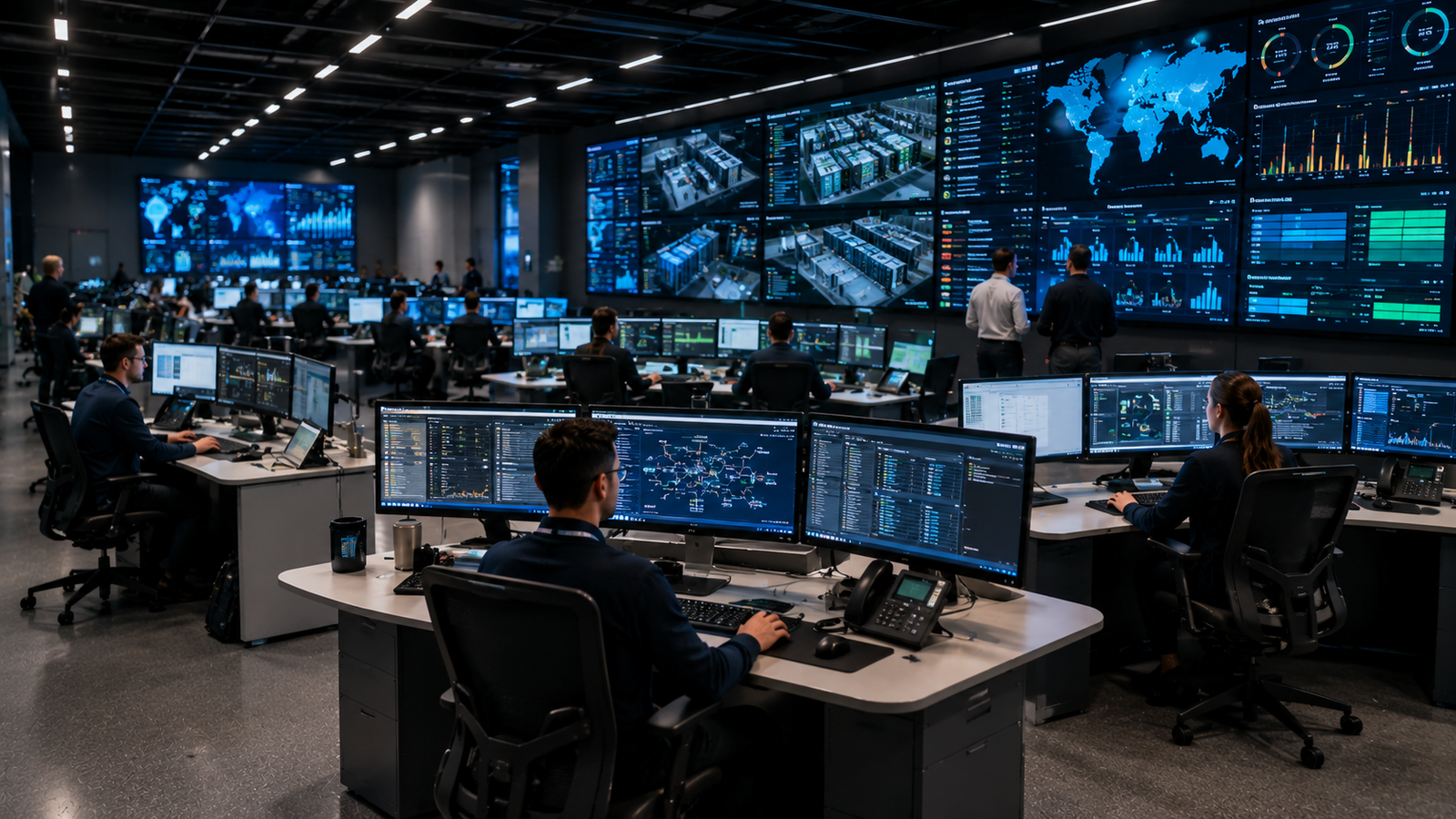
The AI infrastructure buildout has a problem that does not appear in any hyperscaler earnings call and does not show up in GPU supply chain analysis or grid interconnection queue reports. It is the most human of the constraints on the buildout: the people who can actually design, build, commission, and operate AI data centers at the scale and density that the AI economy requires are in shorter supply than any component on the critical path, and the competition for those people has reached a level of intensity that is changing how compensation, retention, and career structures work across the entire industry.

The data center industry faces a structural workforce deficit of 340,000 unfilled positions by end of 2026, driven by explosive AI-fueled construction demand, an aging technical workforce, and qualification standards that eliminate 85% of applicants from consideration for specialist roles. For every hundred applicants who walk through the door, only fifteen meet minimum qualifications for modern data center roles. Employment grew 60% between 2016 and 2023, from 306,000 to 501,000 workers, but demand now far outpaces supply in ways that salary increases alone cannot resolve, because the constraint is not compensation willingness. It is the number of people in the labour market who have the skills the industry requires at the density and voltage levels that AI workloads demand.
The Poaching Loop That Is Rotating the Same Expert Pool
The most damaging dynamic in the AI infrastructure talent market is not the shortage of new graduates entering the field. It is the poaching loop that EPG, one of the leading data center staffing firms, has documented: roughly 25% of staff departures in 2026 are employees being hired away by direct competitors. Instead of building new talent, the industry is simply rotating the same pool of experienced experts for progressively higher compensation. Nearly two-thirds of data center operators report difficulty retaining staff, finding qualified candidates, or both, according to Uptime Institute’s 2024 Global Data Center Survey. An additional 37% struggle specifically with retention, as hyperscalers poach from colocation operators, neoclouds poach from hyperscalers with equity packages that public-company compensation structures cannot match, and PE-backed infrastructure operators poach from neoclouds with founding team economics that vest on transaction timelines.
The compensation escalation that the poaching loop is driving is real and accelerating. A data center commissioning engineer in the United States earned an average base salary of $125,000 to $150,000 in 2026, with total compensation frequently reaching $165,000 or more once bonuses, per diem, and overtime are included. Senior commissioning engineers working on hyperscale AI cooling builds in markets like Northern Virginia and Phoenix routinely clear $200,000 in total annual compensation. Power electronics specialists command $150,000 to $250,000 as companies compete for the subset of electrical engineers who understand both high-voltage power distribution and the specific thermal and power quality requirements of AI GPU infrastructure. Those compensation levels have not resolved the shortage, because there is no pool of qualified candidates sitting on the sideline waiting for compensation to reach the right threshold. The shortage is structural.

The Silver Tsunami That Compounds the Structural Gap
For the first time, operations management roles have overtaken junior positions as the most expensive roles to fill, as a generation of veteran engineers who built and operated the data centers of the 2000s and 2010s enters retirement without a sufficient pipeline of successors. DataX Connect forecasts that 40% of data center professionals plan to leave their roles despite rising salaries, potentially widening the talent gap. The retirement wave is creating a specific and acute shortage in the most senior technical roles, the operations directors, chief engineers, and critical systems managers who carry institutional knowledge about how to run a large-scale data center campus through hardware upgrades, power events, cooling system failures, and the dozens of operational scenarios that standard operating procedures cover in theory but that only experience can navigate effectively in practice.
The institutional knowledge loss from senior retirements is not recoverable on any near-term timeline through training programmes or salary increases. An experienced critical systems manager who has run a 200-megawatt campus through a regional weather event, a transformer failure, and a cooling system upgrade simultaneously carries knowledge that takes a decade to accumulate and cannot be transferred to a successor in a transition period measured in months. The facilities that are most at risk from the silver tsunami are the oldest and largest hyperscale campuses, where the operational staff who commissioned the original infrastructure and developed the campus-specific SOPs over years of hands-on operation are reaching retirement age simultaneously with the arrival of GPU upgrade cycles that require those same experienced operators to manage the transition from one hardware generation to the next.
Why Hyperscalers Are Losing the Talent War to Neoclouds
The conventional assumption is that hyperscalers, with their superior compensation packages, brand recognition, and career development infrastructure, have an inherent talent advantage over neoclouds and PE-backed infrastructure operators. That assumption is increasingly incorrect. Hyperscalers offer competitive base salaries and meaningful equity through RSU programmes, but their equity is in publicly traded companies whose upside potential is limited relative to the explosive growth of the neocloud sector. A commissioning engineer who joins CoreWeave with options priced before its IPO, or a mechanical engineer who joins a PE-backed greenfield campus developer with equity vesting on a transaction timeline, has compensation upside that no hyperscaler RSU programme can match if the company performs.
The neocloud sector has grown from near zero to $180 billion in projected annual revenue by 2030, and the equity value creation that trajectory implies is attracting experienced hyperscaler engineers who are willing to accept the execution risk of a neocloud or PE-backed operator in exchange for the financial upside that the hyperscaler’s scale prevents it from offering. The compensation structure that made hyperscaler employment the most attractive option for top data center engineers in 2019 and 2020 — stable base, meaningful RSUs, strong career progression — is less competitive in 2026 against operators who can offer founding team economics and the personal ownership of building something new at scale.
Why Career Ownership Now Matters More Than Scale
The career trajectory dimension also favours the emerging operators over the hyperscalers for the most ambitious engineers. A data center engineer at a hyperscaler is one of thousands of engineers working on a campus that is one of dozens. Their individual contribution to the campus’s operational performance is real but diffuse. A data center engineer who is the fifth hire at a PE-backed greenfield campus developer, responsible for designing and commissioning the company’s first 200-megawatt facility, is building a professional track record that hyperscaler employment cannot offer on any comparable timeline. The engineers who want to be founders rather than employees are choosing neoclouds and PE-backed operators over hyperscalers at an accelerating rate.
The Training Pipeline That Cannot Keep Up
The demand for AI infrastructure talent is expanding faster than any training programme can address. The Bureau of Labor Statistics projects 340,000 unfilled data center positions in 2026 against approximately 650,000 total positions required, representing a shortage rate of 52%. Community college data center technician programmes, IBEW apprenticeship programmes, military veteran pipelines, and university electrical engineering programmes are all producing graduates, but at rates calibrated to the data center market of 2020 rather than the AI infrastructure market of 2026. Google has committed $15 million to the Electrical Training Alliance to expand the electrician pipeline. Siemens has committed to training 200,000 electricians and manufacturing experts by 2030. These are genuine investments that will produce real graduates. They will not resolve the 2026 shortage because the training cycle is measured in years and the demand surge arrived in months.
The mismatch between training timelines and demand timelines is the structural feature that makes the AI infrastructure talent war different from previous technology talent shortages. Software engineering talent shortages in the 2010s were resolved within two to three years by bootcamps, online education, and accelerated degree programmes that produced qualified candidates with relatively short training cycles. Data center engineering talent cannot be produced through bootcamps, because the skills required, high-voltage electrical systems, liquid cooling infrastructure, power electronics, and critical systems commissioning, require hands-on experience with live electrical systems that no online programme can replicate. The training pathway is long, the supply of qualified trainers is itself constrained by the same shortage it is trying to address, and the compensation available in the market is attracting experienced trainers away from training roles into operational roles that pay more.
What the Talent War Means for Infrastructure Delivery Timelines
The talent war’s most direct impact on the AI infrastructure buildout is its effect on project delivery timelines. A data center campus that has solved its transformer procurement problem, secured its grid interconnection position, completed its facility construction, and taken delivery of its GPU hardware still cannot go live without a qualified commissioning team to verify that every system performs to specification before handover. The commissioning workforce cannot scale as fast as the construction pipeline that feeds it, and the commissioning team for a 200-megawatt AI campus needs months to complete its work — months during which the facility is physically complete but not generating revenue.
The cost of a six-month commissioning delay on a 60-megawatt data center is approximately $14.2 million in lost revenue. At the 200-megawatt scale of current AI campus development, a comparable delay costs proportionally more — and the talent shortage that produces that delay is concentrated precisely in the most experienced commissioning engineers whose skills are required at the largest and most complex facilities. The operators who have prioritised talent acquisition and retention alongside their infrastructure procurement programmes are the ones whose facilities will go live on schedule. The operators who treated talent as a late-stage operational concern rather than an early-stage strategic priority are the ones contributing to the delivery delays that the market is already experiencing across the 2026 capacity pipeline.
The data center construction workforce crisis documented earlier this month, the workforce constraint is the binding constraint that capital cannot outspend. The talent war is the dimension of that constraint that the hyperscalers are losing.
What Operators Must Do to Win
The operators who will win the AI infrastructure talent war are not the ones who pay the highest salaries. They are the ones who make the strongest case that working for them accelerates the career trajectory that the best engineers are trying to build. That case has three components. The first is technical challenge: the most talented engineers want to work on the hardest problems, and the operators whose campuses push the frontier of power density, liquid cooling complexity, and operational scale are attracting better candidates than those building conventional facilities at conventional density.
The second is financial upside: the operators who structure meaningful equity participation for key technical staff, whether through pre-IPO options, PE fund economics, or profit-sharing arrangements tied to campus performance, are competing on the dimension that the most mobile and sought-after engineers are optimising for in 2026. The third is operational ownership: the engineers who leave hyperscalers for neoclouds and PE-backed operators are not primarily leaving for money. They are leaving for the ability to own a problem end-to-end, to see their decisions reflected in facility performance, and to build a professional identity that is bigger than being one engineer among thousands.
The Retention Advantage That Compensation Alone Cannot Buy
The geographic mobility premium deserves specific mention as an underused retention tool. The data center workforce has very low geographic mobility — commissioning engineers and high-voltage specialists are location-bound in ways that software engineers are not, because their skills require physical presence and their compensation has been bid to levels that make relocation expensive for the employee even when the employer offers assistance. Operators who invest in workforce housing, relocation packages, and community integration for the specialist staff they relocate to secondary markets are building retention advantages that competitors who rely on compensation alone cannot replicate.
A senior commissioning engineer who relocates to San Antonio for a greenfield campus project and receives meaningful assistance with housing, spousal employment support, and community integration is substantially more likely to remain for the life of the project than one who relocates without those supports and spends the first year managing the practical difficulties of an unwanted relocation.
Why Talent Strategy Is Now Infrastructure Strategy
The talent war is not one that will end when compensation levels normalise or when training programmes produce more graduates. It is a structural feature of a market that is building AI infrastructure faster than it can develop the human capital to operate it. The Uptime Institute reports that 53% of operators struggled to find qualified candidates in 2024, up from 38% in 2018. That trajectory — a 15-percentage-point increase in eight years — describes a problem that is getting worse over time, not resolving. The operators who treat talent acquisition with the same strategic urgency they apply to power procurement and GPU allocation are the ones who will have the operational capability to match their infrastructure ambitions. The ones who do not will discover that a billion-dollar campus with the wrong operations team is a liability rather than an asset.
The Specialist Roles That Are Most Acutely Constrained
The AI infrastructure talent shortage is not uniform across all roles. It is concentrated in a specific set of technical specialisations whose combination of skills is rare, whose training pathway is long, and whose demand has increased by orders of magnitude in the past three years. Understanding which roles are most constrained, and why, is the starting point for any operator developing a talent strategy that addresses the shortage rather than simply participating in the poaching loop.
The thermal specialist who understands CDUs, cold plate specifications, and ASHRAE TC 9.9 guidelines for liquid cooling is among the most sought-after professionals in AI infrastructure. Direct-to-chip cooling commands 47% of the liquid cooling market, and every new hyperscale AI campus being designed around GB200 or GB300 Ultra hardware requires thermal specialists who can design, commission, and operate the cooling distribution infrastructure that keeps GPU inlet temperatures within specification at rack densities that no air-cooled approach can serve. The thermal specialist who has five years of hands-on liquid cooling experience at hyperscale density is a candidate that every major operator in the market wants. That candidate can name their compensation, and they know it.
Why Power Infrastructure Skills Are Even Harder to Replace
The high-voltage power systems engineer who can design and commission the medium-voltage switchgear, transformer yard, and power distribution infrastructure for a 200-megawatt AI campus is equally constrained. Senior commissioning engineers working on hyperscale AI power builds routinely clear $200,000 in total annual compensation, and that figure has increased by 40% in three years as the buildout has accelerated. The high-voltage engineer’s skills are genuinely dangerous to acquire without proper supervision and experience, which means the training pathway cannot be shortcutted by online courses or accelerated certification programmes. The candidate who has commissioned a 138kV substation serving a hyperscale AI campus has skills that took ten years to develop and that the market cannot produce faster regardless of how much capital is committed to training programmes.
The Mission-Critical Operations Role That Nobody Trains For
The mission-critical operations manager, the individual responsible for maintaining continuous uptime across a live data center campus while hardware upgrades, maintenance activities, and emergency responses occur around active GPU workloads, is the role that the silver tsunami is depleting most rapidly and that current training programmes are least prepared to replace. Success in mission-critical operations depends on applying Method of Procedure and Standard Operating Procedure protocols under live-load conditions where a single error can trigger an outage affecting hundreds of millions of dollars of GPU workload simultaneously.
The judgement required to execute a live-load maintenance activity on a 200-megawatt AI campus without causing an outage is not a skill that can be taught in a classroom. It is accumulated through years of executing progressively more complex procedures under experienced supervision, building the mental model of system interdependencies that makes it possible to anticipate failure modes before they occur. Uptime Institute’s 2025 Staffing and Recruitment Survey found that almost a quarter of operators named staff retention as their single greatest organisational challenge, and the mission-critical operations management role is the category most affected by that retention challenge.
The person who has been doing this job for fifteen years at a large hyperscale campus is irreplaceable on any near-term timeline, and when that person accepts an offer from a neocloud offering 40% higher total compensation and meaningful equity, the campus they leave behind has an operational vulnerability that takes years to rebuild.
The Geographic Concentration That Amplifies the Shortage
The AI infrastructure talent war is not distributed evenly across geography. It is concentrated in the markets where data center development is most intense, which are precisely the markets where the existing talent pool is most fully deployed and therefore most difficult to recruit from. Northern Virginia, which hosts the world’s largest concentration of data centers and the largest concentration of the specialist workforce that operates them, has a talent market that operates more like a closed loop than an open labour market. Every major operator in the market knows every major candidate, and the competitive intelligence about compensation and culture flows freely through the professional networks that connect them.
Northern Virginia electricians now earn $120,000 or more annually, a compensation level that reflects a market where data center demand has bid wages to levels that make the region one of the highest-paying construction markets in the country. But the wage premium has not produced a corresponding increase in the supply of qualified workers, because the workers are already in the market — they are simply rotating among employers at progressively higher compensation rather than new workers entering from other industries or other geographies. The wages are high because the supply is fixed, not because high wages are attracting new supply. That dynamic will not change on any timeline that the 2026 buildout can wait for.
Why Secondary Markets Do Not Solve the Talent Constraint
The secondary markets where operators are fleeing to escape Northern Virginia’s power moratoriums and capacity constraints are discovering that the talent problem is worse outside the primary markets, not better. San Antonio, Phoenix, Columbus, and other emerging data center markets have smaller existing talent pools than Northern Virginia, calibrated to the data center industry that existed before the AI buildout and insufficient for the hyperscale campuses now being planned. An operator building a 500-megawatt AI campus in San Antonio is not just importing construction labour. It is importing operational talent that does not exist in the local market at the required skill level, paying relocation premiums and per diem costs that further increase the effective compensation required to attract and retain the specialists the campus needs.
The Immigration Pipeline That Could Help But Faces Barriers
The most direct mechanism for expanding the qualified candidate pool without waiting for training programmes to produce domestic graduates is immigration of experienced data center engineers from markets with established AI infrastructure ecosystems. IEEE Spectrum has flagged that addressing the engineering talent gap requires robust technical training programmes and partnerships with universities, but also immigration frameworks that allow skilled engineers to move where the demand is highest.
The H-1B visa programme is the primary pathway for skilled technology workers to enter the US labour market, and it is the mechanism through which a meaningful fraction of the software engineering talent that powers the hyperscalers has been recruited globally. But H-1B applications are subject to annual numerical caps and lottery selection that create multi-year uncertainty for employers trying to hire specific candidates with specific skills. A data center operator who identifies a qualified commissioning engineer in Germany or Singapore cannot reliably recruit that person on the timeline that a 2026 campus delivery requires, because the visa pathway is not calibrated to the urgency of infrastructure build schedules.
The Automation Response That Is Coming But Has Not Arrived
The long-term resolution to the AI infrastructure talent shortage is automation of the tasks that currently require experienced human judgement. Predictive maintenance systems that flag hardware failures before they cause outages, AI-driven cooling optimisation that adjusts system parameters in real time without human intervention, and remote monitoring platforms that allow one experienced engineer to oversee multiple campus locations simultaneously are all reducing the human labour required per megawatt of operational data center capacity. AI to manage cooling in real time has contributed to Google’s fleet-wide PUE of 1.09, demonstrating that the operational intelligence that once required permanent on-site staff can increasingly be delivered through software.
But the automation response to the talent shortage has a specific and important limitation: it reduces the labour required to operate a stable, normally-functioning facility, but it does not reduce the human expert requirement for the events that test the edge cases of operational procedure. When an unusual fault condition arises that the automation system has not encountered and cannot classify, the experienced engineer whose judgement can diagnose and resolve it is irreplaceable. When a hardware upgrade is required under live-load conditions, the automation system can monitor and log but cannot replace the mission-critical operations manager whose judgement determines whether the procedure is safe to proceed.
The automation layer is reducing the floor of human labour required. It is not reducing the ceiling — the senior expert requirement that the most critical operational events demand. The talent war will outlast the automation response because the automation is solving the routine problem and the talent shortage is most acute in the non-routine one.
The Measurement Gap That Prevents Strategic Response
The AI infrastructure talent war cannot be won without being measured, and most operators are not measuring it with the rigour they apply to their infrastructure metrics. PUE is tracked daily. GPU utilisation is tracked hourly. Power capacity availability is tracked in real time. Talent pipeline health — the number of qualified candidates in active recruitment, the average time to fill critical roles, the regrettable attrition rate among specialist staff, and the salary premium required to retain key individuals — is tracked quarterly at best and not at all at many operators outside the largest hyperscalers.
The measurement gap matters because talent problems that are not measured are not prioritised. A data center operations director who knows that their campus has 12% vacant specialist positions but cannot tell their board the cost of those vacancies in terms of delayed commissioning milestones, increased overtime for existing staff, and heightened risk of operational errors is an operations director who cannot make the case for the investment in talent acquisition and retention that the problem requires. The cost of an unfilled commissioning engineer role on a 200-megawatt campus is not the salary of the unfilled position. It is the delay cost to the project, the overtime cost to the engineers covering the gap, and the risk premium that accrues from operating at reduced staffing levels during the commissioning phase. That total cost, properly calculated, dwarfs the cost of proactive talent investment that would have prevented the vacancy.
The Operators Who Treat Talent as Infrastructure
The operators who will win the AI infrastructure talent war are the ones who treat talent with the same measurement discipline, strategic prioritisation, and capital commitment they apply to power procurement and GPU acquisition. The AI buildout has demonstrated repeatedly that the constraint nobody modelled is the one that determines the outcome. Transformers, interconnection queues, community opposition, and now talent. The pattern is consistent. The operators who identify the next constraint before it binds are the ones who deliver on time and at the margins that the market ultimately rewards.










