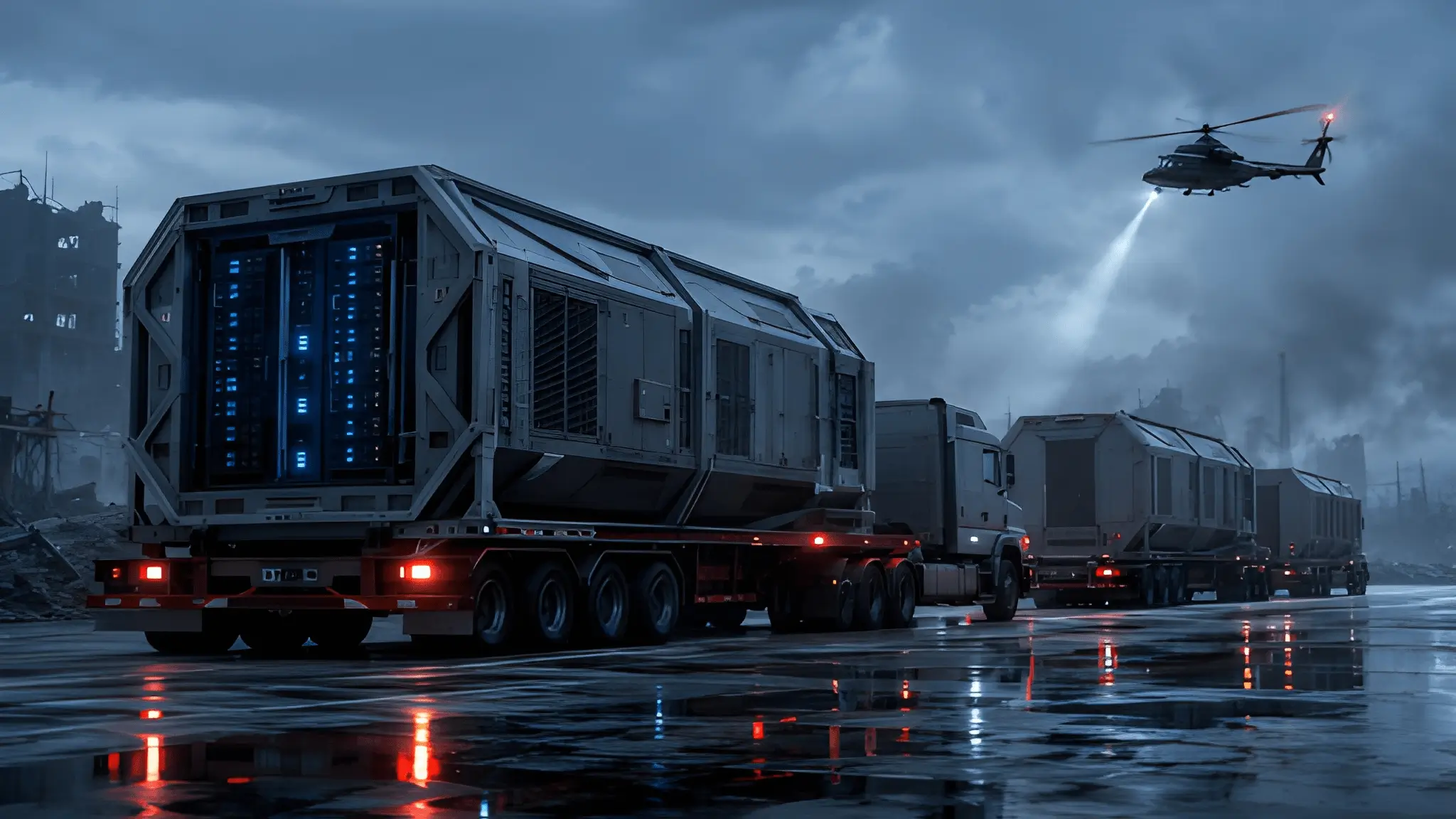
A convoy carrying temporary generators and emergency networking equipment often arrives before reconstruction crews even reach a damaged region. Inside those transport units, enterprises increasingly deploy fully integrated computing environments designed to restore digital operations without waiting for permanent facilities to recover. Regional outages caused by storms, grid instability, wildfires, or flooding now expose how slowly traditional continuity infrastructure responds during fast-moving disruptions. Conventional backup campuses still depend on fixed geography, stable utilities, and long construction timelines that rarely match the speed of modern operational failures. Portable deployment systems introduce a different recovery model where processing capacity, cooling systems, and network infrastructure can move directly toward operational demand as conditions change. Disaster recovery planning has gradually shifted away from static redundancy strategies toward infrastructure mobility capable of supporting continuity under unstable environmental conditions.
When Recovery Infrastructure Starts Showing Up on Trucks
Large outages once forced operators into prolonged restoration cycles because replacement infrastructure needed civil work, permitting, and staged procurement. Containerized computing systems now allow enterprises to transport active digital environments directly into affected locations with integrated cooling, networking, and backup power already installed. Emergency deployment teams can establish temporary processing capacity near damaged facilities without waiting for reconstruction schedules to stabilize regional access conditions. Several modular vendors already design transportable environments that operate inside ISO container footprints with redundant infrastructure layers prepared before shipment begins. Field deployment strategies reduce downtime because technicians spend less time assembling fragmented hardware stacks across damaged operating environments. Enterprises increasingly evaluate recovery speed through logistics readiness instead of focusing only on secondary facility ownership costs.
Truck-based continuity systems also change how operators prioritize staffing and operational sequencing after infrastructure failures occur across metropolitan regions. Recovery teams can position processing capacity close to hospitals, industrial plants, logistics hubs, or emergency response networks without relying on surviving commercial real estate inventory. Some modular platforms are designed for rapid deployment because cooling, rack integration, fire suppression, and power management systems arrive preconfigured before deployment begins.Transportability creates a practical advantage during severe weather events because organizations can relocate equipment away from expanding risk zones before additional failures emerge. Temporary infrastructure positioning also supports continuity planning for ports, mining operations, and energy facilities operating far from traditional colocation ecosystems. Regional disruption response becomes less dependent on rebuilding damaged buildings when computing environments themselves can relocate rapidly across operational territories.
Why Backup Sites No Longer Need Permanent Addresses
Traditional recovery architecture depended on geographically separated campuses that mirrored production environments through expensive redundancy investments and long-term lease commitments. Many enterprises now face situations where regional risk patterns can shift faster than traditional infrastructure planning cycles accommodate operational flexibility.Mobile continuity systems allow operators to establish backup environments wherever exposure levels increase instead of maintaining underused secondary facilities for decades. Temporary deployment capability matters because modern outages increasingly involve power instability, wildfire corridors, water stress, and transportation interruptions affecting entire infrastructure clusters simultaneously. Redeployable computing units also reduce capital lock-in because organizations can reposition infrastructure according to evolving operational priorities across multiple territories. Recovery planning in some sectors has gradually expanded beyond fixed geographic duplication toward more adaptable deployment capacity capable of moving between risk environments.
Enterprise continuity teams also recognize that static recovery campuses often remain idle while consuming land, energy, maintenance budgets, and security resources year after year. Portable deployments provide an alternative model where organizations activate infrastructure only when operational conditions justify temporary regional capacity expansion. Some systems support edge processing, localized analytics, and secure communications without requiring permanent utility integration or conventional building construction timelines. Dynamic deployment strategies also support regulatory compliance during emergency operating periods because enterprises can restore local processing capabilities closer to affected customers and facilities. Flexible continuity environments reduce exposure to stranded infrastructure investments created by rapidly changing regional climate and utility conditions. Recovery infrastructure no longer needs a permanent postal address when mobility itself becomes part of operational resilience strategy.
The Rise of ‘Deploy-and-Leave’ Digital Infrastructure
Temporary computing environments now support operational continuity scenarios extending far beyond traditional disaster recovery frameworks and emergency response operations. Industrial shutdowns, remote construction projects, seasonal logistics surges, and temporary manufacturing expansions increasingly require short-duration processing capacity near evolving operational zones. Deployable infrastructure allows enterprises to establish secure processing environments without committing to permanent data center development across uncertain business conditions. Ruggedized modular systems already support remote installations exposed to vibration, temperature extremes, dust accumulation, and unstable environmental conditions. Operators gain flexibility because infrastructure can remain onsite during high-demand periods before redeployment begins toward the next operational requirement. This approach can improve infrastructure utilization by aligning deployment duration more closely with business demand cycles instead of relying entirely on fixed construction assumptions.
Crisis response environments also benefit from deploy-and-leave computing strategies because temporary field operations often require localized processing capacity near unstable operating zones. Emergency coordination teams, medical deployments, energy restoration crews, and infrastructure contractors increasingly depend on resilient communications systems during restoration periods lasting several weeks or months. Mobile computing environments can support satellite connectivity, localized storage, analytics workloads, and operational monitoring without requiring traditional facility construction near affected areas. Certain portable systems already integrate security controls, environmental hardening, and autonomous operational monitoring within compact transportable footprints designed for rapid deployment. Organizations reduce recovery friction because infrastructure arrives as a pre-engineered operational environment instead of a collection of disconnected hardware components requiring onsite integration. Digital continuity increasingly depends on deployment agility rather than ownership of oversized permanent recovery campuses located hundreds of kilometers away from operational disruption zones.
Why Fixed Recovery Sites Are Becoming a Climate Liability
Climate volatility has complicated the long-standing assumption that geographic separation alone guarantees continuity during major infrastructure disruptions and regional emergencies. Secondary campuses now face the same categories of environmental exposure affecting primary facilities, including flooding, wildfire smoke, grid instability, drought restrictions, and transportation interruptions. Operators cannot easily predict which regions will remain consistently stable across the lifespan of expensive recovery infrastructure investments extending several decades into the future. Fixed recovery campuses also require continuous utility availability even during periods when organizations never activate their standby processing environments. Movable infrastructure strategies offer greater adaptability because enterprises can reposition digital capacity away from escalating environmental exposure zones before conditions deteriorate further. Resilience planning increasingly prioritizes operational flexibility instead of permanent geographic redundancy as climate pressures reshape infrastructure reliability assumptions.
Insurance exposure also influences continuity planning because severe weather events continue increasing infrastructure repair costs across multiple industrial sectors worldwide. Permanent secondary facilities create concentrated asset exposure that organizations cannot easily relocate after regional climate conditions change substantially over time. Portable computing systems can help reduce concentration risk by allowing infrastructure owners to distribute deployments more dynamically according to seasonal operational forecasts and regional threat analysis. Some modular platforms already operate across extreme temperature ranges while supporting hardened deployment conditions unsuitable for conventional construction approaches. Enterprises gain strategic flexibility because redeployment decisions can follow changing environmental intelligence instead of waiting for infrastructure replacement cycles lasting many years. Recovery architecture in some environments is beginning to incorporate more movable operational capacity alongside traditional fixed backup campuses tied to specific regions.
Disaster Recovery Is Quietly Becoming an Infrastructure Mobility Game
Traditional continuity metrics focused heavily on redundancy depth, mirrored storage environments, and distant failover facilities connected through dedicated networking infrastructure. Modern disruption patterns are encouraging organizations to place greater value on transport logistics, deployment timing, autonomous operations, and environmental adaptability across unstable operating conditions. Organizations increasingly evaluate continuity investments according to how quickly infrastructure can arrive, activate, relocate, and scale during emergency operating scenarios. Portable systems compress deployment schedules because integrated power, cooling, monitoring, and security systems undergo factory integration before transportation begins toward operational sites. Logistics coordination now carries similar strategic importance as compute density because recovery success depends heavily on physical infrastructure mobility during regional disruptions. Mobility has gradually become a more important consideration within many enterprise resilience planning frameworks.
Transportable continuity environments also align closely with distributed computing trends shaping industrial digitization, edge processing, and remote operational automation across several sectors. Enterprises increasingly require localized processing capacity near manufacturing facilities, transportation corridors, energy assets, and temporary operational zones where permanent construction remains impractical. Modular deployment strategies support that requirement by delivering scalable computing environments capable of operating close to evolving business activity patterns. Recovery planning now overlaps with broader infrastructure strategy because the same movable systems can support crisis response, temporary expansion, remote analytics, and operational continuity simultaneously. Organizations that invest in deployable digital capacity often gain broader operational flexibility beyond emergency restoration requirements alone. Continuity economics increasingly reward organizations capable of moving infrastructure efficiently instead of simply duplicating infrastructure permanently across distant regions.
The Future Recovery Site Might Already Be in Transit
Enterprise resilience planning has entered a period where construction speed no longer defines the practical limits of recovery readiness across complex operating environments. Transportable computing environments are allowing some organizations to treat continuity infrastructure as movable operational capacity instead of relying entirely on static real estate tied permanently to single locations. That shift changes how enterprises evaluate downtime exposure, capital allocation, infrastructure utilization, and regional risk concentration across distributed operations. Mobile deployment capability creates measurable operational advantages because organizations can reposition digital infrastructure according to evolving disruption patterns and temporary continuity requirements. Recovery strategies built around rapid deployment also support broader operational adaptability across industrial expansion projects, edge processing environments, and temporary infrastructure demands. The next generation of resilience planning may place greater emphasis on rapidly deployable replacement capacity alongside traditional rebuilding strategies for damaged facilities.