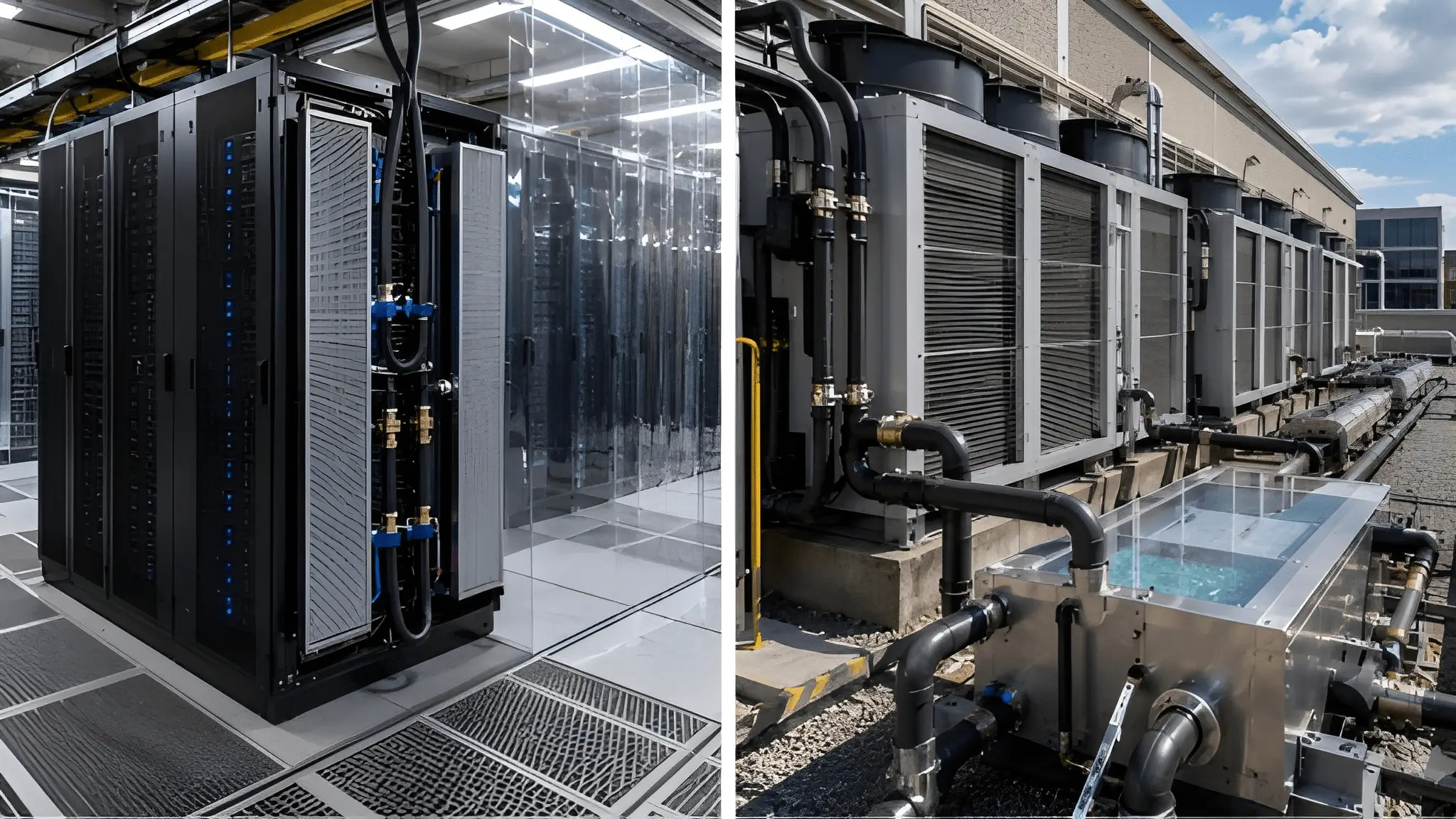
A surprising number of data centers that support modern digital services were never designed for the thermal realities they now face. Their walls, electrical rooms, loading docks, and network connections remain valuable assets, yet their cooling architectures belong to a different era of computing density. Operators increasingly discover that replacing an entire facility often creates more disruption than value when existing infrastructure still offers years of useful service. The challenge no longer centers on whether an older facility can survive, but whether it can adapt economically to rising rack power requirements. Market conditions continue to reward facilities that increase capacity quickly without waiting years for greenfield construction cycles. Many organizations now view cooling-led upgrades as a practical pathway for extending operational life while improving performance and financial returns.
The conversation around infrastructure modernization has gradually shifted away from demolition and replacement strategies toward selective reinvestment. Existing buildings already possess utility access, fiber connectivity, permits, transportation links, and operational histories that often take years to recreate elsewhere. Operators increasingly evaluate how thermal bottlenecks can be addressed while preserving existing utility access, network connectivity, and facility infrastructure. Rear-door heat exchangers, containment systems, and liquid-assisted cooling technologies are commonly deployed as retrofit options within existing data center environments. These approaches can increase cooling capacity and support higher-density deployments without requiring complete facility reconstruction. Existing sites often provide advantages such as established power connections, fiber routes, and operational continuity that are difficult to replicate quickly. Many retrofit projects focus on maximizing the value of those assets while adapting facilities to changing workload requirements. This approach has contributed to broader industry interest in brownfield modernization programs centered on cooling infrastructure.
The Hidden Lease Clause That’s Killing Your Retrofit ROI
Many retrofit initiatives encounter obstacles long before equipment arrives at a loading dock or a contractor enters a white space. Depending on facility ownership structures, lease agreements may contain provisions that were written around the operational requirements that existed when the facility was first occupied. Floor loading limits, mechanical modification approvals, and shared-building obligations can become relevant during retrofit planning activities. Rear-door heat exchangers, supplemental pumping systems, and containment infrastructure may require review because they introduce changes to equipment layouts or supporting systems. Building owners and facility managers often evaluate whether proposed modifications align with structural, mechanical, and operational requirements. Project teams therefore review contractual and facility conditions alongside engineering assessments before implementation begins. Early identification of these requirements helps establish realistic project scopes and timelines. Financial projections can deteriorate rapidly when project teams discover contractual limitations late in the planning process.
Older service-level agreements present another challenge because they frequently define environmental parameters using outdated cooling expectations. Tenants and landlords may interpret temperature ranges, airflow delivery methods, and maintenance responsibilities differently when retrofit projects begin. Successful operators often conduct legal and engineering reviews simultaneously to identify conflicts before procurement activities start. Early engagement with property owners creates opportunities to renegotiate terms that align with current operational realities. Some agreements can accommodate modernization through amendments that recognize efficiency improvements and capacity enhancements. Consequently, organizations that review contractual requirements during the planning stage can identify approval processes, operational obligations, and modification constraints before retrofit work begins.
Raised-floor environments have supported data center cooling strategies for decades, yet many facilities no longer operate according to their original airflow assumptions. Years of equipment additions, cable installations, and operational modifications often transform underfloor spaces into highly inefficient air distribution networks. Engineers frequently discover that theoretical airflow maps differ significantly from actual delivery patterns measured at rack level. Cooling units may generate adequate airflow volumes while critical equipment still experiences localized thermal stress. Traditional monitoring approaches often fail to identify these hidden inefficiencies because aggregate temperature readings appear acceptable. Capacity planning becomes unreliable when airflow behavior no longer matches facility documentation.
Cable congestion remains one of the most common causes of airflow degradation in aging facilities undergoing modernization efforts. Legacy fiber routes, abandoned copper pathways, and undocumented infrastructure changes frequently obstruct airflow channels beneath raised floors. Containment retrofits can amplify these weaknesses because they expose airflow imbalances that previously remained hidden within mixed-air environments. Detailed airflow assessments often reveal dead zones where conditioned air struggles to reach high-density equipment clusters. Thermal imaging and computational fluid dynamics studies increasingly help operators identify these constraints before investing in major upgrades. However, successful containment projects depend on correcting airflow distribution problems rather than simply enclosing existing layouts.
The Insurance Blind Spot in Old Buildings
Insurance considerations rarely dominate early retrofit discussions, yet they can influence project economics in significant ways. Many older facilities entered service before containment systems and liquid-assisted cooling technologies became common operational practices. Underwriters therefore evaluate modernization projects through a risk framework that may not reflect current engineering standards. Questions frequently emerge regarding leak detection systems, water management controls, maintenance procedures, and equipment protection strategies. Insurers often seek evidence that modernization efforts reduce operational risk rather than introduce new vulnerabilities. Documentation quality can become as important as the technology itself during policy evaluations.
Fire protection compliance presents another area where modernization projects require careful coordination with insurance providers and regulatory authorities. Containment structures may alter airflow behavior during emergency events and influence smoke management strategies within existing buildings. Operators introducing liquid-based technologies must demonstrate how monitoring systems detect anomalies and support rapid response procedures. Engineering assessments often help establish confidence by documenting design controls and operational safeguards. Retrofit programs frequently incorporate enhanced monitoring, leak detection, operational controls, and updated safety procedures to demonstrate risk-management measures during insurance reviews. Therefore, organizations that integrate insurance planning into project development frequently uncover opportunities to strengthen both resilience and financial performance.
Cooling discussions traditionally focus on temperature control, energy efficiency, and capacity expansion, yet acoustic performance has emerged as an increasingly important consideration. Higher-density deployments often require more aggressive airflow management and larger volumes of mechanical activity within operational environments. Rear-door heat exchanger installations can alter sound profiles by changing airflow characteristics around equipment rows. Occupants located near technical spaces may notice changes in ambient noise levels even when thermal performance improves substantially. Tenant complaints sometimes appear only after projects become operational, creating challenges that project teams did not anticipate. Acoustic analysis now plays a larger role in modernization planning than many operators expected a decade ago.
Acoustic treatments can help address operational noise while maintaining cooling objectives when they are incorporated into retrofit planning. Engineers commonly evaluate enclosure materials, airflow pathways, equipment placement, and vibration management as part of acoustic assessments. These evaluations help identify potential noise sources associated with higher-density cooling environments. Design teams that address acoustic considerations during project development can better understand how modernization efforts may affect surrounding occupied spaces. Acoustic performance has become an additional design consideration in facilities that share space with office, operational, or commercial environments. Project teams increasingly evaluate these factors alongside thermal performance during retrofit planning.
The Resale Story: Making Brownfield Look Green to Investors
Investment narratives surrounding infrastructure assets continue to evolve as buyers place greater emphasis on efficiency, resilience, and sustainability outcomes. A modernized facility with documented thermal improvements often attracts attention from investors seeking operational enhancements without development risk. Cooling retrofits provide measurable evidence of performance improvements through energy consumption reductions, increased rack density support, and enhanced operational flexibility. These characteristics can strengthen valuation discussions by demonstrating a pathway to future revenue growth. Investors frequently prefer assets with clear modernization histories because they reduce uncertainty regarding future capital expenditure requirements. The ability to quantify performance improvements becomes a valuable component of the asset story.
Environmental reporting frameworks also influence how buyers evaluate upgraded facilities in competitive markets. Modernization projects that improve efficiency metrics and optimize infrastructure utilization can support broader sustainability objectives. Operators increasingly document energy performance changes and operational improvements to create a transparent record for prospective investors. Thermal modernization often becomes part of a larger narrative that positions an asset as adaptable to future workload requirements. Documented modernization programs provide prospective buyers and investors with information about facility upgrades, operational changes, and infrastructure conditions over time. Furthermore, retrofit programs that extend facility life can align with investment strategies focused on maximizing existing resources rather than pursuing extensive new construction.
The assumption that aging facilities must eventually surrender to newer developments overlooks the adaptability embedded within many established sites. Existing buildings often possess strategic advantages that remain difficult and expensive to replicate through greenfield development programs. Cooling-led modernization initiatives provide a mechanism for unlocking additional capacity while preserving those advantages. Rear-door heat exchangers, containment strategies, and liquid-assisted technologies allow operators to address thermal limitations with targeted interventions. Engineering teams increasingly approach modernization as a method of restructuring facility economics rather than simply replacing equipment. The result is a practical framework for extending operational relevance in an environment defined by rising compute density.
Brownfield modernization represents a strategic decision that balances infrastructure realities with market demands for speed, efficiency, and scalability. Organizations that evaluate contractual constraints, airflow limitations, insurance considerations, acoustic impacts, and investment narratives gain a broader understanding of retrofit value. Successful projects rarely depend on a single technology because they combine engineering, operational, financial, and regulatory perspectives into one coordinated effort. The strongest modernization programs treat cooling systems as enablers of long-term business performance rather than isolated mechanical upgrades. As computing requirements continue to evolve, older facilities can remain competitive when operators align thermal infrastructure with contemporary operational needs. In that context, modernization becomes less about preserving the past and more about preparing existing assets for the next generation of digital demand.