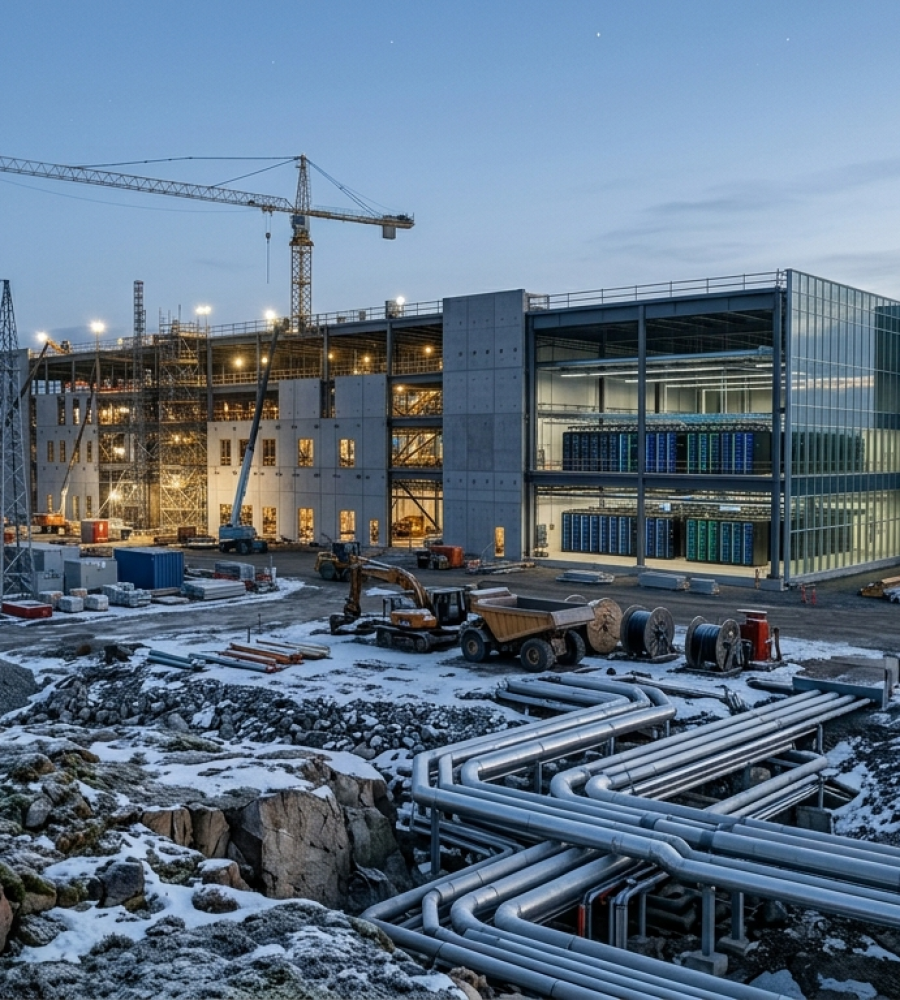

Infrastructure procurement processes commonly evaluate performance, capacity, availability, and deployment timelines as key decision criteria for technology investments. Procurement teams compare GPU availability, model throughput, and rack density before they assess anything related to sustainability disclosures. That sequence worked reasonably well when enterprise workloads remained predictable and infrastructure growth followed established power planning assumptions. GPU-accelerated computing substantially increases electricity demand compared with many traditional enterprise workloads because accelerator systems operate at significantly higher power densities. Facilities built around older thermal and electrical design assumptions now influence corporate reporting outcomes in ways that rarely appear during infrastructure procurement reviews. When governance teams finally examine the environmental footprint of accelerated computing programs, they frequently discover that facility efficiency has become a financial variable rather than an operational detail.
AI infrastructure decisions increasingly connect operational technology with corporate disclosure obligations. Regulators, investors, customers, lenders, and sustainability assessors all seek evidence that energy-intensive digital growth aligns with publicly stated environmental commitments. A deployment strategy that appears successful from a compute perspective can produce unexpected consequences when electricity consumption enters emissions reporting frameworks. Air-cooled accelerator deployments often expose those tensions because cooling systems account for a significant share of facility energy consumption. Legacy facilities can support advanced hardware from a technical standpoint while simultaneously creating reporting challenges that did not exist when the buildings were originally designed. As AI adoption expands across industries, infrastructure efficiency increasingly determines whether growth strengthens or weakens sustainability performance indicators.
Your 2026 ESG Report Has a 2012 Problem
Power Usage Effectiveness remains one of the most widely used indicators for evaluating data center energy efficiency. The metric measures total facility energy divided by the energy consumed directly by IT equipment, meaning lower values indicate more efficient infrastructure. A facility operating at 1.8 PUE requires substantially more supporting energy than a facility operating at 1.2 PUE to deliver the same amount of computing output. GPU-intensive workloads amplify the difference because the underlying IT load increases dramatically. Air-cooled accelerator environments often push cooling systems, airflow management systems, and electrical infrastructure harder than facilities originally designed for lower rack densities. What appears as a historical design decision can therefore become a multiplier across every sustainability metric connected to electricity consumption.
A CFO reviewing annual sustainability disclosures may see rising emissions intensity despite purchasing renewable energy certificates, modern servers, and efficient accelerators. The explanation frequently sits inside facility-level overhead rather than the hardware itself. NVIDIA specifies that H100 SXM configurations can operate at thermal design power levels up to 700 watts per GPU, creating substantial infrastructure demands when deployed at scale. A cluster containing hundreds of accelerators increases cooling requirements, power distribution losses, and facility support energy alongside the compute load. Consequently, emissions calculations tied to purchased electricity can rise faster than infrastructure planners initially expected. Sustainability reporting frameworks require organizations to disclose energy consumption and associated emissions metrics, making facility-level energy performance directly relevant to formal environmental reporting.
Carbon Credits: The Penalty One Didn’t Budget
Consider a deployment of 100 H100 SXM accelerators operating at their maximum rated thermal design power of 700 watts. The direct IT load equals approximately 70 kilowatts before accounting for CPUs, networking, storage, and supporting systems. Running continuously for a full year produces roughly 613,200 kilowatt-hours of IT energy consumption. A facility operating at 1.2 PUE would require approximately 735,840 kilowatt-hours of total facility energy to support that workload. A facility operating at 1.8 PUE would require approximately 1,103,760 kilowatt-hours for the same computational output. The difference exceeds 367,000 kilowatt-hours annually despite identical business outcomes and identical hardware investments.
That energy gap becomes relevant when organizations offset residual emissions through carbon credit programs or similar mitigation mechanisms. The exact financial impact depends on local grid carbon intensity and prevailing credit prices, both of which vary significantly by geography and market conditions. Nevertheless, the relationship remains straightforward because higher facility overhead increases purchased electricity consumption. Every additional unit of electricity consumed by inefficient infrastructure expands the emissions footprint attributed to the workload. Therefore, sustainability budgets can absorb costs that infrastructure procurement teams never modeled during deployment planning. Facility efficiency directly affects electricity consumption, which in turn influences the emissions footprint and any associated carbon management or offsetting requirements tied to that energy use.
Raised Floors, Lower Scores
Data centers constructed during the era of 5kW to 10kW rack assumptions reflected a very different operating environment. Cooling architecture, airflow management, power distribution design, and white-space layouts targeted enterprise workloads that produced far lower thermal densities than current AI clusters. Those design choices remain visible today in facilities that continue operating successfully from a reliability standpoint. Yet sustainability assessments increasingly evaluate operational outcomes rather than facility age alone. Higher overhead energy consumption affects the evidence organizations provide to customers, auditors, and ratings agencies. Infrastructure that remains technically functional can therefore create disadvantages during environmental performance evaluations.
Third-party sustainability frameworks increasingly emphasize measurable performance, documented governance processes, and demonstrable results. EcoVadis, for example, evaluates sustainability management systems using evidence-based approaches that require organizations to substantiate claims with supporting documentation and metrics. Customers conducting supplier assessments often request information about emissions management, energy consumption, and environmental performance controls. A facility operating with elevated overhead energy requirements can make those conversations more difficult, even when service quality remains strong. Moreover, AI deployments attract additional scrutiny because stakeholders recognize the growing energy demands associated with accelerated computing. Facility efficiency therefore becomes part of a broader narrative about operational discipline and sustainability execution.
Stranded Compliance: When ‘Green’ Marketing Meets Facility Reality
Marketing teams increasingly promote offerings as sustainable, environmentally responsible, or optimized for efficient AI operations. Those claims often originate from genuine investments in renewable procurement, modern hardware, and operational improvements. Problems emerge when public messaging emphasizes outcomes that facility performance data cannot consistently support. Customers conducting due diligence frequently request energy metrics, emissions information, infrastructure specifications, and sustainability documentation before signing major contracts. Procurement and sustainability assessment processes frequently rely on documented operational metrics, making consistency between reported performance and public sustainability claims an important consideration. Governance frameworks and sustainability assessment methodologies place emphasis on documented evidence and measurable performance, increasing the importance of aligning public claims with operational data.
Cloud providers, colocation operators, managed service firms, and enterprise infrastructure vendors increasingly compete on sustainability credentials alongside technical capabilities. Many enterprise procurement programs and supplier sustainability assessments evaluate environmental reporting practices alongside operational and commercial criteria. However, a facility with persistent efficiency limitations may struggle to support aggressive environmental positioning without extensive qualification and context. Customer audits often examine operational evidence rather than promotional language. Meanwhile, legal, compliance, and investor relations teams prefer claims that can withstand independent verification under scrutiny. Misalignment between branding and infrastructure realities creates risk because expectations rise faster than measurable performance improvements.
Board Decks Don’t Lie, But Facilities Do
Executive presentations frequently describe AI initiatives using metrics such as productivity gains, revenue opportunities, customer experience improvements, and competitive positioning. Infrastructure assumptions often remain hidden several layers below strategic discussions because directors rarely evaluate cooling architectures or airflow containment systems. Yet facility efficiency directly influences operating expenditure, emissions intensity, and sustainability performance. Growing attention to AI-related electricity consumption has increased scrutiny of how organizations plan for the energy requirements associated with large-scale accelerator deployments. Responses become more convincing when infrastructure efficiency aligns with strategic messaging. Conversely, elevated overhead energy consumption increases reported facility energy use and can become a relevant topic during due diligence reviews, sustainability assessments, and stakeholder evaluations.
Institutional investors increasingly evaluate environmental risk alongside operational execution and long-term growth prospects. Infrastructure efficiency may not determine investment outcomes independently, but it contributes to broader assessments of governance quality and execution discipline. When sustainability disclosures describe efficient computing strategies while facility metrics indicate significant energy overhead, stakeholders naturally seek clarification. Due diligence processes often examine whether reported outcomes align with operational realities. Furthermore, AI deployments attract heightened attention because of their substantial power requirements and visibility within corporate strategy discussions. Infrastructure decisions increasingly affect corporate disclosures, sustainability reporting, operating costs, and energy consumption metrics that are reviewed by executive leadership and governance stakeholders.
The Compliance Ceiling Isn’t Technical
Organizations deploying accelerator-rich workloads into older facilities frequently evaluate power distribution capacity, cooling capability, and rack density constraints as part of deployment planning. Facility operators commonly use engineering upgrades, airflow optimization, power-system improvements, and operational controls to support higher-density computing environments. The first constraint frequently appears elsewhere because governance obligations expand alongside energy consumption. Sustainability disclosures, customer audits, supplier assessments, investor reviews, and procurement questionnaires all demand evidence that infrastructure growth aligns with environmental commitments. As AI adoption accelerates, those obligations become more frequent and more detailed. Disclosure obligations, sustainability assessments, and customer reporting requirements can expand alongside energy consumption regardless of whether a facility has reached its maximum installed power capacity.
Infrastructure buyers evaluating dense accelerator deployments should assess facility efficiency with the same rigor applied to hardware specifications and software architecture decisions. Site selection reviews should examine energy overhead, cooling efficiency, reporting implications, emissions exposure, and future disclosure requirements before contracts receive approval. Financial models should account for operational energy consumption rather than focusing exclusively on equipment acquisition costs. Customer-facing sustainability commitments should reflect measurable infrastructure realities instead of aspirational assumptions. Ultimately, governance risk now sits alongside power, cooling, and capacity as a primary factor in AI infrastructure planning. Organizations that recognize that shift early gain greater flexibility in both compliance management and long-term growth execution.