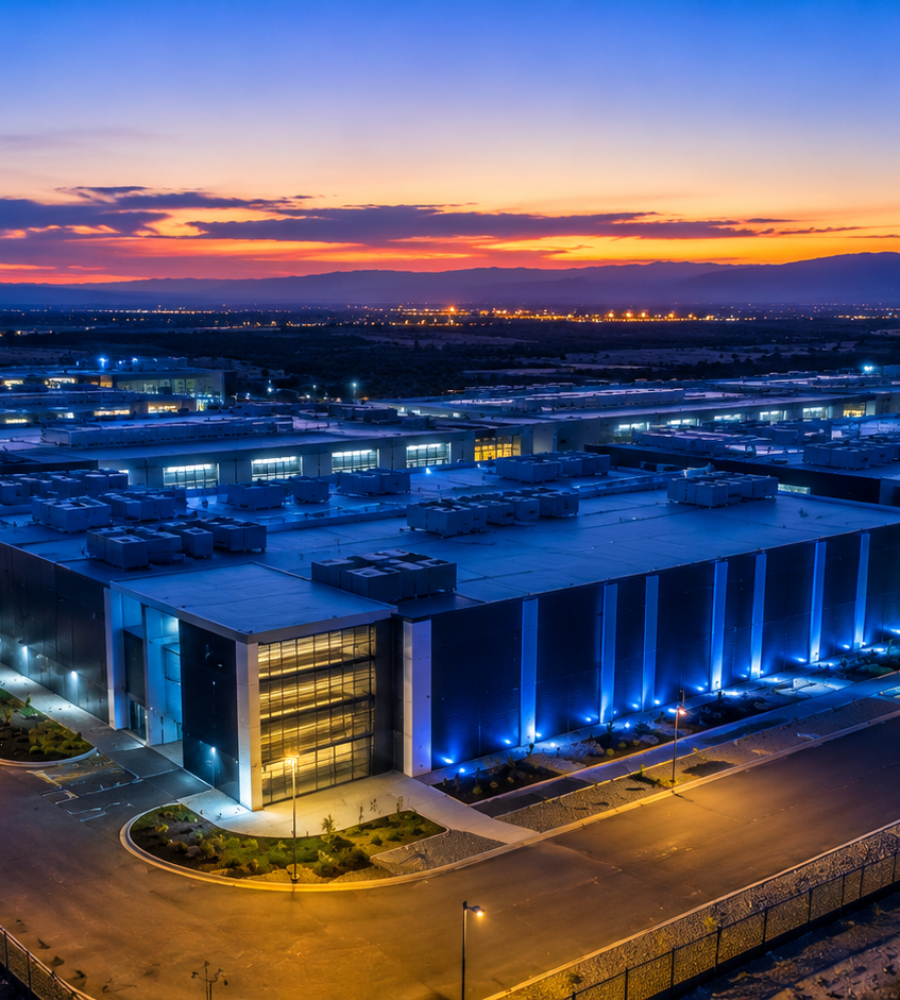

AI infrastructure economics now revolve around something far more physical, scarce, and geographically concentrated than traditional cloud resources ever were. GPU clusters are increasingly being treated as strategically valuable infrastructure environments where allocation timing and availability can influence competitive deployment advantages. Large language model training pipelines, inference latency targets, and multimodal deployment systems increasingly depend on proximity to dense interconnect ecosystems rather than broad cloud availability. Capacity competition inside neocloud platforms has pushed operators toward territory-style allocation strategies that resemble commercial leasing structures across high-demand urban markets. AI companies no longer evaluate compute purely through price-per-hour calculations because allocation certainty, regional availability, and infrastructure adjacency now influence deployment viability itself.
The expansion of neocloud providers has introduced a different infrastructure philosophy from the generalized cloud abstraction models established during earlier enterprise computing cycles. Dedicated GPU operators now organize infrastructure around concentrated accelerator pools that attract specific categories of AI workloads seeking predictable scaling behavior. Investors and infrastructure operators increasingly evaluate high-density GPU deployments as long-term infrastructure assets that can generate recurring revenue through reservation contracts and dynamic allocation models. Some operators prioritize interconnect topology optimization while others focus on regional inference demand aggregation near high-consumption markets. This shift has contributed to infrastructure environments where compute locality can influence application performance more significantly than in many traditional enterprise cloud deployments. AI infrastructure is increasingly developing into regionally concentrated compute ecosystems where geographic positioning carries operational and financial significance beyond hardware ownership alone.
GPU Access Is Becoming Location Locked
GPU availability no longer behaves as a universally accessible cloud utility because regional concentration patterns increasingly determine which workloads can scale efficiently.Several neocloud providers are expanding infrastructure deployments in regions with strong energy reliability, dense fiber connectivity, and established accelerator supply chains. AI companies deploying large inference systems often discover major latency differences depending on whether workloads operate near mature interconnect ecosystems or fragmented regional clusters. Several operators now reserve advanced accelerator inventories for specific geographic markets where enterprise demand guarantees sustained utilization rates across expensive deployments. Geographic GPU concentration also affects east-west traffic efficiency inside distributed training systems that depend heavily on low-latency communication between nodes. Infrastructure locality has consequently evolved into a competitive operational variable rather than a background deployment consideration hidden beneath generalized cloud abstraction layers.
The strongest neocloud regions increasingly function like digital industrial zones where infrastructure adjacency produces measurable performance advantages for AI deployment pipelines. High-density GPU clusters located near mature carrier exchanges often support faster checkpoint synchronization, more stable distributed training behavior, and lower inference routing overhead across active deployments. Model builders seeking reliable scaling patterns frequently migrate workloads toward infrastructure territories where accelerator density already supports established orchestration ecosystems. Regional specialization has also intensified because some markets prioritize inference optimization while others concentrate heavily on large-scale model training environments. Certain providers now market regional availability itself as a premium capability because local compute scarcity can dramatically affect deployment timelines for fast-growing AI startups. Meanwhile, geographic concentration can create new forms of infrastructure dependency where access to established accelerator ecosystems influences deployment flexibility across multiple AI product categories.
The Rise of Reserved Compute Economies
Reserved compute allocation has become one of the defining financial layers inside modern neocloud ecosystems because demand volatility regularly exceeds immediately deployable accelerator inventory. AI companies training production-scale models increasingly purchase long-duration reservation contracts to avoid operational disruption during sudden market demand spikes. Guaranteed GPU access now carries growing strategic value for organizations managing large-scale AI deployment and training operations. Neocloud operators use reservation structures to stabilize revenue forecasting while customers secure predictable scaling environments for expensive development cycles. Reserved allocation markets also help providers prioritize infrastructure planning because committed utilization contracts reduce uncertainty around future cluster expansion requirements. Capacity guarantees have gradually transformed from optional enterprise conveniences into essential operational safeguards for organizations running continuous AI deployment pipelines.
Premium reservation systems have also introduced tiered infrastructure access models that increasingly separate occasional compute consumers from high-priority enterprise tenants. Providers often allocate preferred interconnect bandwidth, deployment windows, and maintenance scheduling advantages toward customers holding long-term GPU reservation agreements. Some neocloud operators now structure contracts around guaranteed accelerator classes instead of generalized compute capacity because model performance frequently depends on hardware consistency across distributed environments. Reserved allocation mechanisms additionally reduce infrastructure fragmentation by consolidating predictable demand into stable utilization corridors inside larger GPU fleets. AI startups with volatile workloads sometimes struggle to compete against enterprise buyers capable of locking substantial future capacity through advance reservation agreements. Consequently, compute access economics increasingly depend on timing, contractual commitment, and infrastructure scarcity rather than open marketplace availability alone.
Neoclouds Are Monetizing Idle Capacity Differently
Underutilized GPU windows represent a major financial inefficiency for operators managing expensive accelerator infrastructure across rapidly fluctuating AI demand cycles. Some neocloud providers now use short-duration allocation systems that redistribute temporarily unused GPU inventory toward workloads requiring immediate access. Dynamic allocation models can allow operators to monetize fragmented utilization periods that might otherwise remain inactive between larger enterprise reservations. AI developers seeking temporary training acceleration often purchase these opportunistic compute windows because they provide access to premium hardware without long contractual obligations. Dynamic scheduling systems monitor cluster activity continuously to identify deployable idle segments across geographically distributed infrastructure territories. As a result, infrastructure monetization strategies have evolved beyond static hourly pricing toward adaptive allocation ecosystems driven by real-time utilization behavior.
Neocloud operators also experiment with market-responsive pricing structures that adjust temporary GPU access costs according to congestion levels and reservation pressure across active regions. Some providers redirect overflow demand toward secondary clusters during high-traffic periods to maintain utilization continuity without expanding premium infrastructure inventories unnecessarily. Idle capacity marketplaces have become particularly valuable for experimental AI workloads that require intermittent scaling bursts rather than uninterrupted long-duration allocation commitments. Several emerging operators now differentiate themselves through orchestration systems capable of reallocating underused accelerators within extremely short scheduling intervals. Dynamic monetization frameworks additionally create revenue opportunities from infrastructure fragments that traditional enterprise cloud allocation systems rarely optimized effectively. AI infrastructure economics increasingly favor providers capable of improving utilization efficiency across expensive accelerator environments through adaptive allocation strategies.
AI Workloads Are Starting to Follow GPU Density
Deployment strategy discussions inside AI companies increasingly begin with infrastructure concentration analysis rather than generalized multi-region cloud flexibility assumptions. Model builders now evaluate where dense GPU ecosystems already exist before deciding how training pipelines, inference gateways, and orchestration frameworks should distribute workloads. High-density accelerator territories often attract adjacent software ecosystems that simplify deployment coordination, observability integration, and distributed scaling optimization across production environments. AI startups pursuing aggressive model iteration schedules frequently relocate operational workloads closer to mature compute corridors capable of supporting rapid scaling requirements. Dense infrastructure regions also reduce coordination overhead because engineering teams gain access to predictable hardware availability and lower deployment fragmentation across interconnected clusters. IInfrastructure concentration is increasingly influencing software placement decisions as organizations prioritize proximity to dense compute ecosystems and established accelerator availability.
The clustering effect surrounding concentrated GPU territories has started reshaping competitive dynamics across inference providers, foundation model startups, and enterprise AI deployment firms. Organizations operating near mature accelerator ecosystems may scale more efficiently because infrastructure expansion can require fewer migration events and less operational coordination across fragmented providers. Dense compute regions additionally attract networking providers, orchestration vendors, and storage optimization companies seeking proximity to sustained AI infrastructure demand. Several neocloud ecosystems now resemble digital economic zones where adjacent infrastructure services evolve around concentrated accelerator deployment activity. However, infrastructure concentration also creates systemic dependency risks because regional disruptions can affect broad categories of interconnected AI operations simultaneously. AI deployment architecture has nonetheless begun following compute gravity patterns where workload mobility increasingly depends on accelerator density rather than abstract cloud portability narratives established during earlier enterprise infrastructure eras.
The Secondary Market for AI Compute Is Quietly Expanding
A secondary economy surrounding AI compute access has started emerging as reservation scarcity pushes organizations toward alternative allocation channels outside direct provider marketplaces. GPU reselling networks now facilitate temporary allocation transfers between companies holding unused reserved capacity and organizations seeking urgent deployment access. Some infrastructure brokers specialize in aggregating fragmented GPU inventory from multiple operators before redistributing that capacity toward smaller AI development teams. Informal compute redistribution systems have appeared because many startups cannot secure long-duration reservations directly from major neocloud providers during high-demand periods. Secondary allocation markets often emphasize speed and flexibility, which can make them attractive for experimental training cycles and temporary scaling requirements. This environment has introduced a new infrastructure brokerage layer where access coordination itself generates commercial value independent of physical hardware ownership.
Brokered compute access also reflects a broader transformation in how AI infrastructure liquidity operates across modern accelerator ecosystems. Reserved GPU contracts are increasingly being treated as strategically valuable allocation assets during supply-constrained periods where infrastructure access becomes limited. Some companies acquire excess reservation capacity specifically to redistribute portions later through intermediary allocation agreements during elevated demand cycles. Secondary redistribution activity remains relatively fragmented, yet infrastructure scarcity continues encouraging more sophisticated compute trading arrangements throughout the AI deployment landscape. Operators carefully monitor these emerging behaviors because unofficial redistribution markets can influence pricing consistency and allocation forecasting inside primary reservation systems. Nevertheless, the growth of secondary compute exchanges demonstrates how AI infrastructure now carries many characteristics traditionally associated with commercial property markets, bandwidth trading ecosystems, and financialized access networks.
Neoclouds Are Turning Compute Into Digital Territory
Neocloud infrastructure no longer functions purely as an abstract extension of traditional cloud computing because accelerator concentration has changed how organizations evaluate operational scale and competitive positioning. GPU clusters are increasingly associated with strategic infrastructure positioning where allocation timing, regional concentration, and reservation access can shape deployment feasibility across modern AI systems. Infrastructure operators continue building dense compute ecosystems designed to attract adjacent workloads, orchestration platforms, and enterprise demand into self-reinforcing regional networks. AI companies seeking stable scaling environments now analyze infrastructure geography with the same intensity previously reserved for software architecture and deployment economics. Access coordination mechanisms, reservation structures, and utilization markets have become central financial layers surrounding accelerator infrastructure management. The commercial value of AI compute increasingly depends on access to concentrated GPU ecosystems rather than generalized cloud scale alone.
The next stage of AI Infrastructure competition is unlikely to be defined by hardware accumulation alone. It will increasingly depend on how efficiently capacity is allocated, how closely compute resources are positioned to adjacent infrastructure, and how mature the surrounding regional ecosystem becomes. Neocloud providers that can sustain dense accelerator footprints while keeping reservations flexible and liquid are likely to be better positioned as AI deployment demand continues to scale. Overtime reserved compute models, secondary allocation markets, and more dynamic utilization exchanges are expected to reshape how enterprises source and consume AI infrastructure. At the same time, the economics of accelerator clustering suggest that geography itself may become a critical competitive factor in large-scale AI deployment. In that sense, the internet’s newest real estate market is no longer just about domains or storage, but about control over deployable GPU capacity in the right locations.