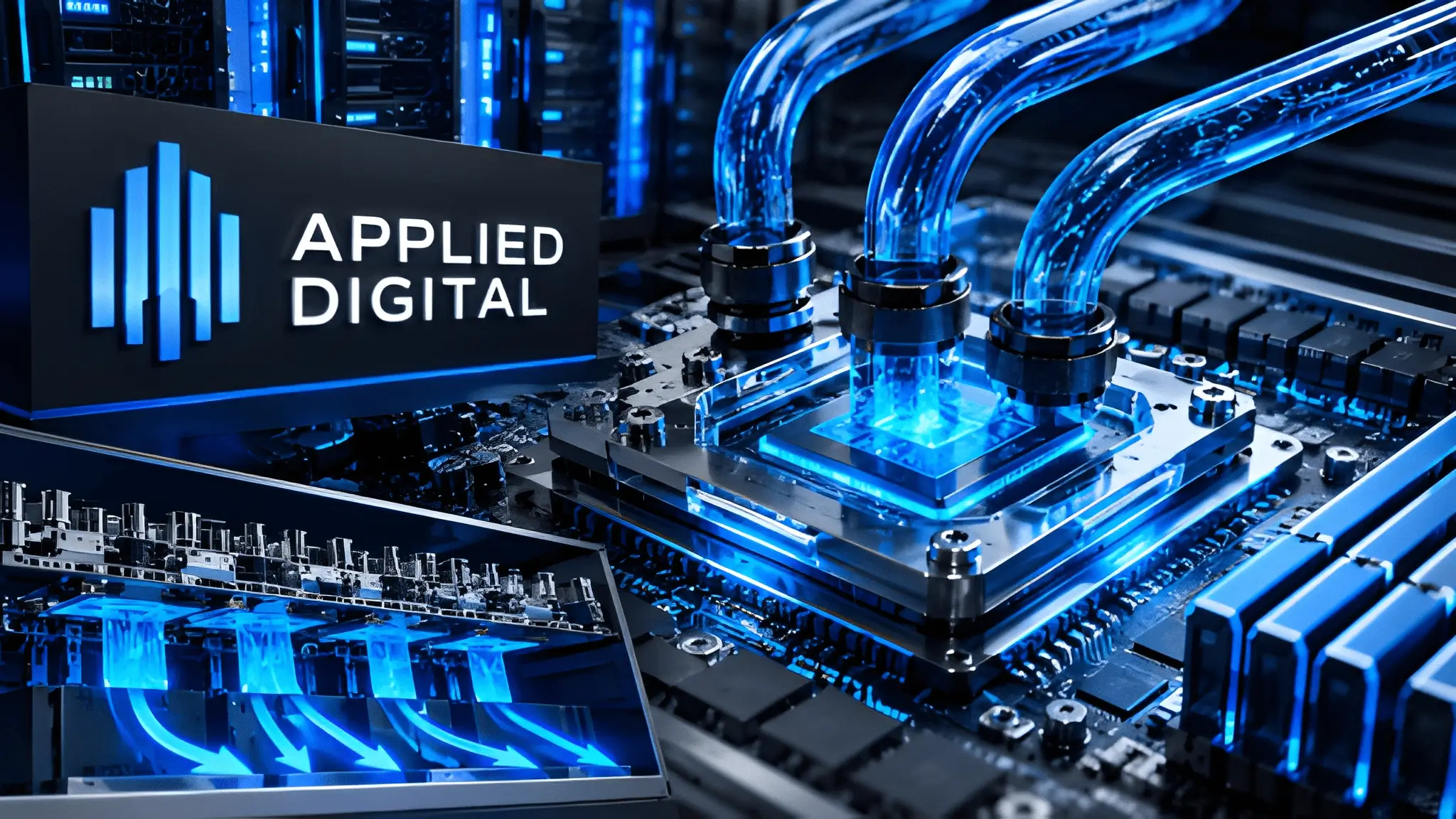
The economics of artificial intelligence infrastructure increasingly depend on something hyperscalers once treated as a secondary engineering concern: heat. As AI clusters grow larger and GPU densities rise sharply, thermal efficiency has started influencing not only hardware performance but also facility design, deployment speed, operating margins, and long-term capital planning. That shift is now reshaping competitive positioning across digital infrastructure providers, particularly among companies racing to secure hyperscale AI workloads before demand consolidates around a smaller group of technically proven operators. Applied Digital is attempting to move early into that category by aligning its expansion strategy around liquid-cooled compute infrastructure capable of supporting increasingly power-intensive AI systems.
The company’s latest moves suggest management believes cooling architecture may become one of the defining selection criteria for future hyperscale leasing decisions. Traditional air-cooling systems continue struggling under the weight of modern AI deployments, especially as next-generation GPUs consume more power and create significantly higher thermal output per rack. Operators that fail to adapt risk running into density ceilings that constrain performance and reduce infrastructure flexibility. Applied Digital has therefore started positioning liquid cooling not as an optional enhancement but as a foundational layer of next-generation AI compute economics. That strategic framing arrives at a time when hyperscalers are prioritizing infrastructure capable of supporting long-duration AI scaling without repeated redesign cycles.
Corintis Investment Signals Long-Term Thermal Infrastructure Strategy
A major component of that strategy emerged through Applied Digital’s lead $25 million investment in Corintis, a Swiss developer specializing in microfluidic direct-to-chip cooling systems. The company’s cold-plate technology reportedly achieves chip temperatures up to three times lower than conventional cold plates, potentially improving thermal stability inside dense GPU environments where heat accumulation increasingly constrains compute efficiency. More importantly, lower operating temperatures could extend infrastructure longevity as hyperscalers transition between successive chip generations, reducing the frequency and cost of cooling system overhauls. That dynamic matters because hyperscalers now evaluate infrastructure providers not only on available power capacity but also on how efficiently facilities can accommodate rapid hardware refresh cycles over multi-year contracts.
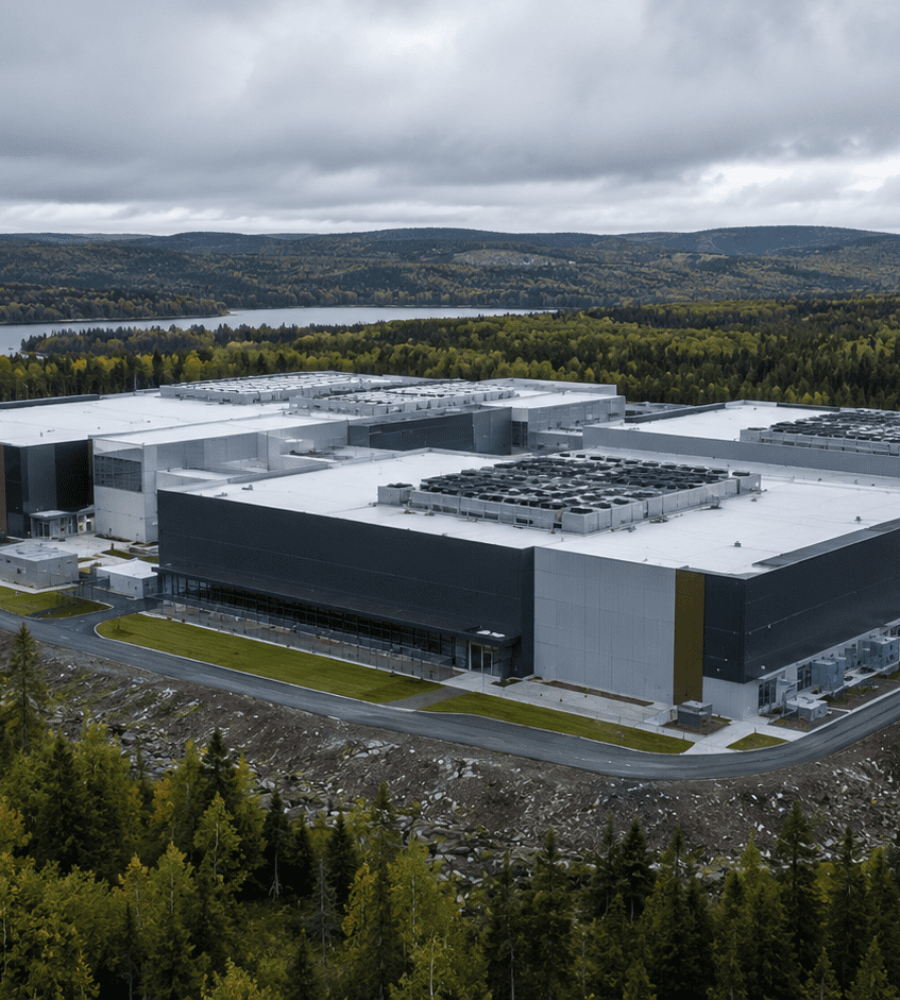
Applied Digital’s broader infrastructure rollout indicates management sees direct-to-chip cooling as commercially scalable rather than experimental. The company’s 100-megawatt Polaris Forge 1 liquid-cooled facility contributed a full quarter of lease revenues during the third quarter of fiscal 2026, while its HPC Hosting segment generated $71 million in revenue. Those numbers suggest liquid-cooled deployments are already transitioning from development-stage infrastructure into revenue-producing assets with measurable hyperscale demand. Investors are increasingly monitoring whether those early deployments can establish Applied Digital as a preferred infrastructure provider for AI tenants that require advanced thermal performance before committing to larger long-term leases.
AI Rack Density Is Redefining Hyperscale Infrastructure Economics
The underlying industry shift extends well beyond a single operator. Hyperscalers continue deploying increasingly concentrated AI clusters to improve training efficiency and accelerate inference workloads, yet higher compute density creates mounting stress across cooling, electrical distribution, and facility engineering systems. Rack power requirements that once averaged below 20 kilowatts have moved dramatically higher in AI-oriented deployments, with some advanced GPU environments now demanding several times that threshold. As a result, thermal management has become directly tied to operational continuity, energy efficiency, and infrastructure utilization rates. Companies capable of stabilizing those variables at scale may gain stronger pricing leverage as AI demand accelerates.
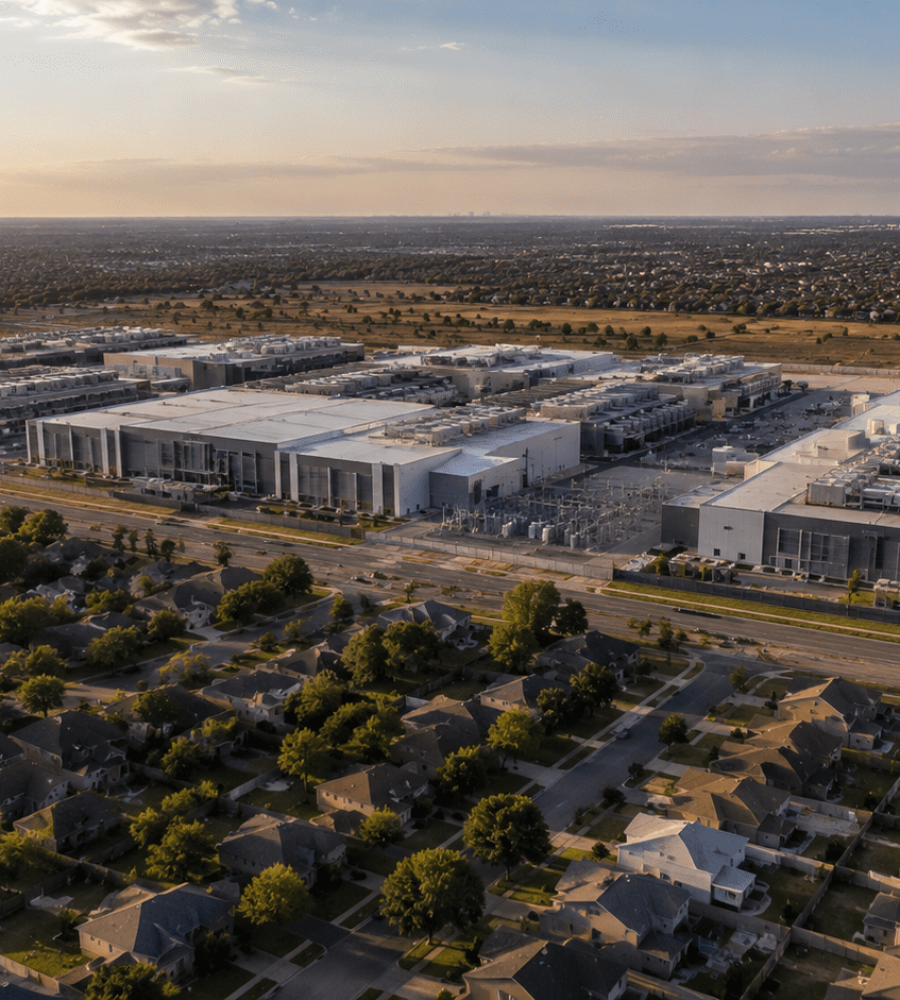
Applied Digital’s expansion pipeline illustrates the scale of that opportunity as well as the complexity attached to executing it. The company has outlined plans for several hundred megawatts of additional AI infrastructure development across multiple campuses, a buildout that would materially increase its exposure to hyperscale AI infrastructure demand. The company currently has approximately 900 megawatts under active development, a buildout that would materially increase its exposure to hyperscale AI infrastructure demand. However, scaling direct-to-chip cooling infrastructure across facilities of that size introduces considerable operational risk. Liquid-cooled environments require precise integration between thermal systems, structural engineering, power delivery, and facility controls. Even minor construction delays or commissioning problems can create downstream cost pressures that affect lease timing and margin realization. Consequently, execution discipline may become just as important as technological differentiation.
Debt Pressure Raises Importance of On-Time Facility Deployment
The balance sheet adds another layer of pressure. Applied Digital continues carrying substantial infrastructure-related debt as it accelerates AI campus expansion, meaning future financing conditions remain closely tied to successful project delivery and sustained hyperscale leasing momentum. Infrastructure investors have become increasingly selective toward companies pursuing aggressive AI expansion strategies, particularly when those strategies involve technically demanding facility designs that require substantial upfront capital. If Applied Digital successfully brings new liquid-cooled assets online according to schedule, the company could strengthen its position with both customers and lenders. Delays, however, may raise concerns around borrowing costs and long-term capital efficiency at a time when AI infrastructure financing remains highly competitive.
Wall Street expectations already reflect substantial growth assumptions tied to the company’s AI infrastructure ambitions. The Zacks Consensus Estimate projects fiscal 2026 revenue of roughly $395.4 million, representing year-over-year growth of more than 83%. Yet the next phase of upside likely depends less on headline capacity announcements and more on conversion efficiency. Investors increasingly want evidence that thermal infrastructure differentiation can accelerate leasing activity, increase utilization rates, and support premium economics compared with more traditional data center deployments. If hyperscalers continue prioritizing thermally optimized infrastructure, direct-to-chip capability could evolve from a competitive advantage into a baseline requirement for securing advanced AI workloads.
That possibility is reshaping competition across the broader AI infrastructure ecosystem. Unlike Applied Digital, which concentrates on campus-scale infrastructure environments, Super Micro Computer is targeting optimization at the server level to improve GPU density and cooling efficiency within enterprise and hyperscale deployments. The distinction highlights how thermal management is emerging simultaneously across multiple layers of the AI stack, from physical facilities to compute hardware design itself.
Super Micro Computer and IREN Intensify AI Cooling Competition
Although IREN’s positioning remains more closely aligned with compute expansion than specialized thermal optimization, the company still competes for many of the same hyperscale customers pursuing rapid AI growth. Applied Digital and Super Micro appear more directly focused on cooling efficiency as a differentiating capability, particularly as thermal constraints increasingly influence infrastructure procurement decisions. That divergence may become more important as hyperscalers evaluate whether future AI facilities can maintain operational efficiency under sustained high-performance workloads.
The broader market implications extend beyond infrastructure specialization. Direct-to-chip cooling could materially alter how hyperscalers allocate capital over the next several years because improved thermal efficiency affects energy consumption, hardware durability, and deployment flexibility simultaneously. Facilities capable of maintaining lower chip temperatures may support longer infrastructure lifecycles while reducing cooling-related power overhead. Therefore, operators that establish proven liquid-cooling expertise early could strengthen customer retention and secure deeper integration into long-term AI expansion strategies. Hyperscalers already face mounting pressure to deploy AI compute faster while controlling operating costs, making thermal performance increasingly difficult to separate from financial performance.
Thermal Management Is Starting to Reshape Hyperscale Infrastructure Economics
Applied Digital’s strategy effectively places the company at the intersection of those converging pressures. The firm is not simply building additional data center capacity; it is attempting to establish itself as a specialized provider of thermally optimized AI infrastructure at a time when hyperscalers appear willing to prioritize engineering capability over conventional colocation scale. Whether that translates into durable competitive advantage remains uncertain, particularly given the operational complexity attached to liquid-cooled facilities and the aggressive pace of infrastructure spending across the sector. Nevertheless, the company’s early positioning around direct-to-chip cooling reflects a broader industry shift in which thermal efficiency is becoming increasingly important alongside compute capacity in AI infrastructure planning.