Power lines rarely attract the same attention as sanctions packages, diplomatic summits or security agreements. Yet the quiet expansion of energy and transport infrastructure across the Gulf may reveal a more consequential shift in global influence than many policymakers acknowledge. Iran and Qatar’s discussions around electricity connectivity illustrate a broader reality taking shape across regional energy markets. The significance does not stem from the volume of power that may eventually cross a transmission line. Rather, it lies in the continued emergence of interconnected networks that create economic dependencies, operational efficiencies and strategic relationships that often outlast political cycles.
The modern energy economy increasingly rewards connectivity. Countries that become essential junctions in electricity grids, gas systems, shipping corridors and industrial supply chains can accumulate influence regardless of whether they possess overwhelming military or financial power. Infrastructure creates relevance through function. Once integrated into a network, a state can become difficult to bypass without imposing costs on participants throughout the system.
This trend challenges assumptions that have shaped Western policy discussions for years. Economic sanctions remain an important tool of statecraft. They can restrict financial activity, limit access to technology and raise transaction costs. However, their effectiveness often depends on the ability to isolate a target from critical commercial and industrial systems. Regional infrastructure projects can continue advancing through commercial agreements, technical cooperation and bilateral arrangements even when broader political disagreements remain unresolved.
Across the Gulf and wider Middle East, governments continue to pursue energy diversification strategies that rely heavily on cross-border integration. Electricity interconnections, pipeline investments, logistics corridors, industrial zones and port modernization projects increasingly serve dual purposes. They support economic development while simultaneously embedding participating countries deeper into regional operating systems. The resulting networks create their own logic. Commercial operators prioritize reliability, efficiency and cost management. Industrial users seek stable access to energy and transportation capacity. Utilities require redundancy and resilience. Once these relationships mature, political objectives often compete with practical operational considerations. That does not mean politics disappears. It means infrastructure introduces another layer of incentives that policymakers must account for.
Networks Often Expand Faster Than Geopolitical Narratives
The international discussion surrounding energy security frequently focuses on supply volumes. Oil production targets, liquefied natural gas exports and renewable deployment figures dominate headlines. Yet the structure connecting those assets may become equally important. A power station generates electricity. A transmission network determines where that electricity can create value. Similarly, natural gas reserves matter. Pipelines, export terminals and transportation routes determine how those reserves influence regional markets.
The distinction is increasingly important because infrastructure networks possess characteristics that differ from traditional geopolitical relationships. Infrastructure networks are commonly designed to improve efficiency, reliability and operational resilience, while also reflecting regulatory, security and political considerations. They reward participation. They often expand incrementally through technical agreements rather than headline-grabbing diplomatic initiatives. As a result, influence can accumulate quietly.
A country that serves as a transit corridor, balancing hub or interconnection point may gain strategic relevance even when broader political tensions persist. Market participants frequently evaluate counterparties according to operational necessity rather than ideological alignment. This dynamic has appeared repeatedly across global energy systems. Energy markets historically developed around practical considerations such as geography, resource availability and transportation economics. Political objectives shaped outcomes, but commercial realities often determined how infrastructure evolved.
Gulf governments continue to expand investments in cross-border energy, logistics and industrial infrastructure as part of broader economic development strategies. Regional governments continue investing in large-scale industrial transformation programs designed to support future economic growth. These initiatives require dependable electricity systems, expanded logistics capabilities and greater cross-border coordination. Infrastructure integration therefore becomes less of an option and more of a competitive requirement.
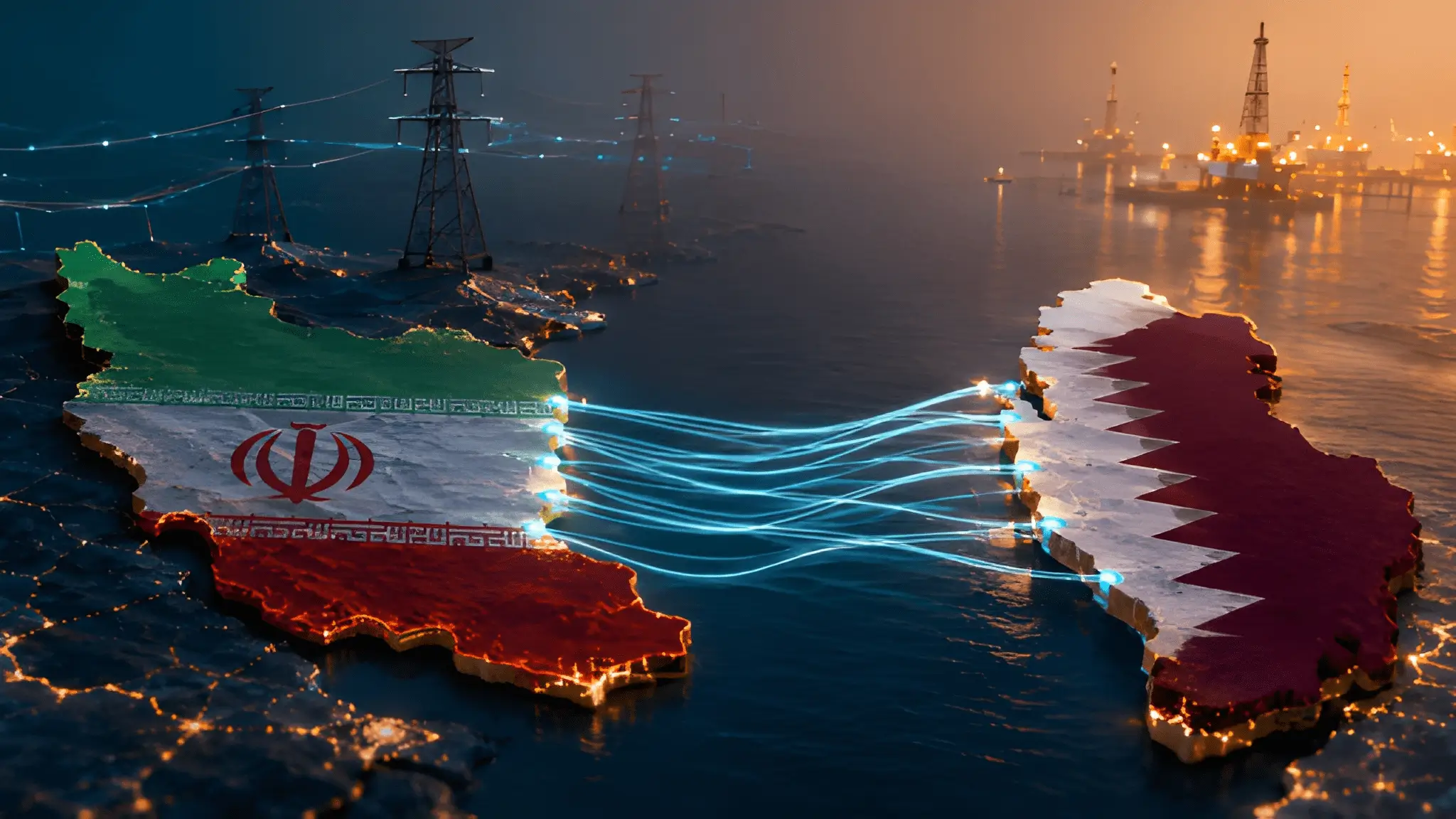
The discussion involving Iran and Qatar reflects that environment. Any potential grid cooperation exists within a broader regional context in which energy connectivity is becoming a strategic asset. The value resides not only in the electricity exchanged but also in the institutional and technical relationships established through the process. Such relationships can generate long-term effects. Engineering standards become aligned. Operational coordination increases. Planning horizons extend. Businesses adapt investment strategies around expected network availability. Over time, these developments can reinforce economic ties regardless of fluctuations in political sentiment.
Strategic Relevance Increasingly Follows Connectivity
Many policymakers continue to assess influence through familiar metrics such as military capabilities, sanctions frameworks and diplomatic alliances. Those measures remain important. However, Infrastructure connectivity can increase the strategic importance of countries that serve as transit routes, interconnection hubs or critical links within regional economic systems. Unlike financial restrictions, infrastructure relationships often become embedded within daily economic activity. They support industrial production, commercial trade and energy reliability. Participants therefore acquire incentives to preserve functionality even during periods of political disagreement. This reality does not eliminate geopolitical competition. It changes the environment in which competition occurs.
Countries positioned at critical intersections of regional networks can gain negotiating power through their role as facilitators rather than solely through resource ownership. The ability to connect markets may become as valuable as the ability to supply them. That prospect carries implications beyond the Gulf. Energy transition strategies worldwide require unprecedented levels of infrastructure development. Electricity grids must expand. Renewable generation assets require transmission capacity. Hydrogen projects depend on transportation networks. Critical mineral supply chains require efficient logistics systems. In each case, connectivity becomes a source of strategic value.
Governments that focus primarily on controlling flows may underestimate the importance of shaping networks. The architecture of a system often determines outcomes as much as the resources moving through it. The emerging Gulf landscape demonstrates that principle. Regional states increasingly view infrastructure as an instrument of economic competitiveness, resilience and influence. Cross-border projects are becoming part of a broader effort to position economies within expanding regional and global value chains. That evolution deserves closer scrutiny.
The significance of a new grid connection cannot always be measured by megawatts alone. The same applies to transport corridors, industrial links and logistics networks. Their broader impact often emerges through the relationships they create and the dependencies they reinforce. The lesson for policymakers is straightforward. Infrastructure is no longer merely a supporting component of economic strategy. Infrastructure increasingly features in government economic strategies, regional development plans and international cooperation initiatives.
Iran and Qatar’s power-grid discussions highlight that reality. The conversation is less about electricity than about the growing importance of connectivity itself. As energy systems become more interconnected, countries that occupy key positions within transportation, energy and trade networks often play important roles in facilitating regional commerce, energy distribution and cross-border economic activity. Political narratives can shift with changing administrations and diplomatic priorities. Networks, once established, tend to endure. That may be the development many observers are still underestimating.