
The global race for artificial intelligence leadership is increasingly being shaped by infrastructure rather than algorithms alone. Governments and technology companies now recognize that access to computing power, electricity, semiconductors, and data centers will determine how quickly AI capabilities can scale. China appears to be embracing that reality with one of its most ambitious infrastructure proposals to date. Reports indicate Beijing is considering an investment of roughly 2 trillion yuan, or about $295 billion, to create a nationwide AI computing network that would connect data centers across the country into a unified platform. The initiative would rely heavily on domestically developed technology and could become one of the largest coordinated AI infrastructure projects ever attempted. If implemented as proposed, the plan would represent a significant expansion of China’s AI Infrastructure Strategy and deepen competition with the United States.
China Wants to Transform Data Centers Into a National Computing Network
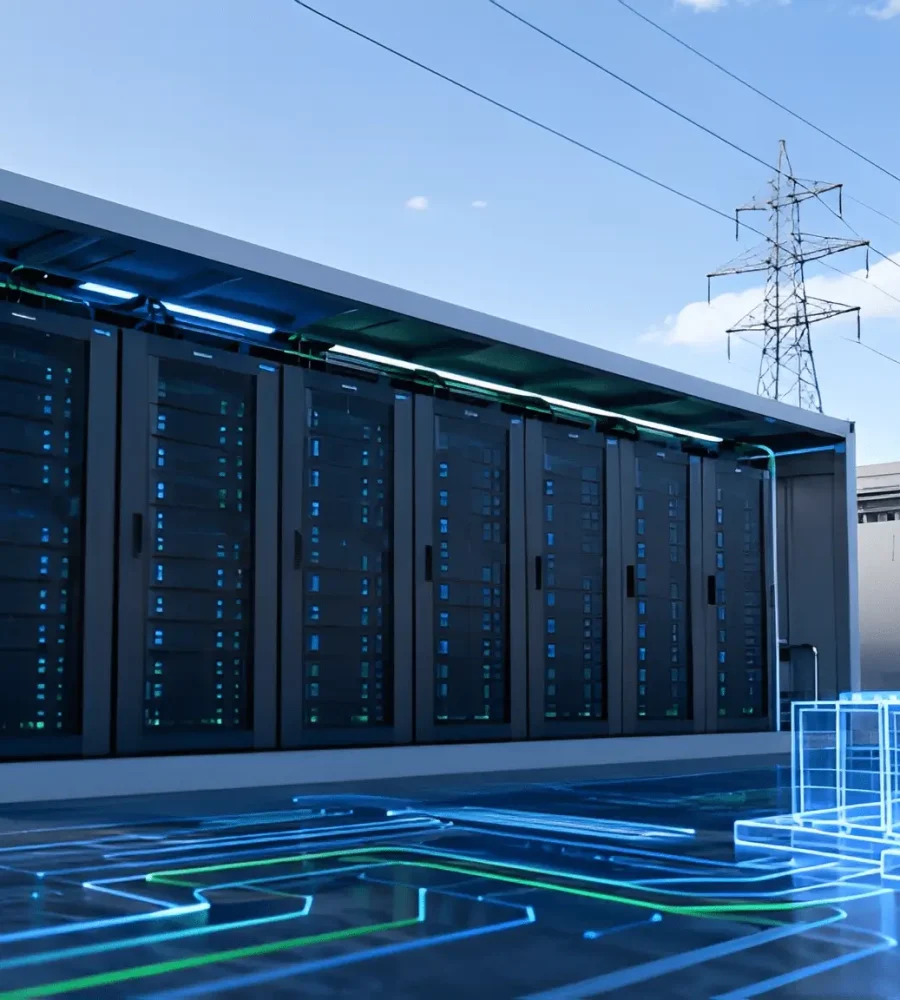
Unlike traditional infrastructure programs focused on individual facilities, the proposed initiative centers on creating an interconnected computing grid. Reports suggest the network would link data centers located across multiple regions into a unified national platform capable of distributing AI workloads wherever computing resources are available. State-backed telecommunications operators, including China Mobile and China Telecom, would play a central role in operating the system. The objective extends beyond increasing capacity because policymakers want computing resources to function as a coordinated national asset rather than isolated facilities. Such an approach could improve resource utilization while expanding access to AI computing across industries. The proposal reflects a broader shift toward viewing compute infrastructure as a strategic national resource.
Officials reportedly aim to complete the network by 2028 through extensive deployment of new infrastructure and connectivity systems. The National Development and Reform Commission is leading development of the blueprint, while financing would rely heavily on sovereign borrowing and long-term government-backed funding mechanisms. Although current estimates place direct spending near $295 billion, broader infrastructure requirements could significantly increase the overall investment. Some projections suggest total costs may exceed 5 trillion yuan when associated power infrastructure and grid upgrades are included. The scale of investment highlights the importance Beijing places on securing long-term AI competitiveness. The initiative would rank among the largest government-supported digital infrastructure programs in the world.
Domestic Technology Sits at the Center of the Plan
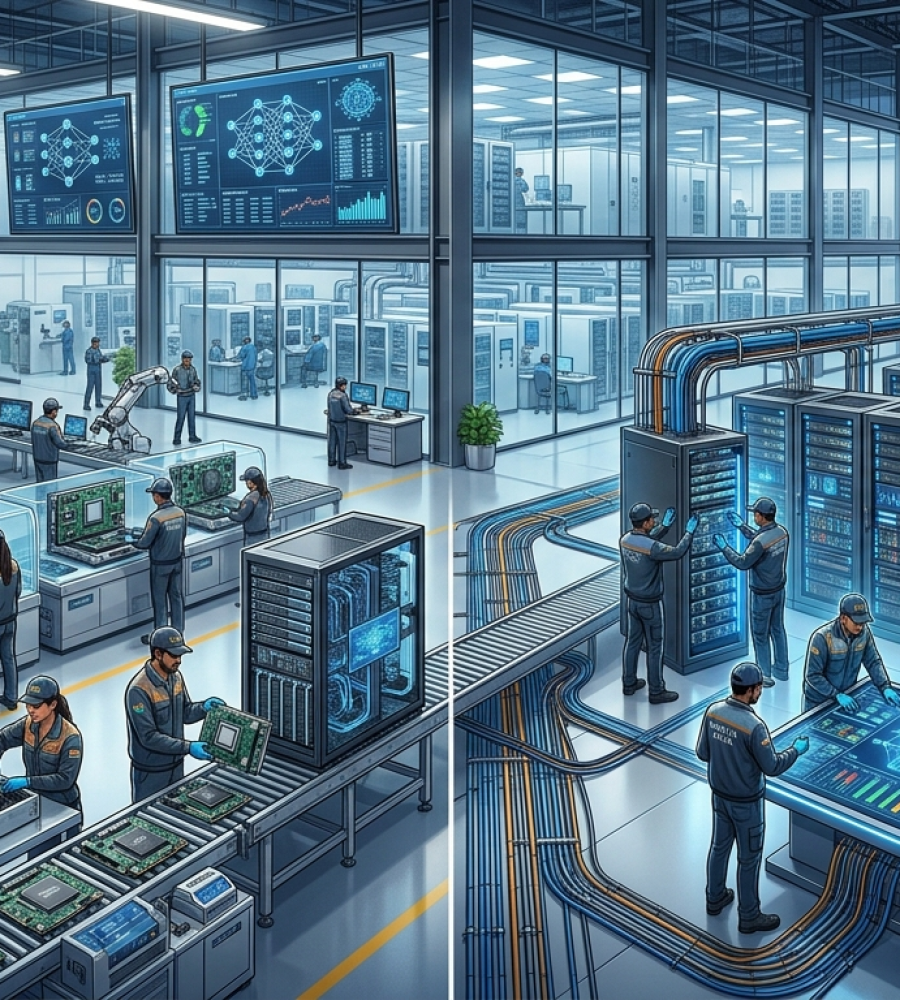
A defining characteristic of the proposal is its emphasis on domestic technology. Chinese authorities reportedly want at least 80% of the underlying infrastructure, including AI chips and computing hardware, to come from domestic suppliers. The requirement aligns with broader efforts to reduce dependence on foreign semiconductor companies and strengthen China’s technology supply chain. Policymakers increasingly view semiconductor self-sufficiency as a strategic priority because advanced AI systems depend heavily on access to high-performance computing resources. Building infrastructure around domestic suppliers allows China greater control over critical technologies. It also reduces exposure to external restrictions and export controls.
The policy builds upon measures introduced during the past two years. Authorities previously required data centers to source at least half of their chips from domestic manufacturers before implementing additional restrictions on foreign accelerators in state-funded projects. Reports indicate some facilities still under construction were required to remove components supplied by companies such as Nvidia, AMD, and Intel. These changes have created new opportunities for domestic firms, particularly Huawei, which has emerged as one of the primary beneficiaries of China’s push toward indigenous AI infrastructure. The broader objective is to ensure that AI systems operate on technology developed and controlled within China. Such policies have become increasingly important as geopolitical tensions influence technology supply chains.
Huawei and Domestic Chipmakers Face a Critical Opportunity
The success of the proposed computing grid depends heavily on the ability of Chinese semiconductor companies to meet rising demand. Huawei has positioned itself as one of the leading domestic suppliers capable of supporting large-scale AI infrastructure deployments. The company’s Ascend processors have become central to China’s efforts to develop alternatives to foreign AI accelerators. Government support and policy incentives have strengthened demand for domestic products across multiple sectors. As more infrastructure projects prioritize local suppliers, companies such as Huawei stand to play increasingly important roles in the country’s AI ecosystem. The national computing grid could accelerate that transition.
However, substantial challenges remain. China’s semiconductor manufacturing ecosystem continues to face capacity limitations and technological constraints. Industry reports indicate that domestic production facilities already operate at high utilization levels, limiting their ability to rapidly increase output. Advanced memory technologies also remain a bottleneck for high-performance AI systems. Analysts project domestic suppliers may satisfy approximately three-quarters of China’s AI chip demand by the end of the decade, leaving gaps that could prove difficult to fill. These constraints illustrate the complexity of replacing foreign technology across an entire national infrastructure network. Ambitious policy goals must therefore contend with practical manufacturing realities.
Infrastructure Is Becoming the New Frontline of the AI Race
The proposal highlights how competition between major AI powers is increasingly centered on infrastructure development. Earlier phases of the AI race focused largely on algorithms, software capabilities, and research breakthroughs. Today’s competition revolves around who can build and sustain the largest computing ecosystems. Data centers, electricity networks, semiconductor production, and connectivity infrastructure have become strategic assets in their own right. Governments now view these capabilities as essential components of economic competitiveness and national security. China’s proposed investment reflects a belief that AI leadership depends on controlling the underlying infrastructure stack.
The United States currently maintains a significant advantage in frontier AI models and access to advanced semiconductor technologies. American technology companies continue to invest heavily in data center expansion and AI infrastructure deployment. However, China’s strategy focuses on leveraging centralized planning, domestic manufacturing, and large-scale infrastructure coordination. The proposed computing grid reflects a distinctly different approach to AI development. Rather than relying primarily on private-sector initiatives, Beijing is pursuing a coordinated national strategy designed to align computing resources with broader economic objectives. The contrast illustrates how different political and economic systems are shaping infrastructure development.
Energy and Connectivity Will Determine Long-Term Success
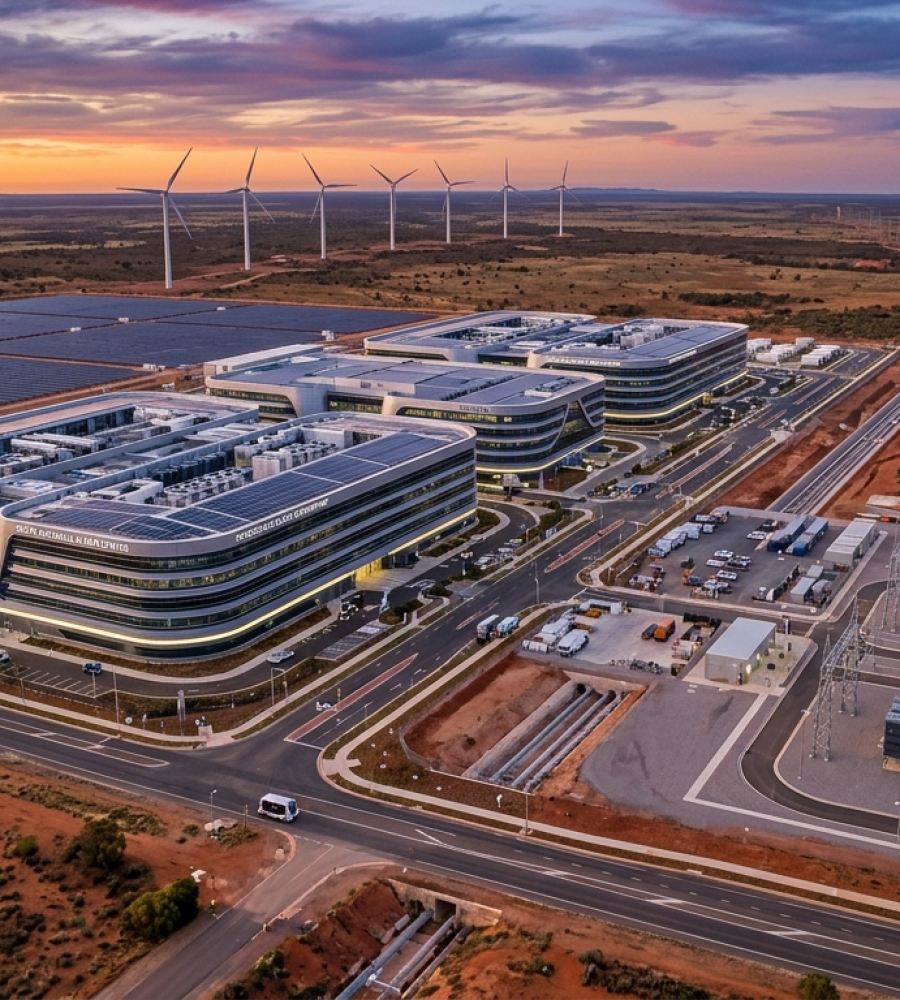
Building a national computing network requires more than servers and semiconductors. AI infrastructure depends heavily on access to reliable electricity and high-capacity connectivity networks capable of moving large volumes of data efficiently. As part of the proposed initiative, significant investments may be required to expand and modernize supporting energy infrastructure. Some estimates suggest power-related spending could rival or exceed investments in computing facilities themselves. Such requirements reflect the increasingly close relationship between AI development and energy policy. The ability to deliver reliable electricity at scale has become a competitive advantage within the AI sector.
China may benefit from advantages in this area. The country has invested heavily in power generation, transmission infrastructure, and industrial capacity during the past decade. Existing initiatives such as the East Data, West Computing program have already encouraged deployment of computing facilities in regions with abundant energy resources. The proposed national grid could build upon those efforts by connecting distributed infrastructure into a unified platform. Access to relatively abundant electricity may help offset some of the challenges associated with domestic semiconductor limitations. Energy infrastructure therefore represents an important component of China’s broader AI Infrastructure Strategy.
The Plan Reflects a Broader Shift in How Nations View AI
Whether the proposal ultimately reaches its full scale remains uncertain, but its strategic significance is already clear. Governments increasingly view AI infrastructure as a national capability rather than a purely commercial activity. Computing resources now occupy a position similar to transportation networks, telecommunications systems, and energy infrastructure in previous eras of economic development. China’s proposed computing grid reflects that evolution in thinking. The initiative seeks to combine state-backed financing, domestic technology development, telecommunications infrastructure, and energy resources into a coordinated platform for AI growth.
The proposal also illustrates how the AI race is evolving into a competition over industrial capacity. Success will depend not only on developing advanced models but also on securing access to chips, electricity, data centers, and manufacturing capabilities. China appears determined to build those foundations at national scale. If successful, the initiative could reshape the country’s AI ecosystem while influencing how other governments approach digital infrastructure planning. The next phase of global AI competition may therefore be defined less by software breakthroughs and more by who can build the strongest infrastructure to support them.