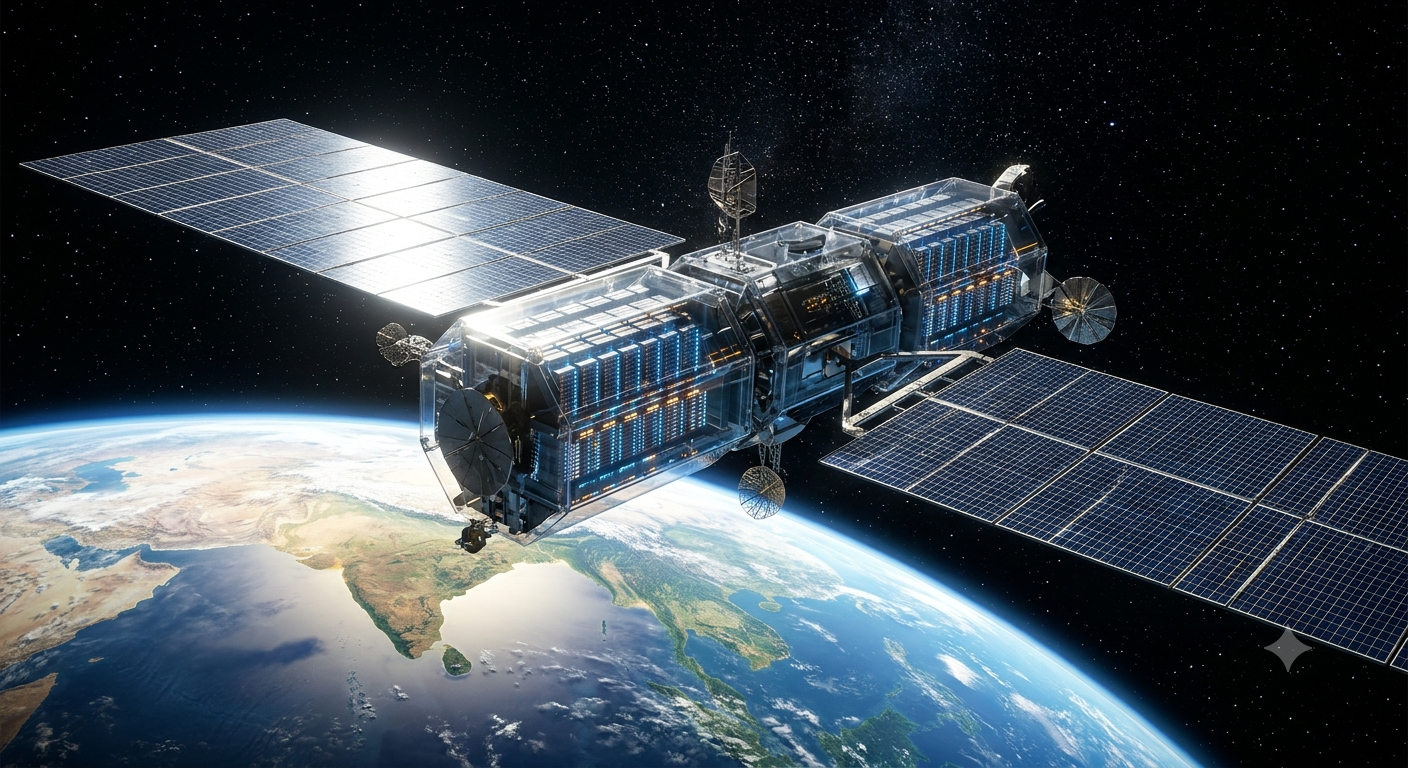
On February 4, 2026, Elon Musk made a declaration on a podcast that compressed years of speculative technology discussion into a single confident prediction: within three years, the most economically compelling location for AI computing would no longer be on Earth. It would be in orbit. Four days earlier, SpaceX had submitted a formal filing with the Federal Communications Commission outlining plans for a constellation of computing satellites that could eventually reach one million units. The FCC accepted the filing, opened a public comment period, and the Chairman shared the document publicly. For a concept that had spent years on the speculative fringe of the data centre industry, orbital computing had, in the space of a single week, acquired regulatory paperwork.
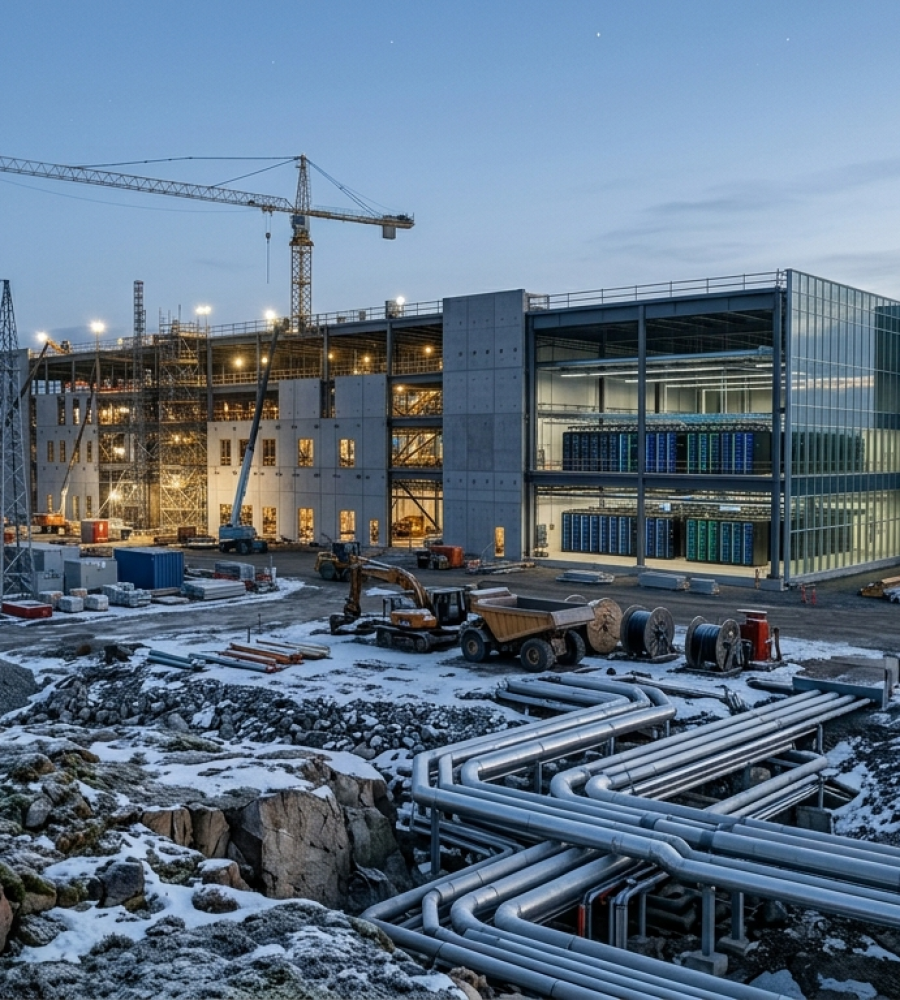
The drivers behind the idea are straightforward. AI data centres on the ground are running into hard physical limits: power grid queues stretching years, transformer shortages, water constraints, local opposition, and energy costs that rise with every new gigawatt of demand. Space, in theory, solves all of them simultaneously. Orbital facilities tap into continuous, unobstructed solar energy. They require no land permits, no utility negotiations, and no community consultations. They generate no local water demand and produce no ground-level emissions. A JLL report examining the commercial viability of orbital computing noted that the upsides are genuinely enticing and that the technology remains largely theoretical.
What Is Actually Being Built
The gap between announcement and hardware is narrowing, though not as fast as the press releases suggest. Several concrete demonstrations are underway or imminent. Starcloud’s Starcloud-1 mission, launched in late 2025, placed an NVIDIA H100-class GPU in low Earth orbit the first serious attempt to test high-performance AI computing hardware in the space environment at this specification level. US startup Orbital has a test satellite scheduled to launch aboard a SpaceX Falcon 9 in April 2027, designed to validate sustained GPU operations, radiation resilience, and AI inference in orbit. Axiom Space and Red Hat are planning an orbital data centre test aboard the International Space Station. Lonestar Data Holdings completed a successful lunar data centre payload mission. Blue Origin announced its TeraWave constellation in January 2026, targeting approximately 5,400 satellites optimised for data centre interconnects serving enterprise and government AI workloads.
China’s National Space Administration deployed three test satellites in 2024 equipped with domestic AI accelerators, with state media indicating plans for a 50-satellite constellation by 2028. The European Space Agency’s ASCEND programme has a demonstration mission planned for 2026. The market intelligence picture is expansive: a ResearchAndMarkets analysis projects gigawatt-scale computing clusters in low Earth orbit and cislunar space by 2035, potentially enabling AI model training and cloud computing at unprecedented speeds.
The Physics Problems Nobody Can Wave Away
The enthusiasm for orbital computing tends to outpace honest engagement with the engineering constraints. Three of them are severe enough to determine whether the concept succeeds or remains perpetually in the demonstration phase.
Cooling is the first and most fundamental. A common assumption holds that space is cold, making heat dissipation easy. The opposite is true. On the ground, data centres cool their hardware through convection moving air or liquid across hot surfaces. In the vacuum of space, there is no medium for convection. Every joule of heat generated by a computing chip must be eliminated through radiation alone, requiring large radiators oriented away from the Sun and sized to the full thermal load of the facility. Voyager Technologies CEO Dylan Taylor delivered a direct assessment in early 2026: cooling remains one of the most serious technical barriers facing space-based computing, and even under aggressive assumptions a two-year commercial deployment timeline would be difficult to achieve. Compute Forecast’s own February 2026 analysis described thermal management as the constraint that must shift from a secondary concern to the central design requirement before orbital data centres can scale beyond demonstrations.
Radiation is the second hard constraint. Earth’s atmosphere and magnetic field protect ground-level hardware from the high-energy particle bombardment that continuously bathes low Earth orbit. In space, radiation corrupts data unpredictably and degrades hardware over time. A US Government Accountability Office report published in April 2026 identified radiation-induced hardware degradation as a core technical risk, noting that mitigation through shielding adds mass, and mitigation through error-correcting design reduces computing performance. Current estimates suggest radiation hardening adds between 30% and 50% to hardware costs while reducing performance by 20% to 30% compared to terrestrial equivalents. Chips operating in orbit may need replacement every five to six years a servicing requirement that, in the absence of mature in-space maintenance infrastructure, translates directly into decommissioned satellites and orbital debris.
Launch cost is the third constraint, and the one that most directly determines the commercial timeline. SpaceX’s Falcon 9 currently delivers payload to orbit at approximately $2,700 per kilogram. JLL’s analysis identified $500 per kilogram as the threshold at which orbital computing could begin to compete commercially with terrestrial alternatives. Google’s Suncatcher team has estimated that launch costs would need to fall below $200 per kilogram a figure that SpaceX’s Starship programme is targeting but has not yet achieved for their vision of orbital solar-powered computing to make economic sense. Starship’s target of approximately $200 per kilogram is plausible by the early 2030s under an optimistic development trajectory. It is not available today, which means the commercial window for orbital data centres is a future condition, not a present one.
The Orbital Debris Problem
The GAO report noted that more than 17,000 satellites currently occupy orbit, alongside an estimated 44,000 tracked objects larger than ten centimetres that pose collision risks. Starcloud’s February 2026 FCC filing proposed a constellation of up to 88,000 satellites dedicated to gigawatt-scale computing. SpaceX’s own filing described a potential network eventually reaching one million units. Blue Origin’s TeraWave adds another 5,400. The accumulation of proposed orbital infrastructure at this scale raises collision probability and debris generation risks that no single operator can individually manage. The GAO report flagged that federal agencies must coordinate nationally and internationally on radio frequency allocation, collision avoidance, and decommissioning protocols a regulatory architecture that does not yet exist at the scale the proposed constellations would require.
The Realistic Timeline
The honest read of orbital computing in 2026 is that it sits at the intersection of genuine commercial motivation and unresolved engineering constraint. The commercial motivation is real and growing: terrestrial data centre deployment is delayed by supply chain failures, grid bottlenecks, and regulatory friction that makes a five-year transformer queue look routine. The argument that space-based deployment could bypass those constraints once launch costs fall and cooling technology matures is commercially coherent. Seraphim Space reported a 48% increase in private investment in space technology in 2025, reaching $12.4 billion, driven substantially by AI infrastructure interest and US defence spending.
The engineering constraints are equally real and will not resolve on the timeline that AI infrastructure demand is moving. The demonstration missions of 2025 and 2026 Starcloud-1, the Axiom ISS test, the Orbital Falcon 9 payload scheduled for 2027 are building the experimental foundation that commercial deployment requires. They are not commercial deployment. Gigawatt-scale orbital AI computing, if it arrives at all in a commercially meaningful form, arrives in the 2030s under favourable assumptions about Starship cost reductions, radiation-hardened chip performance, large-scale radiator engineering, and orbital debris management frameworks that do not yet exist. The concept is serious. The timeline is long. And the distance between Elon Musk’s three-year prediction and the actual physics of putting a working data centre in orbit is, at present, measured in engineering problems that capital alone cannot compress.