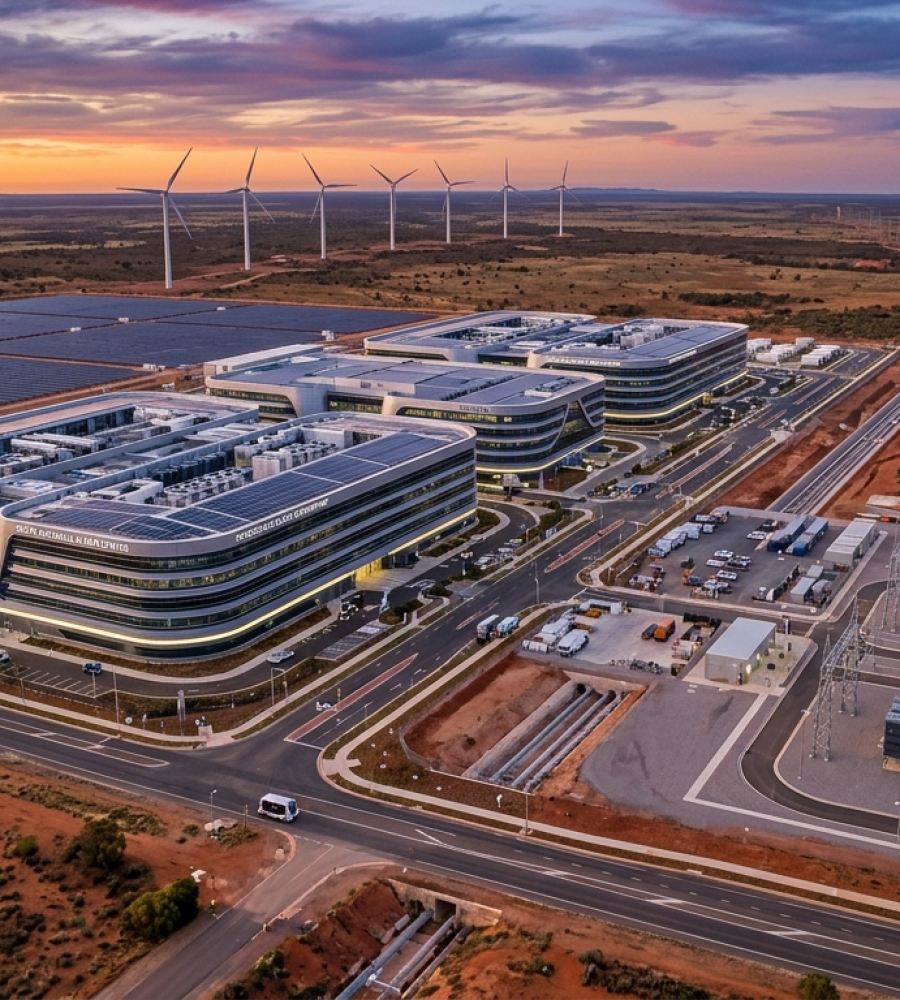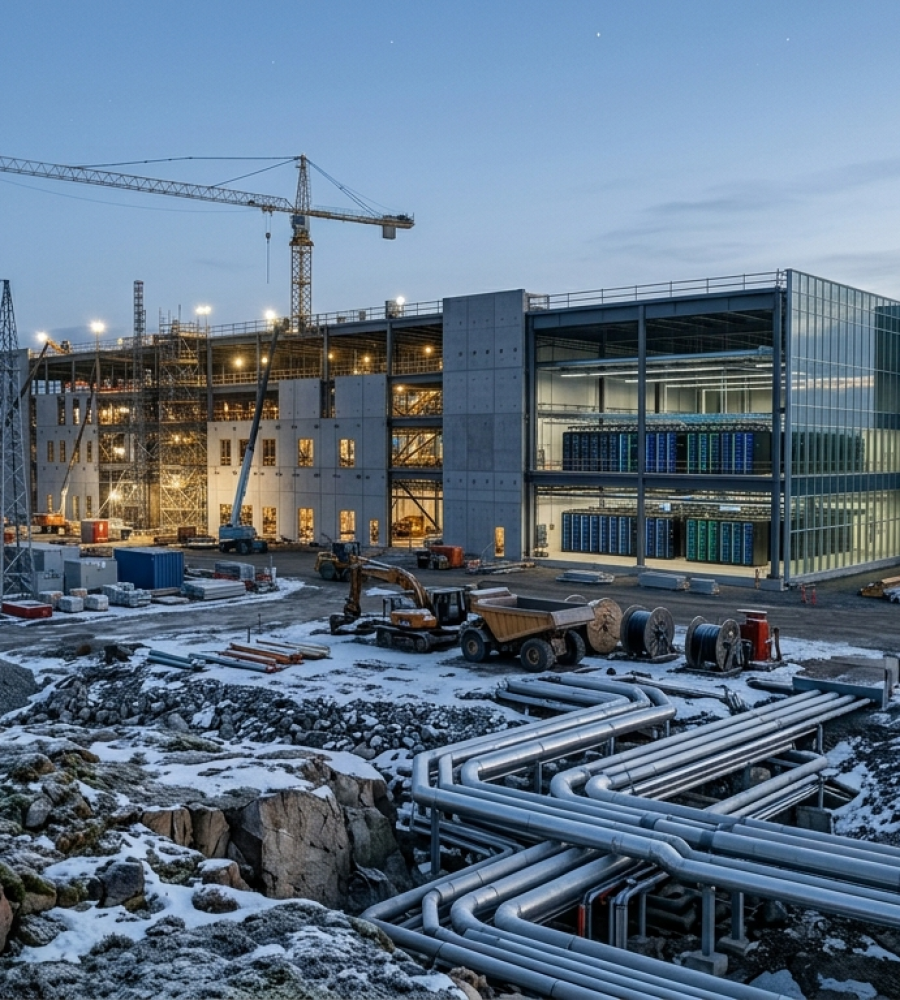
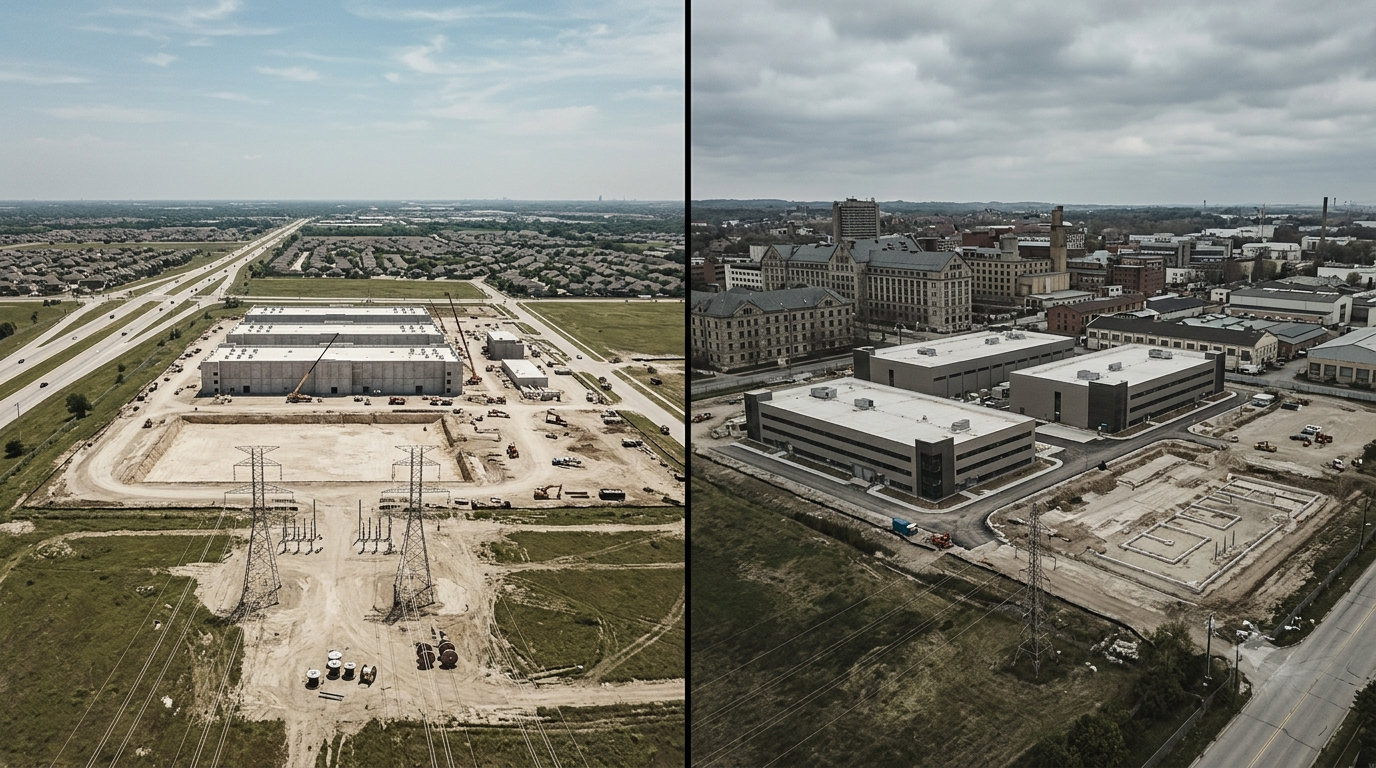
Hyperscalers can build a data center in roughly two years. Getting power to that data center now takes considerably longer, on both sides of the Atlantic. In the United States, PJM’s interconnection timeline has stretched from under two years in 2008 to over eight years today. In Europe’s FLAP-D markets, new facilities wait seven to ten years for a grid connection, rising to thirteen in the most congested zones. This is not a policy abstraction. It is real capital, sitting in real buildings, waiting for real power. This article examines specific stuck projects on both continents, traces why each system produces delay through different mechanisms, and identifies who absorbs the cost when the grid says no.
America’s Queue Problem: Volume, Not Just Speed
The American interconnection backlog is fundamentally a volume crisis. As of early 2026, US interconnection queues nationally contained roughly 2,600 GW of proposed generation and storage. In PJM alone, the regional grid operator has studied approximately 160 GW of generation projects since reopening its queue, yet 46 GW remained stuck in transition processing as of mid-2026. The federal target for issuing an interconnection agreement is 8 to 11 months. Actual PJM timelines now average over eight years.
Texas tells a related but distinct story. ERCOT’s large-load queue reached 410 GW by early 2026, and data centers account for 87% of that demand. In the first quarter of 2026 alone, 198 GW of large-load capacity applied for ERCOT interconnection a figure roughly equal to ERCOT’s entire current peak load. Carbon Direct’s May 2026 analysis of both grids found that 1,216 active projects across PJM and ERCOT represent 111.6 GW of generation and 64.3 GW of storage capacity. The analysis flagged a critical detail: 76% of PJM’s queued projects, and 60% of ERCOT’s, may never reach commercial operation, regardless of how long developers wait. The queue is congested partly with capacity that will not materialize. PJM’s projected shortfall reflects the scale of the mismatch. The grid operator expects a capacity deficit of 6.6 GW for the 2027-2028 period, even as it processes record volumes of new generation requests. Between 2024 and 2030, PJM expects demand to grow more than 30 GW, driven primarily by data centers.
A Stuck American Project: PJM’s Reform Cycle
PJM’s reform effort, mandated after the grid operator effectively shut down its own queue in 2022 to rework the process, illustrates how structural change collides with existing backlogs. Transition Cycle closed its application window on April 27, 2026, and going forward, PJM targets a one-to-two-year review timeline for new Generation Interconnection Agreements. That target represents genuine progress against the eight-year average.
However, roughly 57 GW of projects had already completed PJM’s study process and received interconnection agreements as of late 2025 and many of those approved projects remain stalled regardless. The blocking factor is not PJM’s internal process. It is local opposition, state and municipal permitting, and supply chain constraints downstream of the interconnection agreement itself. A signed agreement gets a project to the starting line of construction, not to commercial operation. For developers, that distinction is the difference between an investment thesis and an operating asset, and it can add years beyond the headline interconnection figure.
FERC’s December 18, 2025 order compounds the urgency. The Commission directed PJM to establish new rules for data center colocation at power plants, creating transmission service options that allow facilities to draw power directly from co-located generators while contracting separately for grid capacity. The ruling responds directly to the eight-year wait — but its compliance deadlines only began in January 2026, meaning the practical relief for projects currently in the queue is still materializing.
Europe’s Different Bottleneck: Permitting, Not Queue Volume
Europe’s delay mechanism operates differently. Where American queues are clogged primarily by volume, European delays are driven by aging transmission infrastructure, fragmented national permitting regimes, and in several jurisdictions outright moratoria. Pamela MacDougall, who heads energy markets and regulation for AWS in EMEA, told Reuters in February 2026 that connecting to the European transmission network can take up to seven years, against a roughly two-year data center build timeline. According to the IEA, FLAP-D wait times average seven to ten years, extending to a decade in the most congested submarkets. The European Union Agency for the Cooperation of Energy Regulators recorded €4.3 billion in direct grid congestion costs across the bloc in 2024 alone — a figure that excludes the indirect economic cost of project delays entirely.
The structural cause is partly physical. More than 40% of Western Europe’s distribution network exceeds 40 years in service age, and reinforcing that infrastructure requires its own multi-year permitting and construction cycle. The structural cause is also procedural. Italy and Spain, in particular, carry backlogs of so-called speculative interconnection applications — projects filed defensively that will likely never proceed but that occupy queue position under first-come-first-served rules, blocking viable projects behind them.
Stuck European Projects: Ireland’s Stranded Billions
Ireland offers the starkest case study in Europe of capital trapped behind grid limitations. Across the country, €5.8 billion in fully permitted data center investment sits stranded — projects with secured land and planning permission that cannot reach commercial operation because the grid cannot connect them. Dublin operates under a de facto moratorium on new data center connections that runs until 2028.
The downstream consequence has been a documented surge in diesel and gas backup generation used to bridge the gap. An investigation found 28 emergency generators in Ireland that emitted approximately 130,000 tonnes of CO2 since 2017, supplied through Gas Networks Ireland’s Gas to Grange infrastructure. EdgeConneX secured the relevant permits before Irish regulatory tightening closed that pathway. An Coimisiún Pleanála’s August 2025 approval for additional generators at the same site imposed a renewable-fuel condition — signaling that the natural gas permitting route used in 2022 is now closing for future projects. As one alternative, Pure DC’s Dublin facility (DUB01, Ballycoolin) announced a 110 MW Wärtsilä microgrid in March 2026, opting for on-site generation rather than waiting on the grid queue at all.
The Netherlands has taken the most direct regulatory approach. A national decree enacted in January 2024 prohibits new hyperscale data centers across the entire country, except in two remote northern municipalities effectively closing Amsterdam, previously one of Europe’s three largest data center markets, to new large-load development until at least 2030. Frankfurt faces a comparable effective ban on new connections over the same horizon.
Comparing the Two Systems Directly
Placed side by side, the two systems share a symptom but differ in cause. The American queue problem is principally a triage failure: too many projects, many non-viable, filed under rules that reward early application over readiness. PJM’s reform cycle and FERC’s colocation ruling both target that specific failure mode process speed and project prioritization within an otherwise functioning physical grid.
The European problem is more structurally embedded. Aging infrastructure requires physical reinforcement that cannot be reformed away through faster paperwork alone. The European Commission has proposed capping permit approval timelines at two years and exempting grid projects from environmental assessment requirements specifically to address this but those proposals remain under negotiation between EU member states and lawmakers as of mid-2026, with no guaranteed implementation date.
Both systems converge on the same practical response from developers: bypass the grid where possible. In the US, FERC’s December 2025 ruling formalizes colocation with generation assets as a recognized transmission pathway. In Europe, behind-the-meter solutions — Ireland’s emergency generators, Pure DC’s Wärtsilä microgrid emerged organically as developers worked around, rather than through, the connection queue. Ascend Analytics’ VP Shalom Goffri noted that behind-the-meter gas generation works as a practical short-term bridge, but long-term levelized cost analysis still favors front-of-the-meter grid connection meaning the workaround is a stopgap, not a substitute for fixing the underlying queue.
Who Actually Pays
The cost of grid delay does not disappear. It relocates. Developers absorb it first, through trapped capital land purchased, permits secured, and equipment ordered for facilities that cannot yet operate. EU congestion costs of €4.3 billion in 2024 reflect generation and transmission inefficiency that ultimately feeds into electricity pricing for all grid users, not solely data center operators. Tom’s Hardware reported that more than 75 European data center build-outs worth a combined $130 billion were effectively blocked in just the first four months of 2026 capital redirected, not deployed.Communities pay through a different channel. Ireland’s emergency generator fleet, run to bridge grid gaps, has measurably increased local emissions in exchange for compute capacity that has not yet materialized at matching scale.
Ratepayers in constrained US markets face network upgrade costs that grid operators increasingly push toward large-load users specifically, as PJM and other ISOs explore cost-allocation reform. For investors and infrastructure decision-makers, the practical conclusion is that power-secured sites now command a structural premium over sites with land and permits alone. Markets actively reforming their interconnection process PJM’s Transition Cycles, the UK’s shift toward a “first-ready” allocation model at Ofgem are repositioning faster than markets relying on legacy first-come-first-served rules. The grid, not the data center shell, has become the asset that determines whether capital converts into revenue.