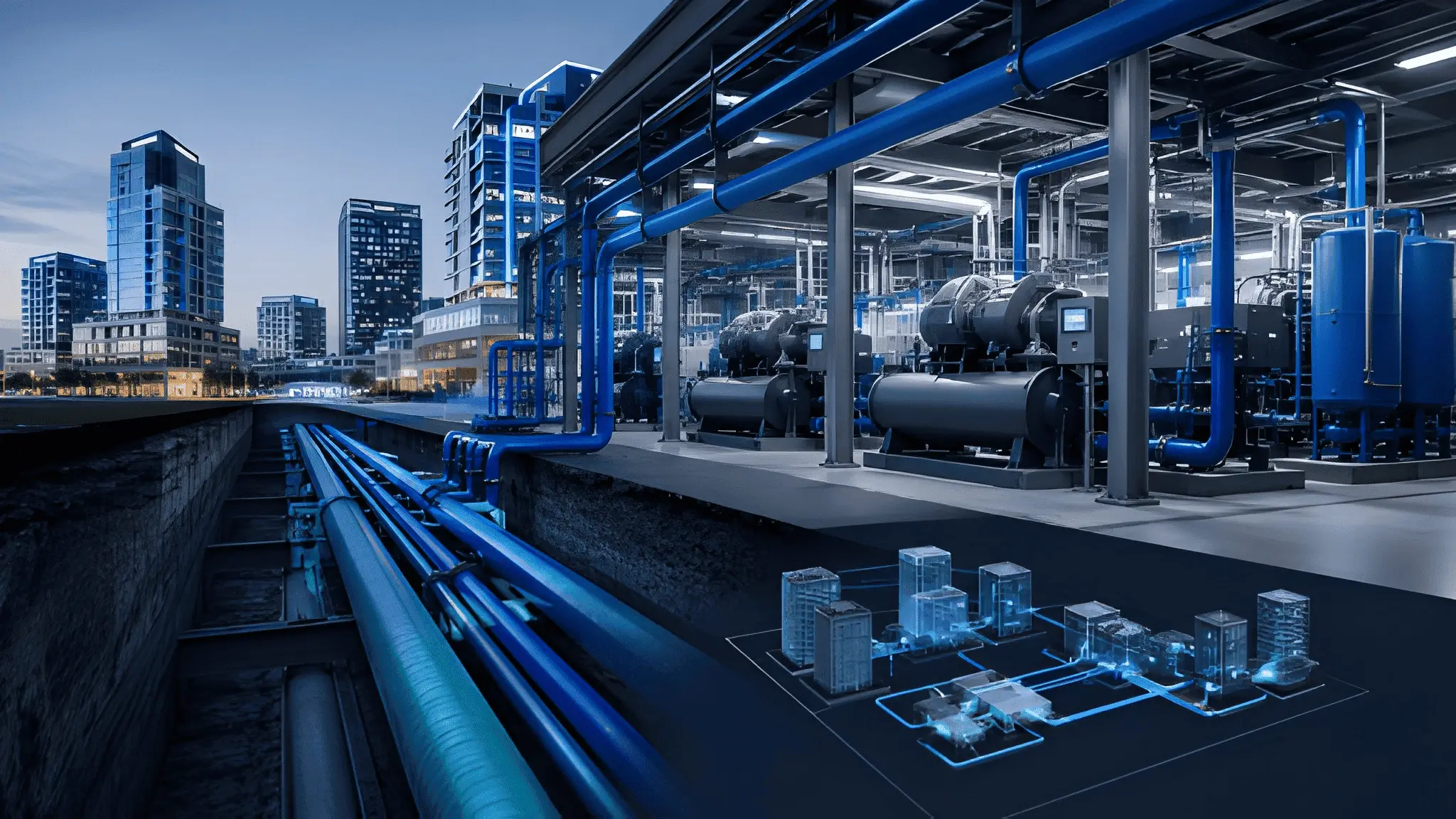
The next constraint on artificial intelligence infrastructure in India may not emerge from power generation, semiconductor availability, or network capacity. Thermal management increasingly shapes where high density computing clusters can operate economically, especially in regions that experience prolonged periods of extreme heat. India’s District cooling initiatives are drawing greater attention in digital infrastructure planning. Meanwhile, every new generation of accelerated computing hardware pushes more heat into a smaller physical footprint. That shift forces designers to reconsider assumptions that guided conventional data center cooling for decades. As AI deployments expand beyond isolated buildings into larger digital campuses, cooling architecture has started to resemble utility planning rather than building engineering. Chilled water networks, thermal storage systems, and centralized energy plants now enter conversations that once focused almost entirely on racks and servers.
Across western and central India, summer design conditions place unusual pressure on cooling systems serving digital infrastructure. Ambient temperatures can remain elevated for extended periods while humidity patterns fluctuate dramatically between dry seasons and monsoon periods. Mechanical systems must therefore respond to both sensible and latent cooling challenges without compromising reliability. Traditional building level chiller plants remain effective in many commercial applications, yet high density AI workloads introduce thermal profiles that rarely align with office building assumptions. Operators increasingly evaluate centralized cooling architectures because they offer opportunities to aggregate load, improve equipment utilization, and create operational flexibility across multiple facilities. Those advantages become especially valuable when infrastructure must support round-the-clock computational demand under difficult climatic conditions.
India already possesses a working reference point for district-scale cooling through the underground chilled water network developed in GIFT City. Although the system originally served commercial development requirements, many of its design principles map directly onto the needs of future AI campuses. Utility tunnels, centralized cooling production, thermal storage, metering frameworks, and distribution loops create a foundation that can support far more than traditional office occupancy. Several emerging technology corridors now examine how similar approaches could help accommodate rapidly growing computational demand without duplicating cooling infrastructure across every parcel of land. That transition does not require importing a foreign model wholesale. Instead, it involves adapting proven district energy concepts to the specific operational requirements of modern data center environments.
Why 45°C Cities Can’t Chill Alone: The Case for Shared Cold
Designers often discuss cooling systems through the lens of equipment efficiency, yet ambient temperature exerts a direct influence on every major component within the cooling chain. Compressors, pumps, cooling towers, condensers, and heat exchangers all operate under conditions established by the surrounding environment. During periods of extreme heat, standalone cooling plants must work harder to maintain target temperatures while preserving redundancy margins. Individual data center operators therefore face a difficult challenge because they must size infrastructure not only for average conditions but also for the most demanding weather events. Excess capacity remains underutilized for much of the year, yet operators cannot risk undersizing equipment in mission critical environments. Shared cooling infrastructure alters that equation by distributing thermal demand across a larger network rather than concentrating responsibility within a single building.
Ambient Heat Changes the Economics of Every Chiller
A district cooling system aggregates loads from multiple users and produces chilled water from centralized plants connected through underground distribution networks. Large chillers generally achieve stronger operating efficiencies than numerous smaller units because centralized systems can optimize equipment staging and load balancing. The architecture also allows operators to add capacity incrementally as demand grows across an entire district. Instead of constructing independent cooling systems for every data hall, developers can connect new buildings to a common thermal backbone. Such an approach reduces duplication of equipment while creating opportunities for coordinated maintenance and operational management. The concept already forms the basis of district cooling deployments worldwide and serves as the core principle behind the chilled-water network operating within GIFT City.
High-density AI halls can increase interest in shared cooling approaches because their thermal behavior differs from conventional enterprise deployments. Compute clusters can create rapid swings in cooling demand when training runs begin, inference workloads scale, or resource scheduling shifts across racks. Building-level infrastructure must absorb those fluctuations even when they occur unpredictably. A district network can smooth such variations by drawing on a larger thermal reservoir and a broader collection of connected loads. Engineers gain additional flexibility because central plants can stage equipment based on aggregate demand rather than the conditions inside a single structure. That flexibility often matters more than headline efficiency metrics because it helps maintain stable operating conditions during the most demanding periods of the year.
Multi-Tenant Chilled Water Networks Rewrite PUE Assumptions
Power Usage Effectiveness calculations frequently focus attention on the energy consumed within a specific data center boundary. District cooling challenges that perspective because part of the cooling infrastructure exists beyond the walls of the building itself. Chilled water arrives through a network supplied by centralized production assets that serve multiple customers simultaneously. Engineers therefore evaluate efficiency through a broader system lens rather than limiting analysis to building level mechanical equipment. That approach aligns particularly well with campus scale AI developments where several data halls operate within a common masterplan. Instead of repeating mechanical systems across neighboring parcels, developers can concentrate resources within shared infrastructure corridors.
Distribution networks also improve operational resilience because they create pathways for redundancy beyond individual sites. If one production asset requires maintenance, another plant within the network can continue supporting connected customers. Engineers can design ring main configurations that maintain flow even when portions of the network require isolation. Similar concepts already exist within district-energy systems serving commercial developments and can be adapted for mission-critical computing environments. The result is a cooling architecture that treats thermal energy as a distributed utility rather than a localized building service. Such thinking becomes increasingly relevant as AI campuses grow larger and more interconnected.
Regional technology hubs such as Hyderabad, Ahmedabad, and emerging digital corridors elsewhere in India face similar environmental realities despite differences in local development patterns. Extreme summer conditions place persistent pressure on cooling infrastructure while future AI deployments continue increasing rack level heat density. Shared chilled water systems provide one pathway for managing those pressures without multiplying mechanical assets across every development plot. The model does not eliminate engineering complexity, but it relocates much of that complexity into infrastructure designed to serve an entire district. That distinction matters because centralized systems can scale, evolve, and absorb growth more effectively than isolated cooling plants scattered across a technology campus.
GIFT City’s Underground Secret: What a Finance Hub Learned About Looping Heat
The most important component of a district cooling system often remains invisible from street level. Beneath buildings, roads, and landscaped areas sits the infrastructure that allows chilled water to move continuously between production plants and connected consumers. GIFT City adopted this philosophy through utility corridors that support centralized service distribution across the development. Rather than treating cooling equipment as an isolated building concern, planners incorporated chilled water infrastructure into the broader physical framework of the city. That decision created long-term flexibility because new buildings could connect to existing thermal networks instead of constructing standalone systems. The same planning principle carries significant implications for future data center campuses.
Ring Mains, Utility Tunnels, and the Logic of Centralized Cooling
Utility tunnel strategies become especially relevant when planners consider the lifecycle of high density computing infrastructure. Mechanical systems evolve faster than roads, drainage networks, and structural assets, which means campus infrastructure must accommodate future cooling technologies without major excavation. District cooling corridors provide dedicated pathways for supply lines, return lines, control cables, instrumentation systems, and maintenance access. Engineers can replace or upgrade equipment within centralized plants while preserving the underground network that connects users to thermal resources. Such separation between distribution infrastructure and cooling production assets creates adaptability that individual building plants rarely achieve. Future AI campuses benefit because cooling demand will continue changing as processor architectures and rack densities evolve.
Ring main configurations add another layer of operational resilience by allowing chilled water to reach connected loads through multiple pathways. Network operators can isolate sections of piping for maintenance while maintaining service through alternate routes. Similar principles guide electrical distribution and telecommunications design because redundancy reduces exposure to single points of failure. Data center environments require the same mindset because cooling interruptions can quickly escalate into operational risks. A looped thermal network therefore acts as more than a distribution mechanism because it becomes a resilience asset integrated into the campus architecture. That characteristic distinguishes district cooling from simple centralized chiller installations that lack network level redundancy.
Applying Commercial District Energy Principles to Mission-Critical Data Halls
Commercial office towers and mission critical data halls operate under very different occupancy patterns, yet both require stable thermal environments delivered continuously across large developments. District energy systems traditionally served commercial districts where cooling loads fluctuate according to occupancy schedules and seasonal demand. Data centers introduce a more demanding profile because cooling must remain available every hour of every day regardless of external conditions. Applying district cooling concepts in such environments would require additional redundancy, advanced controls, and carefully engineered hydraulic balancing strategies. Network operators must ensure that pressure stability and temperature delivery remain consistent across all connected facilities. Those requirements raise the engineering threshold but do not invalidate the district cooling model itself.
Service level commitments create another design consideration because data center operators require predictable cooling performance under all operating conditions. District cooling networks therefore need contractual frameworks that define temperature delivery standards, maintenance windows, response procedures, and backup arrangements. Engineers support those commitments through diversified equipment portfolios, redundant pumping systems, and network monitoring platforms capable of tracking thermal performance in real time. Modern instrumentation enables operators to observe pressure conditions, flow rates, and energy transfer throughout the network. Such visibility allows rapid intervention when anomalies emerge and supports continuous optimization of system performance. Data center environments increasingly expect this level of operational transparency from all supporting infrastructure systems.
BTU metering provides the commercial foundation that allows district cooling systems to function across multiple customers with different usage patterns. Instead of allocating costs according to floor area or estimated demand, operators measure the actual thermal energy delivered through the network. Flow measurements combined with supply and return temperature differentials determine energy consumption for each connected user. This approach encourages efficient use of chilled water because billing reflects actual cooling demand rather than theoretical capacity allocations. AI focused developments gain particular value from such arrangements because workloads can vary significantly between tenants and across operating periods. Accurate metering therefore becomes essential not only for financial accountability but also for network planning and long-term capacity management.
Industrial Estate to Data Campus: How SEZ Surplus Heat Becomes District Chill
Heat rarely receives the same attention as electricity when technology infrastructure discussions begin, yet industrial zones continuously generate substantial thermal energy through manufacturing processes. Much of that heat leaves industrial sites through exhaust streams, cooling systems, and process rejection equipment because the original process no longer requires it. Engineers increasingly examine whether portions of this thermal resource can support adjacent energy systems rather than dissipating unused into the environment. One pathway involves absorption chilling technologies that convert thermal energy into chilled water production. Such systems do not replace all conventional cooling equipment, but they create opportunities to diversify cooling resources within integrated industrial and technology districts. The concept becomes particularly attractive when manufacturing zones and digital infrastructure developments occupy neighboring land parcels.
Absorption chillers operate differently from conventional vapor compression systems because they rely primarily on thermal energy rather than electrically driven compression cycles. Heat drives a thermochemical process that produces chilled water suitable for a range of cooling applications. Industrial facilities that reject usable thermal energy can therefore contribute indirectly to district cooling systems serving nearby developments. The arrangement creates a form of energy cascading in which one activity’s thermal byproduct supports another activity’s cooling requirement. Engineers have applied similar principles in industrial districts around the world where co-located users benefit from integrated energy planning. Technology parks located near industrial corridors can evaluate these concepts where suitable thermal resources, infrastructure connectivity, and operational requirements align.
Special Economic Zones provide a particularly interesting context because they often combine industrial operations, logistics activity, utility infrastructure, and emerging digital developments within connected geographic areas. Data center growth increasingly targets locations that offer strong connectivity and reliable utility access, attributes that many industrial corridors already possess. Shared thermal infrastructure can therefore create synergies between sectors that historically operated independently. Instead of viewing industrial heat solely as a byproduct requiring disposal, planners can evaluate whether portions of that energy support district cooling production. Successful implementation depends on proximity, load matching, infrastructure investment, and operational coordination, yet the technical foundations already exist. The opportunity lies in integrating those foundations into future master planning decisions rather than treating them as isolated engineering projects.
Building Integrated Thermal Ecosystems Around Technology Corridors
The transition from industrial estate to technology campus often focuses on land availability, electrical infrastructure, and telecommunications access. Thermal infrastructure deserves similar consideration because cooling demand increasingly influences site viability for high density computing environments. District cooling networks allow planners to aggregate resources that individual developments might struggle to justify independently. Industrial heat recovery can become one of several thermal inputs feeding a broader chilled water ecosystem. Conventional chillers, thermal storage assets, and recovered industrial energy can operate together within a coordinated framework managed through centralized controls. Such diversification improves flexibility because the system does not rely exclusively on a single cooling production method.
Integrated thermal ecosystems also create opportunities for phased expansion as demand grows across a district. Initial development phases may rely primarily on conventional cooling production while future phases incorporate recovered heat sources and additional network capacity. This incremental approach aligns with the realities of technology campus development because demand rarely arrives all at once. Infrastructure can therefore evolve alongside occupancy rather than requiring complete buildout at the outset. Long-term planning remains critical because underground distribution assets and central plant locations influence future expansion options. Early coordination between industrial operators, land developers, and cooling network designers helps preserve flexibility for later growth.
Operational coordination ultimately determines whether integrated cooling ecosystems achieve their intended benefits. Data center operators prioritize reliability above all else, which means recovered energy sources must complement rather than compromise mission-critical cooling requirements. Centralized control platforms play an important role because they can optimize dispatch decisions based on available resources and operating conditions. Engineers can prioritize different cooling assets according to system needs while maintaining defined service standards across the network. Such orchestration transforms individual cooling components into a coordinated thermal platform capable of supporting large-scale digital infrastructure. That capability becomes increasingly valuable as AI workloads continue driving demand for resilient and scalable cooling solutions across India’s emerging technology corridors.
Thermal Storage as Monsoon Insurance: Banking Chill at Night for Daytime Inference Peaks
Cooling infrastructure traditionally produces chilled water at the moment demand occurs, creating a direct relationship between thermal load and cooling production capacity. Thermal storage introduces a different operating model by allowing cooling systems to produce chilled water in advance and store it for later use. Large insulated storage tanks effectively act as thermal batteries that shift cooling production across time. Operators can generate cooling during favorable operating periods and discharge stored thermal energy when demand rises. This strategy provides flexibility that becomes particularly useful in climates characterized by significant daytime heat and changing humidity conditions. Thermal storage complements both centralized cooling production and district energy architectures and is widely used in district-energy systems to improve operational flexibility.
Unlike electrochemical batteries, chilled-water storage systems rely on temperature differentials rather than electrical charge. Central plants cool water during designated operating periods and store it within large insulated tanks designed to minimize thermal losses. When cooling demand increases, stored chilled water supplements active cooling production from the central plant. The arrangement reduces the need to size mechanical systems exclusively around peak daytime demand conditions. Engineers therefore gain greater flexibility in equipment selection, plant operation, and infrastructure planning. Large-scale district cooling deployments frequently incorporate thermal storage because it enhances system responsiveness without requiring equivalent increases in mechanical capacity.
Indian climate conditions strengthen the case for thermal storage because daytime thermal stress often exceeds nighttime requirements. Cooling systems can take advantage of lower nighttime ambient temperatures while preparing for heavier daytime demand. The strategy becomes especially relevant for AI environments where computational activity can generate sustained cooling requirements over extended periods. Thermal storage does not eliminate the need for robust cooling infrastructure, yet it improves how existing infrastructure responds to changing conditions. Network operators gain an additional operational tool that supports reliability, flexibility, and load management. Those attributes explain why thermal storage increasingly appears in discussions surrounding future district cooling developments.
Nighttime Cooling Production and Daytime Demand Management
Daytime demand rarely represents the most efficient period for producing chilled water because ambient temperatures, electrical loading conditions, and cooling-system stress often reach their highest levels simultaneously. Thermal storage changes that relationship by separating cooling production from cooling consumption. Centralized plants can operate during nighttime periods when outdoor conditions are more favorable for heat rejection and equipment efficiency. Stored chilled water then supplements daytime operations when thermal demand increases across connected facilities. This approach creates operational flexibility without requiring every connected data hall to install oversized cooling infrastructure. District cooling operators value this capability because it allows them to optimize plant performance across an entire network rather than responding only to instantaneous demand.
AI infrastructure adds another dimension because computational workloads do not always align neatly with external environmental conditions. Training runs, model updates, and inference demand can create substantial cooling requirements independent of weather patterns. A centralized cooling network equipped with thermal storage can absorb some of those fluctuations by drawing on previously stored cooling capacity. Operators gain time to stage additional equipment or redistribute loads without creating abrupt changes in network conditions. Such flexibility supports stable chilled-water delivery even when computational demand shifts rapidly across multiple facilities. The benefit extends beyond efficiency because predictable thermal performance directly supports operational reliability within high-density computing environments.
Monsoon conditions further illustrate why storage matters within Indian cooling strategies. Humidity changes can influence cooling-system operation and heat-rejection performance even when temperatures alone do not appear extreme. Thermal storage provides an additional operating buffer that helps maintain service continuity during changing environmental conditions. Engineers can manage cooling production proactively rather than reacting solely to immediate demand. The network therefore gains resilience through operational flexibility rather than through equipment redundancy alone. That distinction becomes increasingly important as cooling systems evolve from isolated building assets into district-scale infrastructure platforms supporting continuous digital operations.
The BTU Billing Problem: Allocating Costs When Neighboring Clusters Spike Demand
Technical performance alone does not determine whether district cooling succeeds in data center environments. Commercial frameworks play an equally important role because multiple users depend on common infrastructure while exhibiting very different demand profiles. AI workloads introduce particular complexity because cooling demand can change rapidly according to computational activity rather than occupancy schedules. One tenant may maintain relatively stable thermal requirements while another experiences significant demand spikes associated with training clusters or inference expansion. Shared infrastructure must accommodate both patterns without creating disputes regarding cost allocation or service quality. District cooling therefore requires commercial structures that reflect the realities of modern computing environments.
BTU metering provides the foundation for equitable cost allocation because it measures actual thermal energy delivered to each customer. Flow rates and temperature differentials determine the quantity of cooling supplied through the network. Operators can therefore bill according to measured usage rather than relying on simplified allocation models. This methodology becomes increasingly important as connected facilities diverge in their cooling characteristics. High-density AI halls often behave differently from conventional colocation environments, which means generalized charging approaches may fail to reflect actual system utilization. Accurate metering helps align commercial outcomes with physical network performance while supporting transparent relationships among all connected users.
Measurement alone does not solve every challenge because network capacity remains a shared resource. Peak demand from one user can influence operating conditions across the broader system if planners fail to establish clear allocation frameworks. District cooling operators therefore require capacity-management policies that define how resources are reserved, expanded, and prioritized during unusual operating conditions. Such policies help prevent conflicts between customers while preserving confidence in the network. Reliability expectations remain particularly high in data center environments because cooling interruptions can affect critical computing workloads. Commercial clarity therefore supports operational stability just as much as engineering design does.
Service-Level Frameworks for High-Density AI Corridors
Service-level agreements form the bridge between physical infrastructure and customer expectations. District cooling providers must define measurable performance commitments that address temperature delivery, pressure stability, availability, maintenance planning, and incident response procedures. Data center operators require those commitments because cooling directly influences computational availability. Clear performance standards also help distinguish normal operational variability from genuine service issues. The result is a more structured relationship between network operators and connected facilities. Such frameworks become increasingly important as AI deployments create more diverse and dynamic cooling requirements across shared infrastructure systems.
Capacity reservation mechanisms often play a central role within these agreements. Customers may reserve defined cooling capacity levels while retaining the option to request additional resources through established procedures. Operators can then plan network expansion and plant upgrades according to forecast demand rather than reacting solely to short-term fluctuations. This approach protects existing users while creating a predictable pathway for growth. Infrastructure planning benefits because capacity commitments provide visibility into future network requirements. The cooling system therefore evolves through coordinated development rather than reactive expansion.
Advanced monitoring platforms support these frameworks by providing continuous visibility into network behavior. Operators can observe load patterns, identify emerging constraints, and verify compliance with contractual performance standards. Historical data also supports future planning by revealing how different customer categories utilize cooling resources over time. AI-focused developments generate particularly valuable operational datasets because their thermal profiles often differ from traditional computing environments. Insights derived from such information can guide future network design, capacity allocation strategies, and commercial policies. District cooling thus becomes both an engineering system and an information-driven infrastructure platform capable of adapting alongside changing computational demands.
From Concrete to Coolth: Why India’s New DC Parks Are Designing Trenches Before Racks
Traditional data center development often focuses first on buildings, electrical infrastructure, and equipment deployment. District cooling environments reverse portions of that sequence because underground infrastructure becomes a foundational design element rather than a later addition. Chilled-water corridors, service tunnels, valve chambers, and utility crossings require careful coordination before vertical construction begins. Decisions made during early site planning influence network flexibility for decades afterward. Retrofitting these systems after buildings occupy the site typically introduces cost, disruption, and operational constraints. District-scale developments that incorporate centralized cooling infrastructure typically evaluate thermal distribution requirements alongside roads, drainage systems, and electrical distribution networks during master planning.
Insulated piping networks require sufficient space for installation, maintenance access, thermal expansion management, and future capacity additions. Engineers must account for soil conditions, groundwater considerations, utility conflicts, and long-term serviceability requirements. Master planning therefore becomes an interdisciplinary exercise involving civil, mechanical, structural, and utility specialists from the earliest stages of development. Such coordination reduces the likelihood of infrastructure conflicts while improving future expansion options. The resulting network can accommodate growth without requiring extensive reconstruction. This advantage becomes increasingly valuable as AI infrastructure evolves faster than the physical campuses that host it.
Future-proofing represents another reason for prioritizing underground thermal infrastructure. Computing technologies continue changing, and cooling requirements evolve alongside them. Developers cannot predict every future thermal demand profile, yet they can create infrastructure corridors capable of supporting multiple generations of cooling technology. Oversized utility pathways, accessible service trenches, and expandable distribution routes provide flexibility that isolated building systems often lack. The investment therefore supports long-term adaptability rather than a single generation of equipment. Campus-scale planning benefits because infrastructure remains useful even as individual facilities undergo technological transformation.
Designing Distribution Networks Before Mechanical Rooms
Mechanical rooms serve important functions, yet district cooling shifts attention toward the networks that connect those rooms to centralized resources. Distribution infrastructure becomes the backbone through which thermal energy moves across the campus. Pipe routing, hydraulic balancing, pressure management, and isolation strategies influence system performance as much as the equipment installed within individual buildings. Engineers therefore evaluate network architecture as a primary design discipline rather than a supporting detail. Such thinking aligns with utility planning principles already common in electricity, water, and telecommunications infrastructure. Cooling increasingly joins that category within large-scale digital developments.
Expansion joints, isolation valves, and sectional control strategies deserve particular attention because district networks operate continuously across large geographic areas. Maintenance activities must occur without disrupting service to connected facilities. Proper segmentation allows operators to isolate portions of the network while preserving chilled-water delivery elsewhere. This capability supports both reliability and long-term maintainability. Data center environments place significant value on such characteristics because uninterrupted cooling remains essential for operational continuity. The network therefore requires resilience features embedded directly into its physical design.
Civil planning decisions increasingly influence cooling outcomes long before the first server arrives on site. Road alignments, utility corridors, service access routes, and development phasing strategies all affect how thermal infrastructure evolves. District cooling reinforces the idea that cooling should not be treated solely as a building service. Instead, it functions as a campus-scale utility requiring deliberate coordination across multiple disciplines. The earlier that coordination begins, the greater the flexibility available to future operators and developers. That shift in planning philosophy may prove as important as any individual cooling technology adopted within India’s next generation of AI-oriented data center parks.
Heat Rejection Becomes the Defining Challenge
Cooling discussions often focus on chilled-water production, yet every cooling system must ultimately reject heat into the surrounding environment. Extreme dry-bulb temperatures complicate this task because they reduce the temperature difference available for heat transfer. Equipment must therefore work harder to reject the same quantity of thermal energy. Data center operators in hot climates face this challenge routinely during summer periods. High-density AI deployments intensify the issue because they concentrate larger thermal loads within relatively compact footprints. Heat rejection consequently becomes one of the defining engineering considerations for future cooling strategies.
Dry coolers offer one response because they reject heat through air-side heat exchange without relying on continuous water evaporation. Many operators value this characteristic in regions where water stewardship influences infrastructure planning decisions. Dry cooling, however, experiences performance limitations during periods of extreme ambient temperature because air remains the primary heat-transfer medium. Engineers therefore evaluate hybrid approaches that combine different heat-rejection technologies according to environmental conditions. District cooling networks provide a useful framework for implementing such strategies because centralized infrastructure can coordinate multiple cooling assets simultaneously.
Regionalized Heat Rejection Through Centralized Cooling Infrastructure
District cooling changes the heat-rejection conversation because individual data halls no longer need to host every cooling component onsite. Centralized plants can deploy a combination of cooling towers, dry coolers, thermal storage systems, and auxiliary equipment according to regional operating requirements. Engineers gain greater flexibility because heat rejection occurs at the district level rather than within the boundaries of a single facility. This separation allows data center operators to maintain dry cooling approaches onsite while benefiting from broader thermal-management strategies implemented elsewhere in the network. The architecture effectively decouples computing environments from portions of the heat-rejection infrastructure. Such flexibility becomes increasingly valuable as cooling requirements continue rising alongside AI compute density.
Hybrid heat-rejection strategies also improve operational adaptability because different technologies perform better under different environmental conditions. Dry coolers may operate effectively during portions of the year while evaporative systems contribute additional capacity when thermal stress increases. Centralized control systems can coordinate these resources according to weather conditions, network demand, maintenance requirements, and operational priorities. The objective is not to rely exclusively on one technology but to create a diversified cooling ecosystem capable of responding to changing circumstances. District cooling networks naturally support this philosophy because they aggregate demand across multiple connected users. Scale therefore creates opportunities that individual facilities may struggle to achieve independently.
Future AI corridors in India will likely evaluate heat rejection through a broader infrastructure lens rather than limiting analysis to individual buildings. Campus-scale thermal planning allows engineers to optimize cooling resources across entire developments while maintaining operational independence within each connected facility. Shared infrastructure can accommodate evolving technologies more effectively because centralized assets can be upgraded without requiring simultaneous modifications across every building. This adaptability supports long-term resilience as cooling technologies continue advancing. District cooling therefore offers more than efficiency gains because it creates a framework through which future thermal innovations can be deployed at scale. Such flexibility may become a decisive advantage in regions where environmental conditions challenge conventional cooling approaches.
Coolth as Shared Infrastructure, Not a Private Utility
Data center development historically treated cooling as a building-level responsibility managed within the perimeter of each individual site. High-density AI deployments increasingly challenge that model because thermal requirements now rival other strategic infrastructure considerations in scale and complexity. Extreme climatic conditions across several Indian technology corridors further reinforce the need for approaches that extend beyond isolated mechanical systems. District cooling introduces a different framework by positioning chilled water as a shared infrastructure layer capable of supporting multiple facilities simultaneously. The concept aligns with the way planners already think about electricity distribution, telecommunications connectivity, transportation access, and utility corridors. Cooling therefore begins to occupy a more central role within long-term digital infrastructure planning.
GIFT City demonstrates that centralized chilled-water distribution can operate successfully within a large-scale urban development when planners incorporate thermal infrastructure from the outset. The lessons extend beyond commercial real estate because many of the same engineering principles apply directly to future AI-oriented data center campuses. Ring-main distribution networks, utility corridors, centralized production plants, thermal storage assets, and consumption-based metering frameworks already exist within established district-energy practice. Data center environments simply apply those concepts to workloads that demand continuous operation and strict thermal stability. The transition therefore represents adaptation rather than reinvention. Existing district cooling knowledge provides a foundation upon which future digital infrastructure strategies can build.
Infrastructure planners increasingly recognize that thermal management decisions influence site viability long before equipment procurement begins. Underground corridors, chilled-water routes, central plant locations, and future expansion pathways shape how efficiently a technology district can evolve over time. Early investment in shared cooling infrastructure often creates flexibility that becomes difficult to replicate through later retrofits. Campus-scale thinking therefore gains importance because cooling demand continues increasing faster than traditional mechanical planning assumptions anticipated. District cooling aligns with this reality by providing a framework capable of accommodating growth across multiple facilities rather than optimizing only individual buildings. The result is a more adaptable thermal foundation for future computational expansion.
The Next Planning Shift Starts Before the First Data Hall Opens
The strongest argument for district cooling in India does not rest solely on equipment efficiency or infrastructure consolidation. Long-term adaptability provides an equally important rationale because AI infrastructure requirements continue evolving at a pace that challenges conventional planning cycles. Developers can predict that cooling demand will increase, yet they cannot precisely forecast future rack architectures, workload distributions, or thermal densities. Shared chilled-water infrastructure offers a degree of flexibility because centralized networks can expand, reconfigure, and integrate new technologies more easily than isolated facility-level systems. This capability reduces the risk of locking future developments into assumptions that may become outdated. Planning flexibility therefore becomes a strategic asset rather than a secondary benefit.
Commercial structures must evolve alongside technical infrastructure if district cooling is to support large-scale AI corridors effectively. BTU metering, capacity reservation frameworks, transparent service-level agreements, and real-time monitoring systems all contribute to the operational confidence required by mission-critical users. Cooling networks cannot function solely as engineering projects because multiple stakeholders depend on predictable performance and equitable resource allocation. Well-defined governance structures help align infrastructure growth with customer requirements while supporting long-term investment decisions. Such arrangements become increasingly important as shared thermal infrastructure serves a wider range of digital workloads. Reliable cooling therefore depends as much on operational coordination as on mechanical design.
India’s hottest technology regions will continue searching for ways to support higher computing densities without multiplying cooling complexity across every new development parcel. District cooling presents one pathway because it treats thermal energy as a shared resource distributed through infrastructure designed for long-term scalability. Thermal storage, centralized production, integrated heat-rejection strategies, underground utility corridors, and advanced metering systems combine to form a cohesive platform rather than a collection of isolated technologies. The model requires careful planning, disciplined execution, and sustained coordination among stakeholders, yet the engineering principles already exist and continue maturing globally. Future AI campuses can evaluate chilled-water infrastructure alongside fiber connectivity and power distribution during long-term site planning and capacity development. When cooling becomes shared infrastructure rather than a private utility, the economics and resilience of high-density computing begin to change in meaningful ways across India’s most demanding climatic zones.