Data center developers increasingly present hydrogen-compatible power systems as a bridge toward lower-carbon operations, yet the first fuel entering many of those systems is not hydrogen at all. Behind project announcements, investor presentations, and sustainability commitments sits a practical infrastructure challenge that rarely appears in headline disclosures. Fuel cells, distributed generation systems, and on-site energy platforms often begin commercial life running on natural gas because hydrogen supply chains, delivery infrastructure, and production capacity remain unavailable at the required scale. Corporate reporting frameworks often capture portions of this activity, but they do not always make the transitional dependence visible to outside stakeholders. Differences between infrastructure deployment schedules and emissions reporting boundaries can make it difficult for stakeholders to understand the full emissions profile of projects undergoing fuel transitions, creating conditions that resemble a gas trap long before a planned hydrogen transition actually occurs.
For executives responsible for energy strategy, the concern extends beyond environmental messaging. Fuel selection during the first years of operation influences permitting obligations, emissions inventories, procurement structures, financing assumptions, and future compliance exposure. Facilities that begin operations using methane often enter into long-term fuel supply, maintenance, and reliability arrangements that can influence future fuel-transition planning. Investors often focus on the eventual destination of a project while overlooking the emissions generated during the journey. Understanding that transition period requires examining how permits are issued, how emissions are categorized, and how infrastructure deployment actually occurs on the ground. Those factors collectively determine whether a site achieves meaningful decarbonization or merely postpones difficult fuel decisions into a later reporting cycle.
The Permit Promise That Started the Clock
When a data center developer proposes a hydrogen-capable power architecture, permitting agencies frequently evaluate the facility based on the fuel that will actually power the system at commissioning. In many cases, that fuel is natural gas because hydrogen infrastructure remains unavailable or commercially immature within the project timeline. Some permit applications for hydrogen-capable energy systems describe natural gas operation during initial project phases while identifying potential future conversion pathways to hydrogen. Regulators generally assess emissions based on current operational conditions rather than speculative future fuel sources. Once construction begins and commercial operations commence, the facility establishes a documented baseline tied to the approved fuel pathway. That baseline becomes an important reference point for future compliance reviews and operational reporting.
A practical challenge emerges after the site achieves stable operation. Reliability expectations increase, customer workloads expand, and operators prioritize uninterrupted service over fuel-transition experiments. Hydrogen conversion milestones that appeared achievable during project development often become dependent on external infrastructure that remains outside the operator’s control. Pipeline availability, storage capacity, production contracts, and transportation logistics may all arrive years later than originally expected. Meanwhile, the permitted natural gas configuration continues delivering dependable power and supporting revenue generation.Regulatory oversight generally focuses on compliance with approved permit conditions, operating limits, and reporting requirements unless permit modifications or other regulatory triggers require additional review.
Methane’s Accounting Boundary Challenge
Carbon accounting frameworks distinguish between direct emissions generated on-site and indirect emissions associated with purchased energy. Under widely used reporting structures, fuel combustion occurring within a facility’s operational boundary generally falls under direct emissions classifications. Purchased electricity from the grid typically appears within indirect emissions categories. This separation serves an important accounting purpose, yet it can also obscure how stakeholders interpret the overall environmental profile of a facility. A site operating fuel cells with methane-derived hydrogen may present a significantly different emissions picture than a facility relying primarily on purchased renewable electricity. Understanding that distinction requires careful examination of underlying fuel pathways rather than headline energy descriptions.
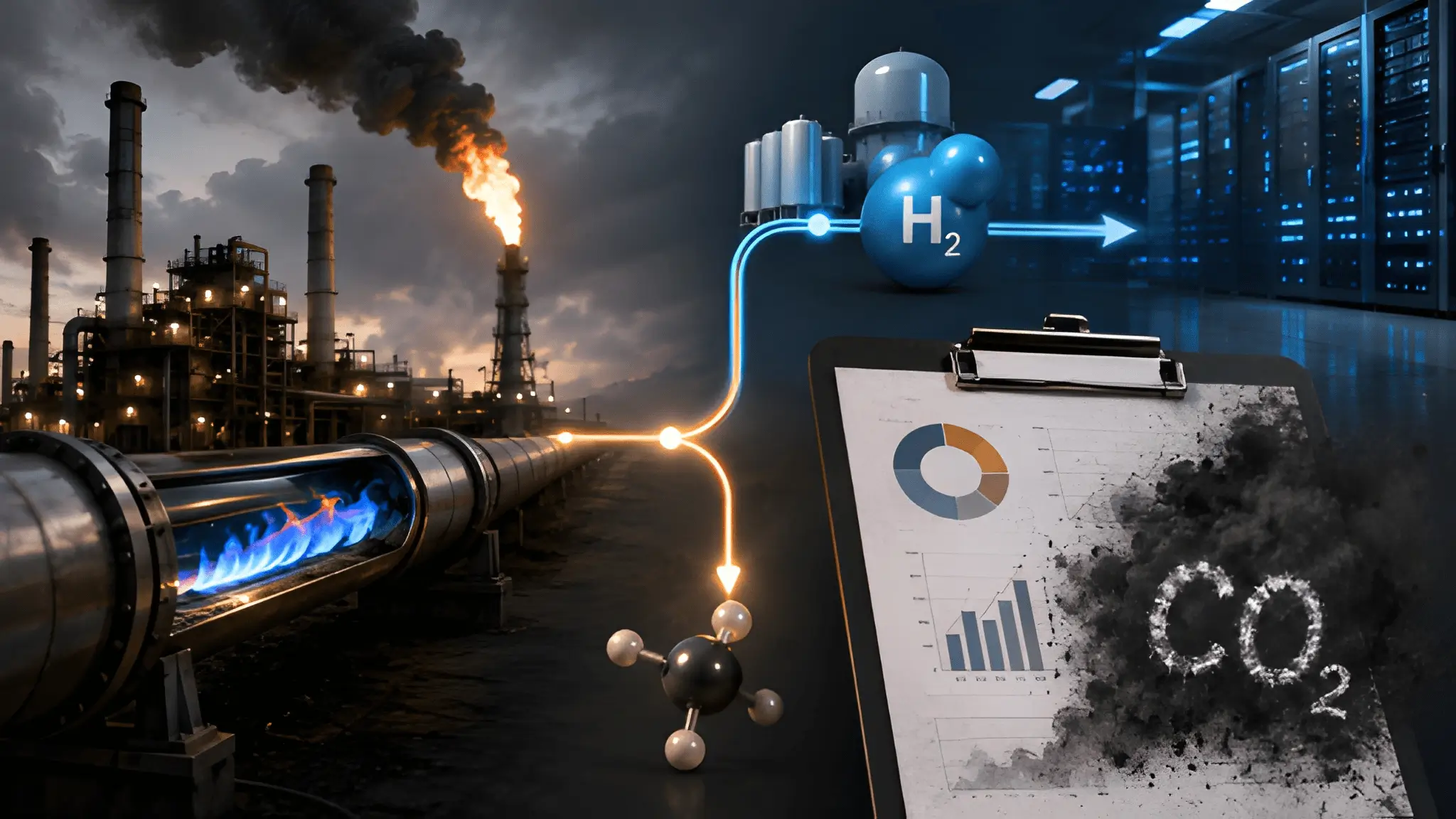
The issue becomes more complicated when natural gas undergoes reforming processes that produce hydrogen for fuel cell operation. External audiences may focus on the presence of hydrogen within the energy system while paying less attention to the methane feedstock required to create it. Hydrogen production through steam methane reforming remains the dominant production pathway across many markets, and associated emissions originate upstream or within the production process itself. Reporting obligations may capture those emissions through different mechanisms depending on ownership structures and operational boundaries. Understanding the emissions implications of hydrogen-based energy systems often requires reviewing fuel sourcing, production pathways, and lifecycle emissions information alongside sustainability disclosures. Investors, customers, and regulators therefore need greater transparency regarding fuel origin rather than fuel label alone.
When “Ready for Hydrogen” Means Five Winters of Gas
The phrase “hydrogen-ready” describes future capability rather than immediate operating conditions. Equipment manufacturers increasingly design fuel cells, turbines, and distributed energy systems that can accommodate hydrogen blends or full hydrogen operation at a later date. Those technical capabilities provide valuable flexibility, but flexibility should not be confused with fuel availability. A facility can possess hydrogen-compatible equipment while consuming methane continuously throughout its early operating years. Project marketing materials often emphasize eventual capability because it demonstrates alignment with long-term decarbonization goals. Infrastructure deployment schedules, however, ultimately determine which fuel reaches the equipment.
Hydrogen supply chains require coordinated investment across production, storage, transportation, and delivery systems. Electrolyzers must secure reliable electricity sources, developers must obtain financing, transport networks require construction, and end users need long-term supply agreements. Each component follows its own timeline and approval process. In contrast, natural gas infrastructure already exists across large portions of North America, Europe, and parts of Asia, allowing developers to connect facilities relatively quickly. Consequently, natural gas is commonly used in energy systems where hydrogen-compatible equipment has been deployed before dedicated hydrogen supply infrastructure becomes available. However, every additional year of reliance increases the risk that temporary arrangements become entrenched operating norms.
Carbon Intensity Math That Breaks the Net-Zero Model
Public discussions frequently treat hydrogen as a low-carbon energy carrier without distinguishing between production pathways. Yet the environmental outcome depends heavily on how the hydrogen originates. Grey hydrogen typically comes from steam methane reforming without carbon capture, while green hydrogen relies on electrolysis powered by low-carbon electricity sources. Those pathways can produce dramatically different lifecycle emissions profiles despite delivering the same molecule to the end user. Carbon accounting frameworks therefore require careful analysis beyond the final fuel consumed inside a facility. Energy procurement decisions become as important as generation technology choices when evaluating total environmental impact.
A data center that plans to transition to hydrogen may experience emissions outcomes during the transition period that differ from those expected under future hydrogen operating scenarios. Lifecycle emissions outcomes depend on factors including hydrogen production methods, methane leakage rates, electricity generation sources, and procurement strategies, making project-specific analysis necessary when comparing energy options. Executive teams evaluating energy architectures must therefore compare complete value-chain impacts rather than technology labels alone. Procurement decisions based solely on future conversion capability risk overlooking emissions generated during the years before conversion occurs. Accurate analysis requires measuring actual fuel inputs and verified lifecycle performance across the entire operating horizon.
The Real Exit: Closing the Gas Trap Before It Closes You
Avoiding long-duration methane dependence requires commercial discipline at the contract stage rather than aspirational statements after commissioning. Developers can structure fuel agreements around measurable transition milestones that trigger specific procurement obligations as hydrogen supply becomes available. Equipment procurement contracts can include performance requirements tied to future fuel conversion readiness, while power supply agreements can establish escalating clean-fuel thresholds. Those provisions create accountability mechanisms that survive leadership changes and shifting market conditions. Financial stakeholders gain greater visibility into transition risks when obligations appear directly within contractual frameworks. Strong governance therefore becomes as important as technology selection.
Co-location strategies offer another pathway for reducing transition risk. Facilities developed near verified low-carbon hydrogen production assets can shorten supply chains and improve confidence in future fuel availability. Site selection teams increasingly evaluate energy ecosystems rather than land parcels alone because infrastructure proximity affects long-term operational flexibility. Furthermore, transparent disclosure practices should clearly distinguish current fuel use from future fuel intentions so stakeholders understand actual operating conditions. Companies that provide detailed reporting on fuel sources, conversion milestones, and lifecycle emissions place themselves in a stronger position as disclosure expectations continue evolving. The organizations most likely to avoid future compliance and reputational challenges will be those that treat fuel transitions as executable infrastructure programs rather than deferred sustainability narratives.