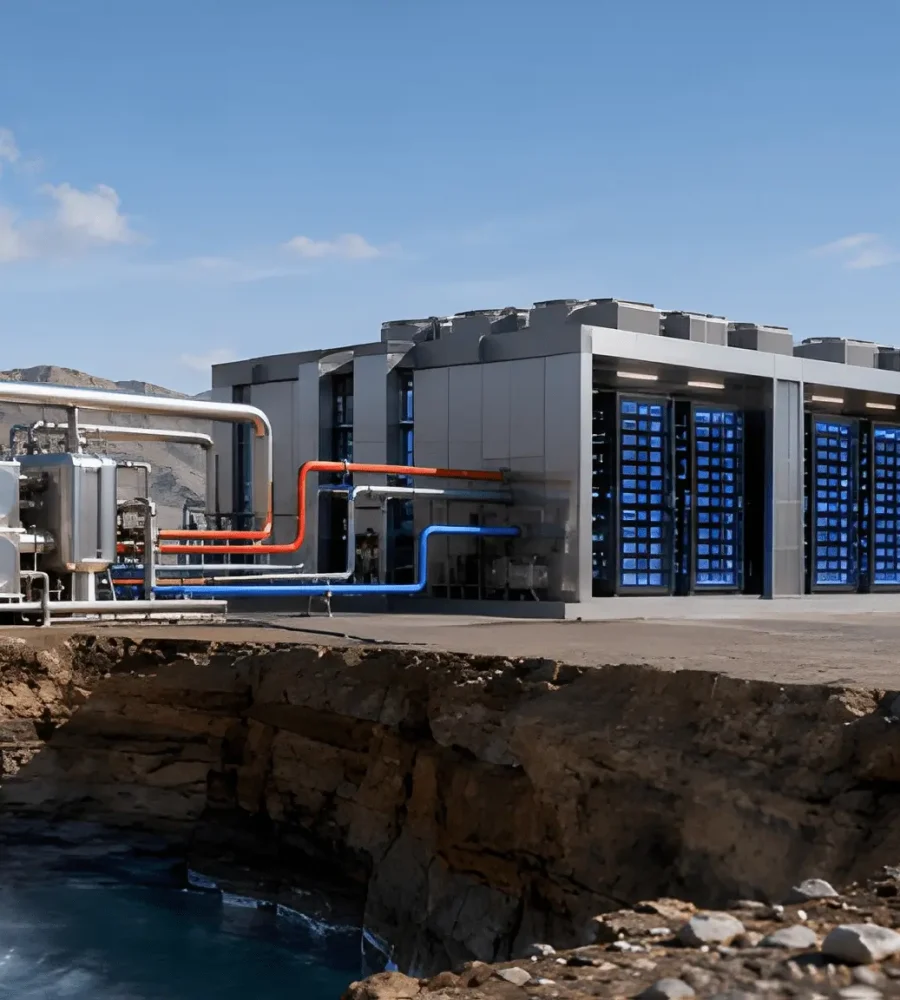

Cooling systems existed to remove thermal energy as quickly as possible because every additional degree threatened equipment performance, operational stability, and service delivery. Operators invested heavily in moving heat away from servers, yet very few asked whether that heat retained economic value after leaving the rack. The assumption persisted because most cooling architectures produced thermal output at temperatures that were difficult to transport, difficult to monetize, and difficult to integrate into real-world heating applications. Waste heat therefore remained an engineering problem rather than a commercial opportunity, leaving the potential of immersion heat reuse largely outside mainstream infrastructure economics.
That assumption is beginning to break down under the weight of changing infrastructure economics. Artificial intelligence workloads have increased rack densities, elevated thermal loads, and accelerated the shift toward liquid-based cooling architectures that can move heat more efficiently than air. Immersion cooling sits at the center of that transition because the technology captures heat directly inside a controlled liquid environment rather than dispersing it through large volumes of conditioned air. The result is not merely improved cooling performance but a fundamentally different thermal product emerging from the facility. Instead of generating low-grade heat that immediately loses value, immersion environments can produce thermal streams that are substantially easier to recover, transport, and reuse. That difference changes how operators evaluate cooling investments and how adjacent industries evaluate data centers themselves.
Why Cooling Economics Are Moving Beyond Energy Efficiency
A notable sign of that transition emerged when Castrol expanded its immersion cooling ecosystem through collaborations with server manufacturers and immersion specialists while developing a dedicated testing environment at its Pangbourne headquarters. The objective was never limited to validating coolant chemistry alone. Real-world testing environments allow operators, equipment vendors, and infrastructure partners to evaluate how cooling fluids interact with servers, tanks, and heat exchange equipment under controlled operating conditions, helping validate performance, compatibility, and maintenance requirements before deployment. Commercial adoption depends on proving entire thermal chains rather than individual components because every participant in a future heat marketplace wants confidence that the energy leaving a server can reliably reach a paying customer. Validation therefore becomes a prerequisite for monetization.
The conversation surrounding heat reuse now resembles discussions that occurred around renewable power procurement several years ago. Early sustainability programs treated renewable energy primarily as a reporting exercise before markets eventually transformed clean power into a tradable commodity with measurable economic value. Waste heat appears to be following a similar trajectory. Financial stakeholders increasingly want evidence that infrastructure assets generate multiple value streams rather than a single service outcome. Every megawatt consumed by a server ultimately becomes heat, which means every data center already produces a potentially useful output. The question is no longer whether thermal energy exists but whether operators possess the infrastructure required to convert it into inventory.
From Cost Center to Cash Flow: The Balance Sheet Flip
For decades, cooling investments justified themselves through cost avoidance. Operators purchased more efficient equipment because they wanted to reduce electricity consumption, improve reliability, or delay capacity expansion. The financial model remained straightforward because cooling existed solely to support computing operations rather than generate revenue. Immersion cooling introduces a broader economic equation because the technology can reduce cooling-related energy consumption while also improving the feasibility of capturing and reusing heat that would otherwise be rejected from the facility. When recovered heat acquires commercial value, the cooling platform no longer functions exclusively as supporting infrastructure. It begins behaving like a productive asset capable of generating additional returns beyond compute services.
Data center operators increasingly evaluate infrastructure investments according to their impact on efficiency, utilization, resilience, and long-term operating costs as compute density continues to increase across modern facilities. Traditional cooling architectures consume energy and remove heat, but immersion systems create opportunities to capture thermal output before it dissipates into the environment. Higher-quality heat enables operators to explore commercial arrangements with neighboring energy consumers who require predictable thermal supply. Revenue does not emerge automatically because successful projects require integration, contractual structures, and long-term operational certainty. Nevertheless, the presence of a monetizable output fundamentally alters investment calculations that previously focused only on efficiency gains.
Rewriting the Financial Narrative Around Waste Heat
The most significant shift may occur in how executives describe cooling infrastructure during capital allocation discussions. Historically, cooling equipment competed against other operational expenditures because its primary purpose involved protecting existing revenue streams. A heat recovery ecosystem creates a different narrative in which thermal infrastructure contributes directly to future earnings potential. That distinction matters because revenue-generating assets often receive different treatment inside investment frameworks than purely defensive expenditures. Demonstrated heat recovery projects show that cooling infrastructure can contribute to broader energy management strategies when operators are able to capture and utilize thermal output effectively.
Emerging heat reuse projects illustrate why this narrative is gaining traction. District heating operators, industrial facilities, greenhouse operators, and thermal network developers increasingly evaluate data centers as stable sources of recoverable energy rather than isolated consumers of electricity. Research examining district heating integration continues to show that data center waste heat can become a valuable thermal input when paired with suitable recovery technologies and temperature management systems. The commercial opportunity therefore depends less on the existence of waste heat and more on the quality, consistency, and accessibility of that heat. Immersion cooling improves all three variables simultaneously, which explains why discussions about thermal reuse have become more serious than previous generations of sustainability initiatives.
The Degrees That Pay: Why 50°C Changes Everything
Not all waste heat carries the same economic potential, and that distinction sits at the heart of why previous heat recovery initiatives often struggled to move beyond pilot programs. Conventional air-cooled environments typically reject heat at temperatures that require significant upgrading before another customer can use the energy for productive purposes. Additional heat pumps, distribution systems, and conversion equipment often absorb much of the value that operators hoped to capture from the recovered energy stream. Infrastructure owners therefore found themselves holding a technically recoverable resource that remained commercially unattractive once real-world delivery costs entered the equation. Thermal recovery became possible in theory while remaining difficult in practice. The gap between technical feasibility and economic viability prevented many projects from reaching long-term deployment.
Immersion cooling changes that equation because the liquid medium captures heat directly from electronic components rather than relying on large volumes of conditioned air to transport thermal energy away from equipment. Direct contact between the coolant and the heat-generating hardware improves thermal transfer efficiency while preserving more of the energy’s usable quality throughout the recovery process. Higher outlet temperatures create opportunities that rarely exist within traditional cooling environments because potential customers can utilize the recovered heat with fewer intermediate steps. Economic value increases when fewer systems stand between the source of the heat and the end user purchasing it. Thermal quality therefore becomes a commercial variable rather than an engineering specification. The conversation shifts away from how much heat a facility produces and toward how useful that heat remains when it reaches a customer.
Temperature Quality Determines Commercial Value
The importance of temperature quality becomes particularly visible when evaluating real-world heating applications. Buildings, industrial processes, agricultural operations, and community heating networks all require thermal energy at specific operating ranges that determine whether recovered heat can enter existing infrastructure. Low-grade heat often requires substantial upgrading before integration becomes practical, while higher-grade heat can move directly into productive use with less complexity. Developers therefore place considerable emphasis on outlet temperatures when assessing the financial viability of heat recovery projects. Small temperature differences can materially affect equipment requirements, operational costs, and contractual economics across an entire project lifecycle. Thermal quality frequently matters more than total thermal volume because customers purchase usable heat rather than theoretical energy potential.
Why Heat Buyers Care About Consistency More Than Sustainability
Commercial heat users generally evaluate recovered heat using the same operational criteria applied to conventional energy supplies, including reliability, availability, temperature suitability, integration requirements, and long-term cost considerations. Sustainability benefits can strengthen project attractiveness, but operational performance remains a fundamental requirement for successful deployment. Immersion cooling improves that reliability profile because data centers produce heat whenever computing equipment operates. Many large-scale AI and cloud workloads operate for extended periods and can generate sustained thermal output, although workload intensity and heat generation profiles vary according to application type and utilization patterns.
Heat therefore becomes a relatively predictable byproduct of digital infrastructure operations. Potential off-takers value that predictability because it allows them to integrate recovered heat into planning processes with greater confidence. Stable thermal output supports long-term contracts, financing structures, and infrastructure investments that would otherwise appear too risky. Consistency transforms waste heat from an opportunistic resource into a dependable utility input. Several district heating initiatives across Europe have already demonstrated that reliable data center heat can serve as a practical component of broader thermal networks when operators establish suitable integration frameworks. These projects reveal a broader lesson that extends beyond district heating itself. Buyers rarely pay for heat because it comes from a data center, and they rarely pay because it improves sustainability metrics alone.
Your Next Tenant Isn’t a Cloud Company
A notable consequence of heat reuse commercialization is the expansion of stakeholders entering conversations that previously revolved entirely around computing infrastructure. Data centers traditionally built relationships with network providers, power suppliers, equipment vendors, and digital service customers. Heat recovery introduces an entirely different ecosystem composed of organizations that consume thermal energy rather than compute resources. Greenhouse operators, food producers, beverage manufacturers, urban heating developers, and agricultural businesses increasingly appear in planning discussions that once focused exclusively on electrical capacity and cooling performance. Their presence reflects a growing recognition that thermal output can support commercial activities beyond the boundaries of the data center itself. Energy leaves the facility but remains economically productive.
Greenhouse operations illustrate the appeal particularly well because controlled-environment agriculture requires substantial and predictable heating throughout the year. Thermal energy represents an ongoing operational requirement rather than an occasional input, which makes recovered heat attractive when supply conditions remain stable. Similar dynamics exist across beverage production, food processing, and selected manufacturing sectors where low- to medium-temperature heat supports routine operations. These organizations evaluate recovered heat through the same lens they apply to any utility service. Reliability, contractual certainty, infrastructure compatibility, and long-term economics generally outweigh marketing considerations. Commercial adoption therefore grows when heat recovery projects satisfy operational requirements first and sustainability goals second.
The Rise of Non-Traditional Heat Off-Takers
The expansion of potential off-takers also changes how operators evaluate site selection decisions. Access to power, connectivity, and land remains essential, yet proximity to thermal demand may increasingly influence future infrastructure planning. A data center located near consistent heat consumers possesses options that a more isolated facility cannot easily replicate. Thermal value diminishes as transportation complexity increases, which means geography plays a critical role in determining commercial viability. Several heat recovery studies identify proximity to potential heat consumers as an important factor affecting the technical and economic feasibility of waste heat utilization projects.
The emergence of dedicated heat customers naturally creates demand for contractual structures capable of governing long-term thermal transactions. Electricity markets evolved through power purchase agreements that established pricing, delivery expectations, and operational responsibilities between producers and buyers. Heat markets require similar mechanisms if participants expect recovered thermal energy to become a reliable commercial product. Heat supply agreements are already used in district heating and industrial energy projects to define pricing structures, delivery obligations, and operational responsibilities between energy suppliers and heat consumers. Contracts transform theoretical opportunity into bankable economics. Financial stakeholders typically require that transition before committing capital to supporting infrastructure.
Heat Purchase Agreements Enter The Conversation
Unlike traditional utility relationships, heat agreements frequently involve parties that possess limited experience working together. Data center operators understand digital infrastructure, while greenhouse operators understand agriculture and district heating providers understand thermal distribution networks. Successful projects therefore require contractual arrangements that clearly define performance obligations, maintenance responsibilities, delivery standards, and risk allocation. Commercial maturity emerges when participants can evaluate opportunities using familiar financial frameworks rather than bespoke arrangements built around individual projects. Standardization reduces uncertainty while supporting broader market adoption. Standardized contractual structures help reduce project complexity and support wider adoption of infrastructure-based energy transactions across multiple industries.
Castrol’s broader immersion cooling ecosystem offers insight into why collaborative models matter throughout this process. Cooling fluids, tanks, servers, heat exchangers, infrastructure operators, and thermal customers all participate in a chain that succeeds only when each component performs reliably. Demonstration environments such as Pangbourne help stakeholders evaluate not merely cooling effectiveness but also the practical realities of moving usable heat from equipment to end users. Commercial markets develop when participants trust both the technology and the surrounding ecosystem. Heat purchase agreements represent the legal expression of that trust. Once those agreements become commonplace, waste heat begins behaving like a tradable infrastructure product rather than a sustainability experiment.
ESG Reports Can’t Fake Joules
Sustainability reporting has matured considerably during the past decade, and that evolution has created new expectations around evidence, traceability, and operational transparency. Investors increasingly distinguish between environmental narratives and measurable performance outcomes because reporting frameworks continue moving toward standardized disclosures that can withstand external scrutiny. Broad statements about efficiency improvements or sustainability commitments often carry less weight than operational data demonstrating how infrastructure assets perform in practice. Data centers therefore face growing pressure to connect environmental claims with quantifiable physical outcomes. Recoverable heat offers an unusual advantage because thermal energy can be measured directly at the point of generation, transfer, and consumption. The underlying physics create a chain of evidence that is difficult to embellish and relatively straightforward to verify.
Heat recovery occupies a unique position within sustainability discussions because it represents a tangible output rather than a modeled estimate. Carbon accounting frequently relies on assumptions regarding energy sourcing, procurement boundaries, or avoided emissions scenarios that may vary across methodologies. Thermal recovery projects instead begin with energy that physically exists and moves through measurable infrastructure. Sensors can track temperatures, flow rates, transfer efficiency, and delivered energy volumes throughout the recovery process. Auditors, investors, and infrastructure partners therefore gain access to operational evidence rather than solely relying on declarations. The conversation shifts from intentions and commitments toward observable outcomes that stakeholders can independently evaluate.
Measurable Heat Recovery Changes The ESG Conversation
Immersion cooling strengthens that transparency because the technology centralizes thermal management within a controlled environment. Operators can monitor how much heat enters the cooling fluid, how much transfers through heat exchange systems, and how much ultimately reaches downstream customers. Each stage generates operational data that supports reporting, verification, and performance assessment. Financial stakeholders increasingly value this visibility because infrastructure investments face mounting scrutiny regarding long-term sustainability claims. Demonstrable heat recovery creates a level of accountability that many environmental initiatives struggle to achieve. Thermal energy either reaches a productive use case or it does not, leaving comparatively little room for interpretation.
A broader shift in capital markets helps explain why thermal recovery attracts increasing attention beyond engineering departments. Infrastructure investors increasingly evaluate whether sustainability initiatives generate operational advantages alongside environmental benefits. Projects that improve resilience, unlock additional revenue opportunities, or enhance asset utilization often attract stronger interest than initiatives designed solely to improve reporting outcomes. Heat recovery sits at the intersection of those priorities because it combines measurable environmental performance with potential commercial returns. The same system that captures waste heat can contribute to both operational efficiency and financial performance. Few sustainability initiatives offer that degree of alignment between environmental and commercial objectives.
Investors Are Looking For Operational Proof
Verification plays a critical role in that equation because financial markets reward evidence more readily than aspiration. A facility capable of demonstrating consistent thermal recovery performance presents stakeholders with information grounded in operational reality rather than future projections. Data points derived from heat exchange systems, energy transfer infrastructure, and customer delivery networks create an audit trail that supports both internal reporting and external disclosures. Confidence increases when stakeholders can evaluate physical outcomes rather than relying entirely on modeled scenarios. Heat recovery therefore becomes valuable not only because it improves sustainability performance but because it generates evidence supporting that performance. Verifiable infrastructure often commands greater confidence than theoretical potential.
That reality explains why immersion cooling demonstrations increasingly emphasize monitoring, validation, and operational transparency alongside thermal performance itself. Stakeholders evaluating future heat reuse projects want assurance that recovered energy can be measured consistently and reported accurately. Demonstration environments help establish those capabilities before commercial agreements move forward. Thermal recovery succeeds when participants trust both the technology and the data supporting it. Reliable measurement creates the foundation upon which commercial contracts, sustainability disclosures, and investment decisions ultimately depend. Reliable measurement and verification practices support investor confidence, operational reporting, and third-party assessment of infrastructure performance.
The ‘Heat Broker’ Role Is Coming
Most infrastructure markets evolve through a familiar pattern. Technical capability appears first, commercial adoption follows, and specialized intermediaries eventually emerge to connect buyers with sellers more efficiently. Electricity markets developed traders, aggregators, and balancing operators because producers and consumers rarely possess identical requirements at identical moments. Telecommunications infrastructure created carriers, exchanges, and service intermediaries for similar reasons. Existing district heating systems, energy service providers, and infrastructure developers already perform coordination functions that connect energy sources with heat consumers across multiple markets. Market complexity naturally creates opportunities for organizations capable of reducing friction between participants.
Data centers rarely specialize in identifying heat customers, negotiating thermal contracts, managing distribution networks, or coordinating regional energy ecosystems. Heat consumers face a similar challenge because they typically understand their own operational requirements better than the technical details of immersion cooling infrastructure. An intermediary capable of understanding both sides can simplify project development considerably. Such organizations may help evaluate technical compatibility, structure commercial agreements, coordinate infrastructure investments, and manage performance expectations throughout the project lifecycle. Their role becomes increasingly valuable as the number of participants expands. Market growth often depends as much on coordination as it does on technology.
Every New Market Creates New Middlemen
The emergence of heat brokers would also help address one of the most persistent challenges facing thermal recovery projects. Valuable heat sources and valuable heat customers do not always discover one another efficiently despite existing within the same geographic region. Matching supply with demand requires information, technical assessment, and commercial coordination. Specialized intermediaries can reduce search costs while accelerating project development. Similar dynamics drove the growth of renewable energy marketplaces and energy procurement advisory services in previous infrastructure transitions. Thermal recovery markets may follow a comparable path as adoption accelerates.
From Cooling Ecosystems To Thermal Ecosystems
The concept already exists in a limited form within many immersion cooling partnerships today. Technology providers, fluid developers, infrastructure specialists, server manufacturers, and deployment partners frequently collaborate to deliver complete cooling solutions rather than standalone products. Castrol’s ecosystem approach reflects that broader reality because successful deployments depend upon coordinated performance across multiple technologies and stakeholders. Heat recovery introduces additional participants into that network, including thermal infrastructure developers, district heating operators, engineering firms, and energy consumers. The ecosystem expands beyond cooling and begins encompassing thermal commerce itself. Commercial value increasingly depends on relationships between organizations rather than the performance of individual products alone.
Demonstration sites play an important role in accelerating that evolution because they provide neutral environments where multiple stakeholders can evaluate technology, validate assumptions, and build confidence in commercial models. Potential customers often require evidence before committing to long-term thermal relationships. Financial institutions, infrastructure developers, and engineering teams frequently share that requirement. A validated ecosystem reduces uncertainty for everyone involved. Heat brokers may eventually become the organizations responsible for translating that confidence into repeatable commercial transactions. When that happens, waste heat will have completed its transition from operational byproduct to actively managed infrastructure commodity.
Lease Language Is Getting Hot
Most colocation agreements were written for an era when electricity entered a facility, powered computing equipment, and left the commercial conversation once cooling systems expelled the resulting heat. Revenue discussions focused on rack space, power commitments, connectivity services, and operational support because those represented the primary products a data center sold to customers. Heat recovery introduces an entirely new category of economic value that existing contract structures rarely address. Commercial energy projects commonly require contractual provisions defining ownership rights, operational responsibilities, and allocation of economic benefits associated with shared infrastructure assets. Commercial agreements therefore face pressure to evolve alongside the underlying infrastructure. The legal framework must eventually catch up with economics.
Questions surrounding ownership become increasingly important as immersion cooling deployments expand. A tenant operating high-density computing equipment generates the thermal energy, yet the operator often owns the cooling infrastructure responsible for capturing, transporting, and monetizing that heat. Both parties contribute to the creation of a potentially valuable resource. Traditional lease language rarely anticipates such arrangements because historical cooling systems produced little recoverable value. Any commercial arrangement involving monetized heat recovery would require clearly defined contractual terms covering operational responsibilities, ownership rights, and performance obligations. Legal certainty becomes increasingly important once thermal energy transitions from waste stream to commercial product. Ambiguity creates friction that can slow otherwise viable projects.
Heat Revenue Is Entering Commercial Negotiations
A similar evolution occurred in renewable energy markets when organizations began negotiating ownership of environmental attributes associated with electricity generation. Questions regarding rights, benefits, and contractual responsibilities emerged only after those attributes acquired measurable economic value. Heat recovery appears to be entering a comparable phase of commercial development. Stakeholders increasingly recognize that thermal output can create financial opportunities extending beyond traditional data center services. Contract language will likely evolve accordingly as operators seek frameworks capable of supporting those opportunities. Commercial innovation often follows infrastructure innovation rather than preceding it.
Heat monetization also introduces strategic considerations that extend beyond revenue sharing alone. Different computing workloads generate different thermal profiles, which can affect cooling system design, heat recovery potential, and overall facility energy management strategies. Consistent, high-density workloads often produce predictable heat output that supports long-term thermal contracts more effectively than highly variable computing activity. Thermal output characteristics are among several technical factors considered when designing cooling and energy recovery systems for high-density computing environments. The economics of computing and the economics of heat may become increasingly interconnected. Infrastructure planning rarely remains static once new revenue streams emerge.
Colocation Economics May Gain A New Dimension
Customers may also begin evaluating facilities through a different lens. Organizations facing growing sustainability expectations increasingly seek infrastructure partners capable of supporting measurable environmental outcomes. Participation in verified heat recovery programs could become a differentiating factor when selecting colocation environments. Some tenants may prefer facilities that can demonstrate productive reuse of thermal energy because those outcomes contribute to broader sustainability objectives and reporting requirements. The value proposition therefore extends beyond operational performance alone. Thermal recovery creates opportunities that benefit both infrastructure providers and computing customers.
Contract negotiations often reveal where markets believe future value will emerge. Growing attention toward heat ownership, thermal revenue sharing, and recovery obligations suggests that stakeholders increasingly view waste heat as an economic asset rather than an unavoidable consequence of computing activity. Lease language may appear mundane compared with advances in cooling technology, yet commercial frameworks frequently determine how rapidly new markets develop. Participants invest more confidently when agreements clearly define rights, responsibilities, and rewards. Thermal recovery markets will likely follow that same pattern. The contracts written during the next several years may shape the economics of heat reuse for decades.
Testing Tanks, Proving Profits
Technical innovation rarely reaches widespread adoption because engineers claim that a technology works. Markets generally demand evidence generated under realistic operating conditions before committing significant capital to new infrastructure models. Immersion cooling follows that familiar pattern because operators, investors, insurers, customers, and energy partners all require confidence that systems will perform consistently over long deployment cycles. Demonstration facilities therefore occupy a critical position within the commercialization process. They provide environments where stakeholders can observe performance, validate assumptions, and examine interactions between technologies before entering long-term commitments. Practical evidence often carries more weight than theoretical projections.
Castrol’s Pangbourne testing environment reflects the growing importance of this validation phase. The facility supports collaboration between technology providers, infrastructure partners, and equipment manufacturers seeking to evaluate immersion cooling performance under operational conditions. Such environments help answer questions extending beyond cooling efficiency itself. Stakeholders can assess equipment compatibility, maintenance requirements, fluid performance, thermal recovery potential, and operational reliability across integrated systems. Commercial adoption accelerates when participants gain confidence in the entire value chain rather than isolated components. Demonstration sites therefore function as market-building infrastructure as much as technical testing environments.
Demonstration Sites Reduce Commercial Risk
Heat recovery projects place particular emphasis on validation because thermal commerce depends upon multiple interconnected systems performing as expected. Cooling infrastructure must capture heat efficiently, transfer systems must deliver that energy reliably, and end users must integrate recovered heat into their own operations successfully. Weakness at any point in the chain can undermine project economics. Demonstration environments allow stakeholders to identify challenges before those challenges affect commercial deployments. Testing reduces uncertainty, and reduced uncertainty often determines whether financing becomes available. Infrastructure markets reward evidence because evidence lowers perceived risk.
Potential heat buyers frequently evaluate projects differently than technology vendors or infrastructure operators. A customer considering a long-term thermal supply agreement ultimately wants confidence that usable heat will arrive consistently under real operating conditions. Technical specifications help, yet many organizations prefer observing complete systems in action before committing to significant infrastructure investments. Demonstration environments satisfy that requirement by showing how energy moves from computing equipment through cooling systems and into practical end uses. Visibility builds confidence because stakeholders can evaluate actual performance rather than relying entirely on documentation. Commercial trust often begins with operational proof.
Seeing The Fluid-To-Faucet Chain Matters
Financial institutions follow a similar logic when assessing emerging infrastructure opportunities. Lenders and investors typically prefer technologies with demonstrated operational histories because performance uncertainty directly affects risk assessments. Live testing environments help generate the evidence required to support more informed investment decisions. Data collected from operational demonstrations provides insights into reliability, maintenance requirements, thermal output characteristics, and commercial viability. That information becomes increasingly valuable as heat recovery projects move from isolated deployments toward broader market adoption. Validation creates the foundation upon which scalable financing structures eventually emerge.
The broader significance of testing environments lies in their ability to transform abstract concepts into observable business models. Heat reuse often sounds compelling in presentations because the underlying logic appears straightforward. Commercial markets, however, depend upon demonstrated execution rather than conceptual appeal. Facilities such as Pangbourne help bridge that gap by showing how thermal energy moves through an integrated ecosystem and ultimately reaches productive end users. Every successful demonstration reduces skepticism and increases market confidence. That process may prove just as important as advances in immersion cooling technology itself.
The Verdict: Stop Venting Value
The history of infrastructure development contains repeated examples of industries discovering value inside outputs that previous generations ignored. Natural gas was once flared because producers considered it an inconvenient byproduct of oil extraction. Industrial waste streams have repeatedly evolved into feedstocks for entirely new markets once technology and economics aligned. Data center heat appears to be approaching a similar turning point. The thermal energy leaving modern computing environments has always existed, yet previous cooling architectures made large-scale commercialization difficult. Immersion cooling changes the quality of the resource and therefore changes the economics surrounding it. Markets often emerge when technology alters the usability of an existing asset rather than creating something entirely new.
Artificial intelligence infrastructure accelerates that shift because rising compute densities continue increasing the concentration of thermal energy inside data center environments. Every computational process ultimately produces heat, and growing demand for digital services ensures that thermal output remains a persistent characteristic of modern infrastructure. Operators therefore face a strategic choice regarding how they manage that resource. One option continues the historical practice of rejecting heat as efficiently as possible. Another option treats thermal energy as inventory capable of generating measurable economic value beyond the facility boundary. The difference between those approaches may influence infrastructure economics more significantly than many stakeholders currently appreciate.
The Infrastructure Industry Is Relearning What Waste Means
Commercial momentum increasingly favors the second path because the supporting ecosystem continues to mature. Cooling technologies, heat recovery systems, thermal networks, reporting frameworks, contractual structures, and validation environments are advancing simultaneously rather than independently. Each development reduces friction for the next participant entering the market. Heat recovery no longer depends upon a single breakthrough because multiple parts of the value chain are evolving together. Market formation often accelerates when complementary innovations reach maturity at roughly the same time. Ongoing investment in immersion cooling, heat recovery technologies, district heating integration, and thermal management research demonstrates growing interest in practical applications for data center waste heat.
Organizations currently deploying immersion cooling and heat recovery systems are generating operational experience that contributes to industry knowledge regarding thermal management, heat reuse, and infrastructure integration. Lessons from these deployments help inform future technical standards, commercial practices, and project development approaches across the sector. Early participants often shape the frameworks, partnerships, and expectations that later entrants must navigate. Organizations experimenting with immersion cooling, thermal recovery, and heat commercialization today are effectively helping define how future markets may operate. Their experiences will influence contractual models, reporting methodologies, operational practices, and investment assumptions across the broader industry. Market leadership frequently begins during periods when uncertainty remains high and established rules have not yet solidified. Thermal recovery appears to be entering precisely that phase.
The First Movers May Define The Market
Several years from now, the most valuable infrastructure assets may not simply be those capable of delivering the greatest amount of compute capacity. Increasing attention may focus on facilities that extract multiple forms of value from every unit of energy entering the site. Electricity powers servers, servers generate heat, and heat supports entirely separate economic activities when operators possess the infrastructure required to capture and distribute it effectively. The facility evolves from a single-purpose asset into a platform supporting multiple interconnected revenue streams. Such transformations have occurred repeatedly throughout infrastructure history. Data centers may simply be the next industry discovering that yesterday’s waste can become tomorrow’s product.
Heat reuse ultimately succeeds not because sustainability teams want a stronger narrative or because operators seek a new marketing message. The concept succeeds when recovered thermal energy becomes valuable enough that market participants willingly buy, sell, measure, finance, contract, and depend upon it. Immersion cooling appears to move the industry closer to that outcome by improving the quality, visibility, and usability of the thermal resource itself. Demonstration environments such as Pangbourne help establish confidence, emerging ecosystems help connect stakeholders, and evolving commercial structures help translate technical capability into revenue. The broader lesson remains remarkably simple despite the complexity surrounding it. Heat is no longer waste once somebody is willing to pay for it.