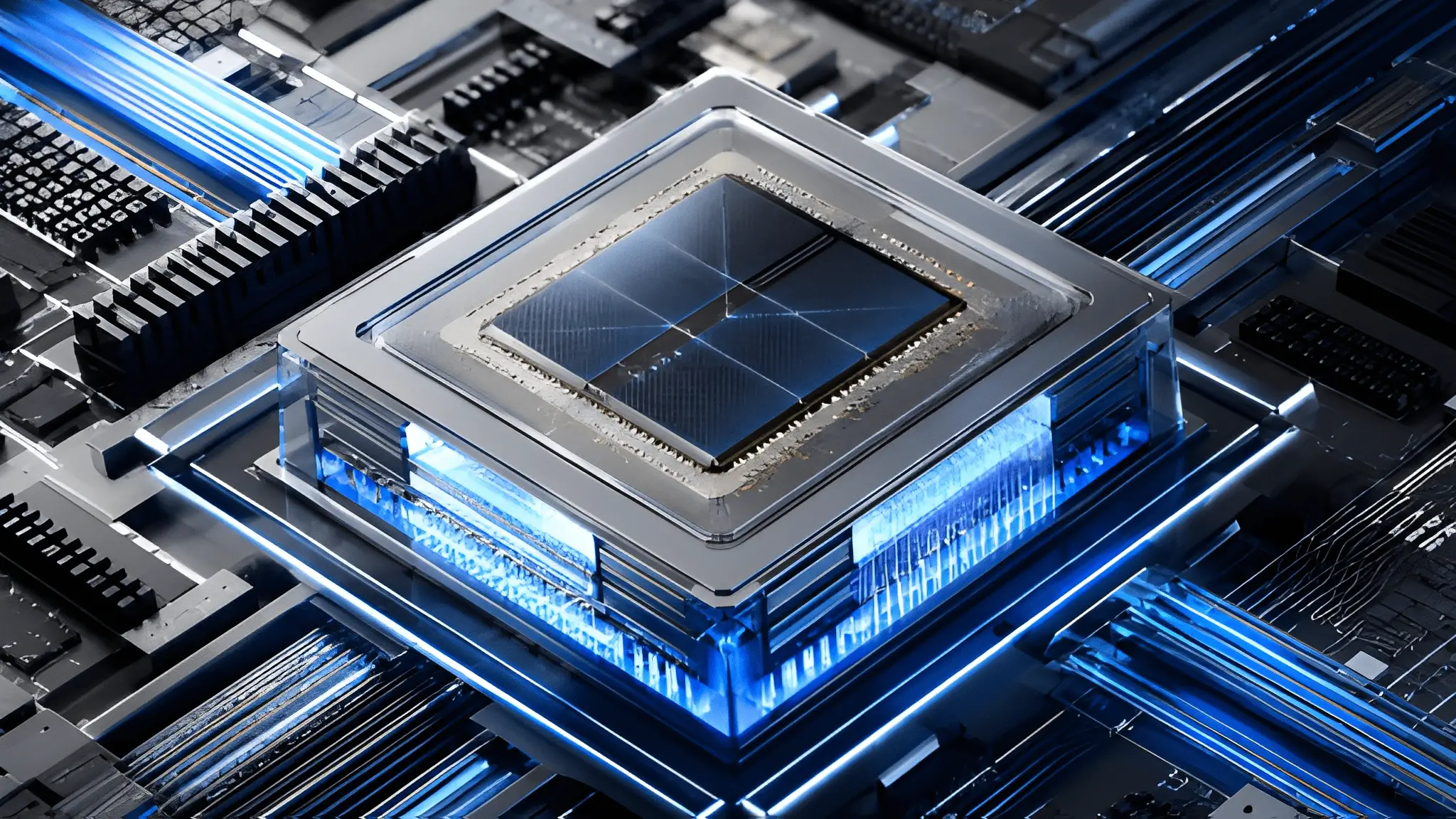
Marvell Technology has now introduced a new switching platform designed specifically for that challenge, unveiling the Teralynx T100, a 102.4 Tbps switch silicon platform built for AI and cloud-scale infrastructure. The company positions the Teralynx T100 as the industry’s first switch at this bandwidth class engineered exclusively for AI workloads rather than adapted from traditional enterprise networking architectures. The chip enters a market where operators continue to seek higher GPU utilization while simultaneously managing growing power and cooling requirements. Marvell says customer sampling will begin during the current quarter.
The announcement arrives at a time when AI infrastructure operators face mounting pressure to improve cluster efficiency. Every networking bottleneck can translate into idle accelerators, increased training times, and higher operational costs. As AI deployments scale into thousands or even hundreds of thousands of GPUs, network design increasingly determines how effectively organizations can extract value from their compute investments. For infrastructure leaders, the introduction signals a broader shift in networking priorities. AI data centers now require architectures optimized around deterministic performance, bandwidth efficiency, and power consumption rather than traditional east-west traffic patterns found in enterprise environments.
Power Efficiency Becomes a Strategic Infrastructure Requirement
Power has rapidly become one of the defining variables in AI data center economics. Modern GPU and XPU systems are approaching power densities of 120 kW per rack, creating significant challenges for operators attempting to expand capacity within existing facilities. These higher densities are also accelerating the adoption of advanced cooling technologies as conventional air-cooling approaches reach operational limits. Networking equipment contributes a meaningful share of total rack power consumption, accounting for approximately 15% to 25% of overall power draw. As a result, switch silicon efficiency now carries implications beyond networking performance alone. It directly influences facility-level power planning, cooling requirements, and infrastructure expansion strategies.
Marvell claims the Teralynx T100 operates at under 1000 watts of typical power consumption. According to the company, that translates into as much as 25% lower power usage compared with competing solutions operating at similar bandwidth levels. The reduction could allow operators to deploy additional accelerators within existing power budgets rather than investing immediately in new electrical infrastructure. Consequently, networking hardware is becoming a strategic lever for AI scaling. Infrastructure teams increasingly evaluate switches not only on throughput and latency but also on their contribution to overall cluster economics.
A Clean-Sheet Design Approach for AI Fabrics
Unlike networking platforms that evolved from previous enterprise and cloud deployments, the Teralynx T100 was designed specifically for AI environments. Marvell built the device as a monolithic 102.4 Tbps switch using advanced 3-nanometer process technology, removing legacy architectural components that traditionally consume additional silicon area and power. The company argues that eliminating these legacy elements enables more efficient network topologies. High-radix switching allows operators to build flatter AI fabrics while reducing the number of network tiers and optical interconnects required across large clusters. Fewer hops across the network can improve latency characteristics and reduce infrastructure complexity.
These architectural advantages carry meaningful implications for AI training environments. Faster communication between accelerators can improve GPU utilization, reduce tail latency, and shorten convergence times for large-scale training workloads. In environments where every percentage point of utilization matters, network efficiency increasingly influences overall AI performance. Furthermore, flatter network architectures can simplify scaling strategies for hyperscalers building next-generation AI campuses. As clusters continue expanding in size, minimizing complexity becomes as important as increasing raw bandwidth.
Marvell Positions T100 for the Next Wave of Hyperscale AI Growth
The launch underscores a growing industry realization that AI infrastructure requires purpose-built networking technologies rather than incremental upgrades to legacy platforms. Hyperscale operators continue to invest heavily in accelerators, but the supporting network must evolve at the same pace to prevent performance bottlenecks.
“As AI workloads evolve and scale exponentially, hyperscalers require network architectures that optimize latency, power and scalability simultaneously,” said Rishi Chugh, vice president and general manager, Data Center Switch Business Unit, at Marvell. “The Teralynx T100 was purpose-built for AI designed without the legacy baggage that inflates power, and engineered to deliver the deterministic performance and efficiency required to scale next-generation data center infrastructure.”
The statement reflects a broader industry trend toward infrastructure specialization. AI networking, AI storage, and AI-optimized power systems are rapidly emerging as dedicated technology segments rather than extensions of traditional data center architectures. For Marvell, the Teralynx T100 represents more than a new switch launch. It is a strategic bet that future AI infrastructure growth will depend on purpose-built networking platforms capable of balancing bandwidth, latency, power efficiency, and scalability. As hyperscalers continue expanding AI capacity worldwide, those attributes may become just as important as the accelerators powering the workloads themselves.