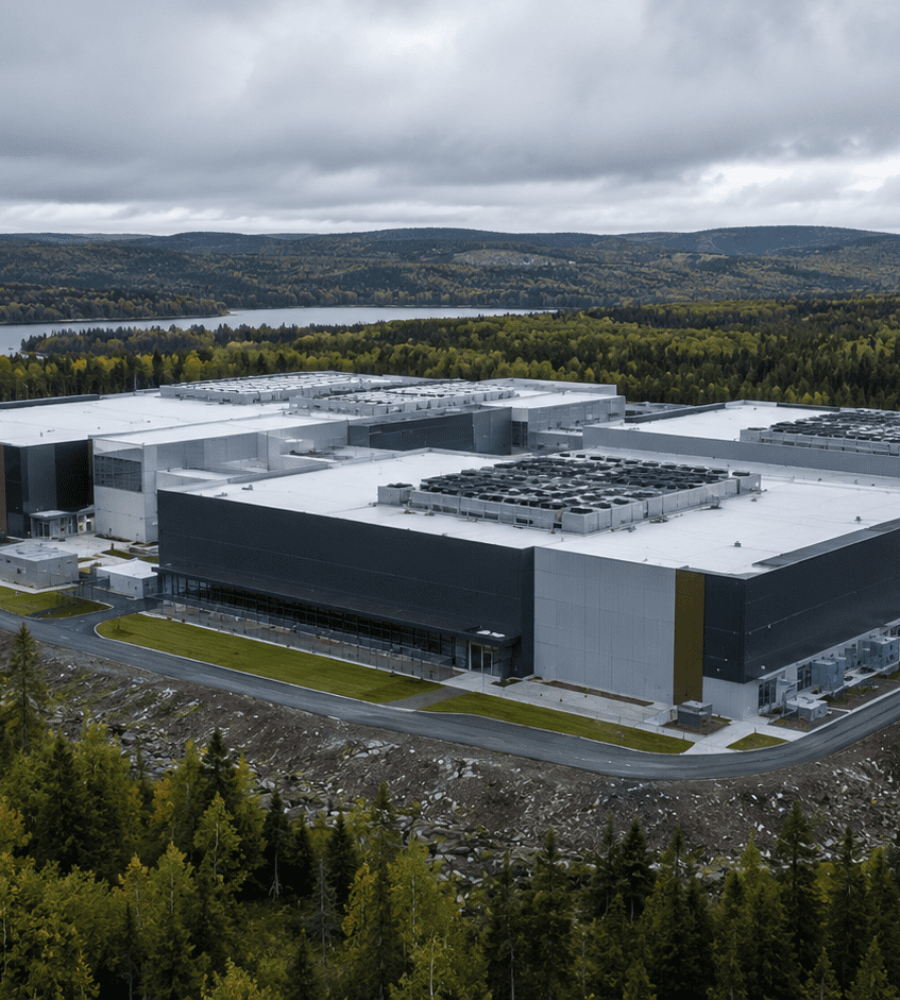
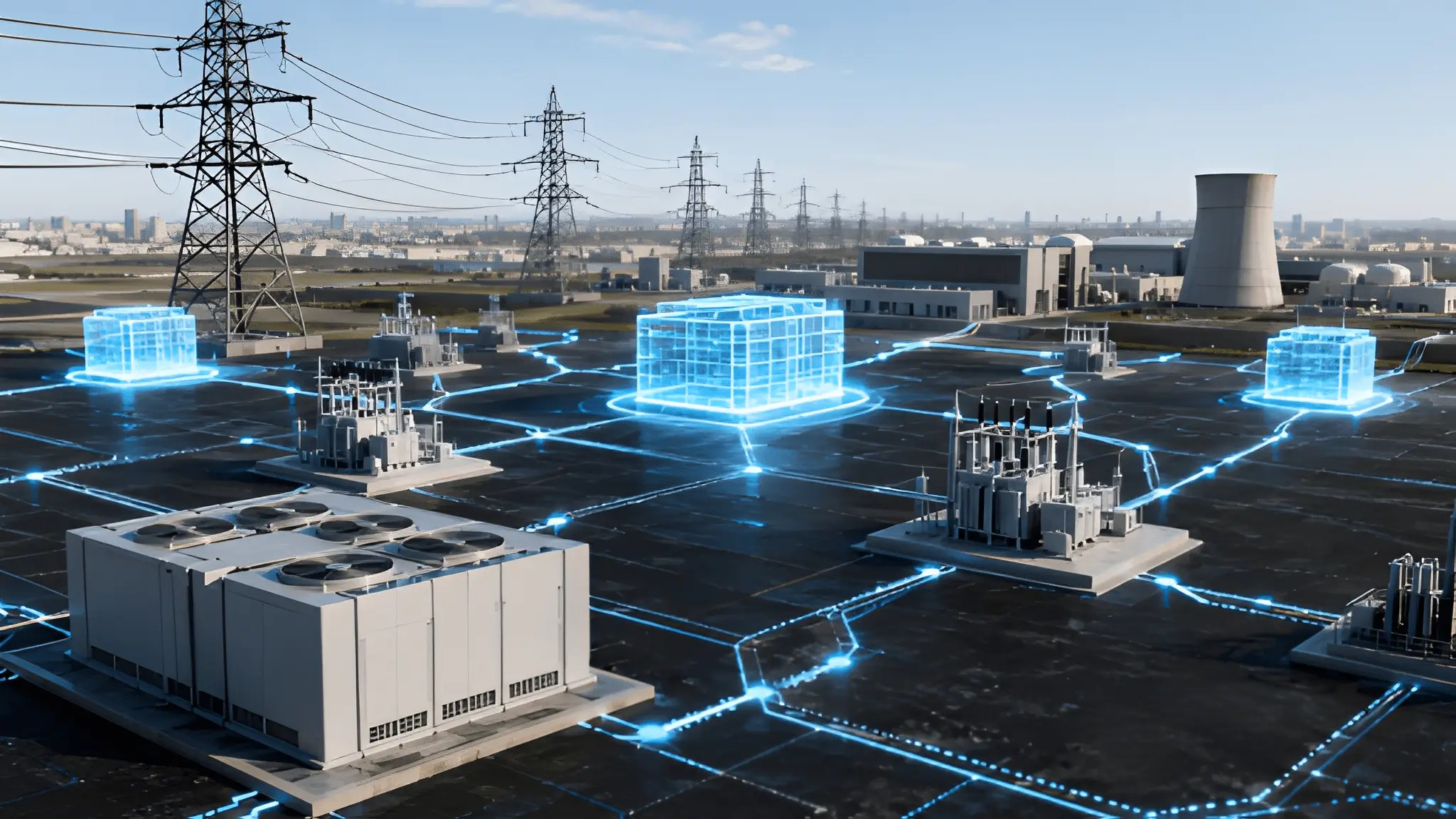
The real competition has begun several layers deeper, inside transmission queues, substation maps, interconnection approvals, and long-range utility planning documents that rarely attract public attention. Operators building the next generation of AI campuses have started treating electricity access as a finite territorial resource rather than a recurring operating expense. That change is beginning to alter how infrastructure markets behave across North America, Europe, the Middle East, and parts of Asia-Pacific where large-scale AI expansion continues accelerating. The companies moving earliest are no longer just securing land and fiber corridors because they are now reserving future electrical capacity years before actual deployment timelines become visible.
The pattern does not resemble traditional infrastructure expansion cycles that followed visible demand growth. Hyperscalers are increasingly filing interconnection requests for capacity far beyond immediate construction requirements because they understand that utility lead times now stretch across multi-year windows in several major markets. Transmission bottlenecks, transformer shortages, and generation constraints have turned power availability into a gating factor for AI deployment itself. Several operators have already discovered that acquiring GPUs means very little if the surrounding grid cannot energize the campus supporting them. That realization has triggered a strategic shift toward pre-emptive electricity reservation behavior that resembles spectrum acquisition more than conventional infrastructure planning. Power capacity is starting to function like strategic inventory, and the largest players are accumulating it aggressively before competitors can react.
Reserved Capacity Is Starting To Reshape Regional Competition
The consequences reach far beyond hyperscale construction pipelines because every reserved megawatt changes regional infrastructure economics. Utilities must now evaluate long-term commitments from companies whose eventual deployment timelines remain fluid and whose actual power utilization may not materialize for years. Smaller cloud operators, regional colocation providers, and sovereign AI initiatives increasingly find themselves competing against speculative reservations backed by balance sheets they cannot match. Markets that once differentiated infrastructure operators through connectivity density or tax incentives are now prioritizing electrical certainty above almost everything else. AI infrastructure competition has therefore started shifting away from visible hardware deployment and toward invisible energy positioning that occurs long before servers ever arrive on-site.
The most significant aspect of this transition lies in how quietly it has unfolded across the industry. Earnings calls continue emphasizing chips, inference demand, and model scaling while the deeper strategic advantage increasingly forms around who controls future power delivery rights. Utility relationships, grid intelligence, transmission forecasting, and interconnection timing are becoming foundational competitive variables rather than operational support functions. Infrastructure planners are beginning to map electricity access with the same intensity previously reserved for fiber routes and network latency optimization. The AI economy may increasingly face growth constraints tied to energy access alongside compute manufacturing, semiconductor supply chains, and transmission scalability.
The Rise of “Phantom Power” Reservations
The phrase “phantom power” has started appearing informally among infrastructure planners describing electrical capacity that exists on utility reservation ledgers but not yet inside active deployment environments. Hyperscalers increasingly reserve future megawatt allocations long before they finalize construction schedules because waiting until deployment begins often means entering multi-year interconnection queues with uncertain completion windows. Transmission expansion timelines rarely align with the speed of AI infrastructure financing, creating pressure to secure electricity rights before land development even starts. Utility operators across major AI corridors now face growing volumes of speculative reservation requests that exceed near-term energization requirements by substantial margins. This behavior reflects rational strategic planning from hyperscalers, yet it simultaneously creates the appearance of scarcity for everyone else attempting to enter those markets later.
Utility Queues Are Becoming Strategic Battlegrounds
Large-scale interconnection queues were originally designed around industrial expansion patterns that moved relatively predictably from planning to deployment. AI infrastructure growth does not follow those historical assumptions because hyperscalers increasingly pursue parallel site strategies across multiple regions simultaneously. Companies now reserve transmission access across several potential campuses knowing that only a subset may eventually become fully operational. Utilities therefore must model future demand against requests that represent strategic optionality rather than confirmed deployment certainty. Regional operators without hyperscale capital flexibility cannot afford similar reservation behavior because tying up unused electrical allocations creates substantial financial exposure. The imbalance gives the largest infrastructure players disproportionate influence over future grid access before physical development even begins.
Interconnection approval processes have consequently transformed into competitive positioning exercises rather than administrative utility procedures. Operators securing earlier queue positions gain substantial leverage because later applicants often inherit longer energization delays and reduced infrastructure flexibility. Transmission operators must evaluate reservation legitimacy while avoiding the risk of underbuilding future capacity in regions experiencing explosive AI-related demand growth. Several utility markets now face concerns that speculative reservations could crowd out productive regional development if unused allocations remain locked for extended periods. The challenge becomes particularly severe in fast-growing AI corridors where infrastructure construction timelines already strain transformer supply chains and transmission expansion schedules. Phantom reservations therefore create economic consequences even before actual electricity consumption starts occurring.
Future Capacity Is Starting To Behave Like Scarce Real Estate
Electricity access traditionally functioned as a service delivered after industrial planning concluded rather than a standalone strategic asset requiring early acquisition. AI infrastructure expansion is reversing that logic because future power availability increasingly determines whether projects can exist at all. Hyperscalers have started treating undeployed electrical capacity similarly to land banking strategies historically used in commercial real estate development. Companies reserve future megawatts not merely for current workloads but for optionality against future market uncertainty and competitive pressure. Several infrastructure developers now evaluate prospective sites primarily through projected utility expansion pathways instead of immediate deployment characteristics. Electricity forecasting is increasingly becoming intertwined with long-term infrastructure investment strategy as operators attempt to secure future scalability ahead of regional grid constraints.
This emerging behavior reshapes regional infrastructure planning because undeployed allocations still influence utility investment decisions and market expectations. Areas perceived as “claimed” by hyperscalers may discourage smaller entrants from pursuing development there even when actual consumption remains years away. Infrastructure investors increasingly analyze transmission planning documents with the same intensity once directed toward commercial zoning maps and tax policy incentives. Regional competition now revolves around who can establish early control over future electrical growth corridors before demand fully materializes. Phantom capacity reservations therefore influence market behavior long before physical infrastructure appears on the ground. The AI boom has effectively created a pre-deployment electricity economy operating beneath the visible layer of active data center construction.
When Energy Contracts Become Competitive Weapons
Long-term power agreements once functioned primarily as cost-management tools that stabilized electricity pricing for large infrastructure operators. AI expansion has transformed those agreements into strategic competitive barriers capable of shaping entire regional markets before deployment begins. Hyperscalers increasingly negotiate multi-decade energy arrangements that secure preferential access to future generation capacity, transmission prioritization, and utility infrastructure commitments unavailable to smaller competitors. Those agreements now influence whether emerging operators can realistically enter major AI corridors at commercially viable scale. Electricity contracting has therefore evolved from procurement activity into infrastructure warfare conducted through utility negotiations rather than visible technology competition.
Long-Term Agreements Are Reshaping Market Entry
Regional cloud operators and independent colocation firms increasingly face an uncomfortable reality when entering high-growth AI markets. Utilities negotiating with hyperscalers often prioritize large-scale guaranteed demand commitments because those contracts support long-term infrastructure investment planning and revenue stability. Smaller operators cannot easily match the duration, scale, or financial assurances embedded within hyperscale agreements. This imbalance affects more than pricing because it also shapes queue prioritization, infrastructure scheduling, and generation allocation visibility across future planning cycles. Some infrastructure markets may increasingly favor operators capable of securing large-scale long-term electricity commitments as utility expansion becomes more closely aligned with hyperscale demand forecasts.
Several infrastructure regions already display early signs of this concentration effect. Operators entering late frequently encounter reduced transmission headroom, slower energization windows, and fewer favorable utility partnership opportunities because earlier agreements consumed much of the immediately expandable capacity. Hyperscalers effectively create defensive moats around future deployment regions through contractual positioning rather than direct exclusivity clauses. Utilities may not formally block smaller entrants, yet the remaining infrastructure conditions become materially less attractive after large reservations dominate regional planning assumptions. AI infrastructure competition therefore increasingly favors organizations capable of locking in energy access years before actual compute deployment begins. Electricity contracts have become instruments of market shaping rather than straightforward procurement mechanisms.
Electricity Certainty Now Carries More Strategic Value Than Land
Traditional site selection models emphasized tax incentives, fiber density, labor availability, and physical expansion potential as primary infrastructure considerations. Those variables still matter, although electricity certainty increasingly overrides them when operators evaluate AI deployment strategies. A geographically perfect campus location means very little if transmission upgrades will not arrive for several years or if utility expansion pathways remain uncertain. Hyperscalers have therefore started valuing guaranteed future power access above many previously dominant infrastructure considerations. Regional competition increasingly centers on which markets can provide scalable electrical confidence rather than merely attractive economic development packages.
This shift creates cascading consequences for infrastructure accessibility because energy certainty is not distributed evenly across operators. Large hyperscalers possess dedicated energy strategy teams capable of modeling transmission forecasts, generation pipelines, and utility investment trajectories at extraordinary depth. Smaller infrastructure firms rarely maintain equivalent analytical capacity or negotiation leverage. Energy intelligence has consequently become a competitive differentiator alongside compute architecture and network design. The companies understanding future electrical constraints earliest can secure structural advantages before the broader market recognizes those bottlenecks. AI infrastructure expansion is therefore evolving into a competition over predictive energy positioning rather than simply physical deployment execution.
The New Speculative Asset in AI Infrastructure
The AI infrastructure market has started assigning financial value to something that does not physically exist yet: undeployed electrical capacity. Reserved megawatt allocations are beginning to carry speculative strategic value within AI infrastructure planning as future power availability becomes harder to secure across major deployment regions.. Land values historically appreciated once utilities expanded toward a region, but the current cycle operates differently because the utility connection itself has become the appreciating asset. Infrastructure investors now evaluate projects partly through how much future electrical access they control rather than how many servers they currently operate. This subtle transition is reshaping financing behavior across data center development, energy partnerships, and regional expansion strategies.
Reserved Megawatts Are Gaining Financial Leverage Before Deployment
Infrastructure developers increasingly market future power entitlements as strategic advantages even when campuses remain years away from operation. Investors evaluating AI infrastructure opportunities now ask detailed questions about substation proximity, interconnection approvals, and transmission scalability before examining deployment density or compute architecture. A project controlling expandable utility access may attract stronger financing conditions than one possessing superior real estate but uncertain electrical growth pathways. Reserved capacity therefore starts accumulating financial significance independent of active consumption because future energization timelines have become commercially critical. The AI market is effectively assigning option value to electricity rights long before infrastructure becomes operational.
This speculative layer introduces entirely new behaviors into infrastructure planning and acquisition markets. Operators may secure energy allocations partly to strengthen future financing positions even if near-term deployment remains limited or uncertain. Regional developers can leverage future utility commitments during partnership negotiations because future capacity visibility now signals strategic relevance to hyperscalers and cloud investors. Transmission-linked land parcels increasingly trade at premiums driven by anticipated electrical scalability rather than existing operational assets. Future energy access may increasingly influence infrastructure valuations and financing leverage before compute deployments become operational. Investors are increasingly assigning strategic value to scalable future electricity access as utility constraints become more visible across AI infrastructure markets.
Infrastructure Speculation Is Moving Beneath The Compute Layer
Previous data center cycles concentrated speculative activity around land accumulation, connectivity density, and regional tax optimization strategies. The AI expansion cycle pushes speculation deeper into the utility layer because power availability now determines deployment feasibility more directly than several traditional incentives combined. Infrastructure investors increasingly track transmission planning maps, transformer manufacturing timelines, and generation interconnection schedules as indicators of future market value. Utility forecasting models are becoming part of infrastructure underwriting decisions rather than purely operational planning tools. Speculation has therefore migrated from visible infrastructure assets toward invisible energy positioning that determines future scalability.
The consequences extend beyond investor behavior because speculative reservations influence how regions evolve economically. Areas perceived as future hyperscale energy corridors may attract infrastructure capital long before active development occurs, while neighboring regions without projected utility expansion lose momentum regardless of geographic advantages. Smaller operators face growing pressure because speculative energy positioning raises entry barriers before they can establish operational footholds. The market gradually begins rewarding future access control more aggressively than present deployment capability. AI infrastructure is therefore entering a phase where undeployed electricity carries strategic and financial influence comparable to active compute resources.
Why Utility Maps Are Becoming Silicon Valley’s New Playbook
The most valuable infrastructure intelligence inside the AI industry no longer sits exclusively within semiconductor roadmaps or cloud software ecosystems. Increasingly, it exists inside utility expansion plans, transmission congestion studies, interconnection filings, and regional energy forecasting models that reveal where scalable electricity will become available first. Hyperscalers are building internal capabilities dedicated to understanding future grid evolution with extraordinary precision because utility visibility now shapes deployment sequencing across entire AI portfolios. This shift reflects a broader recognition that compute expansion depends as much on energy geography as it does on chip procurement or network design. Infrastructure strategy teams now study electrical systems with the same intensity that previous generations analyzed internet backbone growth.
Energy Intelligence Is Replacing Traditional Expansion Metrics
Fiber density and tax incentives once dominated regional expansion conversations because operators assumed electricity availability would follow infrastructure demand with manageable delays. AI workloads changed that assumption by dramatically increasing power density requirements and accelerating regional grid stress. Hyperscalers therefore began prioritizing markets where utility operators demonstrated long-term transmission scalability, generation diversification, and faster interconnection execution. Some regions possessing attractive connectivity economics lost momentum because electrical expansion pathways looked increasingly uncertain. Utility intelligence has consequently become a decisive infrastructure planning discipline rather than a supporting operational consideration.
Infrastructure strategy teams now evaluate variables that rarely appeared in earlier data center expansion models. Transmission congestion risk, renewable integration capacity, reserve margin projections, and substation upgrade schedules increasingly influence where AI campuses get built. Companies also study political attitudes toward transmission permitting and generation development because regulatory friction can delay energization timelines substantially. Energy forecasting therefore shapes competitive infrastructure strategy at a level previously reserved for semiconductor procurement planning. The companies interpreting utility evolution most accurately gain earlier access to scalable deployment corridors while competitors react after constraints become visible to the broader market.
Transmission Visibility Is Becoming A Competitive Advantage
Regional transmission systems historically operated as background infrastructure supporting economic growth without attracting major strategic attention from technology firms. AI infrastructure expansion has elevated transmission visibility into a direct competitive advantage because electrical bottlenecks increasingly determine deployment sequencing. Hyperscalers now analyze how power physically moves across regions, where congestion emerges, and which substations possess scalable expansion potential years before those constraints appear publicly obvious. Transmission mapping has effectively become part of infrastructure market intelligence.
Several operators are already restructuring expansion priorities around projected utility resilience rather than immediate deployment economics. Regions with slower connectivity growth but stronger transmission scalability may outperform historically dominant infrastructure hubs struggling with electrical saturation. Energy resilience, transmission flexibility, and utility responsiveness increasingly outweigh incentives that previously attracted large-scale data center investment. This evolution changes how entire regions compete for AI infrastructure because electrical adaptability now determines long-term strategic relevance more than traditional economic development frameworks alone. The infrastructure market is increasingly prioritizing electricity scalability alongside traditional connectivity and deployment considerations.
The AI Boom’s Invisible Divide: Energy Access Inequality
The AI infrastructure race is beginning to produce a divide that remains mostly invisible outside specialized infrastructure circles. Large hyperscalers possess the financial scale, utility relationships, and long-range forecasting capabilities required to secure future electricity access before demand fully materializes. Smaller operators, sovereign AI projects, regional cloud providers, and emerging inference platforms rarely maintain equivalent leverage within utility negotiations. This imbalance risks creating a market where energy access itself determines who can participate meaningfully in large-scale AI deployment. The divide therefore forms beneath the visible layer of GPUs and model architectures because the real bottleneck increasingly centers on who can secure scalable power pathways early enough.
Smaller Operators Are Losing Access To Prime Energy Corridors
Independent infrastructure providers increasingly encounter regions where future electrical headroom appears largely spoken for before deployment planning even begins. Hyperscale reservation behavior influences utility assumptions regarding future load growth, often leaving smaller entrants with less favorable timelines and constrained scalability options. The issue extends beyond immediate availability because utilities naturally prioritize projects offering predictable large-scale demand and long-duration revenue visibility. Smaller operators therefore face structural disadvantages even in markets that remain technically open to new development. Energy inequality emerges not through formal exclusion but through asymmetrical access to future infrastructure certainty.
Sovereign AI initiatives may encounter similar challenges while attempting to establish regional compute independence. Governments seeking domestic AI infrastructure capacity could discover that large portions of scalable utility expansion have already been aligned with hyperscale demand trajectories. Regions without abundant electrical surplus may struggle to support both hyperscale growth and independent regional compute ecosystems simultaneously. The imbalance creates long-term strategic implications because energy-constrained regions may become increasingly dependent on infrastructure controlled by a small number of dominant operators. AI infrastructure concentration therefore risks reinforcing broader market centralization through energy access dynamics rather than purely technological superiority.
Energy Scarcity Could Reshape Regional AI Development
Energy access inequality may gradually alter which regions participate meaningfully in advanced AI deployment over the coming decade. Markets with abundant scalable electricity and proactive utility expansion strategies could attract disproportionate infrastructure concentration while constrained regions fall behind despite possessing strong technical talent or connectivity advantages. Regional operators unable to secure large-scale power access may shift toward niche deployment models or lower-density workloads because hyperscale-scale training environments become increasingly difficult to support. The AI economy therefore risks evolving unevenly according to electricity availability rather than purely innovation capacity.
This divergence also affects pricing structures throughout the broader infrastructure ecosystem. Scarce power availability tends to increase land values, energization costs, and deployment premiums across constrained regions, making market entry progressively harder for emerging firms. Hyperscalers can absorb those pressures more easily because their scale supports long-term infrastructure positioning strategies unavailable to smaller participants. The invisible divide around electricity access may therefore widen gradually through infrastructure economics rather than explicit market barriers. AI competition increasingly depends not only on compute ownership but on the ability to secure future energy territory before scarcity intensifies further.
How Idle Megawatts Could Distort AI Infrastructure Markets
Reserved electricity capacity does not remain economically neutral while waiting for deployment. Idle megawatts still influence utility planning assumptions, transmission allocation models, regional pricing expectations, and future infrastructure availability even when no active workloads consume that energy. AI infrastructure markets therefore face a growing risk where reserved-but-unused capacity creates artificial tightness across regions experiencing aggressive hyperscale expansion. Utilities must build around projected demand that may arrive gradually, unevenly, or later than initially expected. This dynamic can distort infrastructure economics across entire markets because undeployed reservations still reshape how future capacity gets distributed.
The issue becomes particularly significant in regions where transmission upgrades and substation expansions already require long lead times. If large portions of future capacity remain tied to speculative or delayed deployments, regional growth may slow despite technically sufficient generation existing elsewhere in the grid. Smaller operators entering those markets often encounter constrained availability because utilities allocate planning priority around previously reserved demand forecasts. The resulting bottleneck does not always reflect immediate electricity shortages but rather future capacity expectations shaped by hyperscale reservation behavior. Idle megawatts therefore influence market conditions long before physical consumption materializes.
Infrastructure ecosystems depend heavily on predictable expansion visibility because suppliers, contractors, and regional developers align investments around expected deployment activity. Reserved capacity that remains unused for extended periods can interrupt that coordination by creating uncertainty around when actual infrastructure growth will occur. Construction pipelines may stall, regional investment timing may weaken, and utility capital planning can become harder to optimize accurately. Markets function most efficiently when energy reservations align relatively closely with real deployment schedules. AI infrastructure expansion increasingly challenges that balance because strategic optionality now drives reservation behavior as strongly as immediate operational necessity.
Artificial Scarcity Could Slow Regional Infrastructure Growth
Energy scarcity inside AI markets may increasingly reflect allocation dynamics rather than purely physical supply limitations. Regions can appear constrained because future transmission headroom has already been reserved despite significant portions remaining undeployed for years. This artificial tightness discourages new entrants who perceive limited scalability even when actual consumption remains below projected levels. Infrastructure developers may redirect investment toward secondary markets simply because primary corridors appear commercially inaccessible. The distortion therefore affects how infrastructure capital flows across regions rather than merely how electricity gets consumed.
Utility operators face difficult balancing decisions while managing these conditions because underestimating future AI demand risks grid insufficiency while overcommitting infrastructure toward speculative reservations creates inefficiency. Transmission expansions, transformer procurement, and generation planning require enormous lead times and capital commitments that utilities cannot reverse easily once initiated. Reserved-but-undeployed capacity could contribute to perceived infrastructure tightness in some regions where utility expansion timelines already face significant pressure. Several markets already experience uncertainty around how aggressively utilities should build against future hyperscale projections. Idle megawatts therefore shape infrastructure economics through planning ambiguity as much as through direct scarcity effects.
Infrastructure Pricing May Inflate Around Energy Access
Electricity access constraints increasingly ripple outward into broader infrastructure pricing structures. Land positioned near expandable substations commands rising premiums because future energization certainty now carries enormous strategic value. Contractors, utility consultants, and transmission engineering firms also experience increased pricing pressure as hyperscale competition intensifies around deployable energy corridors. Reserved capacity indirectly inflates surrounding infrastructure costs because the market perceives future scarcity even before deployment accelerates fully. AI infrastructure economics therefore become increasingly tied to expectations around future energy accessibility rather than only present operational conditions.
Regional operators and emerging AI firms feel these pressures most sharply because they lack the scale required to absorb escalating infrastructure costs comfortably. Markets dominated by large-scale reservation activity gradually become harder for smaller participants to enter profitably. Energy access inflation can therefore reinforce hyperscale dominance indirectly by raising ecosystem-wide deployment barriers over time. Infrastructure concentration emerges not only through technological scale advantages but through the compounding economics surrounding future electricity control. The AI market is beginning to display characteristics where access to scalable energy corridors shapes commercial viability as strongly as compute capability itself.
The Shift From Compute Density to Energy Territory
For years, AI infrastructure competition revolved around who could deploy denser compute clusters, faster interconnects, and more advanced accelerators inside increasingly concentrated campuses. That competitive framework is now evolving because energy territory is becoming as strategically important as compute density in large-scale AI expansion planning. Hyperscalers increasingly prioritize geographic control over future electricity pathways, transmission corridors, and utility expansion zones because compute hardware can eventually be purchased while scalable power access may not remain easily obtainable. Infrastructure competition is therefore shifting from vertical optimization inside campuses toward horizontal control across regional energy ecosystems.
Geographic Energy Dominance Is Becoming A Strategic Objective
Several hyperscalers now evaluate expansion through multi-region energy positioning strategies rather than isolated campus economics. Companies seek control over geographically diversified electricity corridors that reduce exposure to regional grid constraints, regulatory shifts, or transmission bottlenecks. This approach resembles territory-building behavior historically associated with transportation infrastructure, logistics networks, and telecommunications backbones rather than traditional data center expansion. Future scalability increasingly depends on who controls expandable energy geography before constraints intensify further. AI infrastructure therefore evolves into a contest over regional electrical influence rather than simply compute deployment speed.
The strategic logic behind this transition remains relatively straightforward despite its enormous implications. GPU supply chains eventually normalize, semiconductor manufacturing expands, and networking technologies continue improving over time. Large-scale utility expansion operates much more slowly because transmission permitting, generation development, and grid modernization require extended planning cycles. Operators securing advantageous energy territory early gain long-duration strategic leverage that competitors may struggle to replicate later regardless of hardware purchasing power. Electricity geography therefore becomes a foundational competitive layer beneath the visible AI stack.
AI Expansion Is Becoming Increasingly Geographic
The next phase of AI infrastructure growth may depend less on how efficiently companies optimize individual campuses and more on how effectively they distribute energy access across regions. Geographic diversification allows hyperscalers to balance workloads against varying utility conditions, transmission availability, and regional energy costs while reducing dependency on saturated markets. Infrastructure planners increasingly treat electricity corridors as strategic deployment canvases capable of supporting future AI ecosystems over decades rather than years. Regional positioning therefore matters as much as technical optimization inside any single facility.
This geographic mindset also changes how regions compete for infrastructure investment. Markets with expandable grid architectures, resilient transmission systems, and supportive energy planning may attract sustained AI development even if they historically lacked dominant connectivity advantages. Utility adaptability increasingly shapes regional competitiveness because energy scalability now determines long-term deployment viability. Infrastructure competition consequently extends beyond data center construction into broader energy system evolution across entire territories. The AI race is gradually becoming a contest over who can secure and sustain future electricity ecosystems at industrial scale.
Power Control May Decide the AI Winners
The AI industry still speaks publicly about models, accelerators, and software ecosystems as the primary forces shaping future leadership. Those factors remain critically important, although a deeper competitive layer is forming beneath them around energy timing, infrastructure access, and electricity control. Companies that secure scalable power pathways early may gain structural advantages lasting far longer than any individual hardware generation cycle. Infrastructure timing increasingly matters because utility expansion cannot accelerate at the pace software markets typically expect. The organizations positioning themselves ahead of future electrical constraints are effectively shaping the physical boundaries within which the next AI economy will operate.
The strongest advantage may not belong to whoever builds the largest campuses or acquires the most GPUs during any single cycle. Competitive resilience increasingly depends on who can sustain reliable expansion while surrounding markets confront transmission congestion, energization delays, and infrastructure scarcity. Early energy reservations, utility partnerships, and regional positioning strategies therefore function as long-duration competitive assets rather than operational support measures. Power access is becoming foundational infrastructure leverage capable of influencing deployment speed, market accessibility, and ecosystem concentration simultaneously. AI infrastructure leadership may ultimately reflect who mastered electricity logistics before scarcity became universally visible.
This transition carries broader consequences for how the technology industry evolves over the coming decade. Infrastructure concentration around a small number of energy-dominant operators could reshape cloud competition, regional compute sovereignty, and market accessibility for emerging AI firms. Governments, utilities, and regional infrastructure developers may eventually face pressure to reconsider how future electrical capacity gets allocated across increasingly strategic AI markets. Energy access has moved beyond operational necessity and into the center of competitive infrastructure strategy itself. The companies understanding that shift earliest are already positioning for an era where controlling electricity pathways may matter more than controlling compute hardware alone.