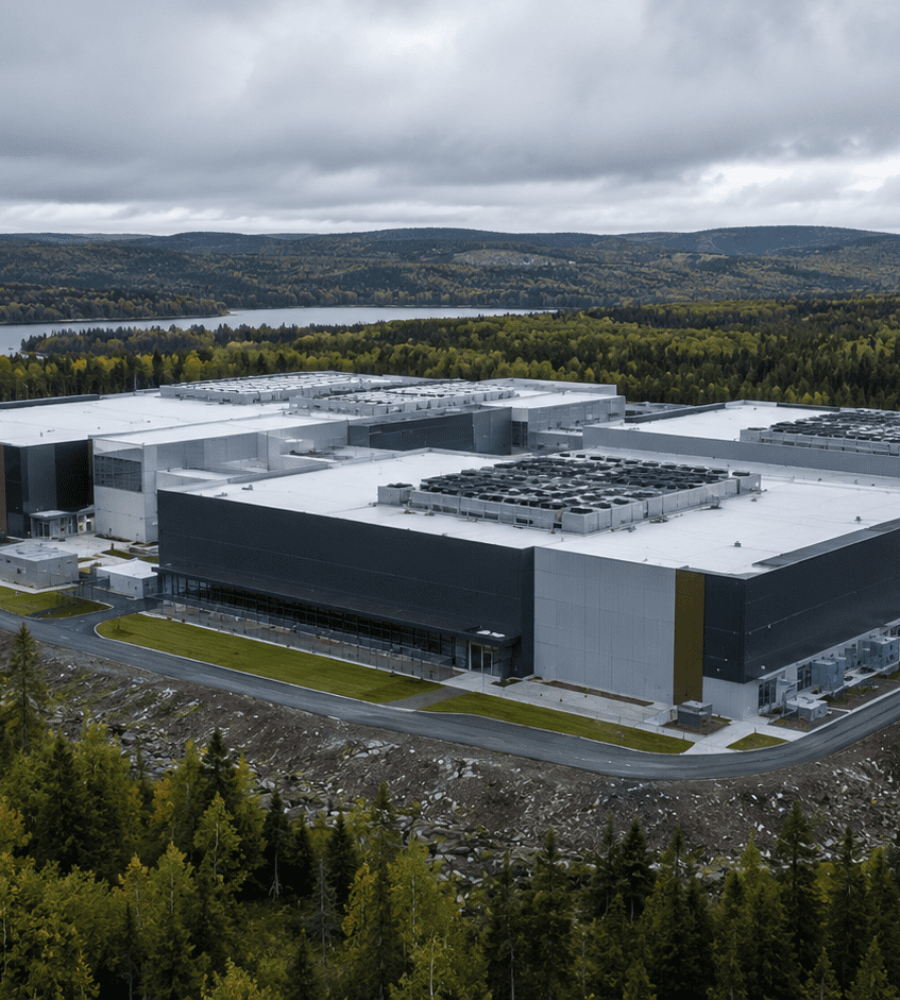

Nokia has launched a new AI Networking Innovation Lab in Sunnyvale, California, aiming to position itself deeper inside the rapidly evolving AI infrastructure market. The facility will function as a collaborative development center where cloud providers, silicon vendors, GPU companies, and enterprise infrastructure partners can test next-generation AI networking architectures under production-like conditions. The move reflects a larger shift taking place across the AI economy, where networking performance increasingly determines the scalability and efficiency of AI deployments.
The company designed the lab to support the growing demands created by large AI training clusters and distributed inference systems. Modern AI workloads require far more than raw compute power because networking latency, congestion management, telemetry, and orchestration now influence overall model performance. Nokia believes traditional data center networking models no longer address the operational realities emerging inside AI-native infrastructure environments.
The new lab sits within Nokia’s existing Sunnyvale campus and acts as both a validation center and ecosystem collaboration hub. Instead of approaching AI networking through isolated hardware releases, Nokia plans to integrate protocols, switching platforms, automation frameworks, and operational architectures into a unified testing environment. That strategy signals a broader industry transition toward vertically coordinated AI infrastructure engineering.
AI Workloads Are Redefining Data Center Networking Requirements
AI infrastructure has become increasingly dependent on deterministic network performance. Massive training models exchange data continuously across GPUs, accelerators, storage systems, and orchestration layers, creating pressure on network fabrics that traditional enterprise environments rarely experience. As hyperscalers and cloud operators expand AI clusters, networking bottlenecks have emerged as one of the largest operational challenges.
Nokia’s AI Networking Innovation Lab focuses specifically on solving those constraints. The company said the environment enables partners to validate emerging commercial technologies while testing advanced networking protocols, switching silicon, congestion management systems, and automation frameworks. The lab also supports experimentation around newer architectural concepts built specifically for AI-centric data centers.
The initiative rests on three core pillars: technology innovation, ecosystem collaboration, and validation. Nokia intends to use the facility as a proving ground where multi-vendor interoperability testing can occur before solutions move into production deployments. That includes validating performance under realistic AI training and inference workloads, failure simulations, and operational stress conditions.
Partners Use Lab to Test Real-World AI Network Performance
One of the strongest signals surrounding the launch comes from the breadth of ecosystem participation already tied to the initiative. Companies across silicon, testing, AI compute, and telecommunications infrastructure have aligned with Nokia to evaluate AI networking technologies inside the new facility.
Keysight Technologies emphasized the importance of realistic workload testing for hyperscale AI infrastructure.
“Partnering with Nokia in the AI Networking Innovation Lab has enabled us to benchmark and optimize AI networks under real-world conditions. Keysight emulated AI training workloads at scale across a range of AI transports, from UEC and RoCEv2 to emerging lossless fabric architectures. Together, we are helping accelerate AI network adoption by giving operators and hyperscalers the validated insights needed for confident, large-scale deployment.” says Ram Periakaruppan, Vice President and General Manager, Network Applications and Security business at Keysight.
The reference to UEC, RoCEv2, and lossless fabric architectures highlights the increasing industry focus on low-latency, high-throughput networking standards optimized for AI clusters. Vendors across the AI ecosystem continue searching for ways to reduce congestion and improve GPU utilization rates because inefficient networking directly impacts AI infrastructure economics.
Nokia Uses Open Ecosystem Strategy to Challenge AI Infrastructure Lock-In
Advanced Micro Devices also positioned the collaboration around open infrastructure principles rather than tightly controlled proprietary stacks. That message arrives at a time when hyperscalers and enterprises increasingly weigh interoperability against vertically integrated AI systems.
“AMD believes customer collaboration and an open ecosystem are fundamental to accelerating AI innovation. By co-developing solutions with partners, such as Nokia in their AI networking innovation lab, we ensure our AMD enterprise AI solutions are tested with Nokia data center switches on real-world workloads and network demands. An open, standards-driven approach empowers customers to integrate seamlessly across heterogeneous environments, avoiding lock-in and fostering industry-wide advancement in AI.” says Travis Karr, Corporate Vice President, HPC and Sovereign AI, AMD
The emphasis on heterogeneous infrastructure matters strategically. AI operators now manage increasingly complex environments that combine GPUs, CPUs, accelerators, storage layers, orchestration software, and distributed cloud resources across multiple vendors. Networking providers capable of validating interoperability across that fragmented landscape could gain significant influence within the AI infrastructure market.
Nokia Validated Designs Become Central To AI Deployment Strategy
The lab also serves as the operational foundation for Nokia Validated Designs, the company’s multi-vendor AI data center architecture framework. These validated environments aim to reduce deployment risk by stress-testing infrastructure stacks before customers implement them at scale.
Nokia said the lab evaluates congestion behavior, operational automation, interoperability, and failure recovery scenarios under authentic AI conditions. The goal involves giving operators clearer performance predictability while lowering integration complexity. As AI infrastructure investments continue accelerating globally, operators increasingly prioritize deployment certainty over experimental scaling approaches.
Nscale described the validation process as a critical requirement for large-scale AI infrastructure expansion.
“Nokia is a strategic networking partner for Nscale as we build towards AI Grid, and the engineering rigour behind their Validated Designs reflects the kind of innovation needed to enable next-generation AI infrastructure. The depth of hardware, software and failure testing behind those blueprints is what will give operators the confidence to deploy complex AI environments faster, with fewer integration risks and less operational disruption. We’re excited to collaborate in the AI Networking Innovation Lab to help push the boundaries of AI-native networking and validate the next generation of solutions before they reach production,” says Arno van Huyssteen, Vice President of Global Telecommunications for Nscale.
AI Networking Moves Closer To Becoming Strategic Infrastructure Layer
The launch also reinforces Nokia’s broader ambition to strengthen its role beyond traditional telecommunications infrastructure. AI networking has become one of the most strategically valuable layers inside the global AI supply chain because scaling AI compute increasingly depends on network efficiency and orchestration intelligence. Consequently, infrastructure providers that can optimize AI connectivity stand to gain influence across hyperscale, sovereign AI, and enterprise deployments.
Nokia appears to be positioning the lab as an early access environment where customers and partners can test emerging AI networking technologies before broader commercial rollout. The company believes that reducing deployment risk and improving operational predictability will become major competitive differentiators as AI infrastructure complexity rises.
“The launch of Nokia’s AI Networking Innovation Lab marks a major milestone in our commitment to drive the next era of AI-native connectivity. As the industry continues to evolve with solutions like scale-across and AI-Grid, this lab is poised to accelerate AI networking technology that will not only support but optimize these emerging industry offerings. This center gives our customers and partners early access to new technologies, deeper collaboration with the world’s leading AI ecosystem players, and the confidence that their networks are validated under more realistic AI conditions. By accelerating innovation and reducing deployment risks, we’re enabling the industry to deliver faster, more reliable, and more sustainable AI experiences to people and businesses everywhere”, says Rudy Hoebeke, Vice President of Software Product Management at Nokia.
Networking Validation May Decide The Next AI Infrastructure Winners
The race to build AI infrastructure has already expanded beyond GPUs and compute capacity. Operators now face growing pressure to ensure that every layer of infrastructure networking included performs reliably under sustained AI workloads. That shift creates a significant opening for companies capable of validating AI-native networking at scale before deployment.
Nokia’s new lab reflects how AI infrastructure strategy increasingly depends on ecosystem coordination rather than isolated hardware innovation. The company is betting that operators will prioritize validated interoperability, operational resilience, and deployment confidence as AI systems grow larger, denser, and more distributed. If that assumption holds, networking validation environments could become as strategically important as the compute clusters they support.