
The race to build artificial intelligence infrastructure no longer revolves around who owns the biggest campus or the deepest land reserve. Operators now face pressure from GPU delivery schedules, utility coordination delays, thermal density constraints, and enterprise demand that shifts faster than conventional construction cycles can absorb. Several infrastructure teams spent the last decade optimizing for scale because cloud growth rewarded centralized expansion and predictable deployment patterns. AI workloads disrupted that assumption after training clusters began consuming unprecedented amounts of power, cooling capacity, and network bandwidth inside condensed rack environments. Traditional construction logic struggles to support deployment timelines that hyperscalers now measure in quarters instead of years because every delayed facility postpones revenue-generating compute. The result has pushed the industry toward modular infrastructure systems that behave more like configurable products than static real estate developments.
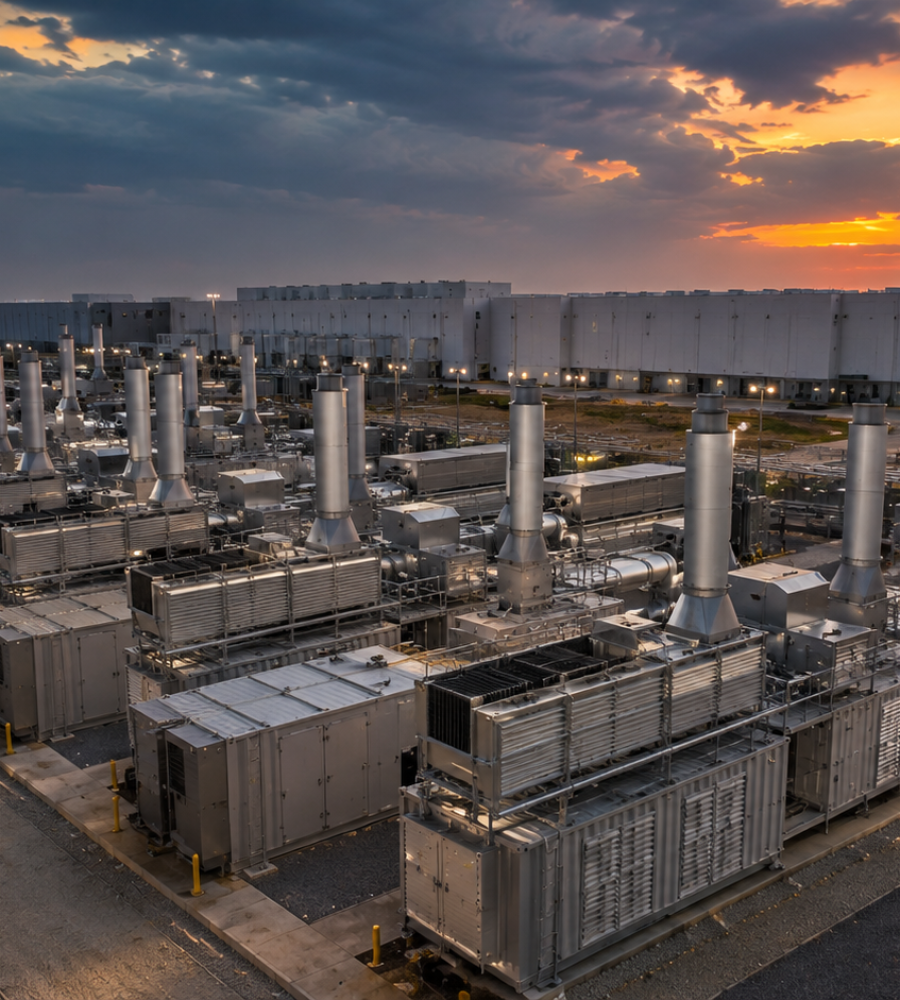
Pre-engineered infrastructure modules increasingly arrive with integrated cooling systems, prefabricated power distribution layers, monitoring controls, and operational redundancy already validated before delivery reaches the site. This approach changes deployment strategy because operators can install capacity blocks rapidly without redesigning the entire facility around every hardware refresh cycle. Many AI deployments now prioritize operational readiness over architectural customization since compute demand fluctuates faster than municipal approvals and utility interconnection processes. Infrastructure providers also recognize that liquid cooling retrofits consume enormous time and capital when older facilities lack structural support for modern rack densities. Modular environments solve part of that problem by aligning thermal systems, containment architecture, and electrical pathways around known deployment conditions before installation begins. Industry momentum around prefabricated infrastructure therefore reflects operational urgency rather than temporary market experimentation.
The Rise of Plug-and-Deploy Compute
Hyperscale operators increasingly prefer infrastructure that can reach operational readiness within months because AI demand curves move faster than traditional construction schedules. Several modular deployment vendors now deliver containerized or prefabricated compute environments that integrate electrical systems, cooling assemblies, security layers, and monitoring frameworks before shipping them to the final location. This deployment model reduces coordination delays between construction contractors, mechanical teams, utility providers, and network integrators because much of the engineering occurs offsite inside controlled manufacturing environments. AI infrastructure economics reward rapid activation since idle GPUs represent enormous capital inefficiency when demand for inference and training capacity continues rising across industries. Operators therefore evaluate infrastructure through speed-to-compute metrics instead of focusing exclusively on total megawatt scale or campus footprint. Faster deployment cycles increasingly determine competitive positioning because infrastructure delays can push customers toward alternative providers with available capacity.
Traditional data center construction often involves fragmented approval processes, extended procurement windows, and sequencing problems that delay commissioning schedules across large campuses. Modular infrastructure compresses those variables because suppliers standardize components, thermal configurations, and operational validation before the deployment phase even begins. Some operators now deploy phased compute blocks close to regional demand zones instead of waiting for multi-year mega campus projects to finish completely. Speed advantages also improve financial flexibility because operators can begin monetizing infrastructure earlier while continuing expansion in parallel with customer onboarding. Meanwhile, utility providers increasingly favor predictable modular power profiles since they simplify grid coordination and staged capacity planning. The acceleration of plug-and-deploy compute reflects an operational shift where deployment velocity now influences infrastructure value as much as raw capacity numbers.
Why Empty Shell Data Centers Are Losing Relevance
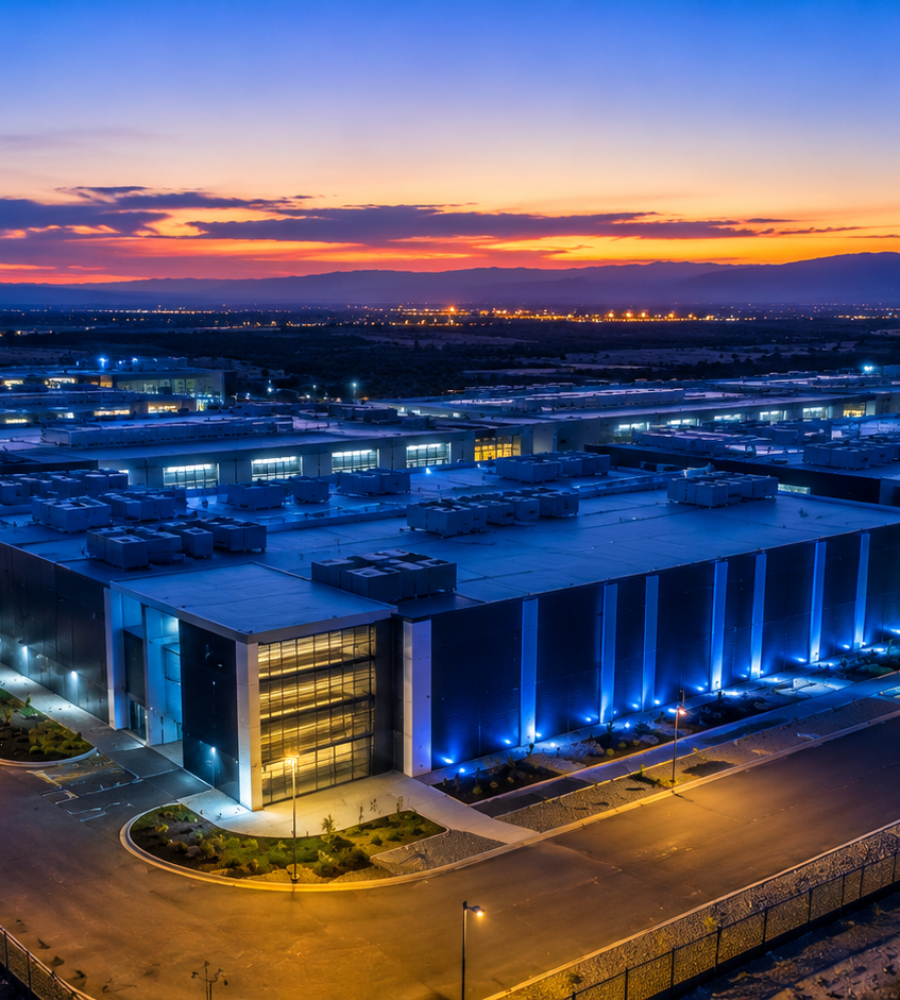
The powered shell model once attracted developers because operators could lease generic facilities and customize infrastructure internally based on future requirements. AI infrastructure changed that equation after rack densities climbed beyond what many shell facilities could support without major retrofitting across cooling, structural, and electrical systems. Generic buildings often lack optimized liquid cooling pathways, high-density busway integration, reinforced floor loading, and coordinated thermal containment necessary for modern GPU clusters. Hyperscalers increasingly reject adaptable blank environments because customization introduces deployment delays that directly affect operational timelines and compute availability. Infrastructure buyers now expect facilities to arrive aligned with deployment architecture rather than functioning as unfinished containers awaiting extensive redesign. The market therefore places greater value on pre-engineered environments with validated operational characteristics tailored for known workload conditions.
Several infrastructure investors also recognize that adaptable shell models create uncertainty around retrofit costs, commissioning complexity, and long-term operational performance under AI workloads. Mechanical systems that supported previous enterprise computing environments frequently struggle to handle concentrated thermal loads generated by modern accelerators and networking fabrics. Operators increasingly demand integrated infrastructure stacks where cooling systems, electrical redundancy, network pathways, and monitoring frameworks work together as unified operational environments instead of disconnected facility components. This preference reshapes procurement decisions because buyers evaluate operational compatibility before considering geographic scale or undeveloped expansion land. Pre-certified modular systems additionally reduce commissioning uncertainty because manufacturers validate infrastructure behavior under known deployment conditions before installation occurs onsite. Consequently, infrastructure markets now reward readiness and operational precision rather than generic flexibility alone.
AI Infrastructure Is Moving Closer to the Workload
Large centralized campuses still dominate massive training deployments, yet inference growth increasingly pushes compute closer to enterprise activity zones, industrial regions, and telecom aggregation points. AI applications supporting manufacturing analytics, logistics automation, financial systems, and autonomous operations require lower latency profiles than centralized architectures can always deliver efficiently. Modular infrastructure enables operators to deploy localized compute environments rapidly without replicating the complexity associated with hyperscale mega campuses. Distributed deployment strategies also help operators avoid regional power congestion where utility availability limits expansion inside traditional infrastructure hubs. Several telecommunications providers now explore modular AI deployments near network edges because localized inference reduces transport overhead and improves application responsiveness. The infrastructure landscape therefore moves toward geographically distributed deployment logic shaped directly by workload behavior.
Enterprise demand patterns increasingly reinforce this localized infrastructure model because organizations want compute resources positioned near operational data sources and industrial systems. AI workloads processing factory telemetry, retail analytics, healthcare imaging, and logistics coordination often benefit from regional processing environments that minimize transfer latency and bandwidth dependency. Modular infrastructure systems support this approach because operators can install smaller compute clusters incrementally across multiple locations instead of concentrating expansion inside singular campuses. Localized deployments also improve resilience since workload distribution reduces dependency on one centralized facility during outages or network disruptions. However, distributed architecture introduces operational complexity around orchestration, monitoring, and lifecycle management across fragmented compute environments. Infrastructure providers now build standardized modular systems partly because consistent deployment architecture simplifies operational governance across geographically dispersed locations.
The New Gold Rush Isn’t Land, It’s Deployment Readiness
Infrastructure investment strategies increasingly prioritize assets capable of immediate activation because undeveloped land alone no longer guarantees competitive advantage in AI markets. Several investors spent previous years accumulating large land reserves near utility corridors under the assumption that future demand would reward scale ownership. AI deployment cycles disrupted that logic after operators began prioritizing infrastructure availability, power readiness, and deployment timing over speculative expansion potential. Land without utility access, permitting certainty, cooling infrastructure, and deployment-ready engineering now creates operational delays rather than strategic leverage. Infrastructure markets therefore assign growing premiums to facilities and modular systems capable of supporting rapid activation under modern rack density requirements. Deployment readiness increasingly functions as a monetizable infrastructure characteristic instead of a secondary operational consideration.
Pre-certified modular environments additionally attract capital because they reduce uncertainty across engineering timelines, commissioning schedules, and operational performance validation. Investors increasingly favor infrastructure models where deployment phases align closely with verified customer demand rather than speculative long-range expansion assumptions. This preference changes how operators structure financing because phased modular deployments distribute capital exposure more gradually across operational milestones. Utility coordination also becomes easier when operators activate infrastructure incrementally instead of requesting massive capacity commitments before customer utilization materializes. Furthermore, manufacturers capable of delivering repeatable modular infrastructure products gain strategic influence because supply chain predictability now affects deployment competitiveness directly. The AI infrastructure economy increasingly rewards execution speed and operational certainty more than undeveloped geographic scale alone.
How Modular Data Centers Are Rewriting Expansion Strategy
Conventional hyperscale expansion often relied on billion-dollar campus developments designed around long-term utilization forecasts and centralized growth assumptions. AI infrastructure economics increasingly favor phased deployment strategies because workload demand changes rapidly across training cycles, enterprise adoption patterns, and inference distribution requirements. Modular infrastructure allows operators to scale incrementally through standardized deployment blocks that align more closely with observed customer demand and utility availability. This approach reduces stranded capacity risk because operators avoid building excessive infrastructure years before utilization reaches sustainable levels. Financial planning also improves when infrastructure investment follows measurable deployment milestones instead of speculative growth projections tied to future market expectations. The modular model therefore transforms expansion strategy from static mega-project planning into adaptive operational scaling.
Several operators now structure expansion programs around repeatable infrastructure templates that simplify procurement, deployment sequencing, and operational management across multiple regions. Standardized deployment blocks create efficiencies because engineering teams can replicate proven infrastructure configurations instead of redesigning every facility independently. Modular scaling additionally improves technology refresh flexibility since operators can introduce new cooling architectures, power systems, or rack designs without rebuilding entire campuses simultaneously. Customer onboarding also becomes easier when providers can activate incremental capacity blocks in response to actual workload commitments. Nevertheless, modular expansion does not eliminate the importance of centralized campuses because large-scale training clusters still require enormous power aggregation and network density. The shift instead reflects a broader industry realization that infrastructure adaptability and deployment speed increasingly shape long-term competitiveness in AI markets.
The Fastest Infrastructure May Win the AI Era
AI infrastructure competition increasingly revolves around deployment responsiveness because compute demand now evolves faster than conventional construction systems can comfortably support. Operators face simultaneous pressure from GPU procurement schedules, utility bottlenecks, thermal density requirements, and enterprise adoption curves that continue accelerating across industries. Modular infrastructure systems address part of that challenge by reducing deployment friction through pre-engineered operational environments designed around known workload behaviors. Infrastructure providers also gain strategic flexibility when expansion occurs through repeatable deployment units instead of singular large-scale construction commitments. This operational model aligns more effectively with uncertain demand conditions because operators can scale capacity gradually while maintaining deployment readiness across multiple regions. The infrastructure sector therefore moves toward a product-oriented operating philosophy where standardized deployment systems increasingly replace purely construction-driven growth models.
The upcoming stage of AI infrastructure growth may hinge less on which players construct the biggest facilities and more on who brings dependable compute environments online with minimal operational lag. Pre-engineered modular systems are increasingly enabling that goal because they shorten engineering schedules, streamline deployment coordination, and match infrastructure performance to shifting workload distribution patterns. Hyperscalers, enterprise operators, telecommunications providers, and infrastructure investors now all treat deployment readiness as a primary competitive benchmark rather than a peripheral operational concern. Fast activation capability is also reshaping financial reasoning because infrastructure starts delivering value earlier while lowering exposure to cycles of speculative overbuilding. As AI workloads expand across sectors and geographies, infrastructure strategy will probably favor systems that can scale dynamically close to actual demand centers instead of clustering solely around centralized expansion hubs.