Enterprise AI has a deployment problem that nobody talks about enough. Models are widely available. Budgets have been approved. Business cases have cleared the board. Yet many organizations remain stuck between a successful pilot and a production system that actually works at scale. The bottleneck is not intelligence it is infrastructure. On June 16, 2026, Equinix announced an expanded collaboration with Cisco, NVIDIA, and technology services firm Presidio to address that bottleneck directly. The initiative delivers standardized AI factory blueprints across Equinix’s global data center network and introduces the Programmable AI Technology Hub the P.A.T.H. Lab a physical, production-grade environment where enterprises can test heavy AI hardware before committing to full deployment. The announcement marks a significant shift in how AI infrastructure reaches enterprise customers, and the implications extend well beyond a single partnership.
Why Enterprise AI Stalls at the Infrastructure Layer
The AI pilot problem is well documented. Gartner research consistently finds that a majority of enterprise AI projects fail to move from proof of concept to production. The reasons vary by organization, but a recurring structural theme ties them together: the infrastructure required to run a production AI workload is categorically different from what most enterprises operate today.
A GPU cluster running NVIDIA DGX systems draws thousands of watts per rack. Standard enterprise data center racks are designed for 5 to 10 kilowatts. High-density AI racks can demand 30 to 100 kilowatts or more. Liquid cooling systems, high-voltage power distribution, low-latency interconnection fabric, and specialized network architecture all become requirements simultaneously. Most internal IT teams have not built and operated these systems before. Consequently, organizations face a situation where the technology is theoretically available but practically unreachable without months of infrastructure design, procurement, and validation work work that carries real financial and operational risk if it goes wrong.
Glenn Dekhayser, Global Principal Technologist at Equinix, framed the challenge precisely at NVIDIA GTC 2026 in March: many AI projects fail to move beyond the pilot phase not because of the model, but because of siloed systems, unstructured data, and inadequate infrastructure. Data centers must be reimagined as systems designed continuously to turn data into outcomes — not merely as buildings housing servers.
The Cisco Secure AI Factory: Standardization at Global Scale
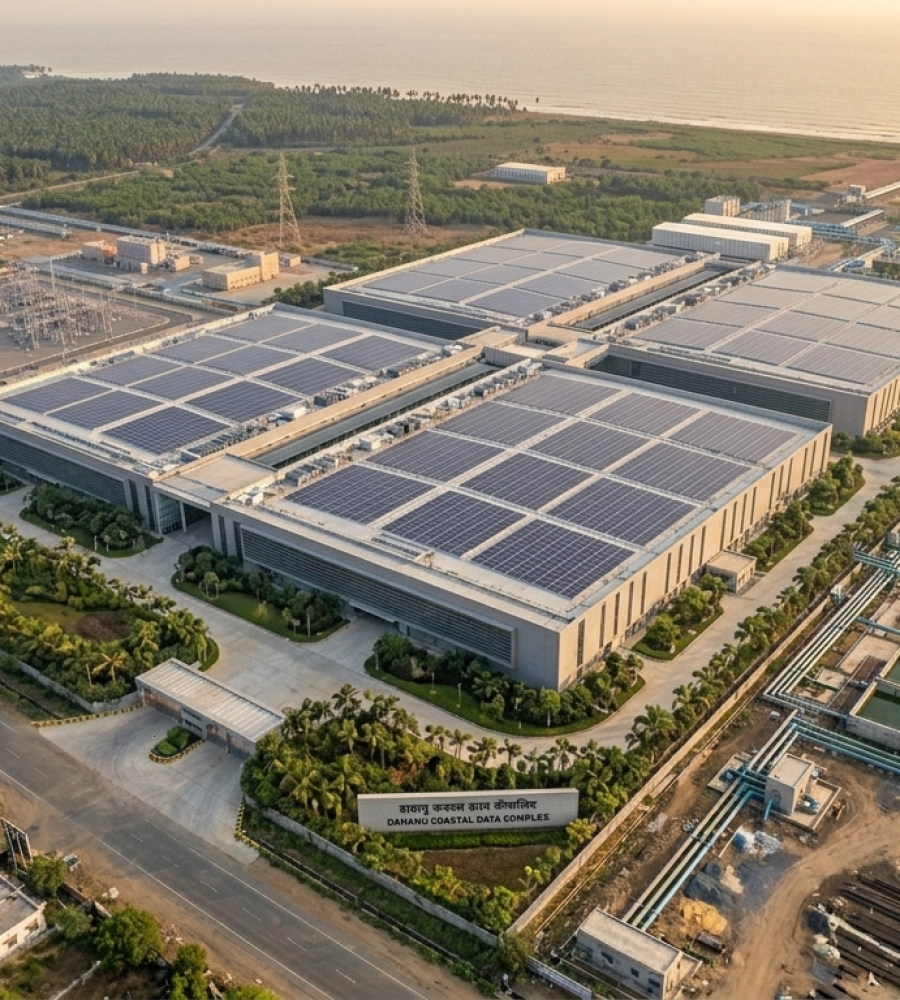
The centerpiece of Equinix’s June 16 announcement is the deployment of the Cisco Secure AI Factory with NVIDIA across Equinix’s global network of over 260 data centers in 70 metropolitan areas. The collaboration brings together three distinct infrastructure layers into a single, pre-validated deployment model.
NVIDIA contributes the reference architectures purpose-built compute configurations for AI training and inference workloads, based on DGX systems and Blackwell GPU platforms. Cisco contributes networking and security technology, including its AI-optimized switching fabric and zero-trust security architecture, which addresses one of the most persistent enterprise concerns around AI deployment: data governance and workload isolation. Equinix contributes the physical infrastructure layer colocation space, specialized power and cooling designed for high-density AI hardware, and interconnection density that allows direct private connectivity to cloud providers, data sources, and partner ecosystems without traversing the public internet.
The result is a standardized AI factory blueprint that enterprises can deploy without designing the architecture from the ground up. Gordon Mackintosh, Senior Vice President of Global Partner Sales and Ecosystems at Equinix, stated the proposition directly: AI infrastructure is no longer a collection of individual technologies. Customers want proven architectures that can be deployed quickly, securely, and consistently across multiple environments. Cassie Roach, Global Vice President of Cloud and AI Infrastructure Partner Sales at Cisco, reinforced the ecosystem logic: long-term success belongs to partner ecosystems that can adapt and innovate as rapidly as the technology itself.
The deployments are built on NVIDIA reference architectures specifically designed to reflect how enterprises actually procure and deploy technology through trusted channel partners and on infrastructure platforms already embedded in their operating environments. That design choice is deliberate. It reduces the behavioral change required from enterprise IT teams, who can work through familiar procurement relationships rather than building new vendor relationships from scratch.
The P.A.T.H. Lab: Test Before You Commit
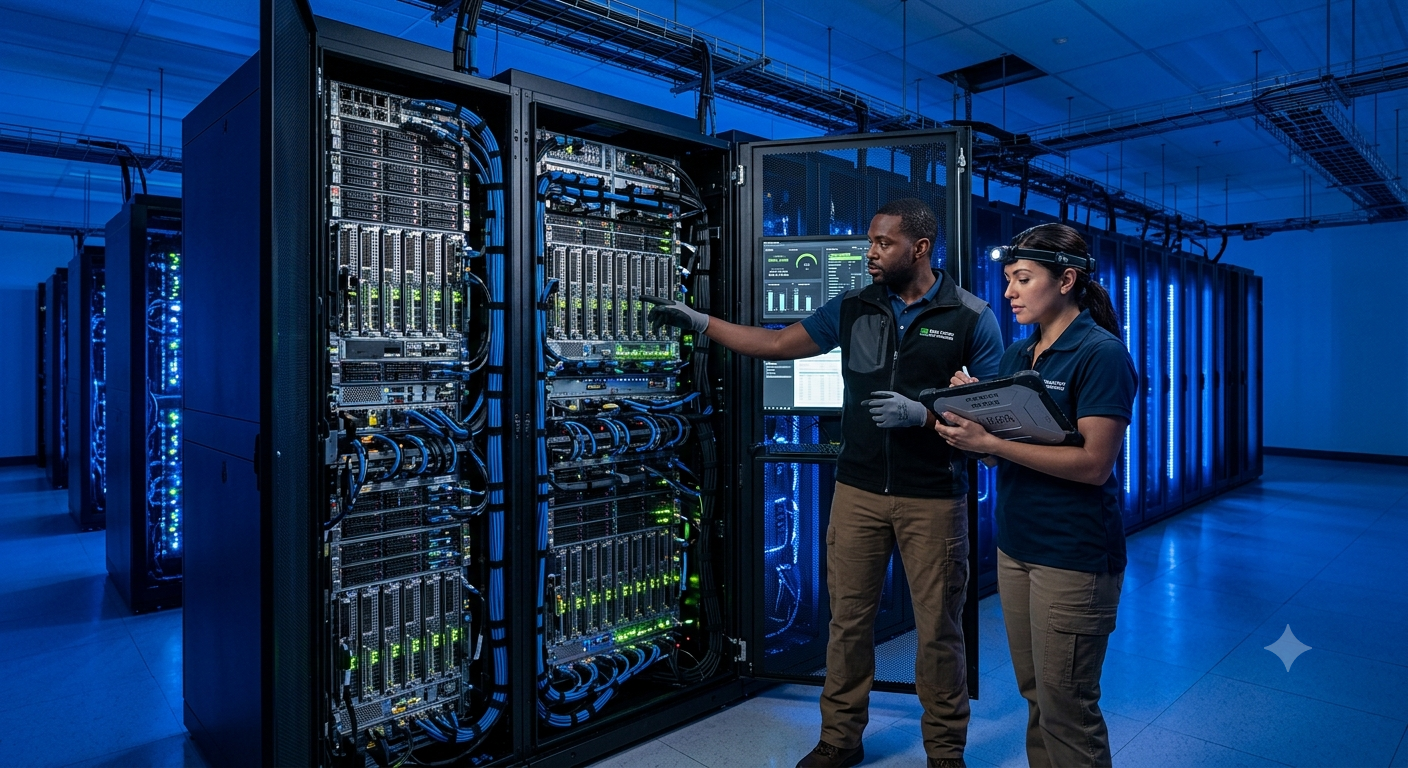
Alongside the blueprint deployment, Equinix and Presidio are launching what may be the more strategically significant element of the announcement: the Programmable AI Technology Hub, or P.A.T.H. Lab. The lab is a fully integrated, production-grade AI environment built inside live Equinix data centers. Enterprises can use it to test, validate, and refine their AI infrastructure strategy before committing capital to a full-scale rollout.
The distinction between a lab environment and a production-grade environment matters significantly here. Traditional proof-of-concept labs simulate conditions. The P.A.T.H. Lab replicates them. It runs on the same Cisco Secure AI Factory with NVIDIA architecture that production deployments will use, operates inside the same physical data center infrastructure, and supports hybrid workloads spanning public cloud, neocloud, on-premises, and colocation environments simultaneously. An enterprise can bring its actual workloads into the P.A.T.H. Lab and observe real performance, power draw, thermal behavior, and network characteristics before signing a long-term colocation agreement or purchasing hardware.
Tim McHugh, VP of Partnerships and Alliances at Presidio, summarized the market shift driving this development: one of the most important changes in the last 18 months is that AI success is no longer about finding the most powerful model. The hard work now is deploying infrastructure that reliably supports that model in production at scale, across distributed environments, within enterprise security and compliance frameworks. Channel Insider’s analysis of the announcement noted that enterprise customers have now heard enough AI promises. They want to test the technology in a real environment and understand what it actually takes to operate before making investments measured in tens or hundreds of millions of dollars. The P.A.T.H. Lab is a direct response to that demand.
The Distributed AI Framework Behind the Announcement
The Cisco and Presidio partnerships sit within a broader strategic architecture that Equinix has been building since late 2025. The company’s Distributed AI framework positions Equinix data centers as neutral convergence points for compute, interconnection, and partner ecosystems — rather than simply as colocation facilities that rent rack space.
The framework addresses a specific challenge in enterprise AI deployment: AI workloads are not monolithic. Training workloads require large GPU clusters with high-bandwidth internal networking and proximity to data storage. Inference workloads require low latency and geographic distribution close to end users. Sensitive data processing workloads require private, sovereign infrastructure outside public cloud environments. No single deployment model satisfies all three simultaneously.
Equinix’s Distributed AI framework allows enterprises to place each workload type in the optimal location within Equinix’s 260-plus data center network, connected through Equinix Fabric a software-defined interconnection platform. Furthermore, Fabric Intelligence, launched in April 2026, adds AI-driven network automation to the platform. Enterprises can set network intent in natural language, and the system adapts connectivity accordingly — without manual configuration. Together with the Zayo AI Infrastructure Blueprint announced in September 2025 as the industry’s first joint framework clarifying how high-capacity fiber, interconnection hubs, training facilities, and inference nodes connect Equinix has assembled a comprehensive infrastructure layer designed for AI at production scale.
Risk Factors and Structural Considerations
The standardized blueprint model carries genuine advantages in deployment speed and risk reduction. Several structural considerations, however, are relevant for enterprise decision-makers evaluating this approach.
Vendor concentration is the primary architectural consideration. A deployment built on Cisco networking, NVIDIA compute, and Equinix colocation creates deep interdependencies across three major vendors simultaneously. Enterprises with existing multi-vendor strategies or contractual commitments to alternative infrastructure providers will need to assess compatibility before committing to the blueprint model.
Cost structure at scale warrants careful modeling. AI-ready colocation at Equinix carries a meaningfully different cost profile than standard enterprise rack space. Higher power density requirements translate into higher per-kilowatt colocation pricing. CBRE’s European data center research noted that operators charge premium rents for AI-ready facilities to recover the considerable build costs involved. Enterprises should model total cost of ownership across a three-to-five-year horizon rather than evaluating colocation cost in isolation from hardware and network expenditure.
Geographic availability of the full blueprint stack Cisco Secure AI Factory, NVIDIA DGX systems, P.A.T.H. Lab access, and Distributed AI interconnection — will vary across Equinix’s 70-plus metro footprint. Enterprises in secondary markets should confirm which elements of the framework are available at their preferred deployment locations before progressing to contractual commitments.
What This Means for Enterprise Teams Right Now
For CTOs, data center architects, and enterprise IT decision-makers, the Equinix announcement creates a practical near-term option that did not previously exist at this level of integration.
The P.A.T.H. Lab changes the evaluation process for AI infrastructure investment. Previously, enterprises faced a binary choice: either commission a consultant-led architecture study or make a capital commitment and discover operational realities during deployment. The P.A.T.H. Lab introduces a third path test production-grade infrastructure in a live data center environment, observe real performance against actual workloads, and then make the capital commitment with empirical data rather than reference architectures alone.
For enterprises currently running AI pilots on cloud-based GPU instances, the blueprint framework provides a structured migration path to dedicated, on-premises-equivalent infrastructure without the design complexity of building from scratch. The hybrid workload support spanning public cloud, neocloud, on-premises, and colocation simultaneously means organizations do not need to choose a single deployment model. They can distribute workloads based on latency, sovereignty, cost, and performance requirements across a connected infrastructure layer.
Ultimately, the most significant shift this announcement represents is not a new product — it is a new category of infrastructure service. Equinix is not offering rack space. It is offering a validated, production-grade AI deployment environment that enterprises can access, test, and scale without carrying the full engineering burden of designing it themselves. That shift in the delivery model is precisely what the gap between AI pilot and AI production has been waiting for.