Google has introduced Brazos, a rack-mounted liquid cooling platform designed to help data center operators support increasingly power-hungry artificial intelligence and high-performance computing infrastructure without undertaking costly facility overhauls.
The launch comes as AI hardware power consumption continues to climb across the industry. According to Google, next-generation AI and HPC processors now regularly exceed 1,000 watts of thermal design power, creating thermal management challenges that traditional air-cooling systems struggle to address. As rack densities increase, operators face mounting pressure to deploy more efficient cooling technologies while preserving existing infrastructure investments. The challenge has become especially acute as enterprises and cloud providers race to scale AI capacity.
Brazos aims to bridge that gap by enabling liquid-cooled IT equipment to operate within facilities originally designed for air-cooled deployments. Instead of requiring large-scale mechanical retrofits, the platform allows operators to introduce liquid cooling incrementally at the rack level. That approach could prove attractive for organizations seeking to expand AI capabilities without disrupting active data center environments. The strategy also reflects a broader industry shift toward modular infrastructure modernization.
Google Positions Brazos as a Retrofit-Friendly Cooling Solution
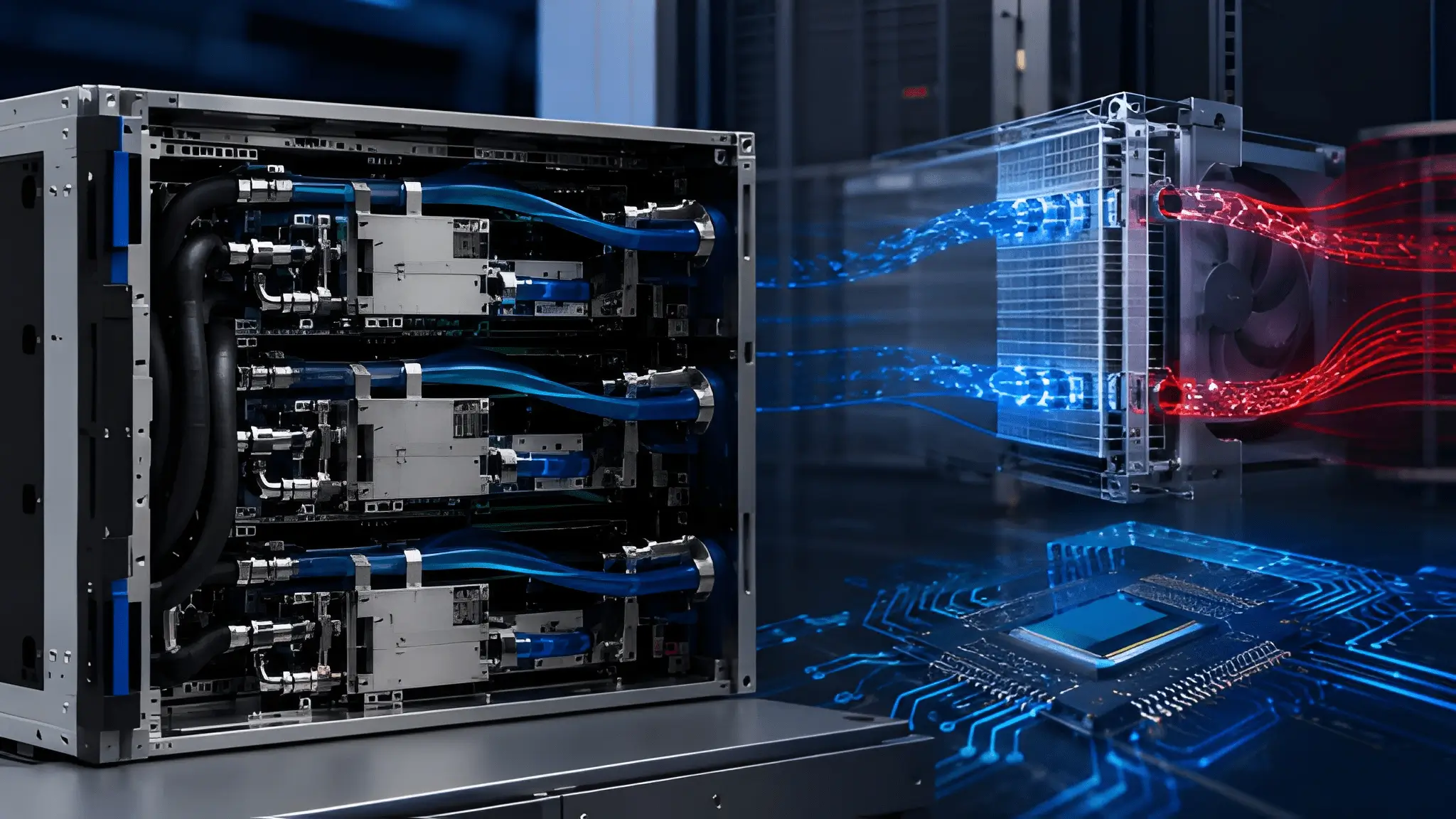
At its core, Brazos operates as a closed-loop liquid-to-air cooling system. The platform captures heat directly from computing components through liquid cooling and subsequently transfers that heat into the facility’s hot aisle using liquid-to-air heat exchangers. This design avoids direct dependence on building water infrastructure while maintaining thermal efficiency for high-density workloads. As a result, operators gain a pathway to support advanced AI hardware inside legacy facilities.
Google said the system separates the internal IT liquid loop from the data center’s facility water supply. This architecture allows deployments to occur one rack at a time rather than requiring facility-wide modifications. For operators managing mixed environments, that flexibility could simplify migration strategies and reduce implementation risks. It also creates opportunities for phased infrastructure upgrades aligned with AI capacity growth.
The company designed Brazos to support organizations facing space, budget, and operational constraints. Rather than replacing entire cooling ecosystems, operators can selectively deploy liquid cooling where thermal demands justify the investment. This modular model aligns with growing industry demand for scalable infrastructure solutions capable of adapting to rapidly changing AI hardware requirements. Consequently, data center operators may find it easier to balance performance growth against capital expenditures.
Technical Design Supports High-Density AI Deployments
Brazos includes three cooling units alongside integrated rack manifolds. Each modular chassis occupies 11 Open Units of rack space and supports Open Compute Project ORv3 rack standards. The platform delivers a nominal thermal load capacity of 60 kilowatts per rack when configured across three modular units. Those specifications position the system for deployments involving modern AI accelerators and advanced HPC infrastructure.
The cooling platform supports operation using either deionized water or a 25% propylene glycol mixture. Google designed the system to run on 40 to 60-volt DC power inputs while incorporating multiple operational safeguards. These include leak detection capabilities, pressure relief valves, local monitoring functions, and remote management through Modbus over TCP. Together, those features aim to enhance reliability and operational visibility within high-density computing environments.
The growing adoption of liquid cooling technologies reflects broader changes occurring across the AI infrastructure market. As processor power densities rise, thermal management increasingly influences facility design decisions, deployment timelines, and operational efficiency. Cooling systems that can integrate into existing environments are attracting attention from operators seeking to accelerate AI deployment schedules. Brazos enters the market at a time when many organizations are evaluating how best to accommodate next-generation compute platforms.
Open Availability Signals Broader Industry Ambitions
Google said Brazos is now generally available, with manufacturing suppliers prepared to bring the design to market for broader industry adoption. The move signals the company’s intention to extend the platform beyond internal infrastructure and contribute to wider ecosystem development. By enabling external manufacturing, Google is positioning Brazos as a scalable solution for operators confronting AI-driven thermal challenges.
The company also plans to open source the platform’s technical specifications, design principles, and visual assets through industry forums in the coming months. That decision aligns with growing collaboration across the data center sector as operators, equipment vendors, and hyperscalers work to establish common approaches for high-density AI deployments. Open specifications could help accelerate adoption and interoperability across the industry. The initiative also reinforces the increasing role of shared engineering frameworks in shaping the next generation of AI infrastructure.
AI Cooling Becomes the Next Data Center Battleground
The launch of Brazos highlights a growing reality across digital infrastructure markets: cooling has become as strategically important as compute itself. While AI innovation continues to push processor performance higher, thermal constraints increasingly determine how quickly new capacity can be deployed. Solutions that extend the life of existing facilities while enabling higher-density computing are likely to play a central role in future infrastructure strategies. Google’s latest move underscores how the competition to support AI growth is now expanding well beyond chips and into the physical foundations of the data center.