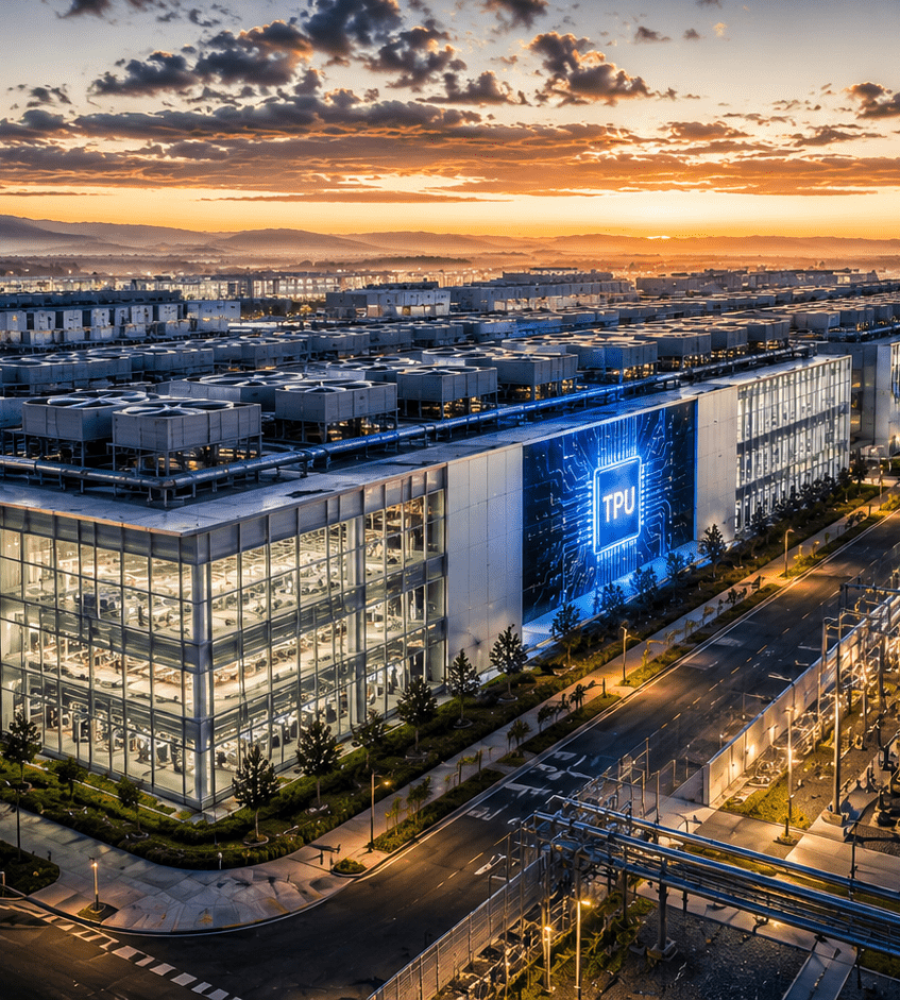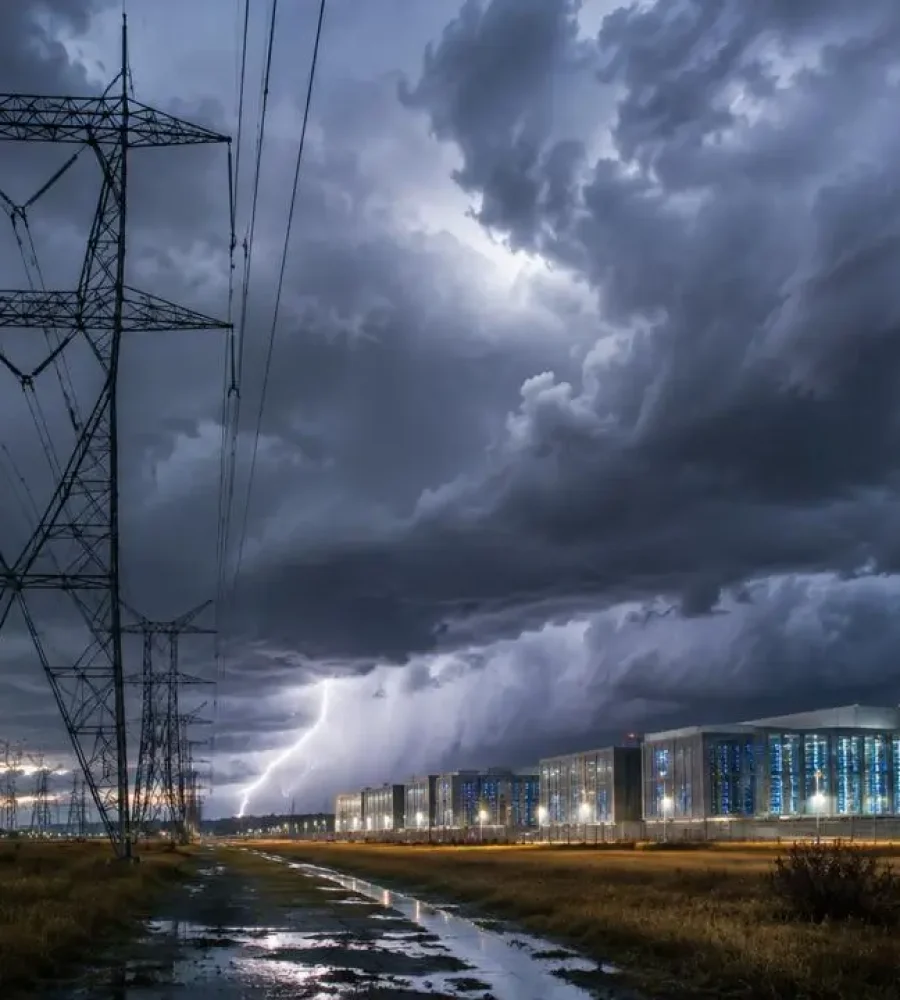
The AI infrastructure buildout is discussed almost entirely in the language of capital. How many billions of dollars are being spent, gigawatts of capacity are being announced, and how fast hyperscaler capex is growing. The physical reality underneath those capital flows receives far less attention — the specific materials, components, manufacturing processes, logistics routes, and geopolitical chokepoints through which the hardware that makes AI infrastructure possible actually moves from raw material to operational data center.
That physical reality is more fragile than the capital conversation suggests. A single Nvidia GPU travels approximately 25,000 miles during its production lifecycle, crossing international borders more than 70 times before it arrives in a data center rack. The silicon wafer starts at TSMC in Taiwan. The packaging happens at TSMC’s advanced CoWoS lines or outsourced packaging facilities in Taiwan and South Korea. The high-bandwidth memory comes from SK Hynix in South Korea or Samsung, also in South Korea. The server integration happens at Nvidia’s contract manufacturing partners across Asia. The finished product ships to a US customs facility, passes export compliance review, and eventually arrives at a data center in Northern Virginia or Phoenix that was designed around the assumption it would arrive on schedule.
Every step of that journey has a failure mode. Most of them have already occurred at some scale. None of them has yet occurred at the scale that the $700 billion annual buildout requires everything to work simultaneously. The AI infrastructure market has been operating in a period of constrained but functioning supply. What it has not yet tested is what happens when one of the critical chokepoints in that supply chain fails at the scale that the current deployment pipeline demands.
The Geographic Concentration That Creates the Risk
The fundamental fragility of the AI hardware supply chain is its geographic concentration. Advanced semiconductor manufacturing — the fabrication, packaging, and testing of AI chips — is concentrated in a region spanning approximately 500 miles between Taiwan and South Korea to a degree that has no precedent in the history of critical global infrastructure.
TSMC in Taiwan produces the advanced node logic chips at the heart of every leading AI accelerator. SK Hynix and Samsung in South Korea produce the HBM3e and HBM4 memory that gives those chips the bandwidth they need to serve AI workloads. TSMC’s CoWoS advanced packaging lines, which integrate logic and memory into the stacked architectures that Blackwell and other AI chips require, are concentrated in Taiwan. The testing and integration infrastructure that validates finished AI chips before they ship to customers is similarly concentrated in Taiwan and South Korea.
This concentration is the product of decades of capital investment, process expertise, and industrial ecosystem development that no other region in the world has replicated. The tools that ASML supplies to TSMC for extreme ultraviolet lithography — the machines that make sub-3-nanometre chip production possible — require components from hundreds of suppliers across the Netherlands, the US, Germany, and Japan. The supply chain that feeds TSMC is global. The production capability that transforms those inputs into advanced AI chips is irreplaceable in any short timeframe and almost entirely located in Taiwan.
The Disruption Risk the Market Still Underprices
When a 7.4-magnitude earthquake struck Taiwan in April 2024, it temporarily halted output at several key fabs and packaging facilities. TSMC’s production came back online quickly because the earthquake caused limited physical damage to its facilities. The incident revealed, however, the degree to which the entire AI infrastructure buildout depends on the continued physical integrity and operational continuity of facilities located in one of the most seismically active regions in the world, in a geopolitical environment where the risk of disruption extends beyond earthquakes to scenarios that recovery cannot be planned around in advance. The infrastructure investment community is pricing AI infrastructure risk primarily as a demand-side question. The supply-side physical geography is the risk it is not pricing at all.
The Transformer Problem That Nobody Has Solved
The GPU is the component that gets the most attention in AI hardware supply chain discussions. It is not the most constrained component in the AI data center delivery pipeline. That distinction belongs to the power transformer — and the transformer shortage has been visible, documented, and structurally unresolved for three years.
The Industrial Supply Chain Behind the Constraint
Grid connection processes require three to seven years in the current environment, and critical equipment like transformers face multiyear lead times. A high-voltage transformer designed for a hyperscale data center substation is not a commodity. It is a custom-engineered piece of industrial equipment, built to the specific voltage transformation and load requirements of the substation it will serve, by a small number of manufacturers whose production capacity has not scaled proportionally with AI infrastructure demand.
Knowledge at Wharton’s May 2026 analysis of the AI supply chain identified that the transformer supply chain depends on a handful of specialised manufacturers in South Korea and Germany who produce the silicon steel inside power transformers, forging shops in Europe that produce gas turbine shafts, and a small number of firms that manufacture the critical components through which electricity enters a substation. These suppliers are invisible until they become the bottleneck, and by then the cost of delay has already compounded. GE Vernova’s $5.3 billion acquisition of full ownership of Prolec GE — one of North America’s largest transformer manufacturers — signals how the best-positioned industrial companies are responding to a shortage they understand better than the capital markets that are financing the data centers waiting for the transformers.
The Delivery Bottleneck That Delays Entire Facilities
The practical consequence for data center developers is that a facility that completes construction on schedule can still sit non-operational for 12 to 18 months waiting for transformer delivery. The capital is committed, the building is complete, the cooling infrastructure is installed, the GPU hardware may even be on-site — and the facility cannot go live because the equipment that connects it to the grid has not yet been manufactured. This is not a hypothetical scenario. It is a documented pattern in the 2025 and 2026 data center delivery pipeline, and it is the primary reason that the gap between announced and operational AI data center capacity is as large as it is.
The Silicon Steel Dependency at the Base of the Stack
The transformer shortage traces back to a raw material dependency that is even less discussed than the transformer itself: silicon steel. Silicon steel — grain-oriented electrical steel — is the material from which transformer cores are made. Its magnetic properties determine transformer efficiency. Its production is dominated by a small number of integrated steel mills in South Korea, Japan, Germany, and increasingly China, whose combined capacity to produce high-grade grain-oriented electrical steel is growing slowly relative to the demand acceleration driven by AI infrastructure, electrification of transportation, and renewable energy expansion.
The silicon steel market does not trade like a commodity. It operates through long-term contracts between steel mills and transformer manufacturers, with limited spot availability. When demand surges faster than contracted supply can accommodate — as has occurred since 2023 — transformer manufacturers cannot increase output proportionally because the input material is not available on the open market in the required grades and specifications. The result is a supply bottleneck that propagates from raw material through finished transformer to energised data center on a timeline measured in years, not quarters.
The operators who secured transformer supply agreements in 2022 and 2023, before the AI buildout demand surge was fully visible to transformer manufacturers, have delivery commitments that look extraordinarily prescient in retrospect. The operators who entered the market after 2023 are competing for transformer supply that is structurally constrained at multiple layers of the industrial stack, and their delivery timelines reflect that competition rather than the construction schedules they originally planned against.
The Export Control Layer That Has Permanently Changed Logistics
The US export control regime for advanced AI chips has added a legal and compliance dimension to AI hardware logistics that did not exist three years ago and that has fundamentally changed how GPU hardware moves through the global supply chain. The Bureau of Industry and Security’s Entity List additions, the advanced chip export restrictions that apply to over 120 countries under the AI diffusion rule, and the specific licensing requirements for chips above defined performance thresholds have transformed AI hardware logistics from a question of moving units from manufacturer to customer into a question of moving units from manufacturer to customer in compliance with a regulatory regime that carries criminal penalties for violations.
Federal prosecutors filed criminal charges in March 2026 against two former logistics managers for allegedly facilitating the export of Nvidia H100 and A100 GPUs to China-linked entities in violation of US export controls, allegedly routed through intermediaries in Malaysia and Singapore. The indictment described a supply chain diversion scheme sophisticated enough to require multiple jurisdictional layovers designed to obscure the final destination of restricted hardware. The broader impact reached every major server OEM: compliance programmes were tightened, end-use verification procedures were strengthened, and the DOC announced investigations into similar allegations at additional unnamed companies.
The compliance burden this creates for legitimate AI hardware logistics is substantial. Every shipment of Nvidia Blackwell hardware above the export control performance threshold requires end-user verification, export licence review where applicable, and documentation that would survive criminal prosecution scrutiny if the shipment were later alleged to have violated export controls. The logistics managers who move AI hardware across international borders are operating in a regulatory environment where a paperwork error can produce criminal exposure, and where the sophistication of diversion schemes means that compliance cannot rely on destination country declarations alone.
The Tariff Overlay That Compounds Supply Chain Complexity
The export control regime operates on top of a tariff environment that has been in constant flux since 2018 and that has accelerated in complexity since 2025. AI hardware components cross multiple tariff jurisdictions during their production lifecycle. Silicon wafers fabricated in Taiwan, packaged with HBM from South Korea, integrated into servers by contract manufacturers in Thailand or Malaysia, and shipped to the United States cross tariff regimes in each jurisdiction. When the US imposes tariffs on semiconductor products from specific countries, adjusts Section 301 tariff rates on technology goods, or adds items to preferential trade programme exclusion lists, the cost structure of every AI hardware shipment changes in ways that procurement contracts signed months earlier did not contemplate.
The Inbound Logistics analysis of AI chip demand and supply chain strain identified that freight flows may swing unpredictably as companies adjust production schedules on short notice, and that logistics managers face shifting freight budgets and more frequent last-minute changes to shipping plans as tariff changes ripple through production schedules. For hyperscalers procuring tens of billions of dollars of AI hardware annually, tariff exposure on hardware imports is a material financial risk that is managed through procurement contract terms, supplier geographic diversification, and engagement with trade counsel — none of which is visible to the outside observer who reads the headline hardware volumes.
The Physical Security Dimension That Has Arrived Quietly
The strategic value of AI GPU hardware has created a physical security dimension to AI hardware logistics that the industry has not publicly discussed at the level of specificity the risk warrants. A shipment of Blackwell NVL72 server modules represents tens or hundreds of millions of dollars of hardware in a quantity that fits in a small number of shipping containers. The intelligence value of intercepting that hardware — understanding its exact specifications, capturing working units for reverse engineering, or simply disrupting the delivery to a competitor nation’s AI infrastructure programme — is significant at the nation-state level.
The response has been the quiet development of AI hardware logistics security protocols that more closely resemble the movement of high-value government assets than standard commercial freight. Physical escorted transit for the highest-value GPU shipments. Bonded warehouse storage at controlled facilities rather than open commercial warehousing. GPS tracking with real-time monitoring throughout transit. Documentation and chain of custody requirements that go beyond standard commercial freight practice. These protocols add cost, complexity, and lead time to AI hardware delivery — costs that are not visible in published hardware prices or infrastructure cost benchmarks but that are real costs absorbed somewhere in the supply chain.
The Concentration Risk That the Buildout Is Increasing, Not Reducing
The most concerning structural feature of the AI hardware supply chain is not any single chokepoint but the trajectory: as the AI buildout accelerates, the concentration of critical production capacity in geographically and politically exposed locations is increasing rather than decreasing, because the buildout is consuming available capacity faster than diversification investments can come online.
TSMC is building facilities in Arizona, Japan, and Germany. Those facilities will eventually provide meaningful geographic diversification of advanced semiconductor production. But TSMC’s Arizona fab is producing at 4-nanometre nodes while Taiwan produces at 2-nanometre and below — the nodes that AI chips require. The geographic diversification of advanced semiconductor production is proceeding on a timeline measured in decades, not years, because the process expertise, equipment supply chains, and industrial ecosystems required for leading-edge production cannot be transplanted at the pace that the AI buildout is demanding.
The Mitigations That Do Not Remove the Constraint
The AI chip shortage has extended HBM lead times into 2027 as memory producers cannot increase capacity quickly enough, with shipments of some components delayed by as much as six weeks or rerouted through alternative logistics hubs to mitigate geopolitical exposure. The rerouting is a short-term mitigation that does not address the underlying concentration. A supply chain that routes through alternative hubs to avoid geopolitical exposure in its primary hubs is a supply chain that has identified its failure modes and adapted its logistics around them. It has not eliminated those failure modes.
The operators and investors who are building 20-year data center infrastructure against a hardware supply chain whose geographic concentration is increasing are building against a risk that their operating horizon is longer than the period in which that concentration could plausibly be resolved. The Taiwan risk, the South Korea risk, the silicon steel supply risk, and the export control compliance risk are all structural features of the AI hardware supply chain that will be present throughout the economic life of the facilities being built today. They are risks that the AI infrastructure market prices through insurance, through inventory strategy, and through supplier diversification at the margins. They are not risks that any of the current structural investments can eliminate on a timeframe relevant to the infrastructure being built.
The Inventory Strategy That Separates the Prepared From the Exposed
The AI hardware supply chain’s structural fragility has produced a divergence in inventory strategy between the operators who understand the risk and those who do not. Conventional supply chain management in technology infrastructure has been governed by lean principles — just-in-time procurement, minimal inventory carrying costs, and the assumption that hardware will be available when needed from suppliers who can respond to demand signals within acceptable lead times.
The AI hardware supply chain has invalidated every assumption in that model. Transformers with three-year lead times cannot be procured just-in-time. HBM fully allocated through 2026 and into 2027 cannot be substituted when a procurement cycle slips. CoWoS packaging capacity booked 18 to 24 months in advance by Nvidia for the majority of available capacity cannot be accessed on demand by operators who did not secure their position in the queue before the queue filled. The operators who applied lean inventory principles to AI hardware procurement in 2022 and 2023 discovered the consequences when their 2024 and 2025 deployment timelines slipped by exactly the duration of the lead times they had not accounted for.
The Inventory Buffer That Reduces Delivery Risk
The operators who have built strategic inventory buffers for AI hardware — securing transformer orders ahead of construction schedules, locking in HBM supply agreements with extended forward coverage, and maintaining GPU inventory reserves that provide operational continuity during supply disruptions — are carrying higher inventory costs than lean operators but significantly lower delivery delay risk. At the scale of a hyperscale campus, the carrying cost of a six-month transformer inventory buffer is a fraction of the revenue loss from a six-month operational delay. The operators who have done that arithmetic and acted on it are holding transformer orders and HBM contracts that their less-prepared competitors are now competing for in a market that has already cleared most of its forward availability.
The strategic inventory calculus also applies at the hardware refresh level. The AI GPU generation cycle runs every 18 to 24 months. An operator who procures Blackwell hardware on a just-in-time basis for current deployments will face the same procurement challenge for Rubin hardware when that generation arrives — competing for supply in a market where the most important customers have already secured their positions. The operators who establish privileged supplier relationships with Nvidia, SK Hynix, and the CoWoS packaging partners during the Blackwell cycle are building the procurement infrastructure that will give them preferential access to Rubin supply when that matters most.
The Domestic Production Gap That Cannot Be Closed Quickly
The US government’s response to the AI hardware supply chain concentration has been to accelerate domestic semiconductor production through the CHIPS Act, which appropriated $52 billion in subsidies for semiconductor manufacturing investment in the United States. The CHIPS Act investments are real and they will produce real results on a timeline that matters — Intel’s Ohio facility, TSMC’s Arizona expansion, Samsung’s Texas fab, and Micron’s Idaho memory manufacturing are all genuine additions to domestic semiconductor production capacity.
What they will not produce, on any timeline relevant to the infrastructure being built today, is domestic production of the leading-edge AI chips that the current buildout requires. TSMC’s Arizona fabs are producing at 4-nanometre nodes with plans to scale to 2-nanometre. Taiwan is currently producing at 2-nanometre for the most demanding applications and will be at 1.6-nanometre by 2026. The leading-edge process gap between TSMC Arizona and TSMC Taiwan is measured in process generations, and each process generation represents billions of dollars of capital investment and years of process development that cannot be compressed regardless of subsidy level.
The Memory Constraint That Extends the Timeline
The memory side is equally constrained. Micron is the only US-headquartered HBM producer, and its HBM production capacity is substantially smaller than SK Hynix or Samsung. Micron’s HBM4 production plans are real and will add meaningful US capacity, but the timeline for that capacity to reach the scale required to reduce dependence on South Korean supply is measured in years. The CHIPS Act investments are building the foundation for a more geographically diversified AI hardware supply chain in the 2030s. They are not solving the supply chain concentration risk for the infrastructure being built in 2026 and 2027.
The honest assessment is that the AI hardware supply chain will remain primarily concentrated in Taiwan and South Korea for the economic life of most of the data center infrastructure currently being built. The operators and investors who plan on that basis — who include Taiwan and South Korea geopolitical risk in their 20-year infrastructure risk models, who have built insurance, inventory, and supplier diversification strategies proportional to that risk, and who have engaged with US government programmes designed to mitigate supply chain disruption risk for critical infrastructure — are managing a real risk with appropriate rigour. Those who assume the CHIPS Act will have resolved the concentration before it matters are making an assumption that the timeline of domestic semiconductor development does not support.
The Lessons the Industry Is Not Drawing From Past Disruptions
The AI hardware supply chain has already produced multiple supply disruptions since 2020, and the industry’s response to each has followed a consistent pattern: acute concern during the disruption, rapid normalisation once supply resumes, and insufficient structural investment in resilience before the next disruption arrives. The COVID-19 semiconductor shortage of 2021 to 2023 demonstrated that global just-in-time semiconductor supply chains can seize for extended periods when production is disrupted at concentrated manufacturing hubs. The industry response — CHIPS Act investment, nearshoring conversations, inventory buffer increases — was proportional to the severity of the disruption as experienced. It was not proportional to the severity of the disruption that would occur if the AI hardware supply chain seized at the scale the current buildout has created.
The 2021 shortage affected automotive and consumer electronics primarily. Car manufacturers could not source the relatively simple chips needed for electronic control units. The economic damage was measured in tens of billions of dollars of lost production. The equivalent disruption to AI GPU supply at current AI infrastructure scale would affect $700 billion in annual hyperscaler capital programmes, $99 billion in contracted neocloud backlogs, and the revenue assumptions of every private credit fund that has underwritten GPU-backed infrastructure debt. The severity is not comparable, and the risk management frameworks should not be comparable either.
The Resilience Cycle That Repeats After Every Crisis
The pattern of under-investment in supply chain resilience after disruptions normalise is not unique to the technology industry. It is a well-documented feature of risk management in industries with complex, globally distributed supply chains. The COVID response provided a brief window when the severity of supply chain concentration risk was visible and politically motivating. As supply normalised and the immediate pain receded, the window for structural investment in resilience narrowed. The same dynamic is likely to govern the AI hardware supply chain’s response to the current disruptions — the transformer shortage, the HBM allocation constraints, the export control diversion cases — which are severe enough to delay individual projects but not severe enough to produce the kind of acute, economy-wide pain that sustains political and commercial attention long enough to drive structural change.
The AI infrastructure operators and investors who build supply chain resilience into their programmes now — while the risk is visible but before a major disruption has made it undeniable — are making investments that their competitors will eventually be forced to make anyway, but at higher cost and under greater time pressure. Supply chain resilience is not a competitive disadvantage. It is a competitive advantage whose value is invisible during normal operations and decisive during disruptions.
What the Supply Chain Fragility Means for Infrastructure Strategy
The AI infrastructure market has developed sophisticated analytical frameworks for demand risk, capital structure risk, and regulatory risk. It has not developed an equivalent framework for supply chain physical risk — the probability that one or more critical chokepoints in the AI hardware supply chain fails at a scale and duration that disrupts deployment timelines and compromises the revenue assumptions on which infrastructure investments are based.
Developing that framework is not a theoretical exercise. It is a practical requirement for any infrastructure investment decision that depends on hardware delivery on a specific timeline. The private credit funds underwriting GPU-backed debt need stress test frameworks that include hardware delivery delay scenarios. The colocation operators whose revenue commitments depend on customer hardware arriving and being commissioned on schedule need supplier relationship strategies and inventory buffer policies calibrated against realistic delay probabilities. The hyperscalers building their own campuses need procurement strategies that account for transformer lead times, HBM allocation uncertainty, and export control compliance timelines simultaneously.
The Operators Already Building for Supply Chain Risk
The operators who have built supply chain risk management into their infrastructure programmes as a first-order concern — who have secured transformer supply agreements years in advance, who have established GPU inventory buffers at hyperscale, who have engaged specialist export compliance counsel as a standing part of their procurement operations — are building with a supply chain sophistication that late entrants to the AI infrastructure market have not yet developed. The supply chain fragility is not a reason to stop building. It is a reason to build with the analytical rigour that the physical complexity of what is being built actually requires. The AI infrastructure investment cycle entering its most dangerous phase documented that the operators who identify and manage the risks that the capital conversation ignores are the ones whose infrastructure programmes deliver on their commitments. The hardware supply chain is the risk the capital conversation is most consistently ignoring.
The Four Questions Every Infrastructure Programme Should Answer
The supply chain risk framework that the AI infrastructure market needs is not complex. It requires answering four questions for every infrastructure programme. First, what are the single points of failure in the hardware delivery path — the components with the longest lead times, the most concentrated production, and the fewest substitutes? Second, what is the probability-weighted cost of a delay at each single point of failure, expressed in revenue loss and debt service coverage terms? Third, what is the cost of the mitigation — the inventory buffer, the supplier diversification, the regulatory compliance infrastructure — required to reduce that delay probability to an acceptable level? Fourth, is the cost of the mitigation less than the probability-weighted cost of the delay it prevents?
For most AI infrastructure programmes, the answer to the fourth question is yes by a substantial margin. The cost of a transformer procurement programme that secures delivery two years ahead of construction completion is a fraction of the revenue loss from a 12-month operational delay on a fully built facility. The cost of HBM forward supply agreements is measurable. And the cost of export compliance counsel is known. The cost of a supply chain disruption that delays a major AI campus is enormous and open-ended. The operators who have done that arithmetic are building with the supply chain sophistication the risk requires. Those who have not are building the kind of fragility into their infrastructure programmes that the capital conversation has consistently failed to price — until it becomes the story.