
NVIDIA H200 shipments delayed to Q3  · BREAKING: Microsoft confirms 3GW data centre expansion in Asia-Pacific ·  AWS announces new sovereign cloud regions in India and UAE  · Arm-based servers now 24% of hyperscale deployments ·  EU AI Act enforcement enters phase two  · Global data centre investment hits $612B in 2026 ·  TSMC Arizona yields improve to 68% on 3nm process  · OpenAI valuation reaches $400B after latest funding round ·  NVIDIA H200 shipments delayed to Q3  · BREAKING: Microsoft confirms 3GW data centre expansion in Asia-Pacific ·  AWS announces new sovereign cloud regions in India and UAE  · Arm-based servers now 24% of hyperscale deployments ·  EU AI Act enforcement enters phase two  · Global data centre investment hits $612B in 2026

Exploring the Frontier of Two-Phase Immersion Cooling

Immersion cooling is attracting serious attention for hyperscale systems, as AI accelerators and high-performance clusters push data center racks beyond

Share
Two-Phase Immersion Cooling

Immersion cooling is attracting serious attention for hyperscale systems, as AI accelerators and high-performance clusters push data center racks beyond traditional thermal limits. Among its methods, two-phase cooling stands out for its efficiency. By harnessing latent heat and closed-loop phase change, it removes heat far more effectively than single-phase liquid systems or air. However, this performance comes with added complexity in design, materials, and operation. To assess whether two-phase immersion is a mainstream solution or a specialized frontier technology, it is essential to examine both the underlying physics and the infrastructure it requires.

The Physics of Phase Change

Two-phase immersion cooling relies on one of the most powerful mechanisms in thermal science: phase change. In single-phase systems, a liquid absorbs heat and gradually warms. In contrast, two-phase cooling uses a fluid engineered to boil at a specific low temperature when exposed to the heat generated by computing components. This boiling process absorbs energy not by raising the fluid’s temperature but through the latent heat of vaporization, the energy required to convert a liquid into vapor without a temperature change.

The benefits are substantial. The energy absorbed in vaporizing a kilogram of fluid can far exceed the energy required to heat the same mass by a few degrees. Thermal engineers typically select dielectric fluids with boiling points between 30°C and 50°C. As a submerged server heats its surrounding fluid, the liquid begins to boil, carrying heat directly into the vapor phase. The resulting vapor rises to the top of the tank, condenses on cooled surfaces, and returns to liquid, completing an efficient cycle. This evaporation-condensation loop enables superior heat transfer and allows extreme heat flux removal with fewer pumps and moving parts compared to alternative liquid systems.

The Hardware Ecosystem

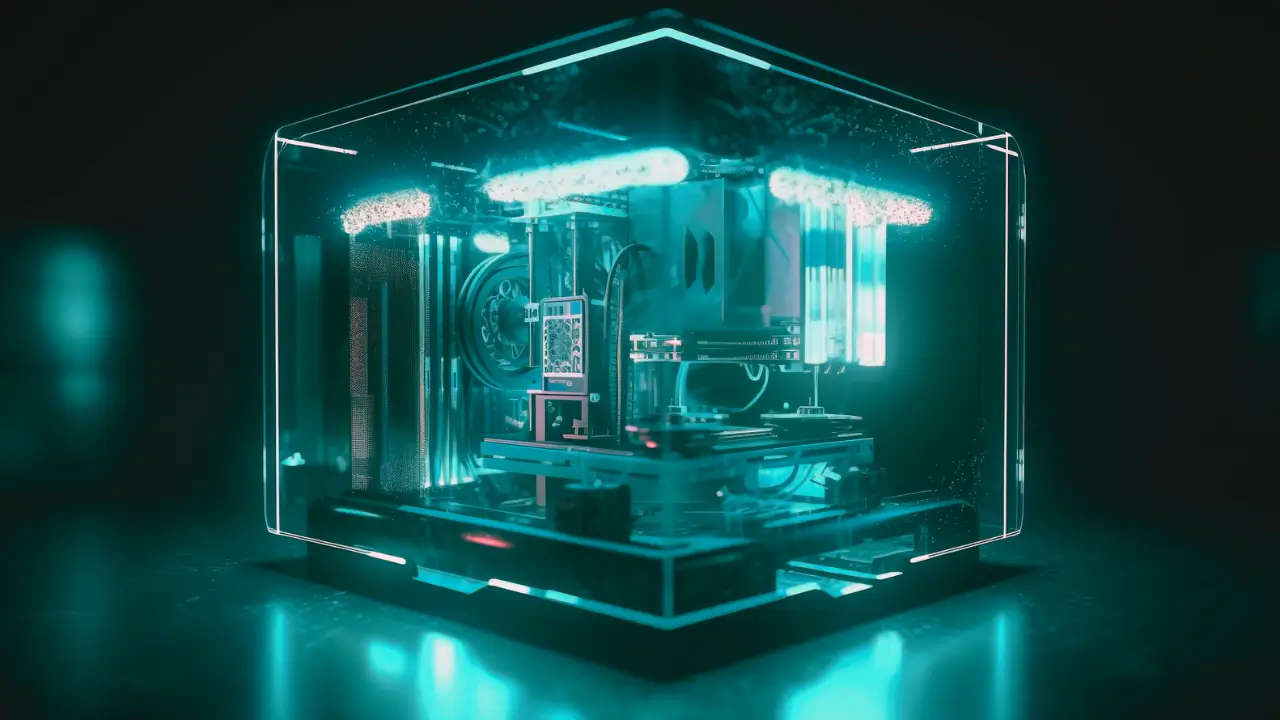
Two-phase immersion cooling extends beyond a simple tank of liquid. It functions as a carefully engineered thermal ecosystem. At its core is a hermetic tank containing servers fully submerged in dielectric fluid. A complete seal is crucial; even minor fluid loss through evaporation or leaks increases costs and reduces efficiency. Inside the tank, heat from processors, memory, and other components causes the fluid to vaporize. Condenser coils, located at the tank’s top or connected to an external heat rejection loop, condense the vapor back into liquid. This cycle continues seamlessly while servers draw power.

Material compatibility plays a critical role. Servers designed for air cooling often contain plastics, adhesives, or connectors that may degrade in contact with certain dielectric fluids. Even small components such as fiber-optic connectors or vented drive housings can complicate immersion installations. As a result, operators either use hardware specifically compatible with immersion or modify existing servers to withstand the fluids used.

Key Benefits Compared to Standard Cooling

When implemented effectively, two-phase immersion cooling offers clear advantages over conventional methods.

  • Energy Efficiency: Phase change captures heat directly at its source, reducing dependence on air handlers, fans, and external chillers. Industry reports indicate cooling-related energy consumption can decrease by 40% or more compared to traditional air systems, improving Power Usage Effectiveness (PUE) and lowering operating costs.
  • Space Optimization: Eliminating airflow corridors and large CRAC units allows for denser rack configurations. Higher compute density per square meter is especially valuable for AI clusters, where every square foot counts.
  • Hardware Longevity and Silence: Removing fans and other mechanical cooling components reduces vibration and airborne particulates, which contribute to wear and failure in air-cooled systems. Immersion tanks operate almost silently, enhancing on-site conditions and reducing maintenance requirements.

These advantages explain why hyperscale operators increasingly incorporate two-phase immersion into next-generation cluster strategies.

Challenges and Barriers to Entry

Despite its technical strengths, two-phase immersion cooling faces several adoption challenges.

  • Cost: Dielectric fluids are expensive, and even small losses through evaporation or leaks can significantly impact total cost of ownership.
  • Maintenance Logistics: Accessing submerged servers differs from conventional air-cooled units. Hardware failures may require shutting down tanks, draining fluid, and using specialized lifting and vapor-recovery systems to replace components without contamination or fluid loss. This process demands training and can extend repair times.
  • Environmental Regulation: Many high-performance dielectric fluids, particularly fluorochemicals, face scrutiny due to environmental persistence. Although newer fluids reduce global warming potential and toxicity, regulatory differences across regions create compliance challenges for global deployments.
  • Lack of Standards: Variations in fluid chemistry, tank design, material compatibility, and heat exchange configurations prevent the industry from relying on universal interoperability frameworks. These inconsistencies complicate procurement, integration, and scaling.

The AI Connection

The expansion of two-phase immersion cooling is closely tied to high-density compute workloads. Modern GPUs and accelerators often produce more heat than traditional air or single-phase systems can reliably manage, particularly in racks exceeding 100 kilowatts. Immersion cooling handles these loads without hotspots or thermal throttling, making it a compelling option for next-generation AI data centers.

Advances in fluid chemistry, condenser design, and heat rejection loops promise further performance and scalability improvements. Hybrid systems combining direct-to-chip cooling with immersion for other components may reduce upfront investment risks while maintaining efficiency gains. Research and early deployments suggest that two-phase immersion can transition from pilot experiments to operational infrastructure. For operators prioritizing performance and sustainability, immersion cooling represents a promising frontier despite practical hurdles.

Two-phase immersion cooling represents a significant evolution in thermal management. By leveraging phase change, it enables unmatched thermal performance, supports ultra-high compute density, and delivers measurable energy and sustainability benefits. At the same time, it requires a comprehensive rethinking of hardware design, infrastructure, maintenance procedures, and regulatory compliance.

For AI-scale compute operators, immersion cooling serves as both a technical and strategic choice, reflecting broader trends in data center evolution. Its adoption is likely to grow in environments where performance and density are critical, even as the industry works through the practical challenges that currently limit its widespread deployment.


[simple-author-box]

More from AI Infrastructure

Power negotiations often conclude long before operational constraints reveal themselves inside a live facility.

Artificial intelligence infrastructure has compressed deployment timelines to the point where electrical capacity is

Boards increasingly expect organizations to support sustainability reporting with evidence that aligns with governance

COMPUTE WEEKLY

The briefing that 40,000+ tech leaders read every Monday. Sharp, fast, essential.

Great! We’ve received your information.

We couldn’t process your submission. Please retry

Building an AI Startup Without Owning GPUs

Not owning GPUs has become the default, deliberate strategy for building an AI company — not a compromise founders accept reluctantly. H100 rental rates fell 64-75% in fifteen months, a dense ecosystem of neoclouds and inference-as-a-service providers now lets startups skip infrastructure entirely, and credit programs can fund a company’s first year before a founder writes a check
Most Read

Infrastructure planning discussions often prioritize engineering, construction, and utility considerations before examining how end

AI infrastructure deployment schedules depend on coordinated progress across hardware availability, electrical infrastructure, cooling

Artificial intelligence has transformed the economics of digital infrastructure. Every new AI model requires

Data centers do not visibly smoke. They have no smokestacks, no visible exhaust, and

Artificial intelligence has transformed the economics of digital infrastructure. Companies once competed by acquiring

Disruptor Spotlight

Cerebras Systems

The chip that makes Nvidia nervous. Cerebras’ Wafer Scale Engine is rewriting the rules of AI inference at scale.
Faster
0 x
YoY Revenue
0 x
Transistors
0 T
Market Pulse
NVDA
$924.60
-2.11%
MSFT
$421.30
-2.94%
AMZN
$192.80
-4.87%
AMD
$924.60
-2.40%
TSMC
$924.60
-2.32%
Indicative only · Not financial advice
Upcoming Events
SEP
The AI Infrastructure Race (India)
WEBINAR · ONLINE
The AI Infrastructure Race: Won on Power, Land and Trust — Not Capital
MAY
0
AI Infrastructure Summit
DUBAI · IN PERSON
MEA’s premier AI infrastructure event.
JUN
0 0
Compute Forecast Summit
SINGAPORE · IN PERSON
Our flagship APAC event. Early bird open.
Latest Moves
Live
ecolab
Ecolab Deepens Cooling Strategy With $4.75B CoolIT Acquisition
Ecolab is making one of its biggest moves yet into AI infrastructure after completing its $4.75 billion acquisition of liquid cooling specialist CoolIT Systems
Pure DC AVK Europe data center microgrid Dublin 110MW AI infrastructure Ireland 2026
Pure DC and AVK Deploy Europe’s First 110 MW Data Center Microgrid in Dublin
The Pure DC Dublin microgrid has made history as Europe’s first large-scale on-site data center microgrid, launched in partnership with power solutions provider AVK at Pure DC’s campus in Ireland.
Pace Digitek
Pace Digitek Partners With MEGMEET to Expand AI Data Center Power Business
India’s AI infrastructure ecosystem continues to mature as domestic technology manufacturers move beyond traditional telecommunications and industrial markets toward high-growth digital infrastructure opportunities
Follow Compute Forecast
11K followers
1200 followers
Companies to Watch
CW
CoreWeave
Neo Cloud · $19B · IPO Watch
CB
Cerebras Systems
AI Hardware · $4.25B · Pre-IPO
G42
G42
Sovereign AI · Abu Dhabi
H
Humain
Saudi AI · $40B Fund
Latest Podcast
AI Capex, Cloud Margins & the Nuclear Bet
48 MIN · 25 APR 2026

Exploring the Frontier of Two-Phase Immersion Cooling

Immersion cooling is attracting serious attention for hyperscale systems, as AI accelerators and high-performance clusters push data center racks beyond

Share
Two-Phase Immersion Cooling
25
847 SHARES

0
SHARES

[simple-author-box]

More from AI Infrastructure

Infrastructure planning discussions often prioritize engineering, construction, and utility considerations before examining how end

AI infrastructure deployment schedules depend on coordinated progress across hardware availability, electrical infrastructure, cooling

Artificial intelligence has transformed the economics of digital infrastructure. Every new AI model requires

Data centers do not visibly smoke. They have no smokestacks, no visible exhaust, and

COMPUTE WEEKLY

The briefing that 40,000+ tech leaders read every Monday. Sharp, fast, essential.

Great! We’ve received your information.

We couldn’t process your submission. Please retry

Global AI Infrastructure Outlook 2026

The briefing that 40,000+ tech leaders read every Monday. Sharp, fast, essential.
Download Free
Most Read

Infrastructure planning discussions often prioritize engineering, construction, and utility considerations before examining how end

AI infrastructure deployment schedules depend on coordinated progress across hardware availability, electrical infrastructure, cooling

Artificial intelligence has transformed the economics of digital infrastructure. Every new AI model requires

Data centers do not visibly smoke. They have no smokestacks, no visible exhaust, and

Artificial intelligence has transformed the economics of digital infrastructure. Companies once competed by acquiring

Disruptor Spotlight

Cerebras Systems

The chip that makes Nvidia nervous. Cerebras’ Wafer Scale Engine is rewriting the rules of AI inference at scale.
Faster
0 x
YoY Revenue
0 x
Transistors
0 T
Market Pulse
NVDA
$924.60
+2.4%
MSFT
$421.30
+1.1%
AMZN
$192.80
-0.6%
NVDA
$924.60
+2.4%
NVDA
$924.60
+2.4%
Indicative only · Not financial advice
Upcoming Events
MAY
0 0
DCD Global — London
LONDON · IN PERSON
World’s largest DC event. CF is media partner.
MAY
0
AI Infrastructure Summit
DUBAI · IN PERSON
MEA’s premier AI infrastructure event.
JUN
0 0

Compute Forecast Summit

SINGAPORE · IN PERSON
Our flagship APAC event. Early bird open.
Latest Moves
  • Live
Sam Altman
OpenAI appoints new Chief Infrastructure Officer to lead $100B DC programme
27 APR · OPENAI
Sam Altman
OpenAI appoints new Chief Infrastructure Officer to lead $100B DC programme
27 APR · OPENAI
Sam Altman
OpenAI appoints new Chief Infrastructure Officer to lead $100B DC programme
27 APR · OPENAI
Follow Compute Forecast
18.4K followers
12.1K followers
9.3K subscribers
41 episodes
Companies to Watch
CW
CoreWeave
Neo Cloud · $19B · IPO Watch
CB
Cerebras Systems
AI Hardware · $4.25B · Pre-IPO
G42
G42
Sovereign AI · Abu Dhabi
CW
Humain
Saudi AI · $40B Fund
Latest Podcast
AI Capex, Cloud Margins & the Nuclear Bet
48 MIN · 25 APR 2026
Scroll to Top








