
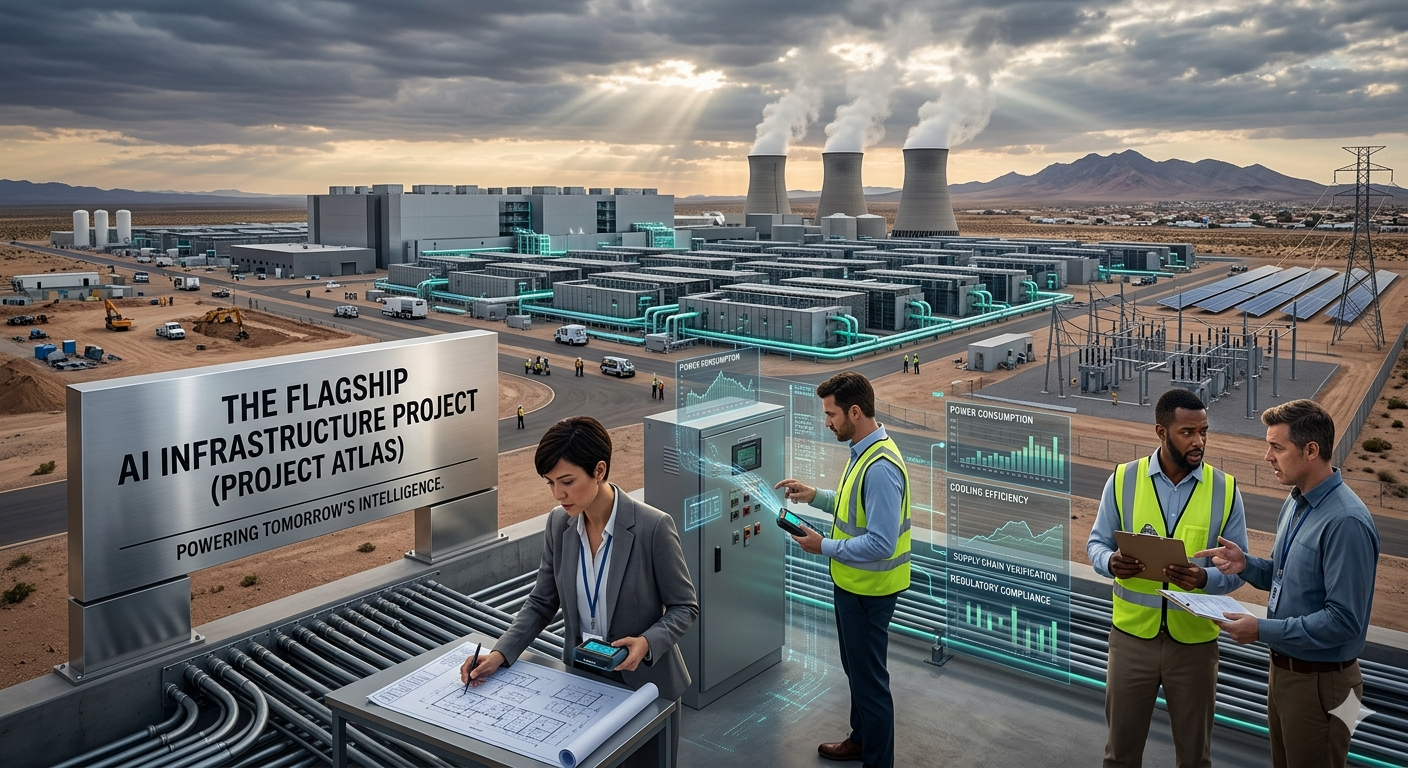
A Flagship AI Infrastructure Project Faces New Scrutiny
The rapid expansion of artificial intelligence infrastructure has created a growing debate over how large-scale data center projects should coexist with local communities and natural resources. That debate has now reached one of the most ambitious AI developments proposed in the United States. Kevin O’Leary, best known as an investor on “Shark Tank,” has indicated that he is prepared to significantly reduce the size of his planned AI-focused data center campus in Utah after state lawmakers demanded major revisions to the project.

The proposed Stratos development has attracted attention because of its extraordinary scale. Originally planned to cover approximately 40,000 acres in Utah’s Box Elder County, the project was promoted as one of the world’s largest AI infrastructure developments. Supporters viewed it as an opportunity to attract investment, create jobs, and strengthen America’s position in the global race for artificial intelligence leadership. However, concerns about water consumption, land use, energy demand, and environmental impact have generated growing opposition among residents and policymakers. As AI infrastructure projects become larger and more resource-intensive, the debate surrounding Stratos reflects broader questions facing the data center industry across North America.
Utah Lawmakers Push for a Dramatic Reduction
The project’s future changed significantly after Utah Senate President J. Stuart Adams publicly called for a substantial reduction in the development’s footprint. In a letter sent to O’Leary, Adams requested that the project area be reduced by approximately 75%, shrinking it from 40,000 acres to roughly 10,000 acres.
The request represented one of the strongest interventions by a state official into a major AI infrastructure project. Adams argued that economic development should not come at the expense of environmental sustainability or long-term resource management. His proposal also included a series of conditions designed to address concerns surrounding water use, wildlife preservation, land conservation, and public transparency.
O’Leary acknowledged the political reality of the situation and indicated that he was willing to revise the project. Speaking publicly about the proposal, he suggested that the requested changes reflected growing political pressure from stakeholders concerned about the development’s potential impact on local communities and ecosystems. The decision marks a notable shift for a project that had previously been presented as a transformative investment in next-generation computing infrastructure.
Water Usage Remains the Central Concern
Among the various issues raised by critics, water consumption has emerged as the most significant point of contention. Modern AI data centers require substantial cooling infrastructure to support densely packed computing systems. As artificial intelligence workloads increase, facilities often require greater power density and more advanced cooling technologies than traditional enterprise data centers.

Utah lawmakers have expressed concern that a project of this scale could place additional strain on regional water resources. The state has invested heavily in water conservation initiatives in recent years, particularly as long-term drought conditions and climate variability continue to affect western states. Policymakers are therefore paying closer attention to how large industrial developments manage water consumption.
Adams called on the project to adopt the most advanced water-efficient technologies available and requested commitments that any excess treated water be directed toward supporting the Great Salt Lake. Such requirements reflect a growing trend among regulators who increasingly expect large data center operators to demonstrate measurable sustainability benefits alongside economic investment. The issue also mirrors broader discussions occurring across the global data center industry, where water usage has become an increasingly important metric for evaluating environmental performance.
Environmental Safeguards Become a Priority
Beyond water consumption, lawmakers are seeking additional safeguards aimed at protecting Utah’s natural resources. Proposed measures include preserving wildlife habitats, protecting agricultural land, and ensuring that development activities minimize environmental disruption. Large-scale infrastructure projects often generate concerns regarding ecosystem fragmentation, habitat loss, and long-term changes to land use patterns. In the case of the Stratos project, the sheer size of the proposed development intensified those concerns. A project spanning tens of thousands of acres naturally raises questions about how construction and operational activities might affect surrounding landscapes.
State officials have emphasized that future economic development should align with conservation objectives rather than compete against them. This approach reflects a broader shift in how governments evaluate major technology infrastructure projects. Increasingly, policymakers are assessing environmental impacts alongside economic benefits when determining whether projects should move forward. The outcome of the Utah proposal could influence how similar projects are evaluated in other regions as AI infrastructure investment accelerates.
The Politics of AI Infrastructure Are Changing
The controversy surrounding the Stratos development highlights a broader transformation occurring within the technology sector. For many years, data centers received relatively little public attention compared with factories, energy projects, or transportation infrastructure. The rise of artificial intelligence has changed that dynamic.
Modern AI facilities require enormous quantities of electricity, advanced cooling systems, land resources, and network infrastructure. As a result, communities are becoming more aware of the physical footprint associated with digital technologies. Residents increasingly seek information about how proposed projects may affect local resources, property values, environmental conditions, and public infrastructure.
O’Leary has argued that some criticisms of the project are based on misinformation and incomplete information. He has questioned the origins of certain claims circulating among opponents and has emphasized the importance of providing accurate information to the public. Nevertheless, the growing scrutiny demonstrates that AI infrastructure projects are entering a new political environment where public engagement and transparency play a larger role in project approval processes. Developers can no longer assume that large-scale technology projects will move forward without extensive examination from regulators and local communities.
The Future of Large-Scale AI Campuses
The revised proposal expected from O’Leary may offer insight into how future AI infrastructure projects evolve in response to public concerns. Rather than abandoning ambitious developments altogether, operators may increasingly pursue smaller footprints, enhanced sustainability commitments, and stronger community engagement strategies.
The data center industry already faces mounting pressure to improve efficiency in water use, energy consumption, and land management. Advances in liquid cooling, recycled water systems, renewable energy integration, and high-density computing architectures provide opportunities to reduce environmental impact while maintaining performance requirements.
At the same time, governments are becoming more sophisticated in their evaluation of large infrastructure investments. Economic benefits remain important, but policymakers increasingly expect developers to address environmental and social considerations from the earliest stages of project planning. The Utah case illustrates how AI infrastructure development is entering a more complex era where growth, sustainability, and public accountability must coexist.
A Defining Test for AI Infrastructure Development
The debate surrounding the Stratos project extends beyond a single development proposal. It represents a broader test of how communities, regulators, and technology companies will manage the rapid expansion of AI infrastructure over the coming decade. Demand for AI computing capacity continues to rise as enterprises, governments, and cloud providers invest heavily in artificial intelligence capabilities. Meeting that demand will require substantial new infrastructure. However, the process of building that infrastructure is increasingly subject to scrutiny regarding resource consumption, environmental impact, and community involvement.
Kevin O’Leary’s willingness to reduce the scale of the project suggests that developers recognize the importance of addressing these concerns. Whether the revised proposal satisfies lawmakers and local stakeholders remains uncertain, but the outcome will likely influence future conversations about how large-scale AI infrastructure should be planned, approved, and operated. As AI becomes a foundational technology across industries, balancing innovation with responsible resource management may become one of the defining challenges facing the digital infrastructure sector.











