 Skip to content
AI’s Infrastructure Boom Is Meeting Local Resistance
The global race to build artificial intelligence infrastructure is accelerating. Governments, hyperscalers, investors, and developers are committing billions of dollars to data centers that will power future AI models. Yet a growing number of communities are beginning to question whether these projects align with local priorities.

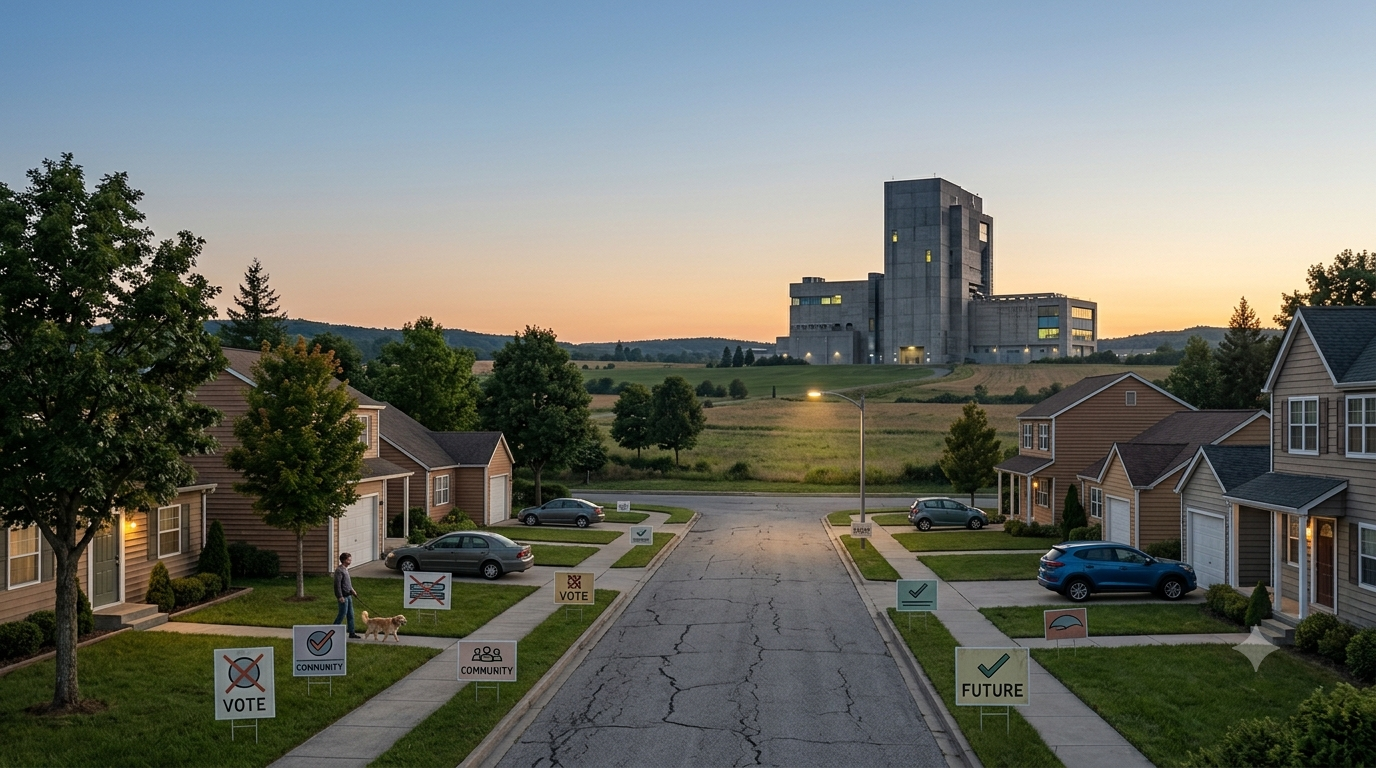
That tension became particularly visible in Monterey Park, California, where residents voted overwhelmingly to prohibit new data centers within city limits. The decision marked one of the clearest examples of public opposition to AI-related infrastructure in the United States. While most discussions around AI focus on innovation and economic opportunity, communities increasingly want answers about electricity consumption, water use, land requirements, and long-term environmental impacts. The result highlights a broader challenge facing the AI industry. Building enough compute capacity to support future demand may prove difficult if local communities remain unconvinced that the benefits outweigh the costs.
Monterey Park Becomes A National Test Case
Monterey Park’s vote did not emerge overnight. Months of community meetings, neighborhood outreach, and public discussions preceded the ballot measure. Residents organized campaigns across English, Spanish, and Chinese-speaking communities. Volunteers distributed educational materials and discussed concerns about the proposed Saturn Street data center project, which planned to redevelop an existing office property into a nearly 50-megawatt facility designed to support growing AI demand.
On June 2, voters approved Measure NDC with more than 86% support. The outcome effectively prohibited new data centers throughout the city. Prior to the vote, developers had already withdrawn their proposal amid rising opposition and regulatory uncertainty. The scale of support reflected more than resistance to a single project. Many residents viewed the proposal as part of a larger debate about how AI infrastructure should coexist with local communities.

The Resource Question Is Becoming Harder To Ignore
Data centers have always required substantial infrastructure. However, AI workloads are pushing requirements to unprecedented levels. Modern AI facilities consume significantly more electricity than traditional enterprise data centers. High-density GPU clusters require advanced cooling systems, larger power connections, and expanded supporting infrastructure. As AI adoption grows, operators continue building increasingly large campuses capable of supporting training and inference workloads.
For local communities, those technical requirements translate into visible changes. New substations, transmission infrastructure, backup power systems, cooling equipment, and industrial facilities often accompany large-scale data center projects. Consequently, residents frequently ask whether these developments create meaningful local value or primarily serve distant technology companies and cloud providers. Monterey Park’s vote reflects a broader concern emerging in regions across North America, Europe, and Asia. Communities increasingly want greater transparency regarding resource consumption and environmental impacts before approving major AI infrastructure projects.
Data Centers Promise Economic Benefits
Industry advocates argue that data centers provide important economic contributions to host regions. Construction projects create jobs during development phases. Operational facilities support technical positions, maintenance services, and local contractors. Data center operators also contribute property taxes and utility revenues that can support municipal budgets.
Industry groups further challenge the argument that data centers automatically increase residential electricity costs. Several studies suggest that large commercial customers often contribute significant revenue to utility systems. Under certain regulatory structures, those payments can help spread infrastructure costs across broader customer bases. Supporters also emphasize the strategic importance of data centers. Cloud computing, scientific research, healthcare applications, financial systems, and AI innovation all depend on reliable digital infrastructure. From this perspective, limiting data center development could reduce economic opportunities while weakening regional competitiveness in emerging technology sectors.
AI Is Intensifying Environmental Concerns
Despite those arguments, environmental concerns continue gaining momentum. Recent research from international organizations suggests AI-related infrastructure could dramatically increase resource consumption during the next decade. Electricity demand represents the most visible challenge. The International Energy Agency reported that electricity consumption from AI-focused data centers grew rapidly during 2025. Forecasts indicate continued expansion as enterprises deploy generative AI, autonomous systems, and advanced analytics across industries.
Water consumption presents another concern. Cooling systems remain essential for maintaining operational reliability in high-density facilities. Although operators increasingly adopt recycled water programs and advanced cooling technologies, communities located in drought-prone regions often remain cautious about large-scale infrastructure projects. Land use has also emerged as a growing issue. AI campuses require extensive space not only for data halls but also for power infrastructure, cooling systems, substations, and supporting facilities. Together, these factors have transformed data centers from relatively invisible digital infrastructure into highly visible public policy debates.
Communities Want Greater Control
Monterey Park is not an isolated case. Across the United States, local governments are receiving increasing scrutiny from residents regarding data center proposals. Community groups frequently raise concerns about environmental impacts, infrastructure strain, land use decisions, and long-term sustainability.
In Southern California, opposition to data centers often overlaps with debates surrounding battery storage facilities, industrial developments, and broader infrastructure projects. Residents increasingly view these proposals through a shared lens focused on environmental risk and quality of life. Meanwhile, organizations tracking development activity report a growing number of delayed, modified, or canceled projects linked to community opposition. Local governments now face difficult decisions as they attempt to balance economic development objectives with public concerns. The trend suggests that future AI infrastructure projects may require more extensive community engagement than previous generations of data center development.
The Industry Faces A New Challenge
Historically, data center site selection centered on access to power, fiber connectivity, and available land. Today, social acceptance is becoming an equally important factor. Developers can secure financing, utility agreements, and technical approvals. However, projects may still encounter resistance if communities feel excluded from decision-making processes. Public trust increasingly influences whether infrastructure proposals move forward.
As AI infrastructure expands, operators may need to demonstrate clearer local benefits. That could include workforce development programs, infrastructure investments, environmental commitments, water conservation measures, or greater transparency around resource consumption. Without stronger engagement, opposition campaigns could become more common in regions targeted for future AI development.
The Future Of AI Infrastructure May Depend On Public Trust
The debate unfolding in Monterey Park reflects a larger question facing the global AI industry. Demand for compute capacity continues rising rapidly. Governments and technology companies view AI infrastructure as strategically important. Yet communities hosting these facilities increasingly want a stronger voice in how development occurs. The challenge extends beyond engineering and economics. It involves governance, environmental stewardship, and public confidence.
Data centers remain essential to the future of AI. However, the Monterey Park vote demonstrates that communities are no longer willing to accept infrastructure growth without scrutiny. Residents want clearer evidence that benefits will be shared fairly and that environmental impacts will remain manageable. As AI infrastructure expands worldwide, public acceptance may become just as important as power availability, fiber connectivity, or access to capital. The communities hosting tomorrow’s AI economy are making it clear that they expect a seat at the table before construction begins.










