Skip to content
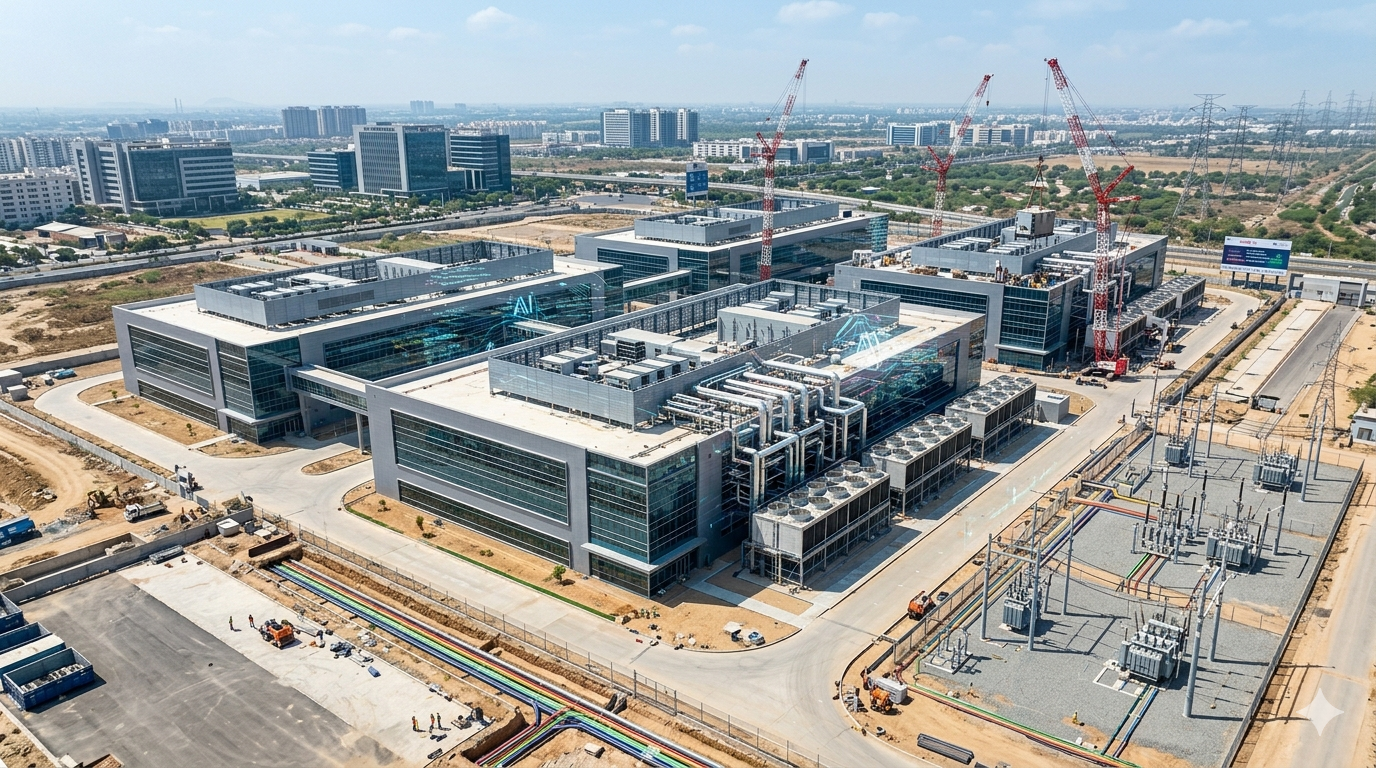
India’s digital infrastructure sector may be entering a new phase of expansion as artificial intelligence adoption drives demand for larger and more sophisticated computing facilities. Industry executives believe the country’s data center ecosystem is positioned for substantial growth over the next five years as enterprises increase AI deployments and global companies seek new locations for digital infrastructure investments. The opportunity extends beyond traditional cloud computing and reflects growing demand for AI training, inference, and high-performance computing workloads. Infrastructure providers are responding by expanding land holdings, securing power resources, and investing in facilities designed specifically for GPU-intensive applications. At the same time, policymakers continue to support digital transformation initiatives that require greater domestic computing capacity. These developments are strengthening expectations that India Data Centre Capacity could increase significantly during the remainder of the decade.

AI Adoption Is Creating a New Growth Cycle for Data Centers
The rapid expansion of artificial intelligence is altering infrastructure requirements across global markets. Unlike traditional enterprise workloads, AI applications require significantly larger computing clusters, higher power densities, and specialized hardware capable of processing complex machine learning models. As organizations increase AI investments, demand for advanced data center infrastructure continues to accelerate. Industry leaders now view AI as one of the primary drivers of future capacity additions across the sector. This shift is encouraging operators to move beyond conventional colocation services and invest in facilities optimized for AI workloads. The result is a growing need for infrastructure that can support both domestic and international demand for computing resources.
According to Prashant Jain, CEO and Managing Director of L&T Vyoma, India Data Centre Capacity could expand to between 10 GW and 15 GW within the next five years. He attributes this potential growth to rising AI adoption, increasing data localization requirements, and the continued expansion of India’s digital economy. Demand for AI-focused infrastructure is growing rapidly as businesses seek access to GPU-powered computing environments capable of supporting advanced applications. Global technology companies are also evaluating new markets for infrastructure deployment as capacity constraints emerge in established regions. These trends are creating favorable conditions for long-term investments across India’s data center ecosystem. Growing demand from both domestic and international customers is expected to support future development activity.
Global Constraints Are Creating Opportunities for India
Several international factors are contributing to India’s attractiveness as a data center destination. Power availability challenges in major markets such as the United States have become an increasing concern as AI workloads place additional strain on existing electricity infrastructure. Data center operators in some regions face difficulties securing sufficient power capacity for large-scale projects. Geopolitical developments are also influencing decisions regarding infrastructure diversification and supply chain resilience. Companies seeking alternative deployment locations are increasingly considering markets that offer long-term growth potential and supportive infrastructure ecosystems. These developments have positioned India as a beneficiary of shifting global investment patterns.

The country’s growing importance within the digital economy further strengthens its appeal. India has one of the world’s largest internet user bases and continues to experience rapid growth in digital services adoption. Cloud computing, e-commerce, fintech, and AI-driven applications are generating sustained demand for local computing infrastructure. Data localization requirements also encourage businesses to maintain workloads within national boundaries, creating additional demand for domestic capacity. As enterprises expand digital operations, the need for secure and scalable infrastructure becomes increasingly important. These factors collectively support expectations of continued growth across the sector.
L&T Vyoma Is Positioning for Long-Term Expansion
L&T Vyoma has already begun building infrastructure to capitalize on anticipated demand growth. The company currently controls a land bank capable of supporting approximately 5.5 GW of future capacity, providing substantial room for expansion. It also has around 250 MW of power-ready infrastructure available for development activities. The company has operationalized a 30 MW data center facility in Chennai and recently commenced construction on a 35 MW project in Mumbai. These developments reflect a broader strategy aimed at supporting hyperscale customers and large-scale digital infrastructure deployments. Infrastructure readiness has become increasingly important as demand accelerates across the market.
The company is also expanding beyond traditional colocation services. L&T Vyoma recently announced an AI factory initiative in partnership with Nvidia, highlighting growing interest in AI-specific infrastructure offerings. Jain stated that the company intends to provide AI computing capabilities and AI token-as-a-service solutions as the business scales. This approach reflects broader industry efforts to capture value across multiple layers of the AI ecosystem. Operators increasingly recognize that future growth may come not only from physical infrastructure but also from services built on top of computing platforms. The combination of infrastructure ownership and AI-focused services could create additional revenue opportunities over time.
Cost Advantages Could Strengthen India’s Competitive Position
Industry observers believe India’s cost structure provides an important advantage in attracting future investments. Vaibhav Garg, Director of Infrastructure and Real Assets Investment Banking at Avendus Capital, noted that data center infrastructure costs in India are approximately 40% to 50% lower than in several competing global markets. Lower development costs can improve project economics while enabling operators to scale capacity more efficiently. These advantages become increasingly relevant as AI infrastructure investments require substantial capital commitments. Cost competitiveness may encourage global companies to expand operations within India rather than relying exclusively on traditional markets. The country’s economic positioning therefore represents a significant factor in future growth projections.
Domestic AI adoption is also creating additional demand for infrastructure investments. According to Garg, more than 70% of Indian companies have already started integrating AI into day-to-day business operations. This trend continues to expand as organizations seek productivity improvements, automation capabilities, and new digital services. Demand generated by domestic enterprises complements interest from international customers seeking computing resources. Consequently, India has the opportunity to serve both as an infrastructure provider for global AI workloads and as a major consumer of AI-enabled services. This dual demand dynamic could support sustained growth across the sector.
Competition Is Expected to Remain Broad-Based
Despite increasing investment activity, industry experts do not expect the market to consolidate around a small number of dominant players. Garg believes the scale of future demand is large enough to support multiple operators across different segments of the ecosystem. He expects the market to remain relatively fragmented, with approximately 15 to 20 meaningful participants competing for growth opportunities. Such an environment could encourage innovation while providing customers with a broader range of service options. Competition may also help accelerate infrastructure development as operators seek to differentiate themselves through capacity, efficiency, and specialized capabilities. Market expansion therefore appears likely to create opportunities for both established firms and new entrants.
Jain, however, expects a distinction to emerge between conventional data center operators and providers focused on large-scale AI infrastructure. AI facilities often require significantly greater capital investments because of higher power requirements, specialized cooling systems, and GPU-intensive deployments. Developing these facilities demands strong execution capabilities and access to substantial financial resources. As AI workloads become more prevalent, infrastructure providers may increasingly specialize in specific market segments. The divide between traditional colocation facilities and dedicated AI campuses could become more pronounced over time. This evolution may influence investment strategies throughout the sector.
Demand Is Outpacing Supply Across AI Infrastructure
One of the most significant challenges facing the industry is the widening gap between demand and available supply. Jain noted that customer demand for GPU-powered infrastructure currently exceeds available capacity in many markets. Organizations seeking AI computing resources often require facilities that can become operational within the current year rather than waiting through traditional development timelines. Building a new data center typically requires between 18 and 24 months, creating delays for customers seeking immediate access to infrastructure. This mismatch is encouraging operators to accelerate project development wherever possible. Speed to market is becoming a critical competitive advantage within the AI infrastructure sector.
Meeting future demand will require enormous levels of investment. Jain estimates that the next wave of AI infrastructure development could require approximately $100 billion in investment over the next five years. Even a single 100 MW AI data center may require capital expenditure of roughly ₹4,000 crore to ₹5,000 crore. Such investment requirements create significant barriers to entry for large-scale projects and limit participation to organizations with strong financial backing. Capital intensity is therefore expected to remain one of the defining characteristics of the AI infrastructure market. The ability to secure funding will likely play a major role in determining which companies emerge as leaders in the next phase of growth.
New Markets Could Join India’s Data Center Expansion
Mumbai currently accounts for a substantial share of India’s installed data center capacity, but rising land costs are prompting developers to evaluate alternative locations. Operators increasingly seek markets that offer access to affordable land, reliable power infrastructure, and strong connectivity networks. As demand expands, secondary cities may play a larger role in supporting future capacity additions. Geographic diversification could also improve resilience while reducing concentration risks associated with a small number of major hubs. These factors are encouraging developers to explore opportunities beyond traditional markets.
Jain identified Visakhapatnam as one of the cities that could emerge as a significant data center destination during the next five to seven years. The city offers access to land, fiber connectivity, electricity infrastructure, and water resources necessary for large-scale developments. These characteristics make it increasingly competitive with more established data center markets. If infrastructure investments continue at the anticipated pace, emerging hubs could help accommodate a substantial portion of future demand. Their growth would further strengthen India’s position within the global digital infrastructure landscape. As AI adoption accelerates, regional expansion may become an important component of the country’s long-term data center strategy.